
Training & Health
Mobility after cycling: 5 exercises in 10 minutes
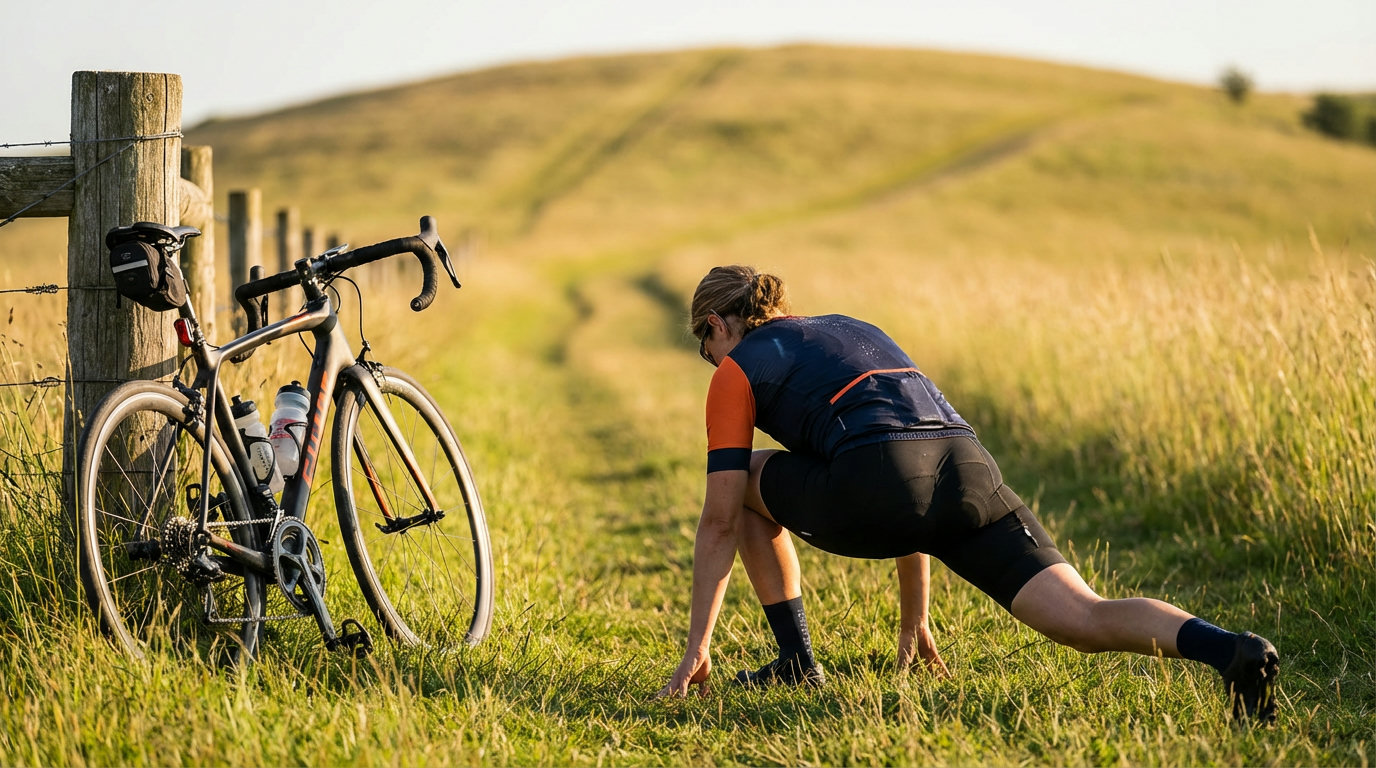
Stiff back, tight hips, tense neck? These five mobility exercises ease the usual post-ride complaints in ten minutes.
Why mobility matters after cycling
After 60, 80 or 100 kilometres, you get off the bike and notice it straight away: your lower back aches, your hips feel locked up and turning your neck is difficult. There is a reason. The crouched position on a road or gravel bike holds your body in an asymmetrical posture for hours.
The hip flexor (iliopsoas) stays shortened because the hip never fully extends on the bike. This persistently increased resting tone can encourage an anterior pelvic tilt, leaving the lower back to compensate. At the same time, the cervical spine is held in extension as you look ahead from a bent torso. The result is increased tension in the trapezius and deep neck muscles.
One study of long-distance cyclists found that more than 54% of women and 44% of men developed neck pain during multi-day tours. The back was the second most common problem area.
This is where mobility comes in. Unlike passive stretching, mobility training takes you actively into the end position, with controlled movement that improves flexibility, joint stability and neuromuscular control. For cyclists, that means balancing the one-sided load instead of just hanging in a position for a moment.
Ten minutes straight after your ride are enough to address the three key areas: hips, back and neck. Your muscles are still warm and well supplied with blood. It is a useful window.
The five best mobility exercises after a ride
This routine moves from the bottom up: open the hips, mobilise the back and finish by releasing the neck. Hold each position for 30 to 45 seconds per side and breathe steadily into the stretch. No bouncing and no forcing.
Exercise 1: Kneeling hip-flexor stretch
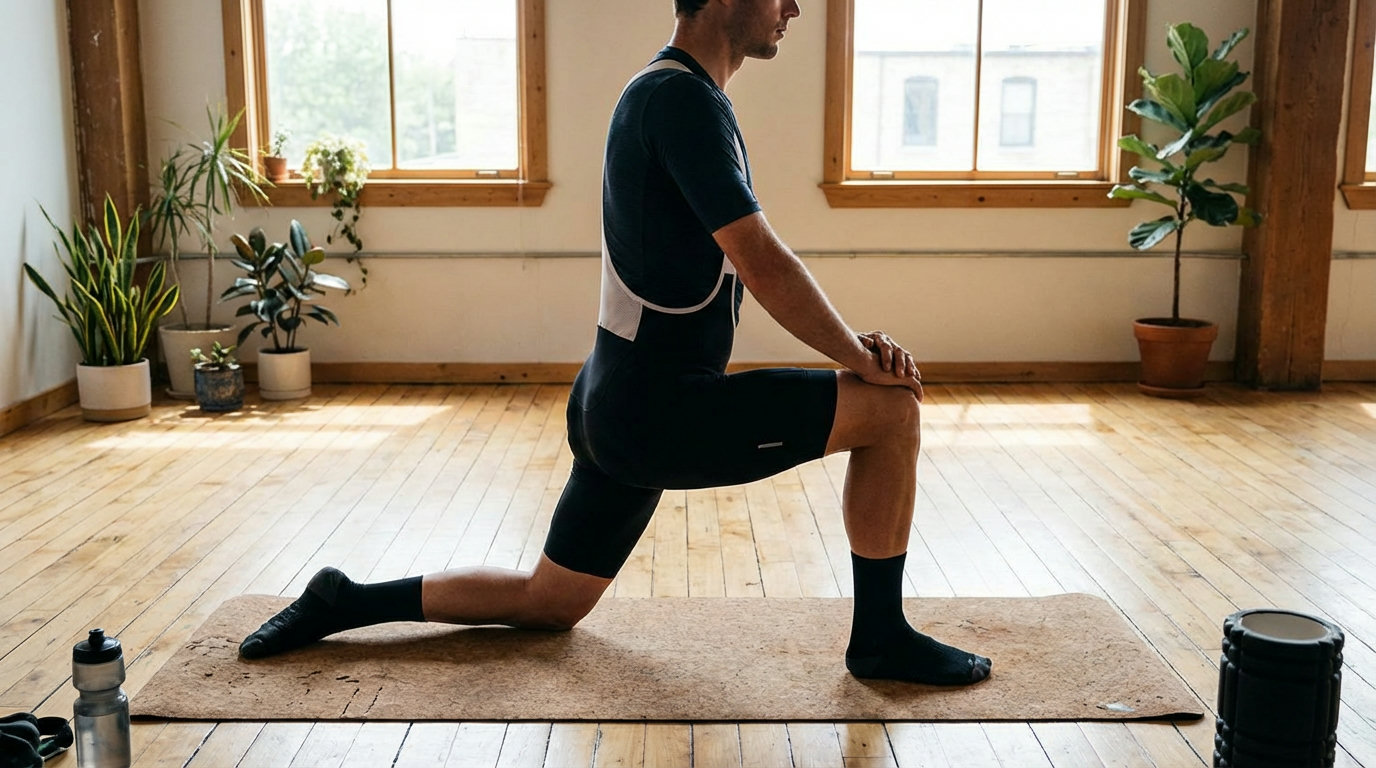
The hip flexor is a major problem area for cyclists. In the saddle, the hip remains bent and the iliopsoas develops increased resting tone. Over time, this may encourage an anterior pelvic tilt and contribute to lower-back pain.
How to: Step into a deep lunge with the back knee on the floor, using a mat or towel for comfort. Keep the front knee above the ankle at 90 degrees. Slowly push the hips forwards until you feel a clear stretch at the front of the rear thigh. Engage the glutes on the back leg to intensify the stretch through reciprocal inhibition. Raise the arms overhead if you want to extend the stretch into the side body.
Duration: 30–45 seconds per side, two rounds.
Exercise 2: Cat-cow for the spine
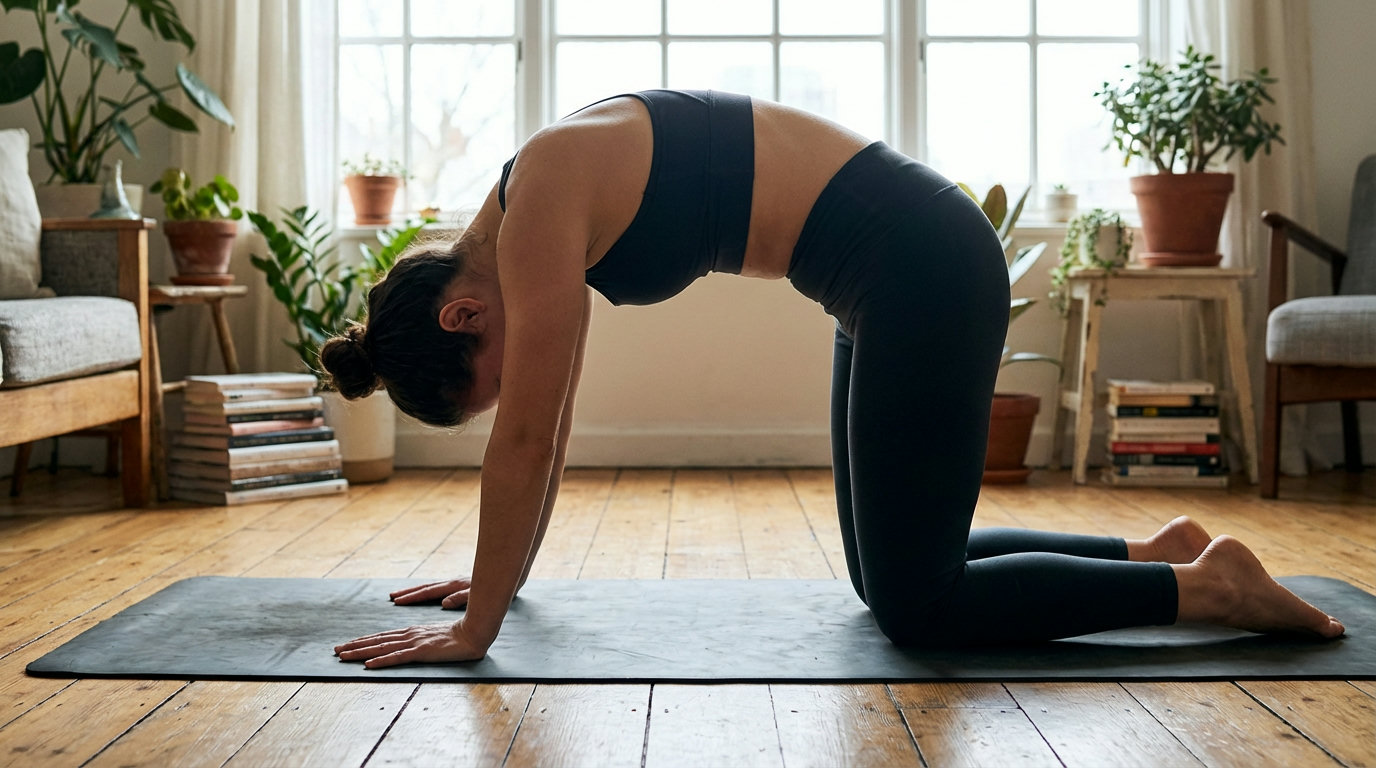
On the bike, the thoracic spine stays flexed for hours. Cat-cow is a practical counter-movement: it mobilises each spinal segment and brings movement to areas that remain still while riding.
How to: Start on all fours with hands under shoulders and knees under hips. As you exhale (cat), draw the navel in, round the back and bring the chin towards the chest. As you inhale (cow), let the belly drop, lift the gaze and open the chest forwards. Move slowly and deliberately, rolling through the spine one vertebra at a time.
Duration: 8–10 slow repetitions, synchronised with your breathing.
Exercise 3: Thread the Needle for thoracic rotation
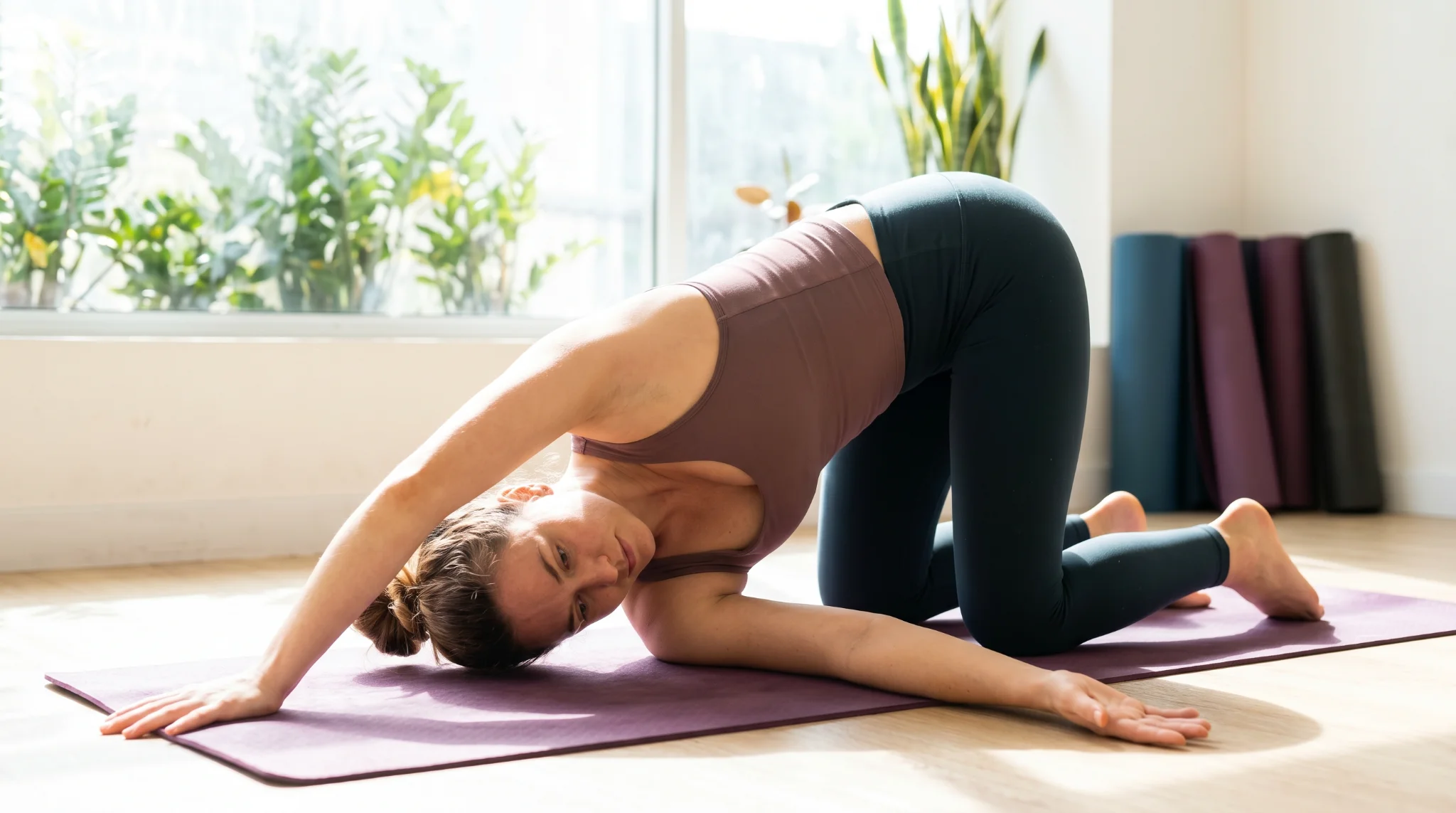
The fixed riding position limits thoracic flexion and extension, but especially rotation. Thread the Needle targets that limitation while easing tension between the shoulder blades and in the upper back.
How to: Stay on all fours after cat-cow. Thread your right arm under the left side of your body until the right shoulder and temple rest on the floor. Keep the left arm supporting you or reach it towards the ceiling to deepen the rotation. You should feel a clear stretch around the shoulder blades and the side of the thoracic spine.
Duration: 30–45 seconds per side, breathing calmly into the rotation.
Exercise 4: Side neck stretch with trapezius release

Holding the neck in extension while cycling increases tension in the upper trapezius and deep neck muscles. This exercise releases that tension more effectively than simply circling the head.
How to: Stand tall or sit on a chair. Slowly tilt your head to the right as if bringing your ear towards your shoulder. At the same time, press the left hand actively towards the floor to draw the left shoulder away from the ear. For more intensity, place the right hand gently on the left side of the head and add minimal pressure. Do not pull.
Duration: 30 seconds per side, two rounds. Then lower the chin towards the chest and stretch the neck in the centre for 15 seconds.
Exercise 5: Pigeon pose for the hips and piriformis
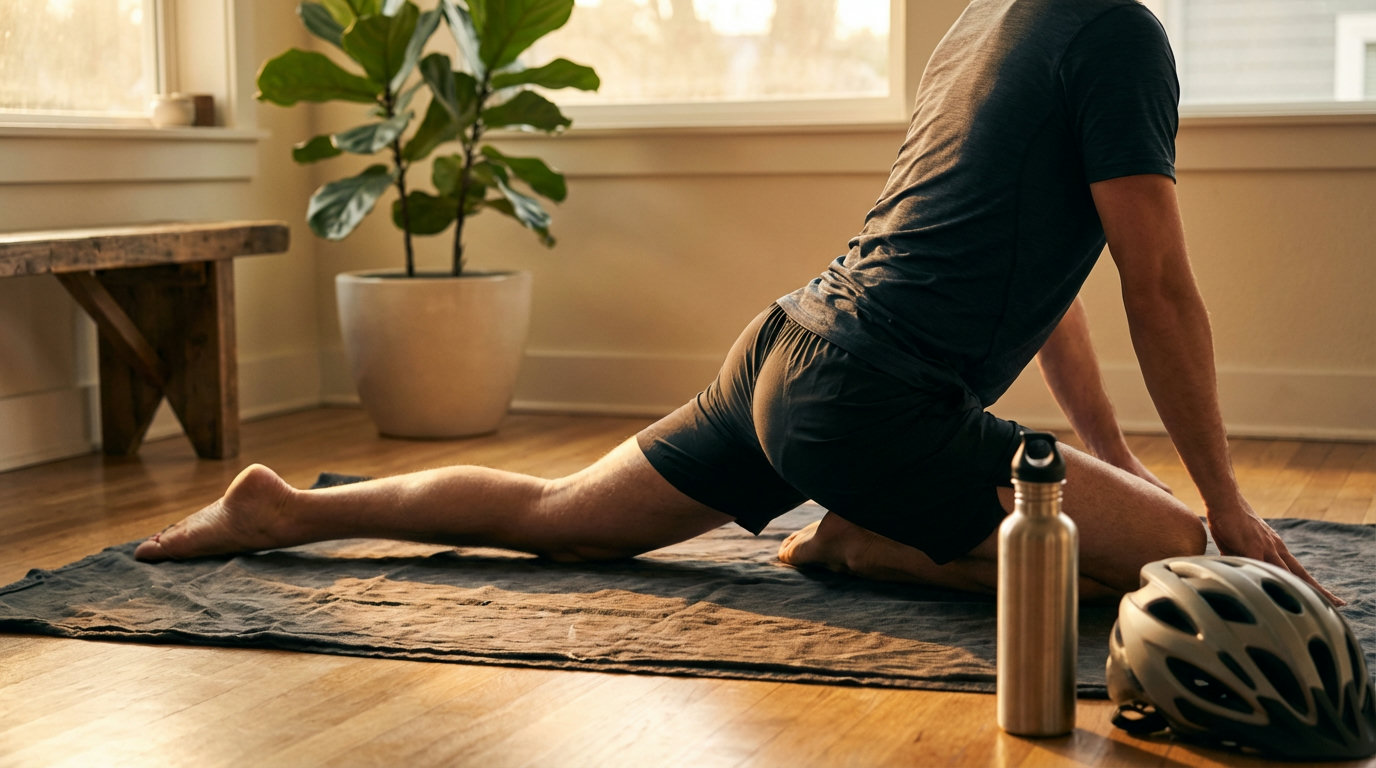
While the hip-flexor stretch targets the front, pigeon pose works on the external rotators and piriformis. This small, deep glute muscle is heavily used when cycling and can cause pressure pain along the sciatic nerve when tight.
How to: From all fours, slide the right knee forwards behind the right wrist. Place the right lower leg across the body, choosing an angle of 45–90 degrees according to your mobility. Extend the left leg straight back. Keep the torso upright at first to control the stretch. More advanced practitioners can lower the torso onto the forearms.
Duration: 45–60 seconds per side. Give this exercise a little more time; the piriformis responds well to longer holds.
Common stretching mistakes after cycling
Common mistakes and better alternatives
- 1
If you bounce or pulse into the stretch
you risk small muscle injuries; hold the position statically and breathe deeply instead
- 2
If you only do mobility after long rides
you will not build a routine; even after 30-minute rides, a short cool-down is worthwhile
- 3
If you circle the neck in isolation
you put unnecessary strain on the cervical spine; a targeted side bend with trapezius traction is gentler and more effective
- 4
If you go straight into a maximum stretch after riding
you overload warm but tired muscles; move slowly into the end position and do not force it
Conclusion: ten minutes that make a difference
Ten minutes after your ride takes less time than cleaning your chain. Yet this short mobility routine can make the difference between waking up stiff and feeling ready for your next outing.
The five exercises target the three main problem areas for cyclists: hip flexors with increased resting tone, an overloaded back and a tight neck. You need no equipment, app or yoga studio. Just a mat, or a patch of grass.
If certain areas continue to cause problems despite regular mobility work, a professional bike fit is worth considering. The best stretch cannot compensate for a poor riding position.
Frequently asked questions
Should I stretch before or after cycling?
After cycling is the ideal time for static stretches and mobility. Your muscles are warm and more flexible. Before a ride, use dynamic warm-ups such as leg swings or light squats.
Can I do these exercises on a rest day?
Yes. On days without training, the routine works as a mobility check. You will quickly notice which areas are still restricted from the previous day.
How long does it take to improve mobility?
With consistent practice after every ride, you may notice the first improvements in hip mobility after two to three weeks. The neck often responds faster. Measurable changes in tissue and muscle extensibility usually take six to eight weeks of regular training.
Are ten minutes really enough?
Yes for a post-ride cool-down. The ten minutes target the three main problem areas. If you want to work on mobility more broadly, extend the routine to 20–30 minutes on rest days.
Can mobility also help with cycling-related knee pain?
Indirectly. Increased hip-flexor tone and limited hip mobility can alter leg alignment and load the knee. For persistent knee pain, a bike fit should be the first step.
Useful tools and articles for your training
Inspiration, knowledge and gear for people who want more from the outdoors.