
SportFits Travel
5 spring day rides in Germany, Austria and Switzerland
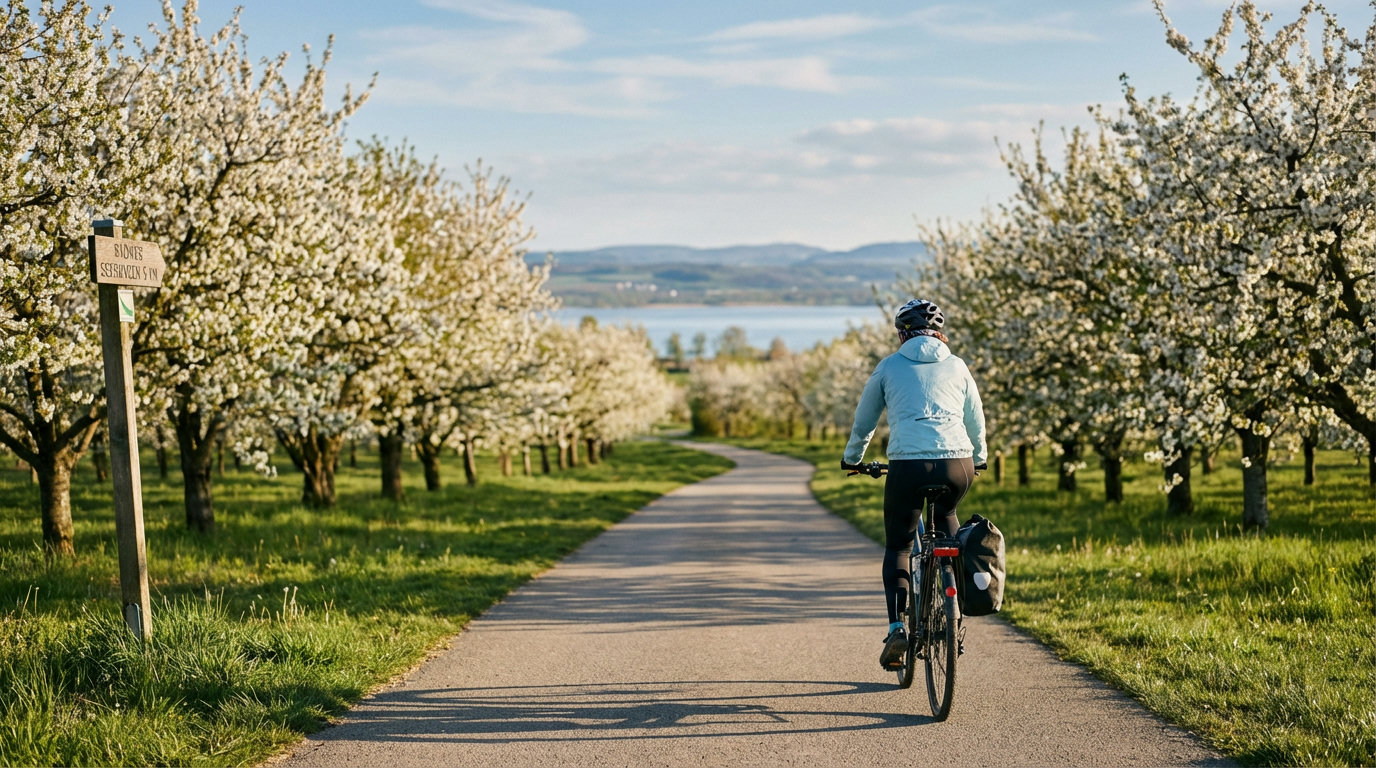
Back on the bike: five signposted cycle routes in Germany, Austria and Switzerland that are made for your first rides of spring.
The essentials at a glance
- 01
Before your first ride: check your tyres, chain, brakes and lights. Winter leaves its mark.
- 02
Five classic cycle routes in Germany, Austria and Switzerland are ideal for the start of the spring season, from virtually flat to moderately hilly.
- 03
For the first few weeks, keep sessions short and easy in the base endurance zone. Save climbs and pace work for week five.
- 04
Spring cycling clothing works best in layers: three thin layers beat one thick jacket every time.
Before you ride: the bike check
Your bike has been in the garage since October. What still worked perfectly in autumn can suffer after a winter of sitting idle: tyres lose pressure, chains can develop light rust and brake pads harden. A ten-minute bike check before your first ride will save you unpleasant surprises on the road.
Especially important: do not use a pressure washer for cleaning. It forces water into the bearings and bottom bracket, which can become expensive in the long run. Lukewarm water, a soft brush and chain lubricant are all you need.
An overview of the 5 rides
The five routes were chosen for variety, from urban and flat to alpine and hilly, across Germany, Austria and Switzerland. All are well signposted, surfaced and easy to ride without knowing the area. None of them needs road-racing fitness. You just need to enjoy pedalling.
| Tour | Country | Distance | Elevation gain | Character |
|---|---|---|---|---|
Isar Cycle Route, Munich | Germany | 30–53 km | < 100 m | Flat, urban, floodplain woodland |
Danube Cycle Route, Passau–Linz | Germany/Austria | 120 km | < 50 m | Riverside cycle route, culture |
Aare Cycle Route, Thun–Bern | Switzerland | 32 km | approx. 150 m | Lake scenery, Alpine views |
Southern Black Forest Cycle Route | Germany | approx. 80 km (stage) | 200–300 m | Hilly, varied |
Lake Constance Cycle Route | Germany/Austria/Switzerland | 40–60 km (stage) | < 50 m | Flat, lake views |
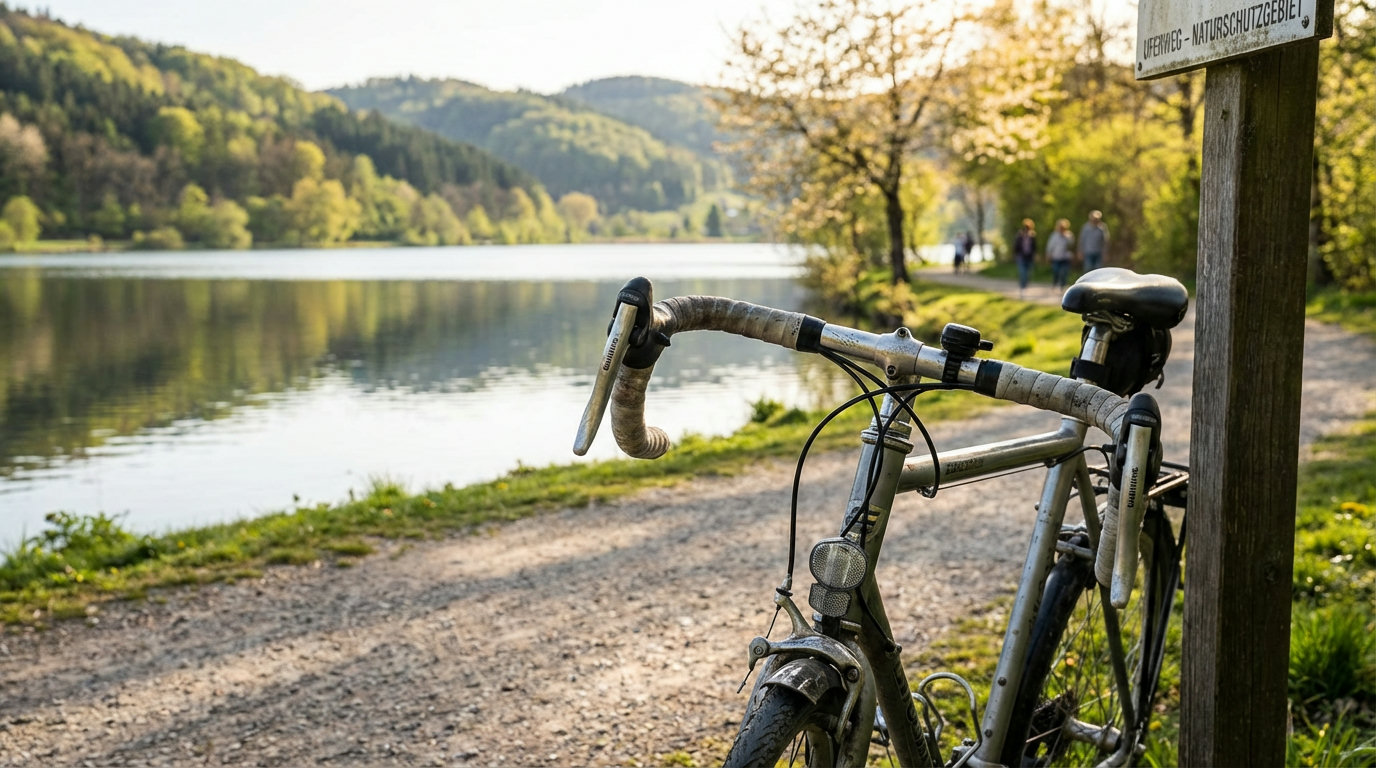
1. Isar cycle route, Munich (Bavaria, Germany) The perfect starting point if you do not want to stray too far from home just yet. From Munich city centre, follow the Isar through riverside woodland: no traffic, smooth tarmac and beer gardens if you fancy one. Choose your own distance: 30 kilometres is enough for a relaxed loop, while those wanting more can ride to Freising and back. Ideal for your very first day back after winter.
2. Danube cycle route, Passau–Linz (Austria) One of Europe’s most popular cycle routes, and for good reason. From Passau downstream to Linz, the route follows the Danube across almost entirely flat terrain. The highlight is the Schlögener Schlinge, a spectacular 180° bend in the river within a nature reserve. The 120 kilometres divide neatly into two days, and the infrastructure along the route is excellent.
3. Aare cycle route, Thun–Bern (Switzerland) Short but impressive: 32 kilometres from Thun through the Aare valley to Bern’s old town. With the Bernese Alps behind you, every kilometre is worth the ride. The route is ideal for a half-day outing, leaving time for a coffee in Bern afterwards. Well signposted as VeloRoute 8, with virtually no elevation gain.
4. Southern Black Forest cycle route (Baden-Württemberg, Germany) For anyone looking for more than flat terrain. A stage from Hinterzarten towards the High Rhine includes moderate climbs, rewarded with Black Forest scenery and views across the Rhine valley. In spring, when snow melts on the peaks and the valleys turn green, the Black Forest is especially atmospheric. If you prefer to avoid the climbs, you can bridge parts of the route by train.
5. Lake Constance cycle route (Germany, Austria, Switzerland) Three countries, one lake and countless options. In May, the fruit trees around Lake Constance are in bloom and tourist crowds are still manageable. Individual daily stages of 40 to 60 kilometres make for relaxed rides at every level. If you like, ride a multi-day loop around the entire lake: 260 kilometres, three countries and an unforgettable experience.
Clothing for spring rides
Spring at Lake Constance or in the Alpine foothills can mean 8°C in the morning, 18°C at midday and occasional rain in between. One thick jacket will soon leave you sweating, so layering is the better choice.
Layer 1 – base: A breathable technical shirt or merino jersey that moves sweat away from your body. Cotton is not an option: it holds moisture and makes you cold.
Layer 2 – mid-layer: A thin cycling gilet or lightweight softshell jacket keeps the wind out and your core warm without overheating. It can be stowed in a jersey back pocket.
Layer 3 – outer: A compact windbreaker or lightweight waterproof jacket for unexpected showers. Ideally, it packs down to the size of your palm.
Leg warmers are also worthwhile on cool April days. They protect your knee joints and can be removed quickly when it warms up. Padded cycling gloves dampen vibrations and offer protection in a fall. A helmet liner or cover helps on chilly morning starts. And good cycling glasses protect your eyes from wind, sun and insects alike.
Cycling clothing for the new season?
Find cycling clothing for spring at SportFits.
Shop now ↗Building up your cycling training
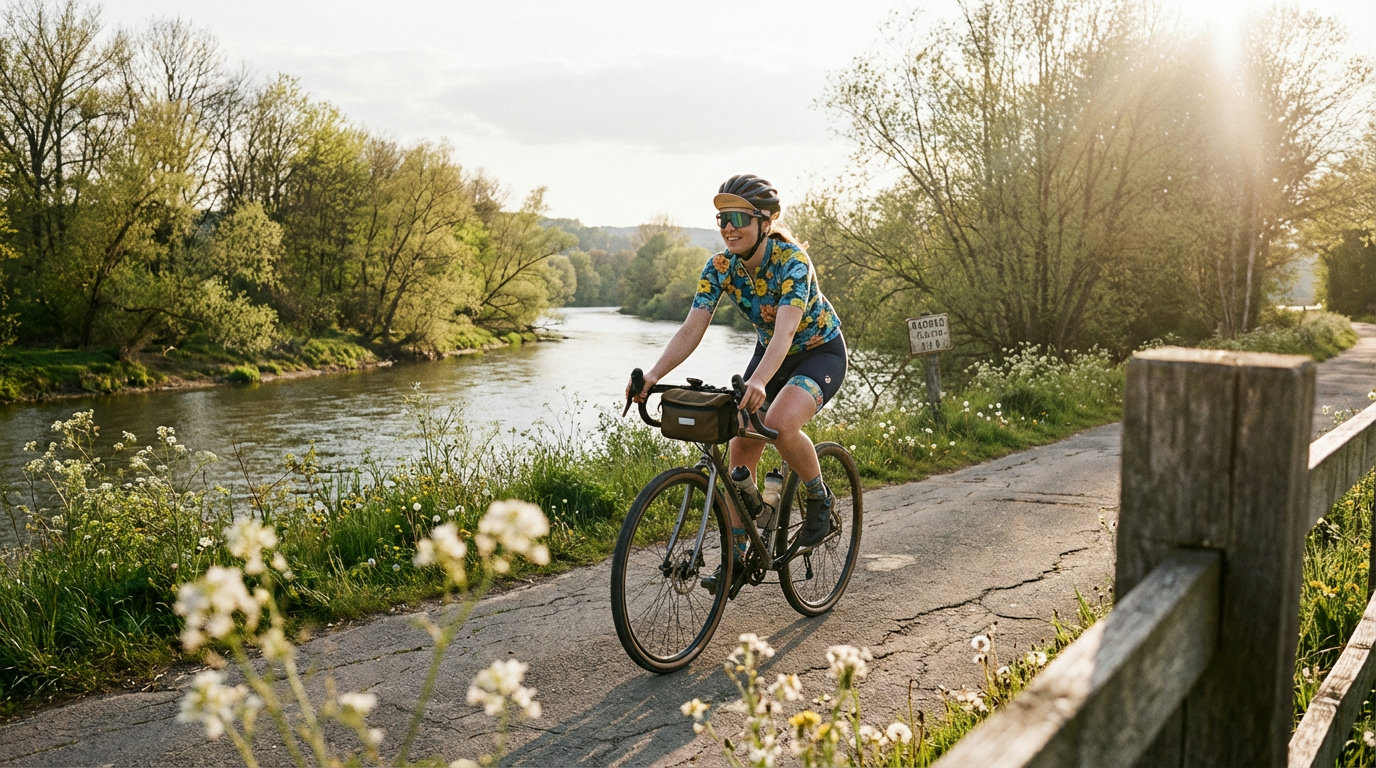
Cycling has one clear advantage over running: it puts far less strain on your joints. Even so, your body needs time after winter to find its cycling rhythm again, especially your knee joints and cycling-specific muscles.
Weeks 1 and 2: Two to three easy rides of 45 to 90 minutes each. Keep your heart rate in the base endurance zone (around 70–75% of your maximum heart rate), at a pace where you can still hold a conversation. Favour flat routes and deliberately skip climbs.
Weeks 3 and 4: Gradually increase your distance, by no more than 10 per cent per week. Gentle hills are fine now.
From week 5: Add targeted climbs and, if you wish, your first intervals. This is when proper season training begins.
One often overlooked tip: Easy gears at a high cadence are kinder to your knees than pushing heavy gears. Target cadence during the build-up phase: 80–90 revolutions per minute. If you are not used to it, you may find it tiring at first. That is normal and gets better as the season goes on.
Which route suits you?
- 1
If you want a gentle return after a long break
the Isar cycle route in Munich is ideal: flat, easy to cut short at any time and with a café always nearby
- 2
If you are planning a multi-day tour straight away
the Passau–Linz Danube cycle route offers perfect stages, excellent infrastructure and zero elevation gain
- 3
If you live in or are visiting Switzerland
the Thun–Bern Aare cycle route is short but unforgettable, with Alpine views included
- 4
If you want a bit of variety and moderate hills
a stage of the Southern Black Forest cycle route is well worth it, with the train as an option for the return journey
- 5
If you are riding with friends or family
the Lake Constance cycle route is the top choice. It suits every fitness level, so everyone can ride at their own pace
Right for you if …
Experienced leisure cyclists looking for a motivating way to start the season after winter.
Probably not for you if …
Road cyclists with race goals: they need structured, more intense training.
Ready for the start of the season?
From trekking to gravel, discover current bikes and accessories for the new season.
Shop cycling gear ↗Frequently asked questions
How long should my first bike ride after winter be?
45 to 90 minutes is a good range. More important than the duration is the pace: easy, without pressure, at a conversational pace. If you have had enough after 30 minutes, that is fine. The first day is about getting used to it, not training.
Do I need to take my bike to a specialist shop after winter?
Not necessarily, provided you carry out the self-check carefully. You can assess the tyres, chain, brakes and gears yourself. It is worth taking it to a bike shop if you hear noises from the bottom bracket, the gears are skipping or the brakes feel unreliable. These are wear-related issues that require professional tools.
Which of these routes still work in spring rain?
The Danube, Lake Constance and Isar cycle routes are mostly tarmac and remain easy to ride when wet. Gravel paths in the Black Forest can become slippery in the rain. As a general rule, ride more slowly in the rain, brake earlier and pay attention to the brake lever bite point.
How much food and water do I need for a day ride?
Rule of thumb: around 500 ml of water per hour of riding, more in warm weather. For food, a small snack every 45–60 minutes is enough on easy rides: bars, bananas or sandwiches. There are inns and supermarkets along the routes mentioned, so you do not need to carry everything from the start.
Inspiration, knowledge and gear for people who want more from the outdoors.