

Training & Health
How your gut microbiome affects sports performance

Around 70% of your immune system sits in the gut. New research shows your microbiome shapes endurance, recovery and whether runner's gut strikes.
Key points
- 01
Endurance athletes have a richer, functionally specialised microbiome. Certain gut bacteria recycle lactate and may extend time to exhaustion.
- 02
Runner's gut affects up to 96% of ultra-endurance athletes. Targeted gut training 6–8 weeks before a race measurably reduces symptoms.
- 03
In meta-analyses, strains such as L. plantarum show moderate performance gains, but the effect depends on strain and dose.
- 04
Fermented foods such as kefir and sauerkraut, plus 30+ g of fibre a day, do more for microbial diversity than any single supplement.
- 05
Around 70% of your immune system sits in the gut. A healthy microbiome may help protect you from the colds that often follow hard training blocks.
What is the microbiome and why does it matter for athletes?
Around 100 trillion microorganisms live in your gut. That is more than the number of cells in your body. This ecosystem is called the microbiome, and it affects far more than your digestion.
Current multi-omics research (2024–2026) shows a two-way relationship between training and the microbiome. Endurance training changes the microbial mix, while microbial metabolites called short-chain fatty acids (SCFAs) influence energy metabolism, immunity and recovery.
For you as an athlete, this means your gut is no passive digestive tube. It is an active training partner that helps decide how efficiently you produce energy, how quickly you recover and how resilient your immune system is.

The bacteria that make athletes faster
Athletes don't have a different microbiome by accident. Their gut is tuned for performance. One of the most striking discoveries of recent years concerns Veillonella atypica: researchers analysed daily stool samples from Boston Marathon runners and found a significant rise in this bacterium after the race.
The mechanism is neat. Veillonella converts the lactate produced during exercise into propionate, a short-chain fatty acid that serves as an alternative energy source. Mice given Veillonella ran 13% longer on the treadmill.
Veillonella is only part of the picture, though. A 2025 systematic review of 19 studies identified sport-specific patterns in how the microbiome changes.
Key bacteria in athletes
| Bacterium | Function | Evidence |
|---|---|---|
Veillonella atypica | Converts lactate to propionate | Rises after a marathon, +13% running time in mice |
Prevotella copri | Carbohydrate and BCAA metabolism | Correlates with training volume (>11 h/week) |
Akkermansia muciniphila | Energy metabolism, anti-inflammatory | Most common among sprinters (41%) |
Faecalibacterium prausnitzii | Butyrate production, anti-inflammatory | More abundant in endurance athletes |
Roseburia hominis | Butyrate production, intestinal barrier | Strengthens gut integrity in ultra-endurance athletes |
Bifidobacterium longum | SCFA production, immune modulation | Associated with performance markers |
How the microbiome shapes endurance and recovery
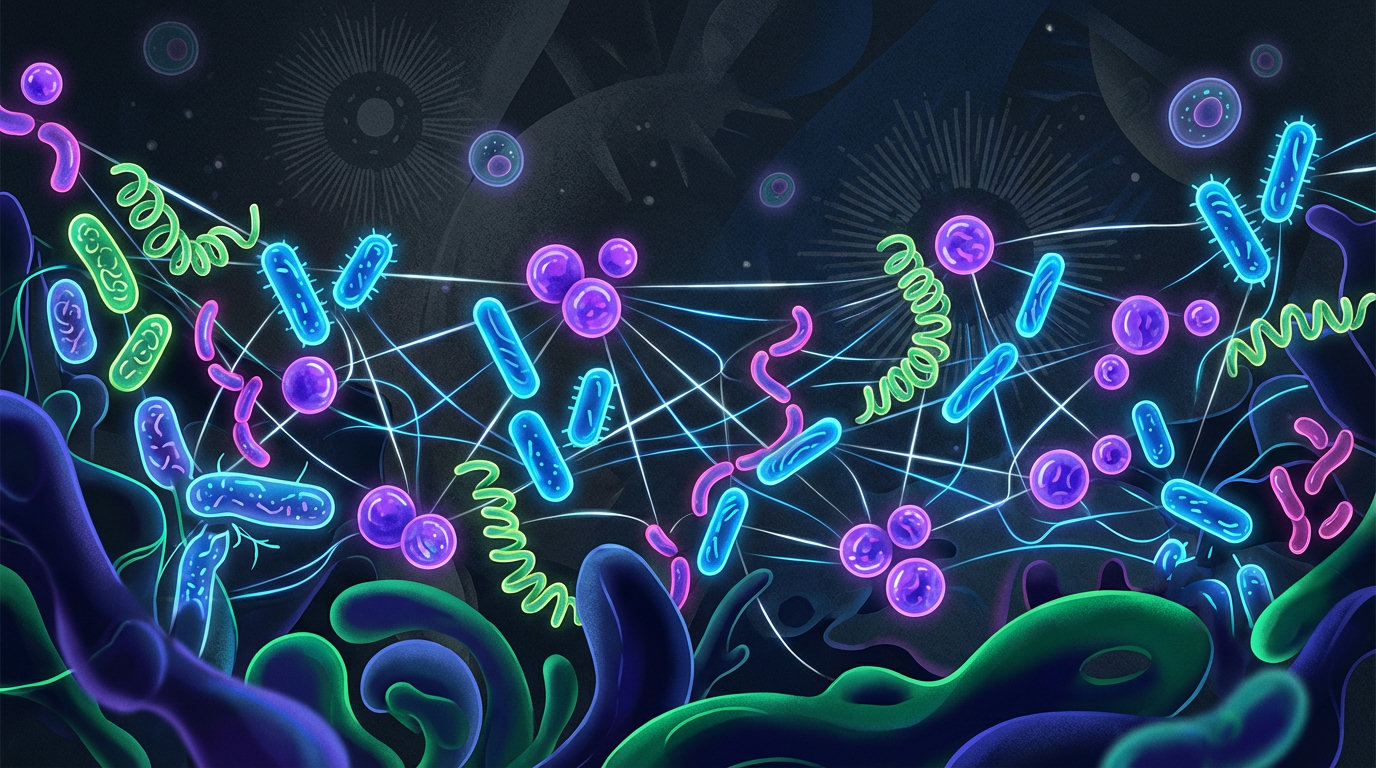
The link between gut bacteria and athletic performance is short-chain fatty acids (SCFAs): acetate, propionate and butyrate. Gut bacteria produce them when they ferment fibre, and they act on your metabolism at several levels:
- Acetate improves mitochondrial function and glucose metabolism in skeletal muscle
- Butyrate suppresses inflammation, strengthens the gut barrier and promotes the expansion of regulatory T cells, which matters for recovery
- Propionate serves as an alternative energy source and supports metabolic regulation
A study on dietary periodisation in highly trained athletes found that a high-carbohydrate diet improved time-trial performance by 6.5%. This correlated with a stable, healthy gut flora.
Recovery: less muscle soreness with a healthier gut flora
The microbiome's role in post-workout recovery is increasingly seen as relevant to performance. A study of rugby players found that athletes with higher microbial diversity had lower levels of systemic inflammation.
The anti-inflammatory functions of the microbiota help reduce DOMS (delayed-onset muscle soreness) and speed up recovery. In studies, probiotic strains such as L. plantarum PL-02 lowered creatine kinase and blood ammonia levels after exercise. Both are markers of muscle damage.
One finding stands out: a study of 543 athletes from different sports showed that each type of sport forms distinct microbial subgroups. Your gut literally adapts to your sport.
Runner's gut: causes and prevention
If you've had it, you won't forget it: cramps, nausea, an urgent need for a toilet in the middle of a race. Runner's gut, medically known as exercise-induced gastrointestinal syndrome (EIGS), affects 27% of marathon runners during the race and up to 96% of ultramarathon runners.
Several factors work together:
Blood redistribution (splanchnic ischaemia)
At rest, about 1.56 litres of blood per minute flow to your digestive organs. During intense exercise this drops to just 0.3 litres per minute, as blood is redirected to your muscles and skin.
Increased gut permeability
Running at 65% VO₂max increases gut permeability by around 300%. Inflammatory markers such as TNF-α and IL-6 rise.
Oxidative stress damages the gut barrier
High-intensity exercise destabilises tight junction proteins (claudin-1, ZO-1, occludin), which normally seal the gut wall.
Mechanical strain
The repeated impact of running puts mechanical strain on your internal organs. That is why stomach and gut problems are more common in running than in cycling.
Heat stress makes everything worse
Training in the heat damages the gut lining and triggers local inflammation. GI symptoms are significantly more common in hot conditions.
Here is the paradox. Acute exercise damages the gut barrier, yet regular training strengthens it in the long run. Trained cyclists have endotoxin levels at rest three times lower than non-athletes. The reasons: a better microbiota composition, more butyrate production and the induction of heat shock proteins.
Gut training: how to train your digestive system
Probiotics for athletes: what the research says
Probiotics are a billion-euro market. But which strains actually have evidence behind them for athletes? A 2026 Bayesian meta-analysis gives the clearest answer so far: probiotic supplementation is linked to a moderate but practically meaningful improvement in athletic performance.
The strongest single-strain effect came from L. plantarum, with a standardised mean difference of 0.82. Multi-strain probiotics showed an effect of 0.45. Effective doses range from 10⁹ to 10¹¹ CFU per day.
Keep in mind that probiotic effects are strain- and dose-dependent. A generic "probiotic" from the supermarket won't improve your performance. The specific strains are what count.
Evidence-based probiotic strains for athletes
| StrainTop evidence | Effect | Dose / duration |
|---|---|---|
L. plantarum TWK10 | Dose-dependent gains in endurance and muscle mass, less body fat | 3–9 × 10¹⁰ CFU / 6 weeks |
L. plantarum PL-02 | More muscle mass and strength, less lactate and CK after exercise | 1.5 × 10¹⁰ CFU / 4–6 weeks |
B. lactis BL-99 | Better VO₂max and knee extensor strength in cross-country skiers | 8 weeks |
L. casei | Improved aerobic capacity, reduced stress and anxiety | 6 weeks |
L. reuteri DSM 17938 | Gut barrier integrity, fewer GI complaints | Variable |
L. helveticus Lafti L10 | Maintains SIgA levels, fewer colds in elite athletes | 14 weeks |
Multi-strain Lactobacillus | Better sleep quality, improved testosterone/cortisol ratio | Several weeks |
Eating for a strong microbiome
The best investment in your microbiome is your plate, not an expensive supplement. The Mediterranean diet is considered the gold standard: plenty of plant foods, olive oil and polyphenols. It promotes the growth of Bifidobacterium, Faecalibacterium prausnitzii and Roseburia, exactly the bacteria that produce SCFAs and curb inflammation.
A randomised controlled trial with professional female footballers is particularly interesting. 200 ml of kefir a day for 28 days significantly increased microbial diversity, and VO₂max correlated with the abundance of SCFA-producing bacteria.
| Area | Recommendation | Why? |
|---|---|---|
Fibre | ≥30 g a day, increase gradually | Substrate for SCFA production |
Fermented foods | Daily: kefir, yoghurt, sauerkraut, kimchi | Live cultures and microbial diversity |
Polyphenols | Berries, olive oil, green tea, nuts | Work together with fibre |
Carbohydrates | Periodised, not permanently low-carb | High carbohydrate intake = +6.5% performance and microbial stability |
NSAIDs | Avoid where possible | Significantly reduce microbial diversity |
Gut training | 6–8 weeks before a race | Activates SGLT1/GLUT5 transporters |

Work out your protein needs
How much protein do you really need? Our calculator takes your sport, training volume and goals into account.
Open the protein calculator ↗The gut-brain axis: sleep, stress and mental strength
Your gut talks to your brain all the time, via the gut-brain axis. Gut bacteria produce neurotransmitters such as serotonin (around 95% of peripheral production), GABA and sleep-related metabolites.
For athletes, that has concrete effects:
- Sleep quality: a 2025 proof-of-concept study with elite athletes found that a multi-strain Lactobacillus consortium improved sleep quality and recovery, and improved the free testosterone/cortisol ratio
- Stress resilience: dysbiosis can overactivate the HPA axis and raise cortisol. Probiotics can dampen this overreaction
- Cognitive function: the gut-brain axis also affects focus and decision-making, which matters in long races
Sleep, stress and gut health are directly connected. Improve one and you benefit in all three.
Your 4-week plan for an athlete-friendly microbiome
Week 1: take stock and lay the foundation
Cut out highly processed foods and any NSAIDs you don't need. Add one fermented food every day (kefir, plain yoghurt or sauerkraut). Raise your fibre intake to 25 g a day.
Week 2: build diversity
Increase fibre to 30+ g a day from a range of sources (pulses, wholegrains, vegetables, nuts). Add polyphenol-rich foods: berries, olive oil, green tea, dark chocolate.
Week 3: start gut training
Start gut training: eat and drink your planned race nutrition during long sessions. Begin with 30 g of carbohydrate every 20 minutes. Note how well you tolerate it and adjust.
Week 4: fine-tune and lock in the routine
Review: fewer GI complaints? More energy? If you want to try probiotics, start with an evidence-based multi-strain product (10⁹–10¹¹ CFU). Turn the new habits into a routine.
Which approach suits you?
- 1
If you regularly get stomach or gut problems during training
start the gut training protocol 6–8 weeks before your next race
- 2
If you often get ill after hard training blocks
focus on multi-strain probiotics with L. helveticus and Bifidobacterium
- 3
If you're generally healthy and want to improve performance
invest in the quality of your diet (fibre, fermented foods) rather than supplements
- 4
If you're vegan or vegetarian
you probably already have a high-fibre base. Make sure you get enough fermented foods and B12
- 5
If you regularly take NSAIDs after training
cut back. They significantly harm your microbial diversity and gut barrier
FAQ: gut health and sport
Frequently asked questions
How long does it take for probiotics to work?
Most studies show the first measurable effects after 4–6 weeks of regular use. For immune effects (fewer infections), expect more like 8–14 weeks. Bear in mind that probiotics only work while you take them. They don't settle in your gut permanently.
Do probiotics help with runner's gut?
Certain strains such as L. reuteri DSM 17938 may reduce GI symptoms by strengthening the gut barrier. Still, gut training (getting your digestive system used to eating during exercise) is the most effective prevention. Probiotics add to it; they don't replace it.
Is kefir better than probiotic capsules?
Kefir gives you a broader range of bacterial strains plus extra nutrients (protein, calcium, B vitamins). A randomised controlled trial with professional female athletes showed significant gains in microbial diversity with 200 ml of kefir a day. If you want specific, validated strains, capsules are more targeted.
Can too much fibre be a problem when you exercise?
Yes. Too much fibre can cause bloating and stomach discomfort, especially just before a workout. Increase it gradually and reduce fibre 24–48 hours before a race. In the long term, aim for ≥30 g a day.
Does the contraceptive pill affect the microbiome of female athletes?
Current research shows that hormonal contraceptives can reduce microbial diversity and weaken the positive effects of training. This factor has received little attention so far. If it concerns you, talk to your doctor.
More on the topic
Related articles and tools
Sources
- Scheiman et al.: Meta-omics analysis of elite athletes identifies a performance-enhancing microbe – Nature Medicine, 2019 ↗
- ISSN Position Stand: Probiotics – Journal of the International Society of Sports Nutrition, 2019 ↗
- The Athlete Gut Microbiome: A Narrative Review of Multi-Omics Insights – Nutrients, 2025 ↗
- Bayesian meta-analysis: Effect of probiotic intake on athletic ability – PMC, 2026 ↗
- Effects of Kefir Consumption on Gut Microbiota and Athletic Performance – Nutrients, 2025 ↗
- Role of SCFAs in Skeletal Muscle Homeostasis and Exercise Performance – Nutrients, 2025 ↗
- Exercise and intestinal permeability – American Journal of Physiology, 2021 ↗
- The performance gut: optimizing performance in high-level athletes – Frontiers in Sports, 2025 ↗
Inspiration, knowledge and gear for people who want more from the outdoors.