
Training & Health
Dynamic warm-up for hiking and trail running
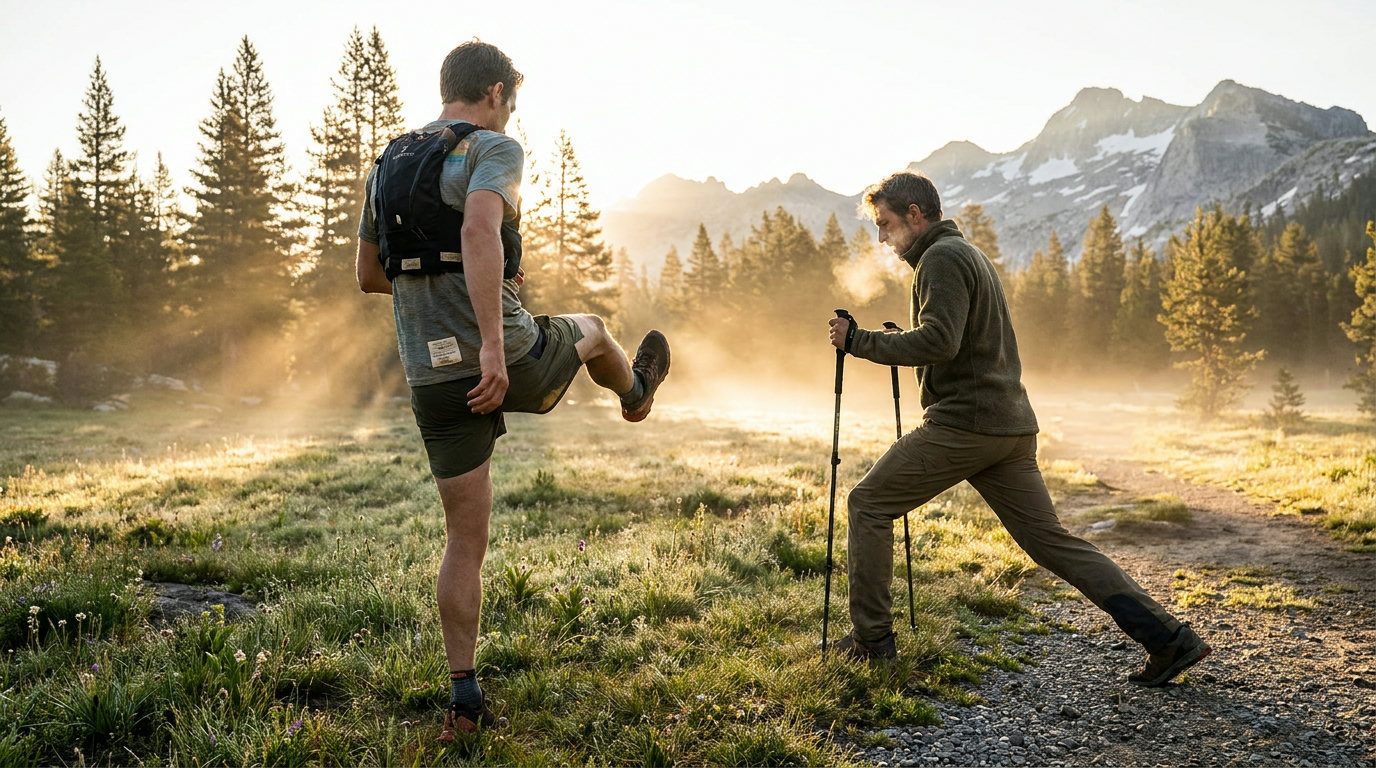
International footballers never skip the warm-up, and you shouldn't either before a hike or trail run. Here's why dynamic warm-ups work, with two ready-to-use routines.
Key points
- 01
A dynamic warm-up clearly lowers your risk of injury. Programmes such as FIFA 11+ are linked to around 30 to 46 per cent fewer injuries.
- 02
Save static stretching for later. Before exercise it can temporarily cut strength and jumping performance by 5 to 10 per cent.
- 03
Five minutes is enough for a hike, 10 minutes for a trail run. You don't need a mat or any equipment at the trailhead.
- 04
The structure never changes: raise your heart rate, mobilise your joints, stretch dynamically, then activate the movements your sport needs.
Before kick-off: what the professionals do
No international footballer walks straight onto the pitch before a World Cup kick-off. First the team works in a circle: easy jogging, lunges, short sprints. This dynamic warm-up protects muscles and joints and sharpens reactions.
The same principle works before a mountain hike or a trail run, just in a shorter version. Cold muscles mean more strains and more trips and falls.
Why those few minutes pay off
- fewer injuries with a professional warm-up
- 30–46 %
- lower risk of ankle injury
- 33 %
- strength lost by stretching statically beforehand
- 5–10 %
- is enough for an effective warm-up
- 5–10 Min
Dynamic, not static: why stretching cold is outdated
For years the rule was: stretch first, then go. Sports medicine has moved on. Holding stretches for a long time can temporarily reduce strength and jumping performance by 5 to 10 per cent. That's the opposite of what you need on a climb.
A dynamic warm-up works better. Controlled, swinging movements raise your heart rate and take your joints through their full range of motion. Professionals do essentially the same, only more intensely.
Four building blocks of a good warm-up
Whether it's a national team, a hike or a trail run, a good warm-up always uses the same building blocks:
- Activate gently: 3 to 5 minutes of easy walking or jogging to raise your pulse and blood flow.
- Mobilise your joints: circle your feet, knees, hips and ankles, and add trunk rotations.
- Stretch dynamically: leg swings and lunges, holding each position only briefly and keeping moving.
- Activate for your sport: light running drills and short accelerations to prepare for impact and changes of pace.
A 5-minute warm-up for hikers
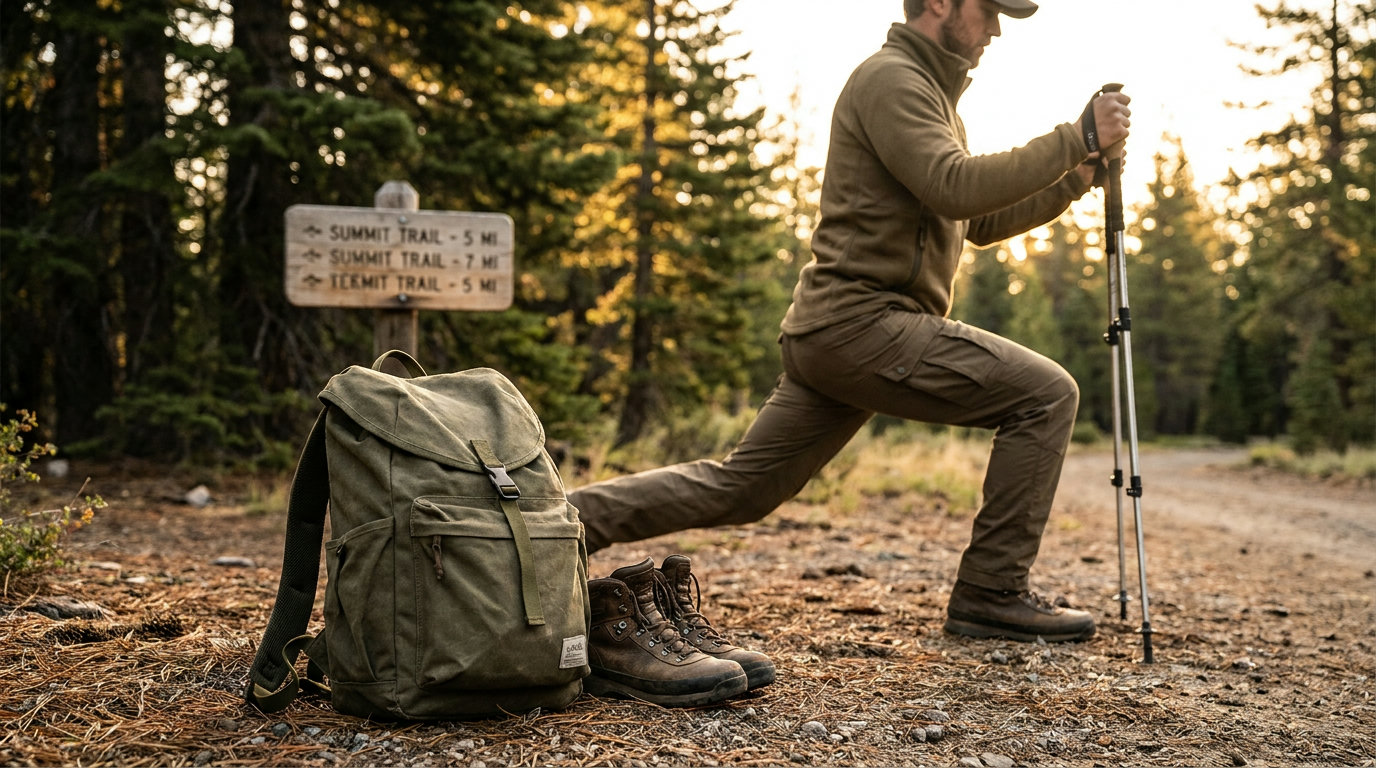
This compact routine needs no mat and no equipment. Do it right at the car park or trailhead, and allow about 5 to 8 minutes.
Arrive and ease in (1–2 min)
Walk briskly on level ground and let your arms swing loosely. If you like, walk backwards for one or two short stretches to wake up your calves and foot muscles.
Mobilise your joints (2–3 min)
Circle your ankles for 10 to 15 seconds per side. Do 10 to 15 half squats, raising your arms forwards and up. Then rotate your upper body loosely left and right while standing, for 30 to 40 seconds.
Dynamic stretches for legs and hips (2–3 min)
Hold on to a tree or trekking pole and swing each leg forwards and back 10 to 15 times. Add 10 to 15 sideways swings per leg for your adductors. Finish with 8 to 10 dynamic forward or side lunges per side.
A 10-minute warm-up for trail runners

Trail running asks more of your reactions, ankles and coordination than road running, so your warm-up can be a little more intense. Plan your pace with our pace calculator and use the heart-rate zones to keep the first kilometres easy.
Easy jog and mobility (3–4 min)
Jog easily for 3 minutes on flat ground, not yet on the steep trail. Circle your shoulders, swing your arms actively and add short trunk rotations.
Dynamic stretches and leg control (3–4 min)
Swing each leg forwards, back and sideways 10 to 15 times. Do 6 to 8 dynamic lunges with a trunk rotation per side. Add 6 to 8 side lunges and side shuffles per side for your adductors and the outside of your legs.
Trail-specific activation (3 min)
On a flat path, do two rounds of 20 to 30 seconds each of high knees and heel flicks. Then do two short, controlled 20-second accelerations up a gentle slope, focusing on quick, soft contact through the forefoot and midfoot.
Which warm-up suits your outing?
- 1
If you're planning a relaxed, easy-going hike
the 5-minute routine with mobility work and leg swings is enough.
- 2
If you're carrying a heavy rucksack or facing long descents
add a short glute and core warm-up.
- 3
If you're running fast on a technical trail
do the full 10 minutes, including accelerations and ankle activation.
- 4
If you run for performance
add neurofunctional exercises such as single-leg stands and skater jumps.
Right for you if …
Hikers and trail runners who want to start injury-free and feeling good.
Probably not for you if …
Anyone who wants to improve mobility after exercise. That's what static stretching after your hike or run is for.
The most common warm-up mistakes
Most mistakes are easy to fix:
- Static stretching before you start reduces strength and reaction speed. Save it for the end of your outing.
- Setting off too fast while still cold: use the first few minutes to ease in, not to race.
- Forgetting your ankles: on the trail, stable feet can make the difference between a twisted ankle and a secure step.
- Keeping the same duration in the cold: add a few minutes on cold days or at altitude.
Frequently asked questions
Should I do static stretches before a hike?
Not as preparation. Holding stretches for a long time temporarily reduces strength and reaction speed. Dynamic movements work better, and static stretching fits best after your outing.
How long should my warm-up be?
About 5 minutes for a normal hike and about 10 minutes for trail running. Add a little more when it's cold or when you plan a high intensity.
Is a warm-up worth it for an easy hike too?
Yes. The first kilometres, steep climbs and descents put extra strain on cold muscles. A few minutes can noticeably reduce strains and trips.
What is FIFA 11+?
A neuromuscular warm-up programme from football, with running, strength and balance exercises. Studies report around 30 to 46 per cent fewer injuries, and the balance work is useful on the trail too.
Do I need any equipment to warm up?
No. A tree, a stick or your trekking pole is all the support you need. Every exercise works at the car park or trailhead.
Tools and topics for training and the trail
Inspiration, knowledge and gear for people who want more from the outdoors.