
Stories
Visor Helmet Meets Magnetic Interchangeable Lens: the uvex horizon V MAG MIPS
In partnership withuvex
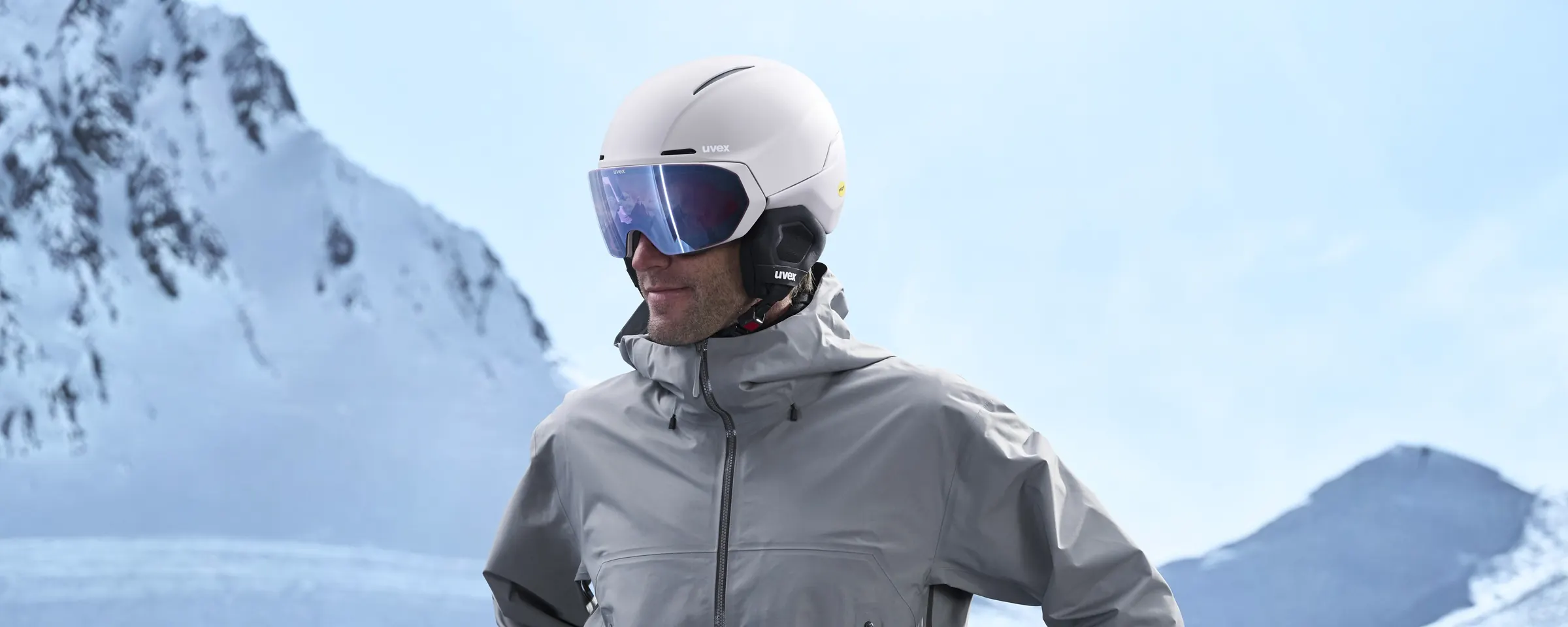
Ski helmet and goggles in one, with a lens that swaps by magnet. What the new uvex horizon family changes about the visor helmet and which model suits you.
Key facts at a glance
- 01
A visor helmet combines ski helmet and goggles: the visor sits flush with the helmet, so there is no gap at the forehead.
- 02
On the MAG models of the new uvex horizon family, the visor lens is held by magnets. According to uvex, it can be changed in seconds, even with gloves on.
- 03
The uvex horizon V MAG MIPS has a self-tinting variomatic visor covering filter categories 1 to 3, plus MIPS and a magnetic Fidlock buckle.
- 04
The uvex horizon CV MAG also has the magnetic interchangeable lens, but with a colorvision contrast visor and no MIPS.
Flat light on the glacier in the morning, sunshine on the piste at midday, clouds rolling in by the afternoon. If you ski with goggles, you know the answer: a second lens in your jacket pocket or self-tinting goggles. With a ski helmet with visor, this used to be harder. The visor is fixed to the helmet. If you wanted a different lens, you had to get out a screwdriver or make do with the one that was built in.
This is exactly where uvex comes in with the new horizon family. On three of the five models, the visor lens is held by magnets. You'll find two of them at SportFits, including the horizon V MAG MIPS.
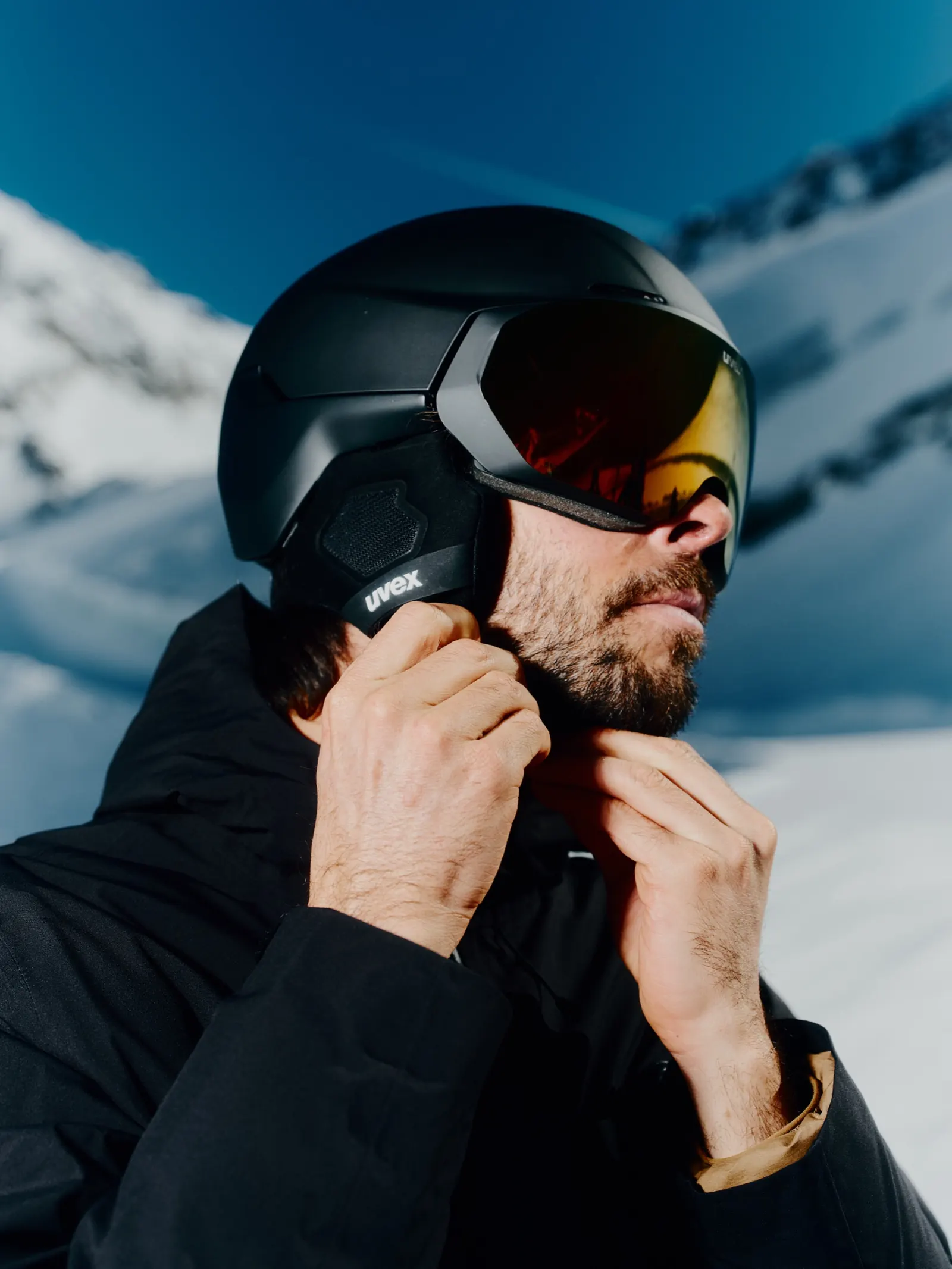
A visor helmet is ski helmet and goggles in one. Instead of separate goggles with a strap, a large lens sits directly on the helmet. On the piste, you notice this in four ways:
- No gap: The visor sits flush with the helmet. The gap at the forehead, where cold wind likes to get in with a helmet and goggles, simply isn't there.
- One item less: You don't have to find goggles that fit your helmet. Helmet on, visor down, off you go.
- With prescription glasses: Many visor helmets have room for glasses underneath. Whether your frames fit is something to check when you try the helmet on.
- On the lift: You flip the visor up instead of pushing your goggles onto your helmet.
Until now, one point spoke in favour of the classic combination: the choice of lens. With good ski goggles, you put in a lighter or darker lens depending on the weather. With a visor helmet, you were usually stuck with the built-in visor.
uvex ski helmets
Already know what you're looking for? Find all uvex ski helmets at SportFits, from visor helmets to helmets with MIPS.
Shop uvex ski helmets ↗On the MAG models, the visor is no longer permanently fixed. It is held to the helmet by magnets. According to uvex, this means it can be swapped in seconds, even with gloves on. The helmet is thus ready for a lens change, just as you know it from ski goggles.
For uvex, this removes one of the last arguments against the visor helmet. When it comes to adapting to light and weather, it is meant to match the flexibility of high-end ski goggles with interchangeable lenses.
How light or dark a lens is, is described by its filter category. It ranges from S0 to S4 and indicates how much visible light the lens lets through. The higher the number, the darker the lens. It says nothing about UV protection.
| Category | Light transmission | Typical conditions |
|---|---|---|
S0 | over 80 % | darkness, floodlights |
S1 | over 43 to 80 % | snowfall, fog, heavy cloud |
S2 | over 18 to 43 % | changing cloud cover |
S3 | over 8 to 18 % | sunshine on the piste |
S4 | over 3 to 8 % | very bright light, e.g. on the glacier |
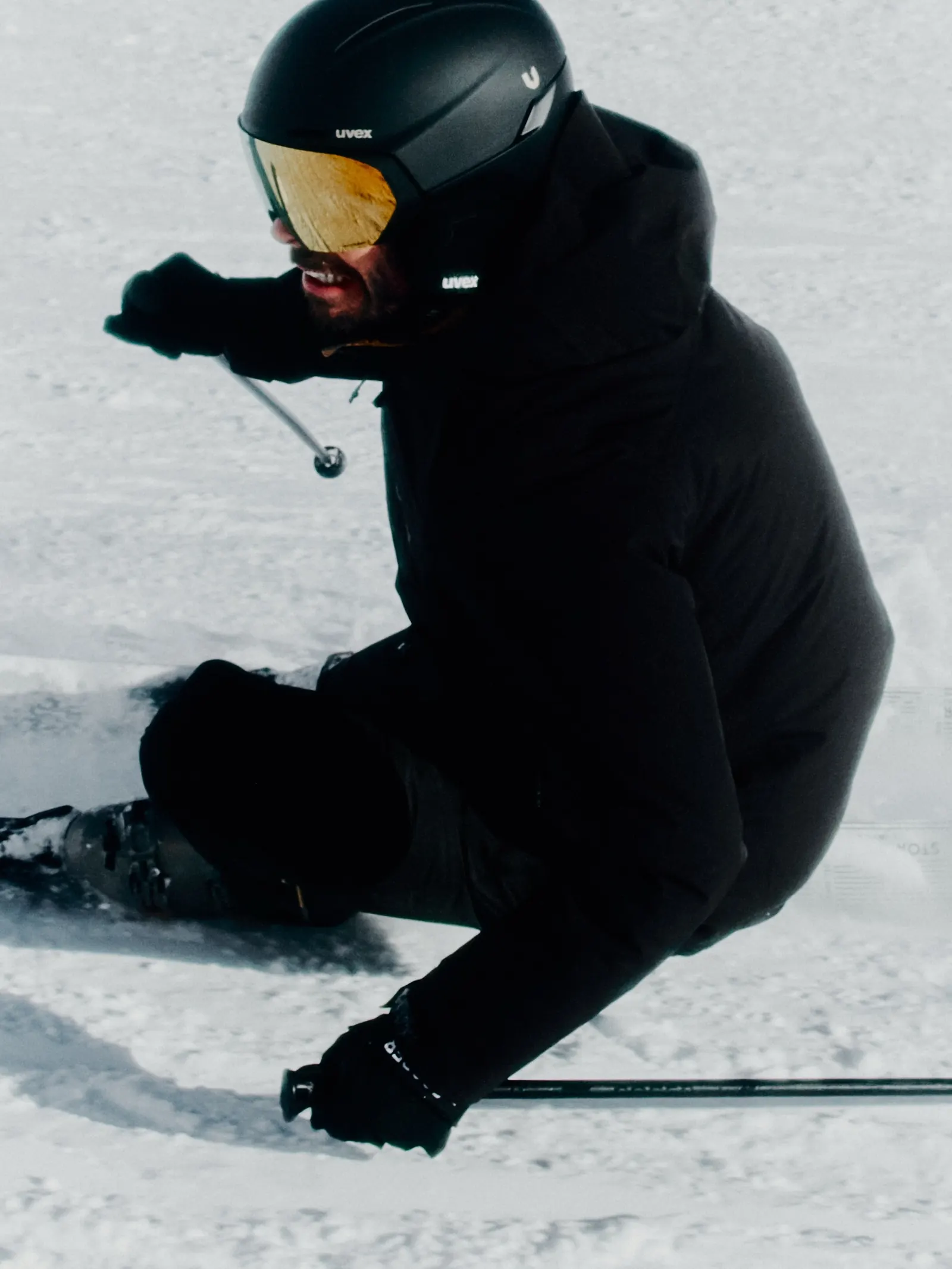
For most ski days in the Alps, you'll be somewhere between S1 and S3. In snowfall and flat light, a light lens helps you see the contours of the piste. When the sun shines on fresh snow, a dark lens protects you from glare. In dense fog, however, no lens can conjure up contrast. Then the only thing that helps is skiing more slowly. Our guide Ski goggles explained goes into more detail on what S0 to S4 mean.
A self-tinting lens takes part of the decision off your hands. Within its range, it adapts to the light by itself. An interchangeable lens gives you the option of fitting a different category on purpose. With the horizon V MAG MIPS, you get both.
The uvex horizon V MAG MIPS is the fully equipped all-rounder of the family. It combines a self-tinting visor with the magnetic interchangeable lens and MIPS.
Self-tinting visor: variomatic with filter categories 1 to 3
The visor is a spherical single lens with uvex variomatic. It tints by itself, covering filter categories 1 to 3. uvex assigns S1 to low light, S2 to changing cloud cover and S3 to sunshine. This covers most days on the piste without having to change lenses.
On top of that come two technologies from uvex's goggle development. vision+ provides a larger field of view. supravision is a coating on the inside that, according to uvex, counteracts fogging.
Protection: hybrid shell and MIPS
The shell is a hybrid construction of an ABS hard shell and a polycarbonate shell over an EPS core. The helmet also features MIPS. The system is designed to reduce the rotational forces that act on the head in an angled impact. What the slip layer can do and where its limits lie is explained in Mips in helmets: what the slip layer can and can't do.
Comfort: fit, ventilation, acoustics
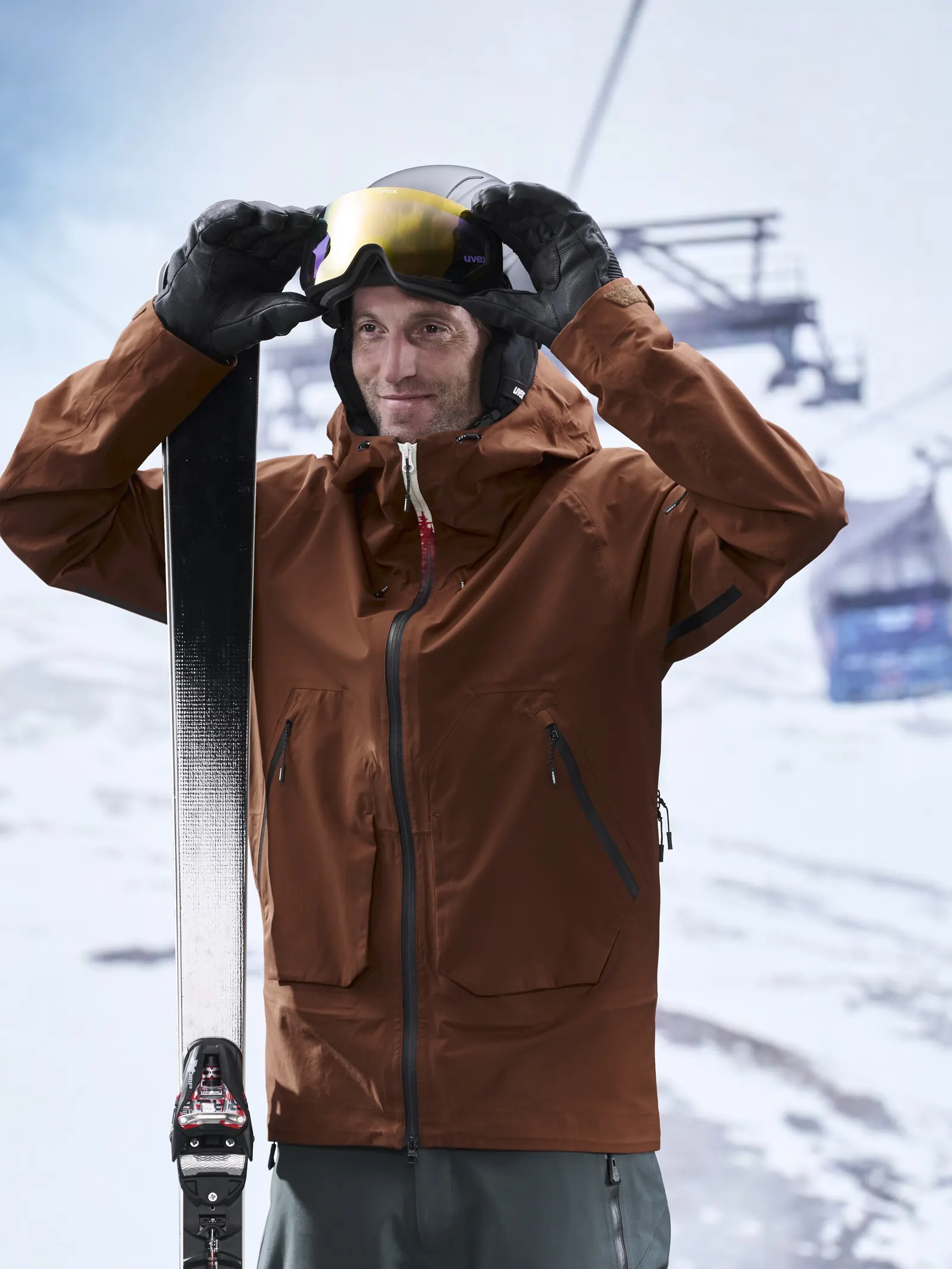
When it comes to comfort, the horizon V MAG MIPS relies on the same strengths as the family's top model, according to uvex:
- uvex 360° IAS fit system: Lets you adjust the fit precisely all the way round. The helmet comes in sizes 51–55, 55–59 and 59–62 centimetres.
- Adjustable ventilation: You open or close the vents depending on temperature and effort.
- hear+ ear pads: They are designed to let ambient sounds through well, so you can hear what's going on around you.
- Magnetic Fidlock buckle: The chin strap closes magnetically and can also be opened with gloves on.
The helmet is available in black matt, white matt and warm grey matt.
The horizon family comprises five visor helmets with a shared design language. According to uvex, it relies on dynamic lines and a slim fit, so the helmet doesn't look bulky despite its integrated visor. The top model is the uvex ultimate horizon MIPS from the "ultimate line", with which uvex celebrates its 100th anniversary. At SportFits, you'll find three more models alongside the V MAG MIPS. All of them have the hybrid construction, the 360° IAS fit system, vision+, supravision and hear+ ear pads. They differ in the visor and in whether MIPS and the magnetic interchangeable lens are on board.
horizon CV MAG: magnetic lens change with contrast visor
The uvex horizon CV MAG is the second model with a magnetic interchangeable lens. Instead of the self-tinting lens, it has a visor with uvex colorvision. According to uvex, this technology is designed to enhance contrast and make colours easier to distinguish. The CV MAG does not have a MIPS system. It is available in black matt, white matt, warm grey matt and warm grey-black matt.
horizon CV and CV MIPS: without magnetic lens change
The uvex horizon CV and the uvex horizon CV MIPS also have the colorvision visor, but no magnetic interchangeable lens. The CV MIPS adds MIPS. Both are a good fit if a fixed contrast visor is enough for you.
| Model | Visor | Magnetic interchangeable lens | MIPS |
|---|---|---|---|
horizon V MAG MIPS | variomatic, self-tinting S1–S3 | yes | yes |
horizon CV MAG | colorvision, contrast | yes | no |
horizon CV MIPS | colorvision, contrast | no | yes |
horizon CV | colorvision, contrast | no | no |
The uvex horizon family in our shop
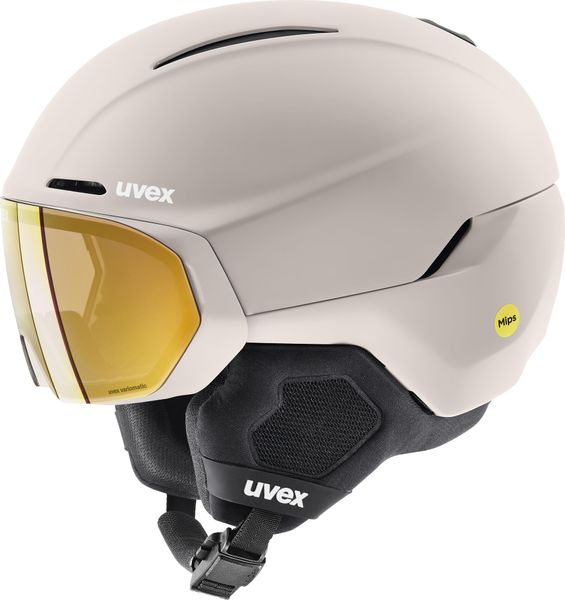 UvexHorizon V MAG MipsSelf-tinting visor S1–S3, magnetic interchangeable lens and MIPSView product →
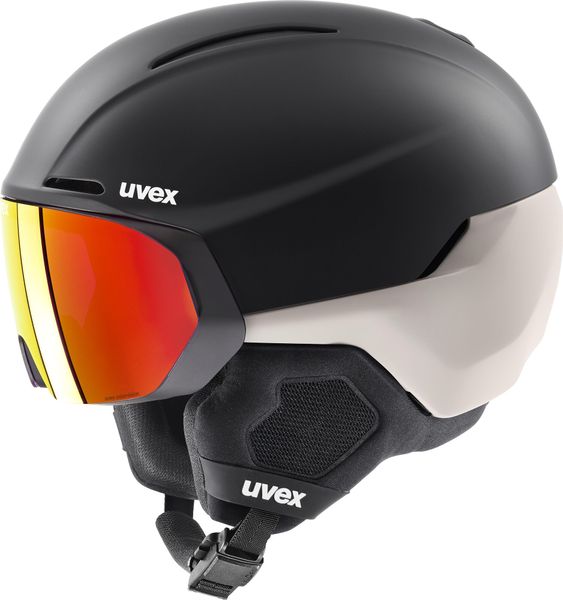 UvexHorizon CV MAGContrast visor with colorvision and magnetic interchangeable lensView product →
 UvexHorizon CV MipsContrast visor with colorvision and MIPSView product →
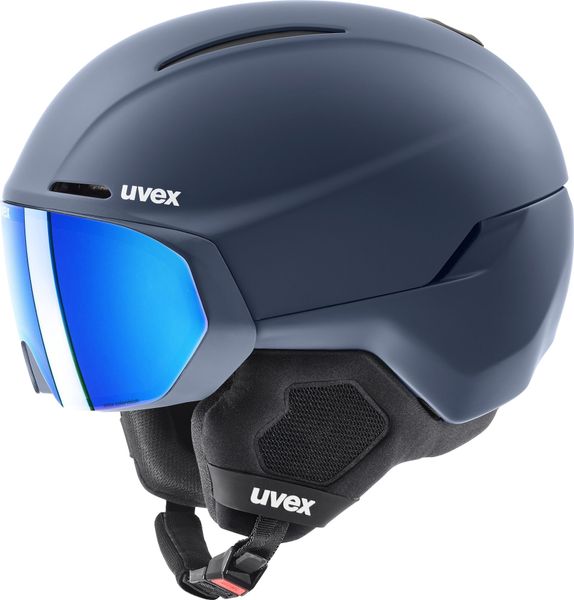 UvexHorizon CVContrast visor with colorvisionView product →
Prices from the shop, checked when this page loaded. The price shown in the shop applies.
Whether a visor helmet or the combination is right for you depends mainly on how and where you ski. Before you decide, though, fit comes first. A visor helmet also has to suit the shape of your face. The visor should sit snugly all round without pressing on your nose. Measure your head circumference about a finger's width above your eyebrows beforehand and choose the size whose range your measurement falls in the middle of. You adjust the rest with the fit system. The helmet fits correctly if it doesn't slip when you shake your head and ends just above your eyebrows at the front. Fasten the chin strap so that one finger still fits underneath. What else to look out for when it comes to shell, ventilation and size is covered in our guide Ski helmets explained. Once you've settled on a size, the overview below will help you choose a model.
Which horizon suits you?
- 1
If the light often changes where you ski
go for the V MAG MIPS, because the variomatic visor adapts by itself.
- 2
If you mainly want contrast and MIPS isn't important to you
the CV MAG with colorvision visor is a good fit.
- 3
If you often ski on glaciers in bright light or in the dark
bear in mind that S1 to S3 replaces neither a glacier lens (S4) nor a clear lens (S0).
If you mostly ski on the piste and the light often changes, the horizon V MAG MIPS is the well-rounded choice. It brings self-tinting, MIPS and the magnetic mount together in one helmet. If you need contrast rather than self-tinting, take a look at the CV MAG. And if your helmet and goggles already work well together, keep them. A visor helmet is worth it if you're buying new anyway or the gap at your forehead bothers you.
uvex at SportFits
Ski helmets, ski goggles and more: the current uvex range at SportFits.
Shop uvex ↗Frequently asked questions
What is a visor helmet?
A visor helmet is a ski helmet with an integrated lens. It replaces the combination of helmet and goggles. The visor sits flush with the helmet and can be flipped up, for example on the lift.
How does the magnetic interchangeable lens on the uvex horizon work?
The visor lens is attached to the helmet by magnets. According to uvex, this means it can be removed and swapped in seconds, even with gloves on. You'll know the principle from ski goggles with interchangeable lenses.
What is the difference between the horizon V MAG MIPS and the CV MAG?
Both have the magnetic interchangeable lens. The V MAG MIPS has a self-tinting variomatic visor covering filter categories 1 to 3 and MIPS. The CV MAG has a colorvision contrast visor and no MIPS.
What does variomatic mean?
variomatic is uvex's self-tinting lens technology. On the horizon V MAG MIPS, the tint ranges from filter category 1 to 3. It does not replace a clear night lens (S0) or a glacier lens (S4).
Can I wear glasses under the visor?
Many visor helmets have room for prescription glasses underneath. Whether your frames fit depends on their size and shape. It's best to try the helmet on with your own glasses.
What does MIPS do in a ski helmet?
MIPS is a layer in the helmet that can move slightly against the shell in an impact. This is designed to reduce the rotational forces that can act on the head in an angled impact.

SportFits editorial team
Digital Marketing Manager at SportFitsAuthor profile →SportFits
outdoors looks good on you