
Buying advice
Understanding ski helmets
What a helmet needs to do. And what you need to try on.
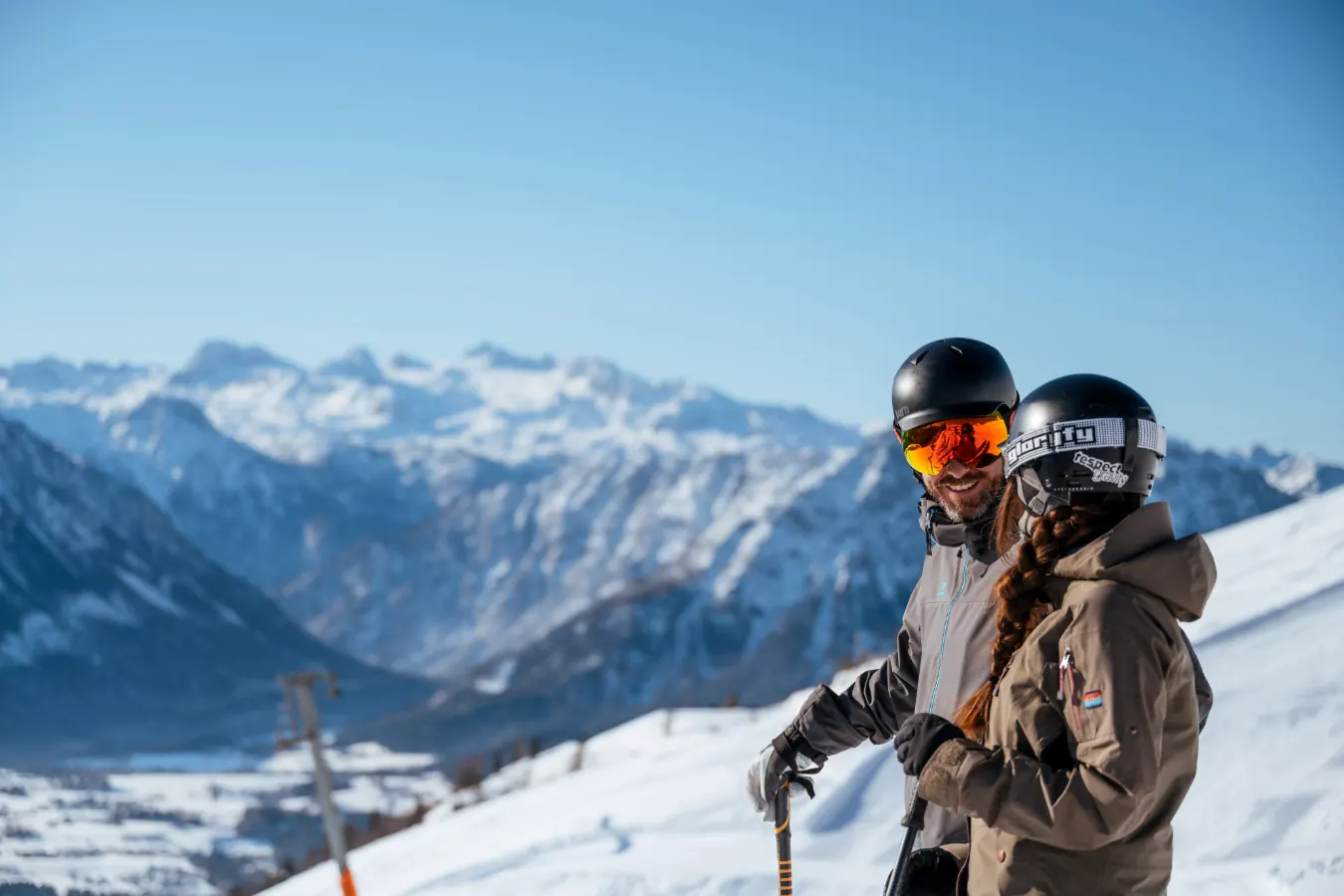 © TVB Ausseerland – Salzkammergut / Karl Steinegger
EN 1077 applies to alpine ski and snowboard helmets. According to DIN, Class A covers more of the head and has higher penetration-resistance requirements than Class B. The specific class is listed for the model when stated.
For ski touring, the manufacturer’s intended use also matters. A mountaineering certification is a separate specification. It does not follow from the name touring helmet or from a ski-touring category.
- Measure your head circumference and compare it with the model’s size chart.
- Try the helmet and ski goggles on together. Both should sit close without creating pressure points.
- Adjust the straps and fit system according to the manufacturer’s instructions.
- Choose children’s helmets based on their current head circumference. A helmet that is too large is not room to grow.
Fixed vents stay open. Adjustable vents let you change the airflow. This can be an important selection criterion for sweaty climbs.
A ventilation system does not guarantee fog-free goggles. When trying them on together, also make sure the helmet and goggles do not block each other’s ventilation paths.
An integrated visor combines the helmet and lens. If you wear prescription glasses, check whether the specific model is suitable and try both on together.
A removable sun peak is not a visor. Optional accessories are only included if the product contents list them.
A weight comparison requires the same size and head circumference. If the weighed size is missing, the figure is not a fair basis for comparing helmets.
Additional systems such as Mips or AMID are feature specifications. Their names do not indicate a ranking of protective performance or make any promise about the consequences of an accident.
Can I go ski touring with any ski helmet?
Check whether the manufacturer describes the specific model as suitable for ski touring. For climbing sections, you also need the appropriate approval and standard. A shop category alone doesn't answer this.
Are all MIPS helmets built the same way?
No. The shell, fit system and ventilation differ. The additional system is a feature; we don't promise any specific effect in an accident as a result.
Does every ski goggle fit every helmet?
You need to check the fit together. A statement about integration with one brand doesn't replace trying on your own goggles.
As of 18 October 2026. Product details from the product pages on sportfits.eu.