
Stories
Save the Duck: Down-free jackets, PLUMTECH and warmth ratings explained
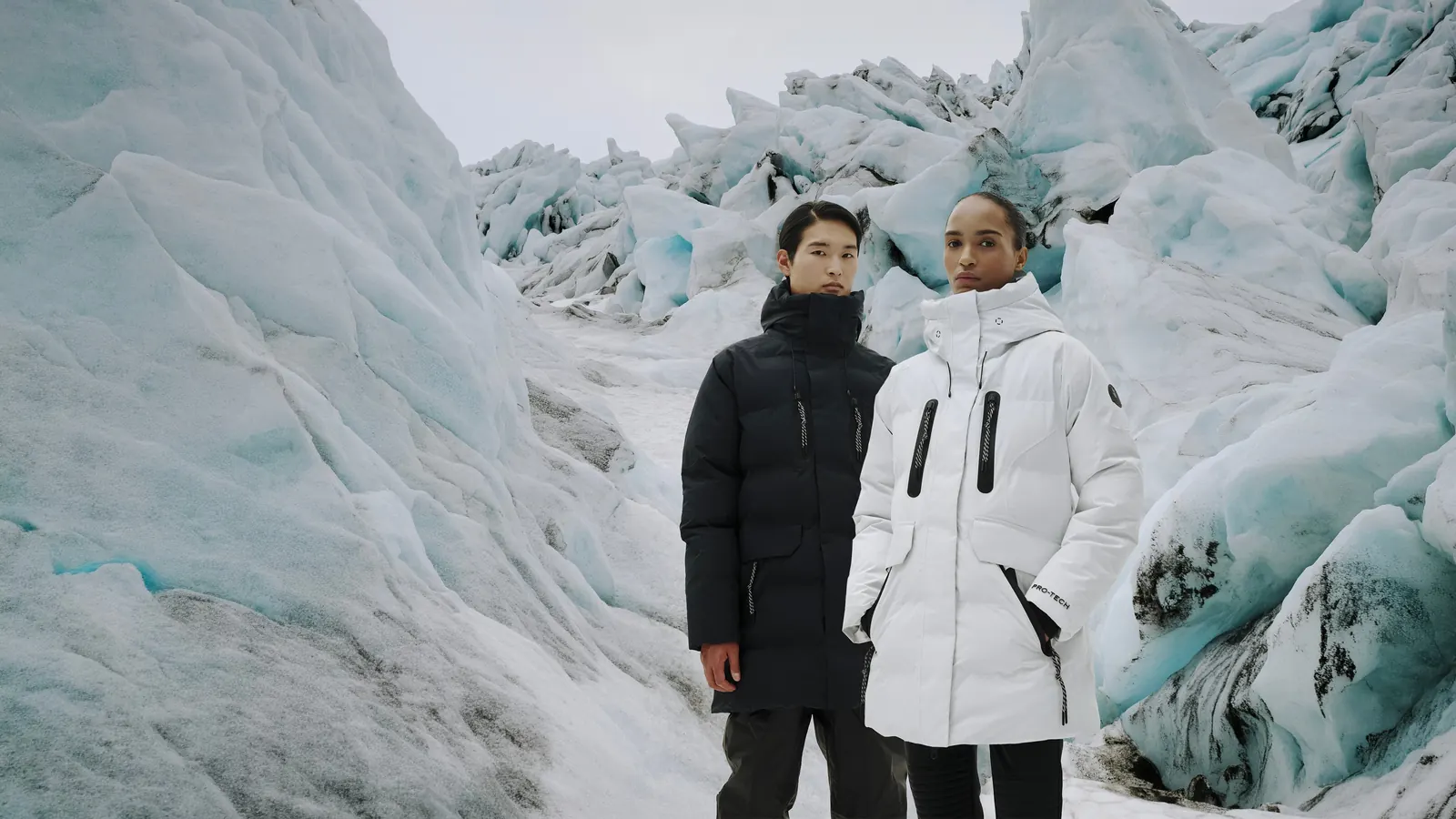
Founded in Milan in 2012, Save the Duck builds 100% animal-free insulated jackets, vests and winter parkas. Learn how PLUMTECH padding works, what fabric codes like GIGA, IRIS, LOVE and SMEG mean, and how to read Italian sizes from 00 to 7.
The essentials at a glance
- 01
Nicolas Bargi launched Save the Duck in Milan in 2012 out of his family's 1914 Italian clothing business Forest. Every jacket, vest and coat is 100% free from animal materials including down, feathers, leather, fur, wool and silk.
- 02
Thermal insulation comes from synthetic PLUMTECH® and Recycled PLUMTECH® polyester padding. Engineered in fluffy fibre clusters, it traps body heat, resists clumping in sleet or rain and dries quickly after washing.
- 03
A four-letter fabric code inside the style number reveals how each piece performs: GIGA and IRIS mark ultralight 20-denier packable nylon, LOVE and MIRO add stretch or heavier daily weather protection, while SMEG, MEGA and Pro-Tech cover deep-winter coats and seam-taped parkas.
- 04
Women's styles use numeric Italian codes from 00 (XXS / EU 32) to 7 (XXL / EU 52). Because Italian cuts sit close to the torso, sizing up makes sense whenever you sit between two measurements.
At first glance, a slim quilted puffer with a bright orange zipper pull and a palm-sized stuff sack looks just like a classic Italian goose-down jacket. Flip open the inner label and not a single feather sits inside the baffles. Since 2012, Save the Duck has built its entire outerwear lineup around synthetic fibre clusters that keep insulating even when a cold drizzle catches you at the station.
Browse the catalogue, though, and you quickly run into dozens of first names such as Daisy, Alexis, Biddy, Donald, Juncus and Wilson paired with cryptic four-letter tags like GIGA, IRIS, LOVE, SMEG and Pro-Tech. Once you know how the four-step warmth scale connects to those shell fabrics, picking between a packable mid-season puffer and a sub-zero rain parka takes minutes.
The textile heritage behind the whistling-duck badge stretches back over a century. In 1914, Foresto Bargi established a garment company called Forest in Pisa, Italy. Nearly a hundred years later, third-generation entrepreneur Nicolas Bargi launched Save the Duck in Milan in 2012 under Forest S.r.l. (now Save The Duck S.p.A.) with a strict brief: build technical and urban outerwear using 0% animal-derived components. According to Save The Duck, its collections exclude not only duck and goose down, but also leather, fur, wool, silk, horn and mother-of-pearl.
Every insulated style relies on PLUMTECH®, a 100% polyester staple-fibre wadding, alongside Recycled PLUMTECH®. According to Save The Duck, Recycled PLUMTECH® is made from 100% recycled polyester derived from plastic bottles and holds both Global Recycled Standard (GRS) and bluesign® certifications. Instead of lying in stiff flat sheets, the fibres are spun into lofty clusters that trap pockets of warm air while letting moisture vapour escape. In 2019, B Lab certified Save The Duck S.p.A. as Italy's first fashion B Corporation.
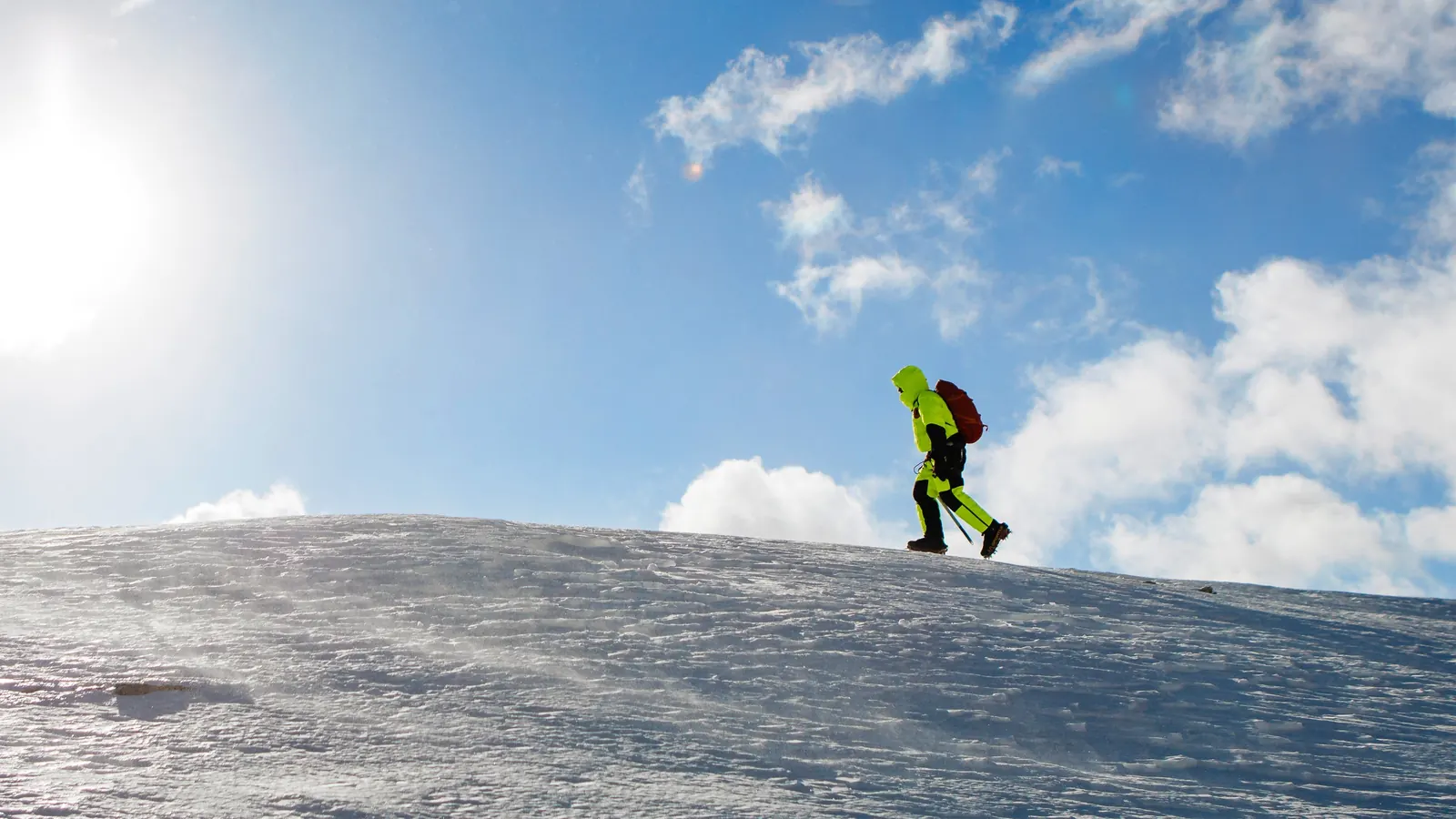
High-altitude mountaineering proved how far synthetic loft can go. Nepalese climber Mingma Tenzi Sherpa reached the summits of all 14 eight-thousand-metre peaks wearing a custom animal-free expedition suit developed by the Milanese brand. According to Save The Duck, construction details from that Himalayan suit now feed directly into its cold-weather Pro-Tech and Record Jacket lines.
Inside every jacket sits a printed Warmth Index dividing thermal output into four clear temperature brackets:
- Mild / Light (+5 °C to +15 °C): Lightly padded transitional puffers, vests and midlayers for spring, autumn and cool summer evenings.
- Cold / Warm (-5 °C to +10 °C): Everyday quilted jackets suited to crisp autumn commutes and active mild-winter wear.
- Very Cold / Very Warm (-10 °C to +5 °C): Thicker winter jackets and coats pairing higher PLUMTECH® loft with denser wind-blocking shells.
- Extreme / Extremely Warm (-20 °C to -5 °C): Heavy long coats and weather-sealed parkas built for sustained sub-zero frost.
Just as helpful is the SKU structure. In a code such as D33620W-GIGA, the prefix D3 denotes a hip-length insulated jacket (D4 marks coats, D8 vests, P weatherproof parkas and J junior styles), while the four letters identify the exact outer shell fabric.
Ultralight packable puffers and vests (GIGA and IRIS)
Save the Duck made its name with featherweight quilted jackets woven from 20-denier high-density nylon (20D × 20D). Tightly woven polyamide yarns block wind, shed light showers, dry fast and stuff neatly into an included travel pouch. Narrow horizontal baffles, Lycra-bound cuffs and hems, and signature orange zipper pulls define the look.
Comparing two bestselling women's hoodies shows how the naming works in practice: the Save the Duck Daisy (D33620W-GIGA) and the Save the Duck Alexis (D33620W-IRIS) share the exact same tailored pattern. GIGA brings a lively glossy sheen, whereas IRIS swaps in a understated semi-matte nylon weave with an anti-static finish. If you want extra thigh coverage without heavy bulk, the Save the Duck Lysa stretches that same lightweight IRIS nylon into a knee-grazing coat.
On the men's side, the hooded Save the Duck Donald (D30650M-GIGA) serves as the go-to three-season packable jacket. Kids get direct equivalents in the boys' Save the Duck Dony and the girls' Save the Duck Iris. For core warmth under a shell or behind the wheel, quilted gilets such as the women's Save the Duck Cassandra and kids' Save the Duck Cupid keep your arms unrestricted.
Everyday stretch and matte shells (LOVE, MIRO and JADE)
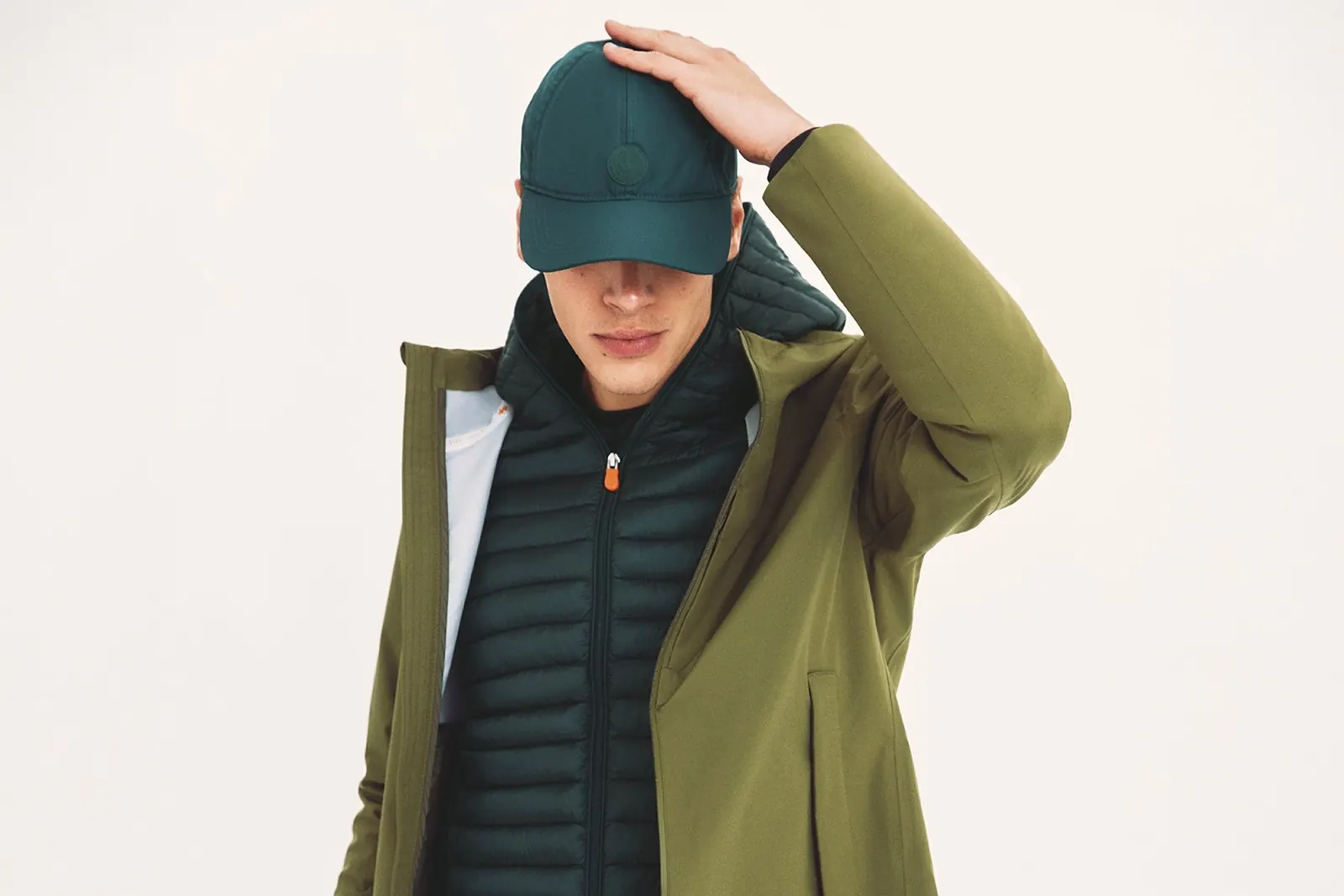
When ultralight 20D nylon feels too delicate for daily commuter trains or schoolyards, step up to the denser urban fabrics. LOVE leads this category with a soft multi-layer construction (frequently using 100% recycled nylon or stretch polyester blends according to Save The Duck) that blocks wind and wet snow noticeably better than featherweight puffers. Standout women's picks include the Save the Duck Biddy, the Save the Duck Cosmary and the long Save the Duck Bella winter coat.
Men find that same weather-ready LOVE build in the Save the Duck Edgard jacket and the Save the Duck GIL vest, alongside the matte polyester MIRO shell on the Save the Duck Juncus. Smooth JADE fabrics shape contemporary silhouettes like the women's Save the Duck MEI. Junior winter staples rely heavily on durable LOVE shells too, led by the boys' Save the Duck Artie and the girls' Save the Duck Millie and Save the Duck Gracie coats.
Wet-winter parkas and deep-cold coats (SMEG, MATT, MEGA and Pro-Tech)
Stitched quilt lines always leave tiny needle perforations where persistent rain can eventually seep through. For sleet, slush and wet coastal winters, Save the Duck builds smooth-faced parkas without exposed baffle stitching:
- SMEG and MATT: Weather-resistant parka shells rated by the brand at 5,000 mm hydrostatic head and 5,000 g/m²/24 h breathability with taped seams. The men's Save the Duck Wilson (
P45320M-SMEG) pairs a snap-button storm placket and rib-knit inner cuffs with a hood that zips neatly into a high stand collar. Kids get tough winter rain protection in the Save the Duck VAL (J43065B-MATT) parka, while the women's Save the Duck Arena uses heat-sealed channels to lock out wind and rain. - MEGA: High-loft winter coats such as the women's Save the Duck Taylor (
D43110W-MEGA), packing generous PLUMTECH® insulation for dry, biting frost. - Pro-Tech and GORE-TEX: Designed with Satoshi Yamane, Pro-Tech sits at the technical summit of the range. According to Save The Duck, its Pro-Tech® Engineered by Toray recycled polyester shell combines fully taped seams, water-resistant zips and a PFC-free DWR finish with a 20,000 mm waterproof rating and 10,000 g/m²/24 h breathability. Selected capsule parkas also integrate two-layer GORE-TEX membranes.
Save the Duck shell families compared
| Feature | GIGA / IRIS (Ultralight) | LOVE / MIRO (Daily & Stretch)Daily all-rounder | SMEG / MATT / Pro-Tech (Parka) |
|---|---|---|---|
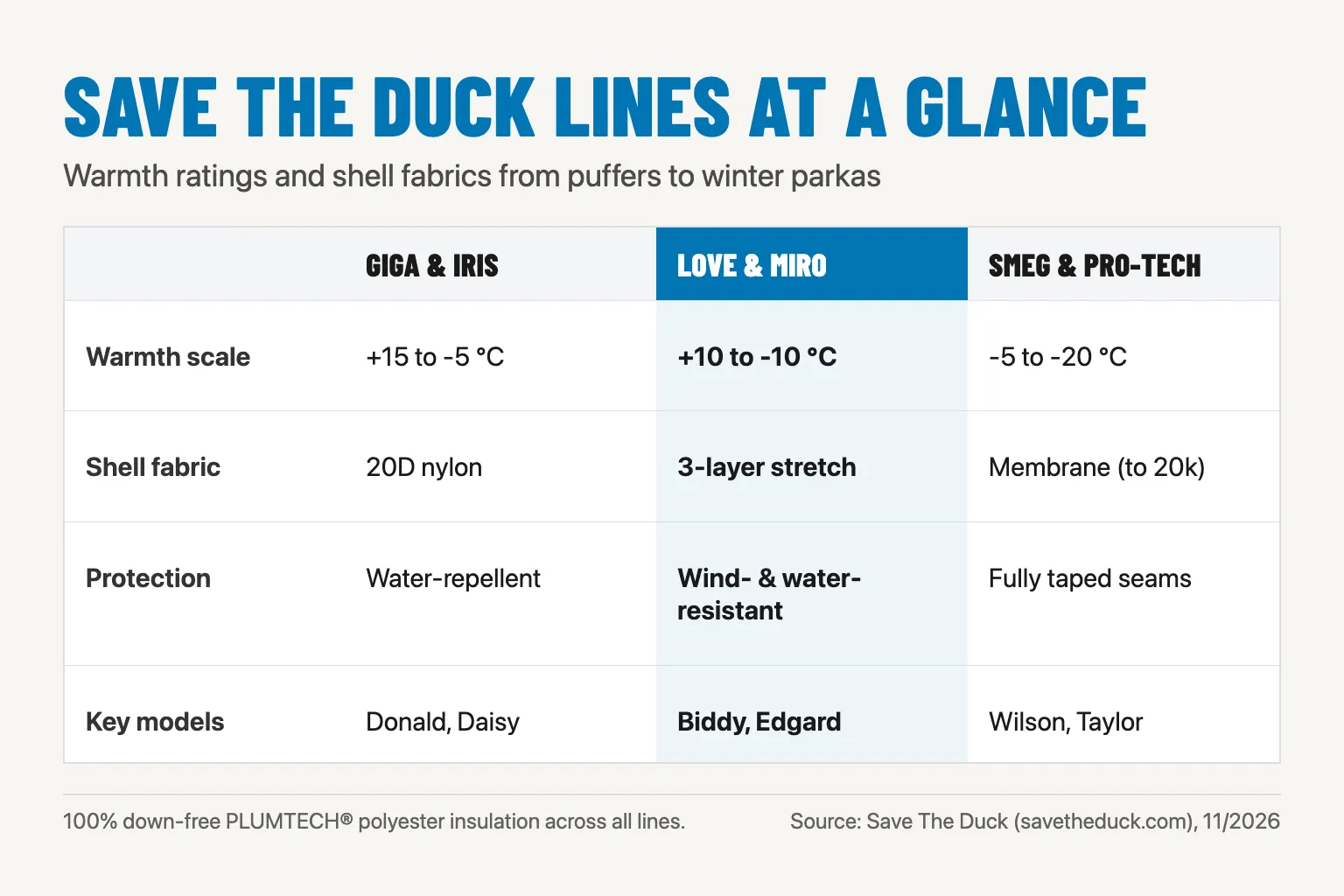
Typical warmth tier | Mild to Cold (+15 to -5 °C) | Cold to Very Cold (+10 to -10 °C) | Very Cold to Extreme (-5 to -20 °C) |
Outer fabric | 20D high-density nylon (glossy or matte) | Multi-layer softshell or matte polyester | Smooth membrane shell, up to Toray 20k |
Seam construction | Stitched horizontal baffles | Quilted or low-seam construction | Smooth exterior with taped seams |
Weight & packability | Featherlight, packs into pouch | Medium weight, holds structured shape | Higher volume, strongest storm protection |
Six core Save the Duck picks from our range
From the weather-ready Biddy jacket and 20D icons to men's and junior bestsellers
 Save the DuckBiddyInsulated women's LOVE jacket in recycled nylon with PLUMTECH padding for cold daily commutes.View product →
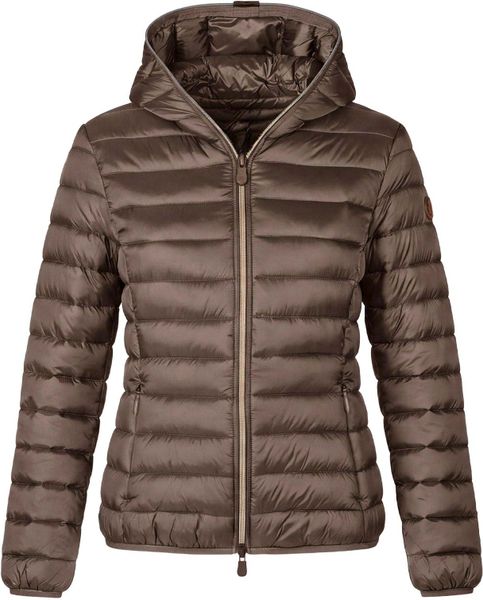 Save the DuckAlexisLightweight women's hooded puffer in semi-matte 20D IRIS nylon, wind-repellent and packable.View product →
- Save the DuckLysaLightweight women's quilted coat with hood and two-way zip for extended thigh coverage.View product →
 Save the DuckJuncusMen's hooded quilted jacket in matte MIRO fabric with Lycra-bound cuffs and breathable padding.View product →
 Save the DuckGILDown-free men's LOVE insulated vest built for transitional weather and smart layering.View product →
 Save the DuckArtieDurable boys' hooded winter jacket with PLUMTECH insulation for school runs and outdoor play.View product →
Prices from the shop, checked when this page loaded. The price shown in the shop applies.
PLUMTECH® shines brightest in damp, freezing weather around 0 °C. Where natural down clumps when wet and takes hours of careful tumbling to regain loft, synthetic polyester fibres keep trapping warm air even in sleet and dry overnight on a coat hanger. Home washing at 30 °C also spares you specialist down-cleaning routines.
Two physical boundaries still apply. First, if you count every gram on technical alpine traverses, top-tier 800+ fill-power goose down still compresses smaller for the same warmth than any synthetic wadding on the market. Second, ultralight 20D puffers like Donald, Daisy and Alexis carry a water-repellent finish for light showers, not waterproof seam tape. Half an hour of heavy rain on a bike commute will eventually push moisture through stitched quilt lines, so wet-weather riders are better served by a taped parka like Wilson or a hardshell layered on top.
Matching the right Save the Duck line to your routine
- 1
If you want a packable jacket with a stuff sack for travel, mild winters or layering under a shell
choose glossy GIGA (Daisy, Donald) or semi-matte IRIS (Alexis).
- 2
If you want tougher daily winter protection for work commutes or school runs
step up to LOVE or MIRO styles such as Biddy, Edgard, Juncus or Artie.
- 3
If you spend long stretches outdoors in sleet, wet snow and biting wind
pick a smooth seam-taped parka (SMEG, MATT or Pro-Tech, such as Wilson or VAL) rather than stitched baffles.
- 4
If you sit between two sizes or layer chunky knitwear underneath
size up one step to accommodate the close-fitting Italian cut.
Right for you if …
Commuters, travellers and families looking for easy-care, moisture-resilient, 100% animal-free insulated outerwear with clean Italian tailoring
Probably not for you if …
Gram-counting alpine minimalists chasing maximum compressibility or heavy-rain cyclists wearing stitched 20D puffers without a shell
Women's Save the Duck labels use numeric Italian brand sizes from 00 to 7 rather than standard S/M/L letters alone. The conversion follows a consistent ladder: 00 equals XXS (EU 32, bust 81 to 84 cm), 0 is XS (EU 34), 1 is S (EU 36), 2 is M (EU 38), 3 is M/L (EU 40), 4 is L (EU 42), 5 is L/XL (EU 44/46), 6 is XL (EU 48/50) and 7 is XXL (EU 52). Men's jackets run in international sizes from XS to 4XL (chest 84 to 136 cm), while junior styles follow age brackets from 2 (height 92 cm) up to 14 (height 164 cm).
Keep Italian tailoring in mind when choosing your number. Core quilted puffers such as Daisy, Alexis and Donald follow a trim silhouette across the shoulders and chest; your regular size fits neatly over a t-shirt or thin base layer, while heavy winter knitwear calls for one size up. On knee-length coats like Lysa, Bella or Taylor, let your hip measurement break any tie so the two-way zip sits flat when seated. Every genuine garment also carries a 12-digit Certilogo® code and QR tag stitched inside for instant authenticity checks.
Caring for PLUMTECH® at home is straightforward provided you keep heat low:
- Empty all pockets, close every zip and snap button, and turn the jacket inside out; Save The Duck also recommends using a microfibre laundry bag to protect fine nylon shells.
- Machine-wash cold on a gentle cycle at maximum 30 °C using a small dose of mild liquid detergent. Never use fabric softener, bleach or dry cleaning, and never wring the wet garment.
- According to Save The Duck, placing 2 or 3 clean tennis balls in the drum helps keep PLUMTECH® padding evenly distributed.
- Dry flat in the shade away from direct radiators. Only use a tumble dryer on a low-to-medium cycle (around 30 minutes to reactivate a water-repellent DWR finish) if the stitched care label inside your weatherproof parka explicitly permits it.
Explore all Save the Duck jackets, vests and parkas
From packable 20D GIGA and IRIS puffers to weather-sealed LOVE and SMEG winter coats for women, men and kids.
Shop Save the Duck ↗Frequently asked questions
Are all Save the Duck jackets completely free from down and animal materials?
Yes. Every Save the Duck collection since 2012 has been 100% animal-free. According to the brand, its garments contain zero duck or goose down, leather, fur, wool, silk, horn or mother-of-pearl, relying instead on synthetic PLUMTECH® and Recycled PLUMTECH® polyester insulation.
How warm are Save the Duck jackets in sub-zero winter weather?
Warmth depends on the printed four-tier Warmth Index inside each jacket. Lightweight 20D puffers in the GIGA and IRIS lines suit mild-to-cool conditions (+15 °C down to -5 °C) or layering under a shell. Thicker LOVE, MIRO and MEGA coats alongside insulated parkas (SMEG, MATT, Pro-Tech) cover Very Cold (-10 °C) down to Extreme (-20 °C) winter frost.
What do Save the Duck women's sizes 0, 1, 2, 3 and 4 mean?
They represent the brand's numeric sizing scale: 00 equals XXS (EU 32), 0 is XS (EU 34), 1 is S (EU 36), 2 is M (EU 38), 3 is M/L (EU 40), 4 is L (EU 42), 5 is L/XL (EU 44/46), 6 is XL (EU 48/50) and 7 is XXL (EU 52). Because Italian cuts run trim, choose the larger size if you fall between two brackets.
What is the difference between the Save the Duck Daisy and Alexis jackets?
Both women's jackets share the exact same hooded pattern (D33620W), PLUMTECH® padding and Lycra-bound cuffs. The difference lies in the 20-denier nylon shell: Daisy uses glossy GIGA nylon, while Alexis uses semi-matte IRIS fabric for a more understated finish.
Can I wash and tumble-dry a Save the Duck jacket at home?
Machine-washing is easy at maximum 30 °C on a gentle cycle with the jacket turned inside out, zippers closed, mild liquid detergent and no fabric softener. Standard quilted puffers should air-dry flat in the shade; only use a low-heat dryer cycle if your waterproof parka's care tag explicitly allows it to refresh the DWR finish.
Sources (6)
- Save The Duck: We Respect Animals & PLUMTECH padding ↗
- Save The Duck: Pro-Tech collection & Toray shell specs ↗
- Save The Duck: Record Jacket & 14 Peaks expedition ↗
- Save The Duck: Official Care & Wash instructions ↗
- Save The Duck: Official Size Chart Guide ↗
- B Lab Global: Save The Duck S.p.A. B Corp profile ↗

SportFits editorial team
Marketing & Sales Manager at SportFitsNiklas is Marketing & Sales Manager at SportFits and studied applied sports science in Regensburg. In the magazine he writes about training science, fitness and longevity, putting trends into scientific context instead of simply celebrating them. He also looks at what really matters in outdoor gear: honest facts instead of empty advertising language.
Author profile →SportFits
outdoors looks good on you