
Buying Guides
MIPS: how the helmet technology works
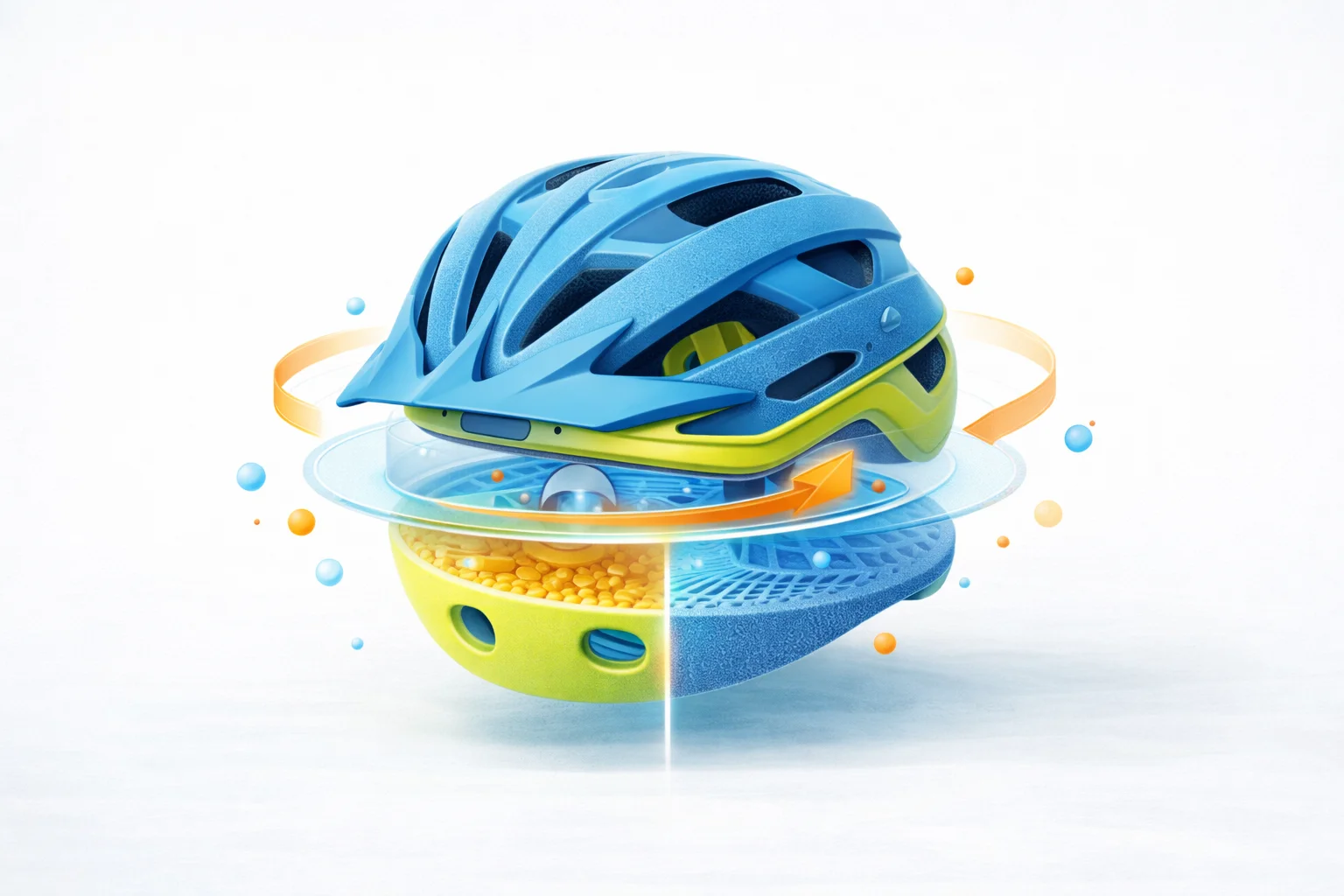
MIPS is more than a yellow logo inside your helmet. The system reduces rotational forces in angled impacts. Here is how the technology works.
Key points at a glance
- 01
MIPS is a movable inner layer, not a separate helmet. It reduces rotational forces in angled falls
- 02
The system weighs just 20–45 grams and you barely notice it when wearing the helmet
- 03
More than 150 brands use MIPS, in bike, ski and climbing helmets
- 04
Fit matters more than technology: a perfectly fitting helmet without MIPS protects better than a badly fitting one with MIPS
- 05
The extra cost pays off most in high-risk sports where falls are more likely
A helmet protects your head. That much is obvious. Yet most falls hit a helmet at an angle rather than head-on. This is exactly where MIPS comes in: the Multi-Directional Impact Protection System is an extra protective layer that diverts rotational forces away from your brain.
What is MIPS?
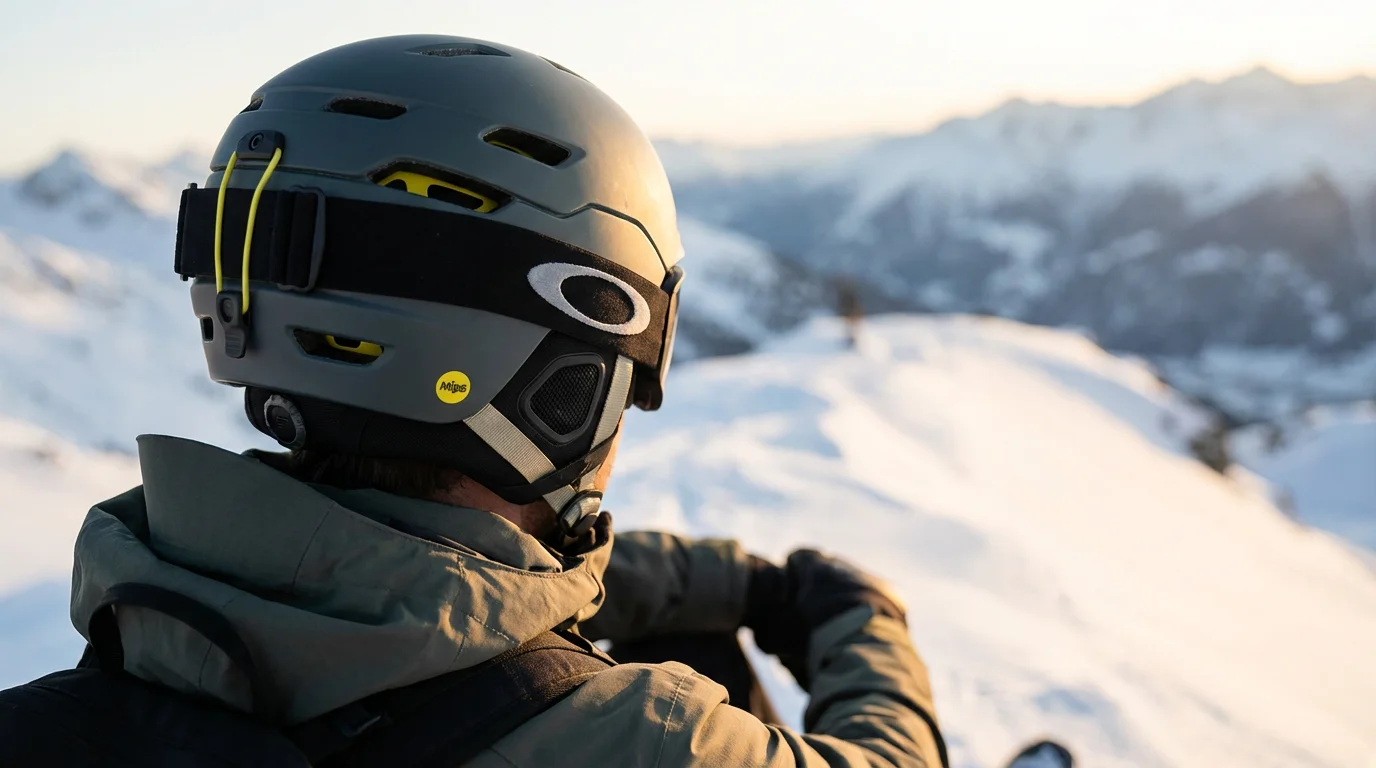
MIPS stands for Multi-Directional Impact Protection System, a safety system developed since the mid-1990s at KTH Royal Institute of Technology in Stockholm and the Karolinska Institute. It is a thin, movable layer between the padding and the outer shell. You can spot a MIPS helmet by the yellow logo on the inside or outside. MIPS adds to a helmet tested to safety standards. It does not replace the helmet's normal protective function.
How does MIPS work?
Inside the helmet sits a low-friction layer that can move 10–15 millimetres relative to your head in an angled impact. This sliding movement spreads rotational energy over a larger area of the helmet material before the full force reaches your head. The principle copies your head's own protective system: the meninges and cerebrospinal fluid also allow a tiny amount of movement between skull and brain.

What MIPS actually does
Angled and twisting movements can stretch sensitive brain tissue and cause shear stress. These are linked to serious injuries such as diffuse axonal injury or subdural haematomas. MIPS reduces the rotational movement passed on to the brain in an angled impact. In lab tests, helmets with rotational protection show lower loads than conventional models.
MIPS vs conventional helmets: the differences
| Feature | Conventional helmet | MIPS helmet |
|---|---|---|
Protection in frontal impacts | Yes (EPS foam) | Yes (EPS foam) |
Protection against rotational forces | Limited | Additional damping |
Inside the helmet | Padding + outer shell |
|
Extra weight | – | 20–45 grams |
Noticeable when worn | – | Barely noticeable |
Price | Base price | Slight premium |
Standards | CE tested | CE tested + MIPS |
Which types of helmet use MIPS?
MIPS is a licensed system, now built in by more than 150 partner brands. The range goes from city bike helmets to ski and snowboard helmets, and on to climbing and riding helmets. Many ranges come in both a standard and a MIPS version, which you can recognise by "MIPS" in the model name.
City, MTB, road bike, e-bike Cycling
Brands including Giro, POC, ABUS, Smith, Bontrager, Sweet Protection and MET offer MIPS versions across almost every price range.
Piste, park, freeride Ski & snow
uvex, POC, Sweet Protection and Giro increasingly use MIPS in ski helmets, especially in the mid-range and premium price brackets.
Rock, via ferrata, ice Climbing
Climbing helmets with MIPS give extra protection when you hit rock from the side. Petzl, Black Diamond and Mammut offer suitable models.
Riding, motocross Riding & motorcycling
Riding and motorbike helmets also benefit from rotational protection. Here, MIPS models are mostly found in the premium segment.
Who benefits from MIPS?
MIPS makes most sense in sports with a higher risk of falling and typical angled impacts. The faster you go and the less predictable the terrain, the more extra rotational damping matters. Mountain biking, road cycling in traffic, off-piste skiing, climbing on rock: anywhere a fall may hit at an angle rather than straight on.
What speaks for it
Shown to reduce rotational forces in angled falls
Only 20–45 grams of extra weight, barely noticeable
Available from more than 150 brands and in every helmet category
Easy to identify by the yellow MIPS logo
MIPS helmets also meet all the usual safety standards
What to weigh up
Slightly more expensive than standard versions
No guarantee of protection: fit is still crucial
Mainly protects in angled impacts, not purely frontal ones
Rival systems such as SPIN and WaveCel take similar approaches
Ski helmets with MIPS technology at SportFits
Find the right MIPS helmet for the piste, the backcountry or speed.
Shop MIPS ski helmets ↗Bike helmets with MIPS technology at SportFits
Find the right MIPS helmet for downhill, road rides or getting around town.
Shop MIPS bike helmets ↗Frequently asked questions about MIPS technology
Frequently asked questions
Is a MIPS helmet safer than a helmet without MIPS?
In tests, MIPS helmets show lower rotational loads on brain models than identical models without MIPS. In typical angled falls, MIPS adds a safety benefit, as long as the helmet fits properly.
How can I tell whether a helmet has MIPS?
Look for the yellow MIPS logo on the outside or inside of the helmet. MIPS models also usually have "MIPS" in their name. Inside, you can see a thin plastic layer.
Does MIPS make a helmet heavier or less comfortable?
The system weighs just 20–45 grams and you barely notice it. Modern MIPS inserts are so thin that neither ventilation nor comfort suffers.
Is MIPS worth the extra cost?
If you regularly ride or ski in higher-risk settings such as road traffic, trails, bike parks or the piste, you benefit most. The MIPS version usually costs only a little more than the standard model, so compare prices in the shop.
Can I retrofit MIPS to my helmet?
No. The manufacturer builds MIPS directly into the helmet, and it cannot be retrofitted. When you buy a new helmet, look for the MIPS version of the model you want.
Are there alternatives to MIPS?
Yes. Systems such as POC SPIN, Bontrager WaveCel and Leatt 360° Turbine take similar approaches to reducing rotational motion. MIPS is still the most widely used system and is offered by the most brands.
Conclusion: is MIPS worth it?
MIPS won't turn a poor helmet into a good one. It makes a good helmet better. If you wear a helmet regularly, you benefit from the extra layer of protection against rotational forces. The small extra cost and barely noticeable weight are good reasons to look out for the MIPS version next time you buy. One thing still comes first: the helmet has to fit. Size and fit first, then technology.
Inspiration, knowledge and gear for people who want more from the outdoors.