
Buying Guides
From road bike to gravel: what changes and what you need
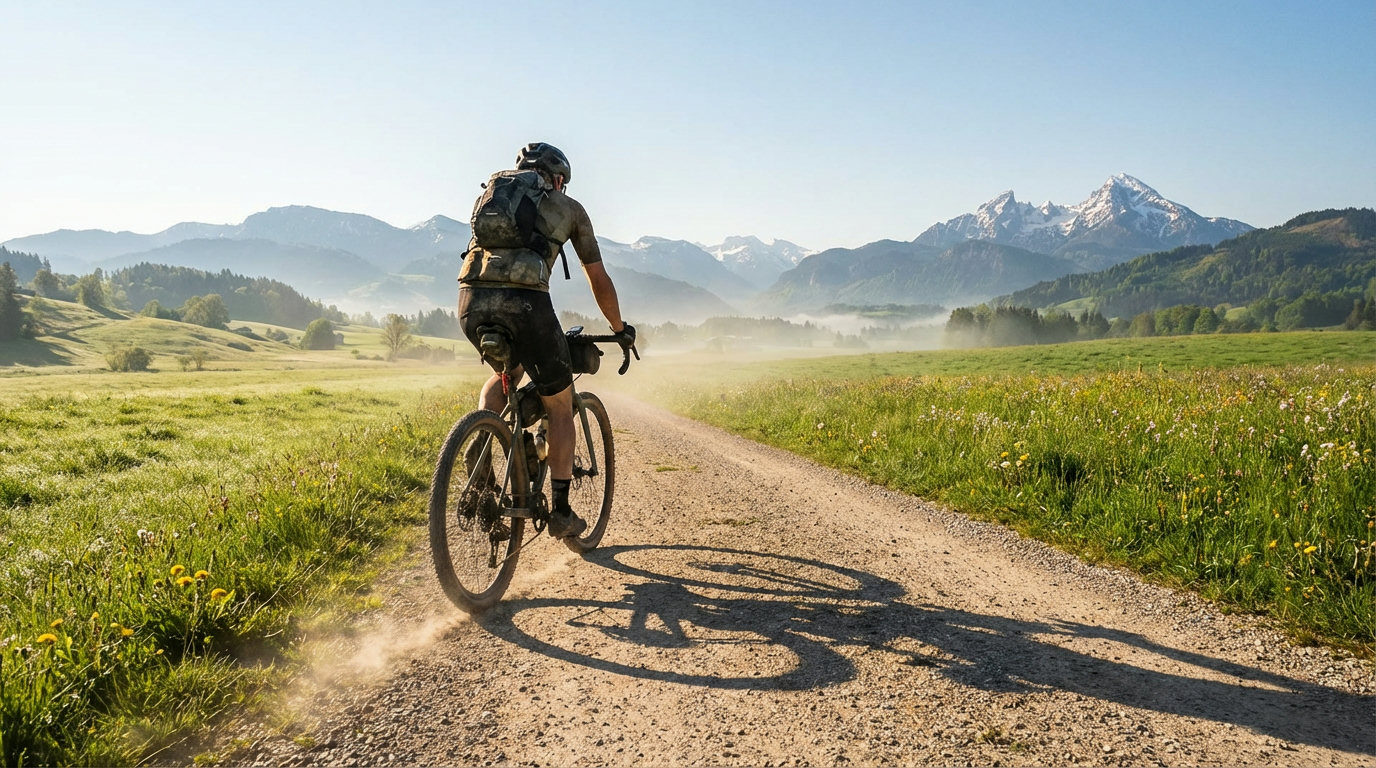
Riding a road bike and thinking about gravel? Here is what really changes, what you can take with you and which parts you need to buy new.
Key points at a glance
- 01
A gravel bike has its own geometry, tougher components and more versatility. Wider tyres are only part of the story.
- 02
The fitness, bike handling and endurance you built on the road carry straight over. You are not starting from zero.
- 03
The main differences: wider tyres (35–50 mm), a more relaxed position and lower gearing for loose surfaces.
- 04
Not every road bike is worth converting. Tyre clearance, brakes and frame geometry decide.
Been riding a road bike for years and wondering whether gravel could be for you? You are in good company. In Germany, gravel-bike sales have grown by double digits for years, and a large share of new gravel riders come straight from road cycling.
The good news: you don't start from zero. Much of what you learned on the road bike comes with you. There are real differences, though, and you should know them. This guide gives you an honest look at what changes, what stays and where you need to spend money.
What changes: tyres, position and feel
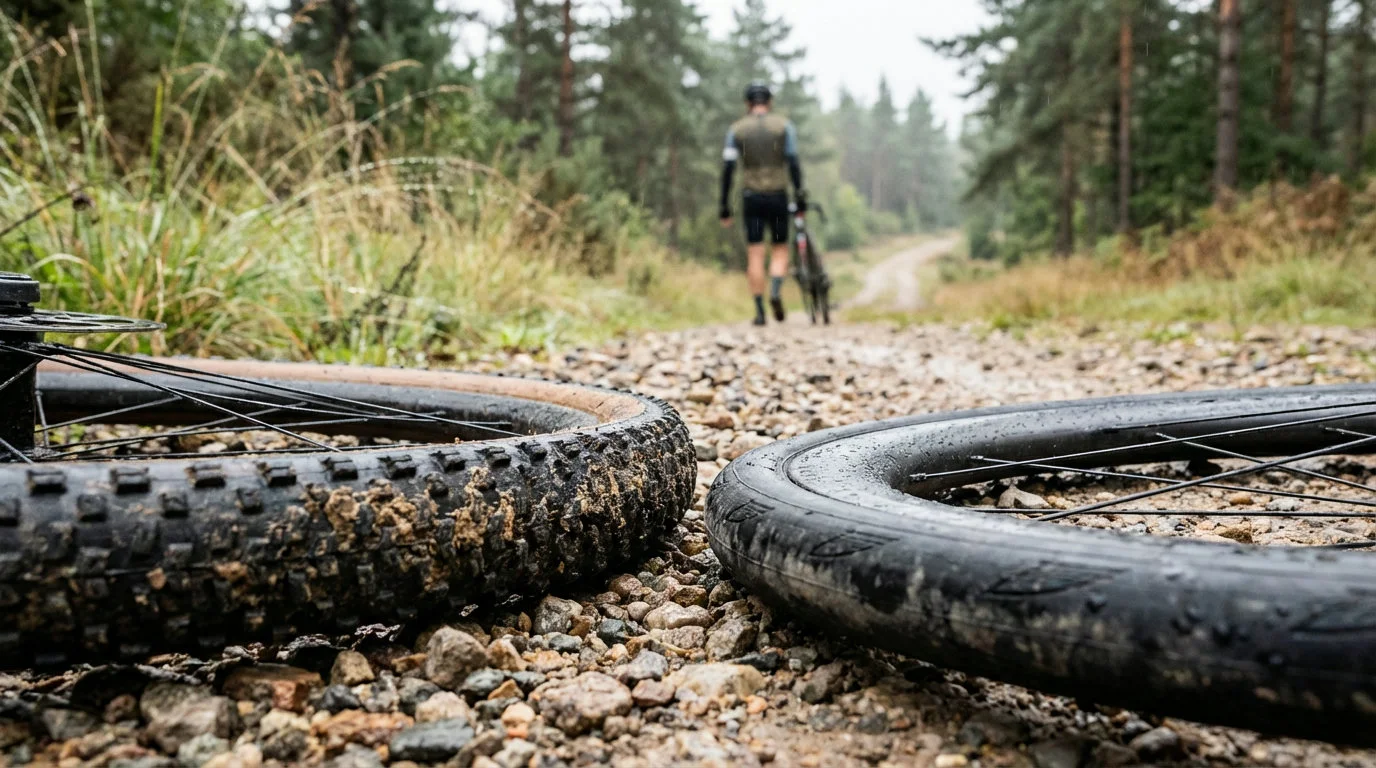
The most visible difference is the tyres. On a road bike you typically ride 25 to 28 mm. On gravel, common widths are 35 to 50 mm. Pressure is much lower, often 2.5 to 4 bar instead of 6 to 8. The result: more grip, more comfort and noticeably more control on loose ground.
For many people switching over, this is the big eye-opener. The bike feels far more secure on gravel and is still fast enough on tarmac. Start with 40 mm tyres and you can't go far wrong. That width fits almost any gravel bike and strikes a good balance between versatility and speed.
The riding position is different too. Gravel bikes are designed to be more relaxed and slightly more upright than road bikes. That improves control off-road and takes the strain off on long, bumpy rides. Coming straight from the road, you will notice at first that the gravel bike feels calmer and less aggressive.
Handling changes as well. A gravel bike is built for changing surfaces: tarmac, gravel, forest tracks, badly surfaced cycle paths. You give up some aerodynamics and gain a lot of versatility. Off-road, control counts for more than squeezing out every watt.
What stays: fitness and a sporty riding style
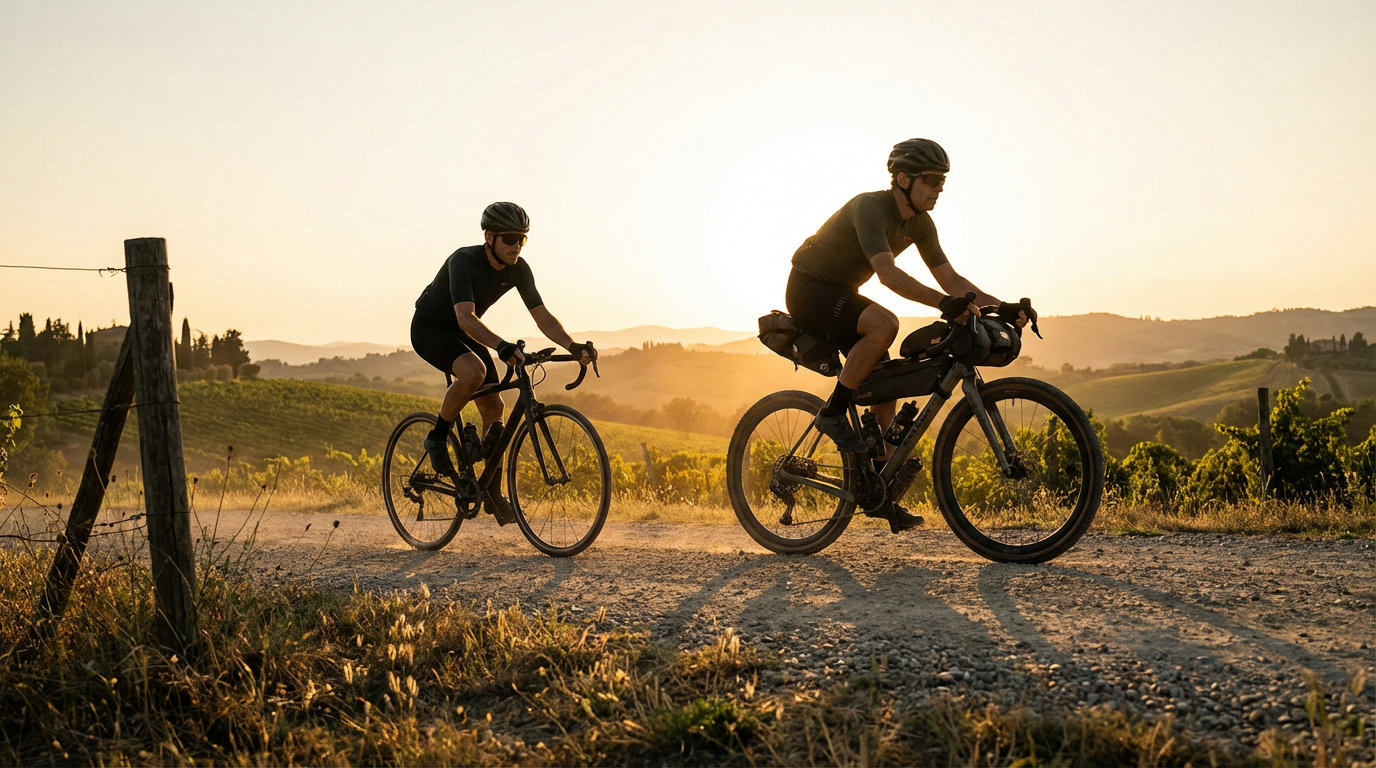
Here is the best news if you are coming from the road: your athletic background stays fully intact. Road riders keep their endurance-focused riding style. On a gravel bike you can still ride fast, do long tours and train efficiently.
What changes is the kind of sporty riding. Gravel is less about maximum average speed and more about smart route choices, reading the terrain and variety.
Your endurance, cadence and riding experience from the road are fully usable. A good bike fit, the right saddle height and a clean position still matter. If you have ridden a road bike for years, you already bring a strong base.
What you really need to buy
You don't need to replace everything. Some components, though, are fundamentally different on a gravel bike. Here are the main differences at a glance:
Road bike vs gravel bike: the key differences
| Feature | Road bike | Gravel bike |
|---|---|---|
Tyre width | 25–32 mm | 35–50 mm |
Tyre pressure | 6–8 bar | 2.5–4 bar |
Brakes | Rim or disc | Disc brakes (essential) |
Gearing | Compact (50/34) | Lower (e.g. 46/30, or 1x with 10–44) |
Riding position | Sporty, stretched out | More relaxed and upright |
Tubeless | Optional | Recommended |
Luggage mounts | Few or none | Lots of mounting points |
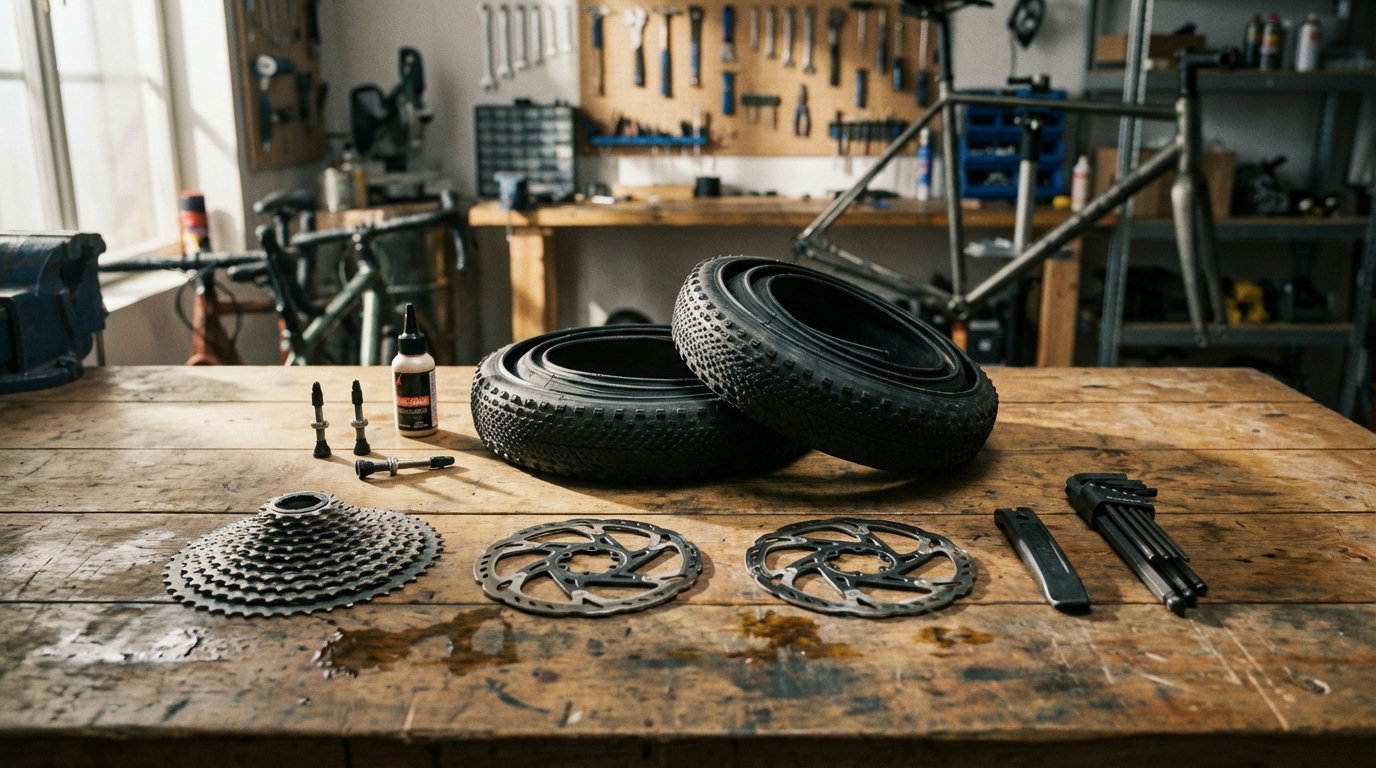
Wider tyres are the most important upgrade. For beginners, 40 mm gravel tyres are ideal. Tubeless is worth it: the lower pressure adds comfort and grip, and the sealant protects you against punctures.
Disc brakes are a must on a gravel bike. Off-road in mud and wet conditions, they give you much more braking power and control than rim brakes.
When it comes to gearing, lower gears than on a road bike make sense. Steep climbs on gravel take a lot more out of you. Many gravel bikes use single-chainring (1x) drivetrains with a wide 10–44 or 10–46 cassette. That saves weight and means fewer mechanical problems off-road.
Convert the road bike or buy a gravel bike?
One of the most common questions from road riders: can I convert my road bike for gravel? The honest answer: it depends on the frame.
Three things decide: tyre clearance, brake standard and frame geometry. Older road bikes with little room in the frame and rim brakes soon hit their limits. Without clearance for at least 35 mm tyres and disc brake mounts, a sensible conversion is often impossible.
If the frame is up to it, the main steps are wider tyres, suitable inner tubes or a tubeless setup, a different handlebar and adapted gearing. Even so, a converted road bike stays a compromise. A true gravel bike is designed from the ground up for riding off-road.
Convert or buy new? It depends on your situation
- 1
If your road bike has disc brakes and at least 35 mm of tyre clearance
A conversion is a cheap way to try it out
- 2
If you ride an older road bike with rim brakes
Buying new makes more sense than a complicated conversion
- 3
If you want to ride gravel regularly for the long term
A dedicated gravel bike is the better long-term choice
- 4
If you only want the occasional gravel detour
Wider tyres on your current bike are often enough
Right for you if …
Road riders who want to try gravel or switch completely
Probably not for you if …
Not ideal if you ride only on tarmac and want maximum aero performance
From tarmac to adventure
Switching from a road bike to gravel is an extension of what you already do. You trade speed and efficiency for stability, comfort and versatility. Your fitness, training knowledge and riding experience all stay with you.
The key investments are wider tyres, disc brakes and suitable gearing. Everything else, from clothing, helmet and shoes to your training habits, you can bring across from the road bike.
Gravel opens up routes that stay closed to a road bike: forest tracks, gravel roads, old farm lanes. And once you have felt what an after-work loop away from the main roads is like, you rarely go back.
Frequently asked questions
Is a gravel bike slower than a road bike?
On tarmac, yes. Wider tyres and more relaxed geometry cost you some speed, around 1–3 km/h on average. On mixed surfaces, though, gravel is often faster, because you can ride sections where a road bike would have to give up.
Can I ride gravel on my road bike?
Only to a limited extent. If your frame has enough clearance (35 mm or more) and disc brakes, you can start with wider tyres. Older road bikes with rim brakes and little room are not suitable for conversion.
What tyre width is best for gravel beginners?
40 mm is the ideal starting width. It fits almost any gravel bike and gives you a good mix of comfort on gravel and speed on the road. If you ride more off-road, go up to 45–50 mm.
Do I need tubeless on a gravel bike?
It isn't compulsory, but it is recommended. Tubeless lets you run lower pressure for more grip and comfort. The sealant inside the tyre plugs small holes on its own, a real advantage on gravel.
How much does a good entry-level gravel bike cost?
Solid gravel bikes with disc brakes and a decent groupset start at around €1,200 to €1,800. If you want electronic shifting, expect to pay from €2,000. The second-hand market is a good alternative.
Related articles and tools
Inspiration, knowledge and gear for people who want more from the outdoors.