
SportFits Travel
Hiking with a dog: rules, preparation and packing list
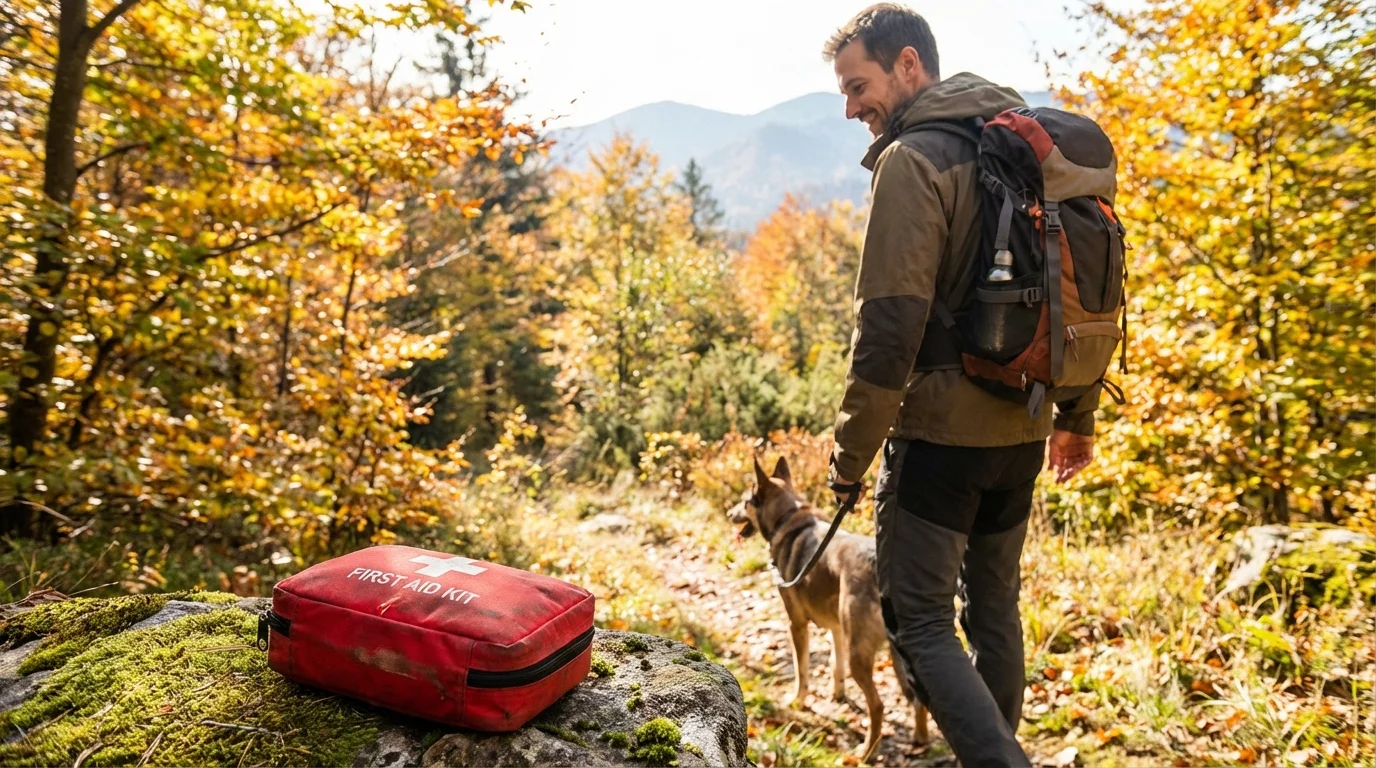
Make your hike with your dog safe and relaxed: the rules to check, step-by-step preparation and a complete packing list for both of you.
Key points
- 01
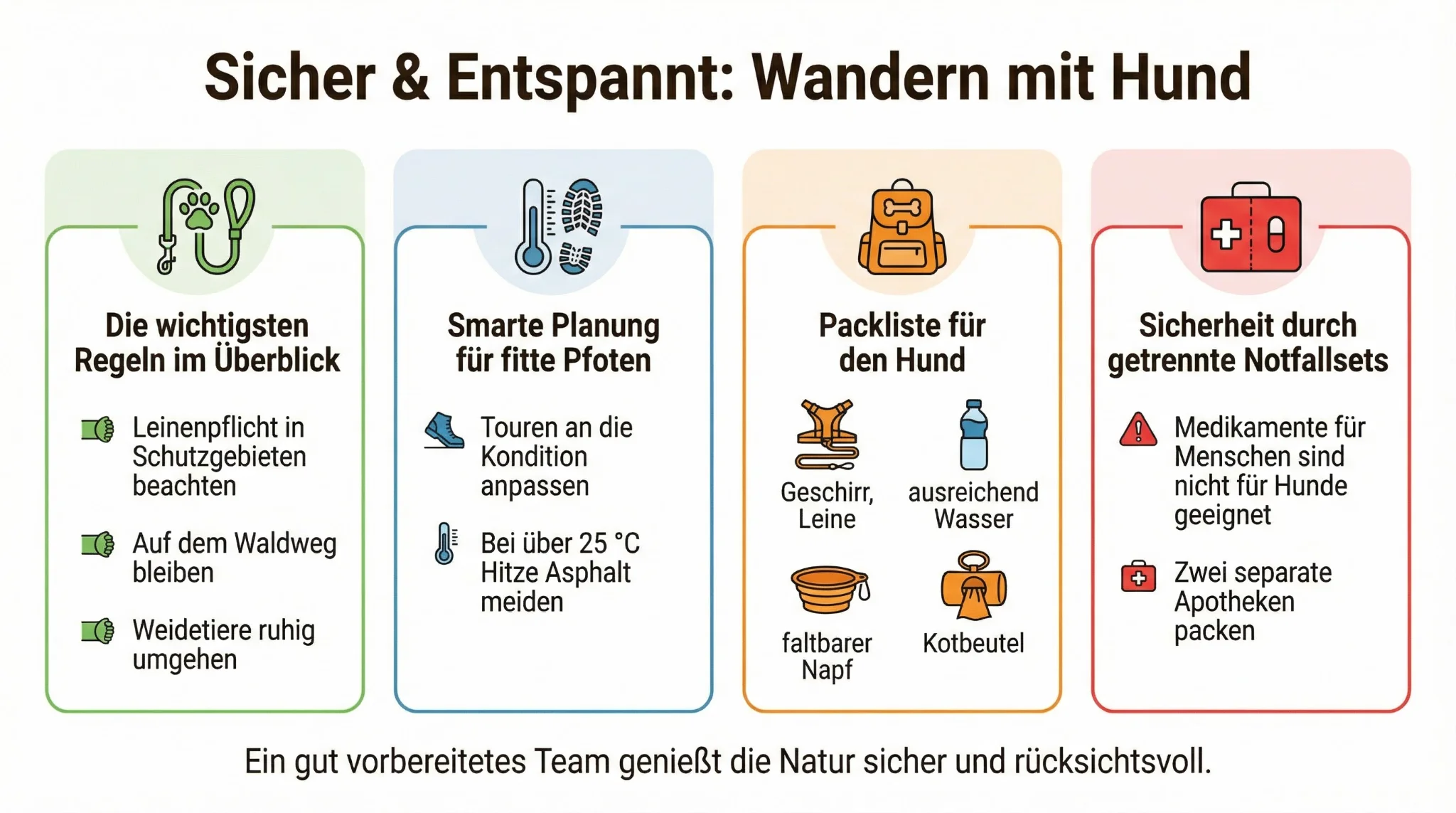
Lead rules vary widely between countries, regions, municipalities and protected areas. Check the local rules before every hike.
- 02
A healthy adult dog can manage 10–15 km a day once it has been gradually used to longer distances.
- 03
In summer, start early or late: when the air is above 25°C, asphalt can already exceed 50°C.
- 04
Pack two separate first-aid kits, one for you and one for your dog. Medication is not interchangeable.
What rules apply when hiking with a dog?
Before you lace up your boots, check the rules for the area you are hiking in. They differ between countries, and often within a country too. Germany is a good example.
Lead rules: in German states such as Berlin, Brandenburg and Hesse, dogs must be on a lead in woodland all year round. Bavaria has no general lead requirement in woodland, but municipalities or nature reserves can set stricter rules. Practical tip: check the website of the relevant nature park or municipality before every hike.
National parks and protected areas: in Germany, dogs must be on a lead in all national parks. In nature and bird reserves, they almost always have to be kept on a short lead, often no longer than two metres. Some areas, such as sensitive raised bogs or bird sanctuaries, are closed to dogs completely. Many other countries have similar rules, so check before you go.
Grazing animals: when cows, calves or suckler cows are in a pasture, keep your dog close. Walk through the herd calmly but briskly. If a cow attacks, let go of the lead if in doubt so your dog can get out of the way.
Consideration for others: put your dog on the lead in good time when hikers, children, cyclists or horse riders approach. On narrow sections, keep your dog beside you or at the edge of the path. Poo bags go in your pack, and full ones come home with you.
Wildlife and breeding season: in spring and early summer (roughly March to July), wild animals are especially easily disturbed. Many regions then have stricter lead rules, and hunters and foresters carry out more checks. Meeting a dog causes chamois, deer and ground-nesting birds considerable stress, even if you hardly ever see them.
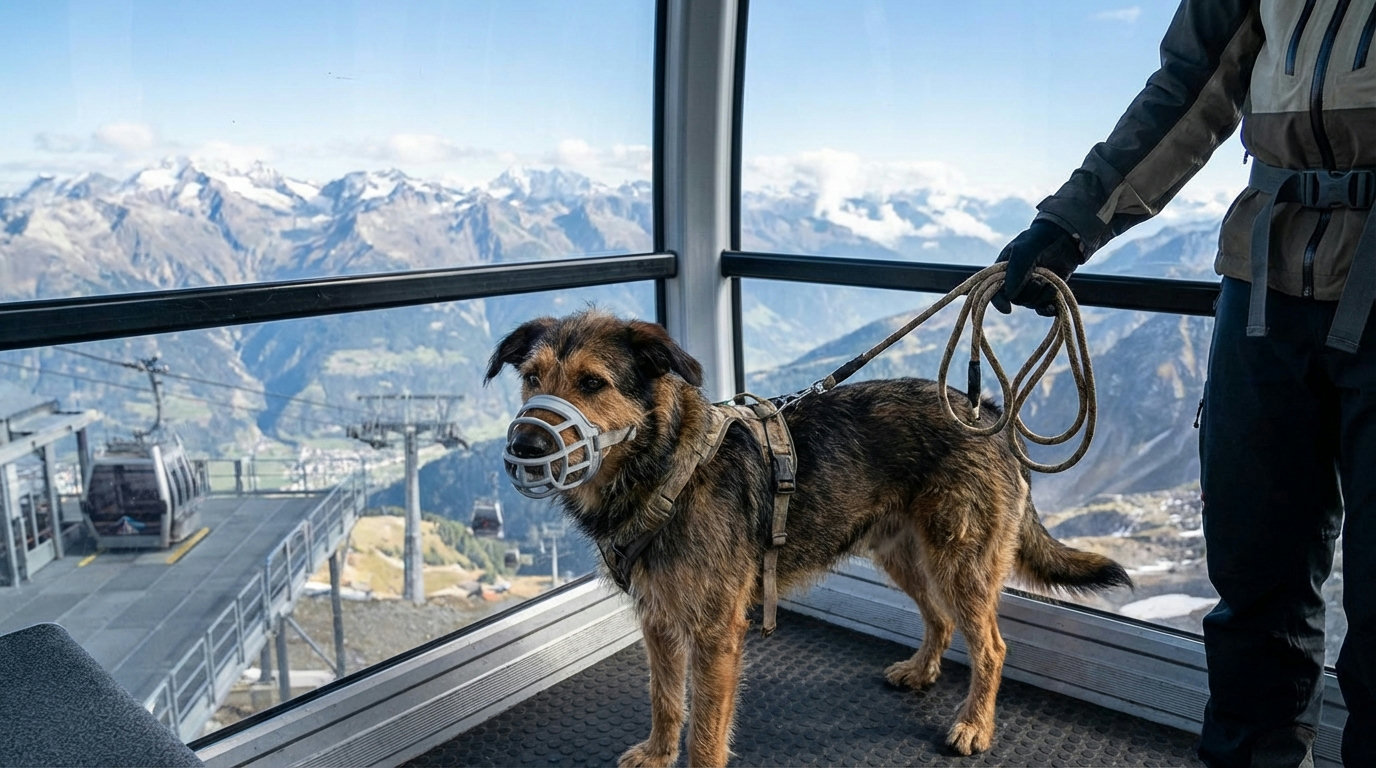
Cable cars and public transport: almost all gondolas and cable cars in Germany and Austria require dogs to wear a muzzle. On German long-distance trains, larger dogs must be on a lead and muzzled. Ferries, for example to the German North Sea islands, often require a muzzle too. If your dog isn't used to one, you will have a problem at the boarding gate.
Preparing your hike, step by step
Assess fitness and age
A healthy adult dog can usually hike 10–15 km, provided it is used to longer distances. Puppies should be at least 12 months old, large breeds closer to 18 months. Older dogs or dogs with joint problems need much shorter, flat routes. If in doubt, have your vet check your dog first.
Build fitness gradually
Start with longer walks and increase distance and difficulty over several weeks. As with people, no forced marches without training. Choose broad valley paths for your first hikes before you head into the mountains.
Choose a dog-friendly route
Look for broad paths with no risk of falling, enough shade and water. Avoid routes with ladders, via ferratas or very narrow ridges. Many guidebooks and apps mark dog-friendly routes. Check the lead rules in advance and whether huts or cable cars allow dogs.
Reinforce commands
A reliable recall is a must. Stop, go ahead and walk behind me are useful too, especially on narrow mountain paths. Your dog must walk well on the lead, because it has to be leashed in protected areas and when you meet others.
Plan for weather and time of day
In summer, set off early (before 10am) or late (after 6pm). When the air is above 25°C, asphalt can heat up to over 50°C. In winter, think about paw protection, because snow, ice and road salt damage the pads. The seven-second test helps: place the back of your hand on the ground for seven seconds. If it gets uncomfortable, it is too hot for your dog.
Have emergency information ready
Note down the number of your vet and the nearest veterinary clinic in the hiking area. Load a GPX track or offline map onto your phone. Take your dog's pet passport, especially if your route runs close to a national border.
Packing list for you and your dog
The right gear decides whether your hike is fun or stressful. Here is the complete packing list, split into three sections.
Gear for you
A rucksack with chest and hip straps keeps your hands free. Clothing in layers: breathable, suited to the weather, with a rain jacket to hand. Hiking boots should be sturdy and broken in, never new on the day. Sun protection means a cap, sunglasses and sun cream.
For food and drink, allow at least 1.5–2 litres of water per person, and much more on hot days. Add snacks such as nuts, bars or sandwiches. A map, GPS device or smartphone with an offline map and a power bank belong in every pack. Don't forget rubbish bags, tissues, ID and some cash.
Gear for your dog
A harness rather than a collar: a well-fitting harness with a back handle gives you control on steep sections and spreads the pull more evenly than a collar. Add a lead (2–3 m) and a short lead for narrow sections or protected areas. Still put on a collar with an ID tag (name, phone number) as a backup.
Water and food: your dog's own bottle or hydration system and a collapsible bowl. Dry food in small portions and treats for breaks. Plan drinking breaks every 30–60 minutes.
Comfort and safety: a light towel for drying off, a thin blanket or sleeping mat for breaks, and paw boots for sensitive paws or gravel paths. A reflective collar or flashing light for dusk. Take a muzzle if public transport, huts or cable cars require one. Get your dog used to it beforehand, not on the day of the hike.
Don't forget poo bags. Pack plenty, so you can pick up what other dogs have left behind too.
First-aid kit: separate supplies for you and your dog
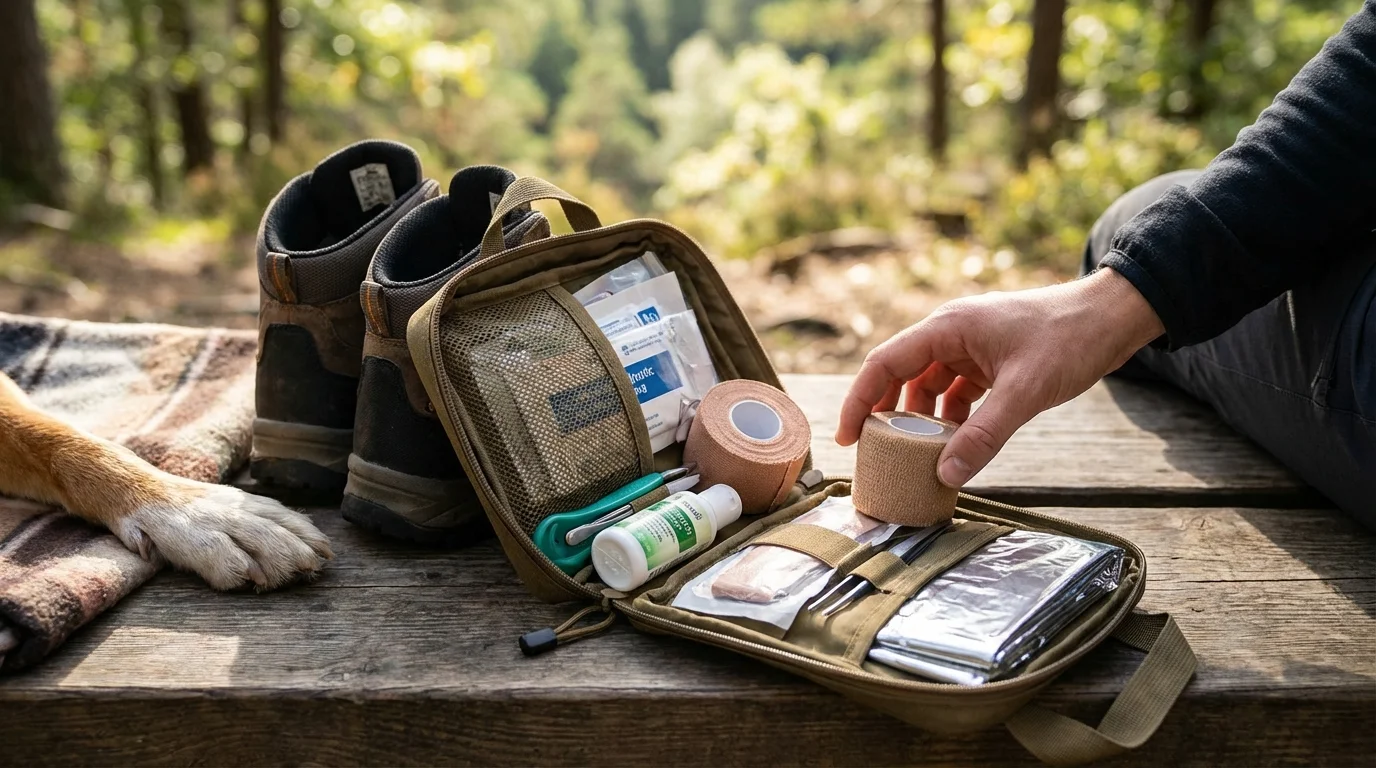
Pack two separate kits. Human medication can be toxic to dogs, and the other way round.
| Category | Human first-aid kit | Dog first-aid kit |
|---|---|---|
Wound care | Plasters, blister plasters, sterile dressings, elastic bandage, disinfectant | Animal-safe wound spray, sterile dressings, cohesive bandages, padding wool |
Pain and fever | Ibuprofen or paracetamol (check personal tolerance) | Individual medication prescribed by your vet, thermometer for animals |
Ticks and parasites | Tick remover or tick card | Tick protection recommended by your vet (spot-on, collar or tablet), tick remover |
Stomach and bowel | Anti-diarrhoea medicine, electrolyte solution | Emergency medication recommended by your vet |
Paw care | Paw balm for cracks, salt and ice | |
Tools | Disposable gloves, small scissors, tweezers | Disposable gloves, small scissors with rounded tips |
Personal | Your regular medication (asthma, allergies etc.) | Your dog's regular medication |
On the trail: breaks, water and paw care
Even if your dog is bursting with energy, regular breaks matter. Stop briefly every 30–60 minutes and offer water. Frequent short breaks beat a few long ones. Take breaks away from narrow sections so you don't block the path.
Heat and paws: dogs regulate their body temperature almost entirely by panting and through their paws. They can barely sweat. Above 25°C, exercise becomes hard work, and above 30°C it can be dangerous. Choose woodland and meadow paths and avoid asphalt. Paw balm helps on stony ground, special dog boots in extreme terrain, but your dog has to get used to them first.
Stay on the trail: keep to marked paths to protect wildlife, nesting sites and sensitive vegetation. Cross-country shortcuts can disturb wildlife, cause erosion and lead to fines.
Staying overnight with a dog: many mountain huts in Germany and Austria allow dogs, and some even have separate sleeping spots for them. That isn't the case everywhere, so ask in advance. Bring a light blanket or mat for your dog to lie on in the hut. In the dining room, settle your dog under the table and don't let it sniff at other people's rucksacks or food.
Is hiking with a dog right for you?
Who is hiking with a dog suitable for?
- 1
If your dog is fully grown and healthy
day hikes of up to 15 km are no problem, provided you build up gradually
- 2
If your dog has a reliable recall and knows the basic commands
you can let it off the lead in suitable areas
- 3
If you are hiking in low mountain ranges or on broad valley paths
most dogs will be fine, smaller breeds included
- 4
If you are planning Alpine routes with via ferratas or ladders
only sure-footed dogs with terrain experience should come along, and you need a harness with a back handle
- 5
If your dog has joint problems or a heart condition, or is a short-nosed breed
a longer hike is not suitable, as it will make things worse. Short, flat walks are the better choice
Right for you if …
Healthy adult dogs with gradually built-up fitness and basic obedience. Active breeds such as herding dogs, gundogs, retrievers and terriers are especially well suited.
Probably not for you if …
Puppies under 12 months (large breeds under 18 months), dogs with joint or heart conditions, short-nosed breeds in hot weather, and dogs without a reliable recall in areas with wildlife or grazing animals.
Frequently asked questions about hiking with a dog
Frequently asked questions
How far can a dog hike in one day?
A healthy, trained dog can usually manage 10–15 km, but it depends a lot on breed, age, fitness and terrain. Start with shorter hikes and build up slowly. Watch your dog on the way: a hanging head, heavy panting or sitting down are signs of overexertion.
Does my dog need hiking boots?
In most cases, no. Paw boots make sense in extreme terrain (sharp stones, hot asphalt, ice) or for dogs with sensitive pads. Get your dog used to them first, or it won't walk in them. Paw balm is a lighter alternative.
Can my dog run off the lead in woodland?
That depends on the country and the specific area. In Germany, for example, Bavaria has no general lead requirement in woodland, while Brandenburg and Hesse do. National parks, nature reserves and wildlife sanctuaries almost always require a lead. Check the local rules before every hike.
What should I do if there are cows on the trail?
Keep your dog close, walk calmly and briskly through the herd and don't crowd the animals. Mother cows may see your dog as a threat to their calves. If a cow attacks, let go of your dog if in doubt. It is faster than you and can get out of the way.
Which vaccinations does my dog need for hiking abroad?
To take your dog to Austria or Switzerland, for example, you need an EU pet passport and a valid rabies vaccination given at least 21 days earlier. Norway also requires a worming treatment against fox tapeworm. Check the current entry rules for your destination in good time before you travel.
Sources
- Deutscher Wanderverband (German Hiking Association) – hiking with a dog: practical advice ↗
- Deutscher Alpenverein (German Alpine Club) – seven tips for hiking with a dog ↗
- Mammutmarsch – hiking with a dog: gear and routes ↗
- Uelzener Versicherung – travel first-aid kit for dogs ↗
- Thieme Vet – dangers of summer heat for dogs ↗
Inspiration, knowledge and gear for people who want more from the outdoors.