
SportFits Travel
Mountain picnic: easy recipes and smart rucksack food
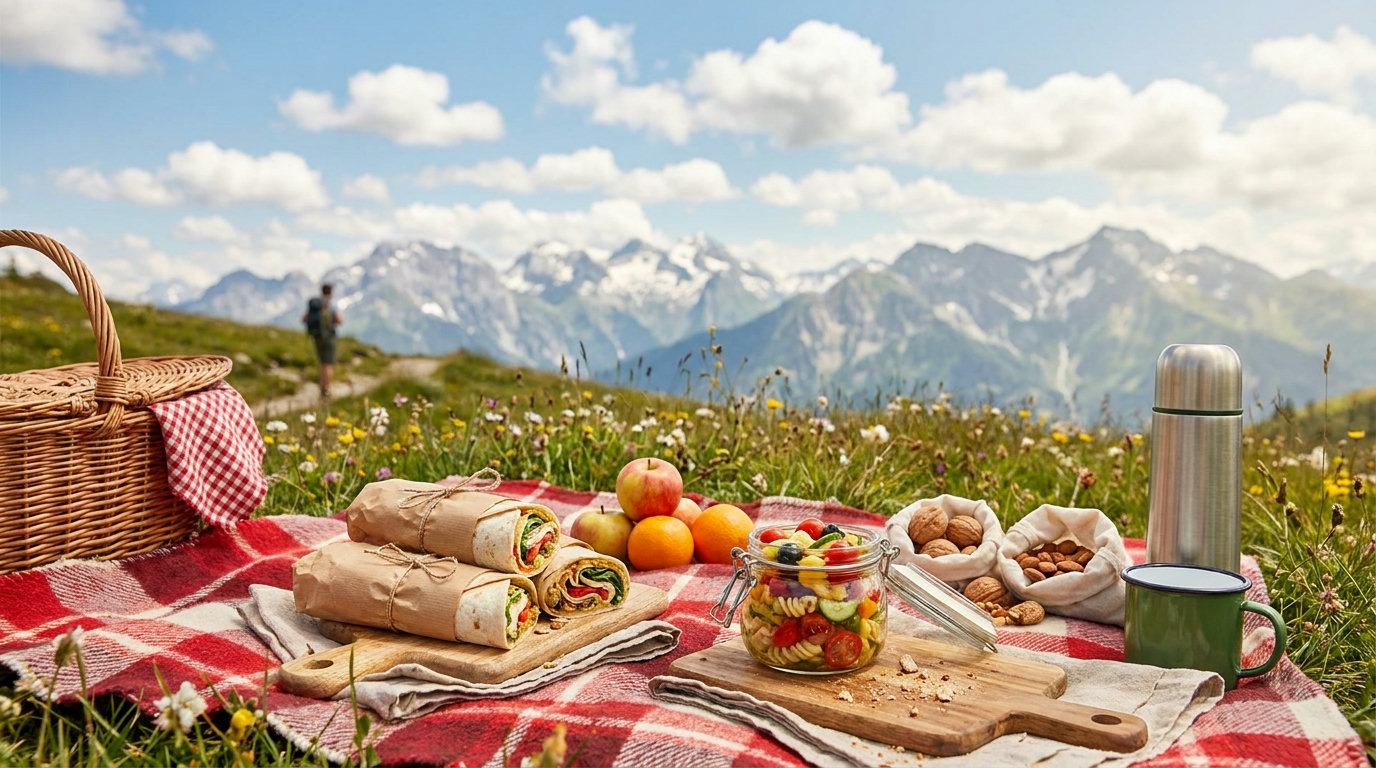
Small treats for the trail: which recipes survive the rucksack, how to keep food fresh without a cool box and what really belongs on your packing list.
Key points
- 01
A good mountain picnic is light, crush-proof and leak-proof, and you can eat it with your hands.
- 02
Bread, spreads in jars, nuts and fruit keep for about 4 to 6 hours at room temperature. Hard-boiled eggs last 2 to 3 days if you don't cool them in cold water, and air-dried salami lasts for weeks.
- 03
On warm days, leave delicate foods such as mayonnaise, cream cheese, quark or raw egg out of your rucksack.
- 04
Single portions, screw-top jars and beeswax wraps replace a heavy cool box and cut down on rubbish in the mountains.
More than bread and an apple
The best moment of a hike often comes just after the summit cross. You put down your rucksack, sit, unpack and take in the view. A good picnic turns a break into a highlight, and you need neither a heavy cool box nor complicated recipes.
What matters is that your food survives the trip: light in the rucksack, sturdy while you carry it and easy to reach. Up top, everything tastes twice as good anyway. This guide gives you simple recipe ideas, the right packaging and a mini packing list, whether you're planning a relaxed family break or a quick stop on a demanding hike.
What makes a good mountain picnic
Good mountain food has four qualities. It is light, crush-proof and leak-proof, and you can eat it without much cutlery. Anything that turns to mush, gets squashed or leaks in your rucksack means frustration on the trail, plus a few sticky surprises.
Dishes that taste good cold and are easy to prepare are your best friend: sandwiches, wraps, savoury bakes, salads in a jar, finger food and small sweet snacks. Bread, cheese, fruit, bars, hard-boiled eggs, crackers and dips in tightly sealed containers are classics for a reason. They take little effort and give you plenty of energy.
A useful guide is how long food keeps at room temperature. On summer days, your rucksack warms up fast.
| Food | Keeps unrefrigerated | Tip |
|---|---|---|
Bread, nuts, dried fruit | All day | High in energy, no fuss |
Spreads and dips in jars | About 4–6 hours | Seal tightly, carry in the shade |
Chopped fruit and vegetables | About 4–6 hours | Use a sealed box, don't squash |
Hard-boiled eggs | 2–3 days | Don't cool in cold water and peel just before eating; eat cold-water-cooled eggs the same day |
Hard cheese, air-dried salami | Several days to weeks | Ideal for multi-day hikes |
The best recipes to take along
You don't need to pack a gourmet menu. The best mountain picnics are built from a few clever components you can mix and match: something savoury, something fresh and something sweet for the break. Here are tried-and-tested ideas for every taste.
Savoury and filling
- Wraps with hummus, grated carrot, cucumber and feta. Rolled tightly, they still hold together after two hours in your rucksack
- Wholegrain sandwiches with hard cheese, air-dried salami or a plant-based cream cheese alternative
- Focaccia or a savoury bake (for example with courgette and cheese). Cut into pieces, it's ideal for eating with your hands
- Mini quiches or savoury muffins, wrapped individually
Fresh and light
- Couscous, pasta or rice salad in a screw-top jar: no mayonnaise, just lemon and olive oil. It keeps well and tastes great cold
- Vegetable sticks (carrot, pepper, cucumber) with a dip in a separate small jar
- Pulse salad with chickpeas or lentils: nutritious and filling without weighing you down
Cook the base
Soak couscous in boiling water, or cook pasta al dente, and let it cool completely.
Dice sturdy vegetables
Chop peppers, cucumber, sun-dried tomatoes and a little feta. Choose anything that won't go mushy.
Dress with lemon and oil
Skip the mayo and stir in a dressing of olive oil, lemon juice, salt and herbs. It keeps much longer without refrigeration.
Layer it in a screw-top jar
Pack it in firmly, screw on the lid, done. On the trail you can eat the salad straight from the jar with a fork.
Something sweet for the summit break
- Banana bread or slices of cake: sturdy, filling and a proper mood-lifter
- Homemade muesli bars or energy balls made from dates, oats and nuts
- Biscuits and dried fruit for a small energy boost on the way down
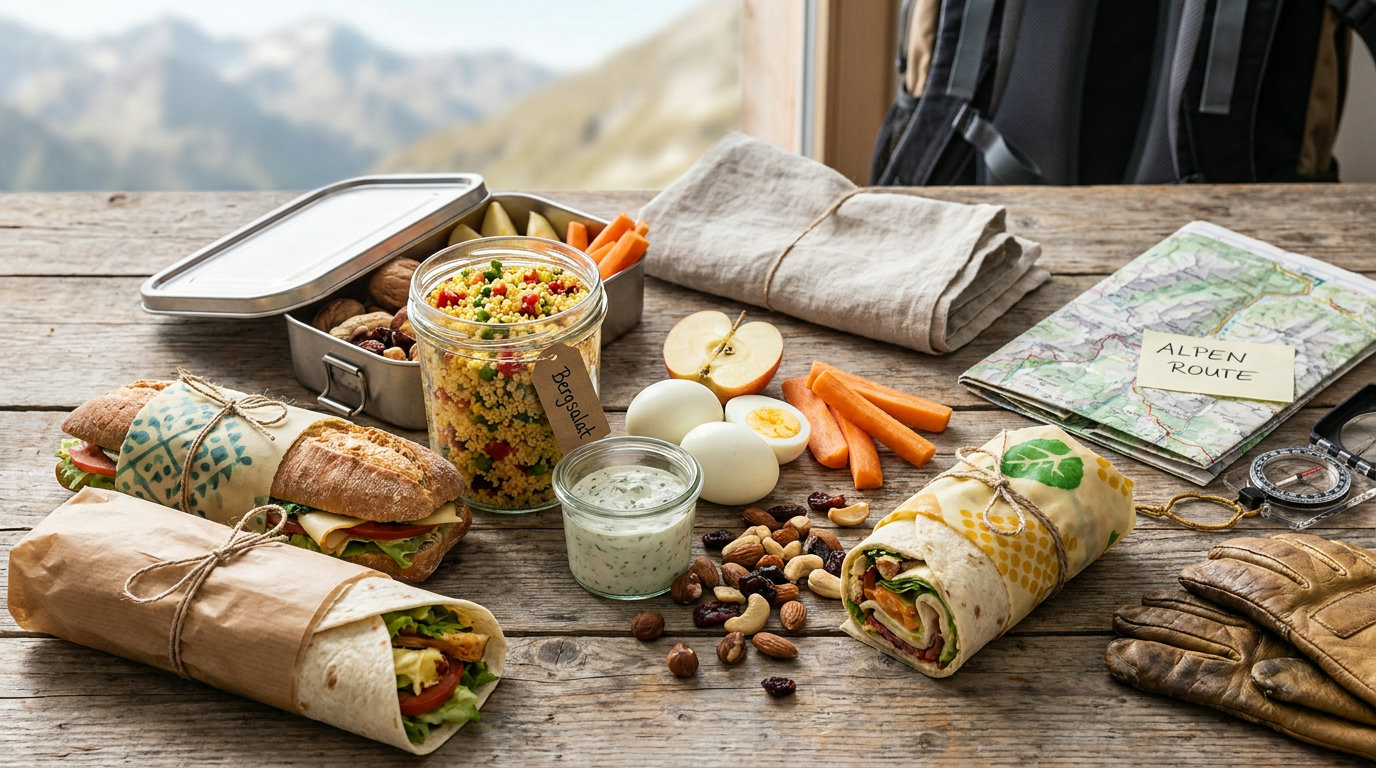
Rucksack check: how to pack
Packaging matters more than the recipe. Good outdoor food doesn't get squashed, doesn't leak and is quick to reach. Small single portions often work better than one big container. They're easier to handle, and you only unpack what you need.
Put heavy, sturdy items at the bottom and delicate things such as sandwiches or cake at the top or in a rigid box. That way nothing arrives at the summit squashed.
| Food | Best packaging |
|---|---|
Sandwiches, wraps, bread | Beeswax wrap or greaseproof paper |
Salads, spreads, dips | Screw-top jar or tightly sealed box |
Cake, muffins, quiche | Rigid stainless steel or hard plastic box |
Nuts, dried fruit, bars | Reusable zip bag |
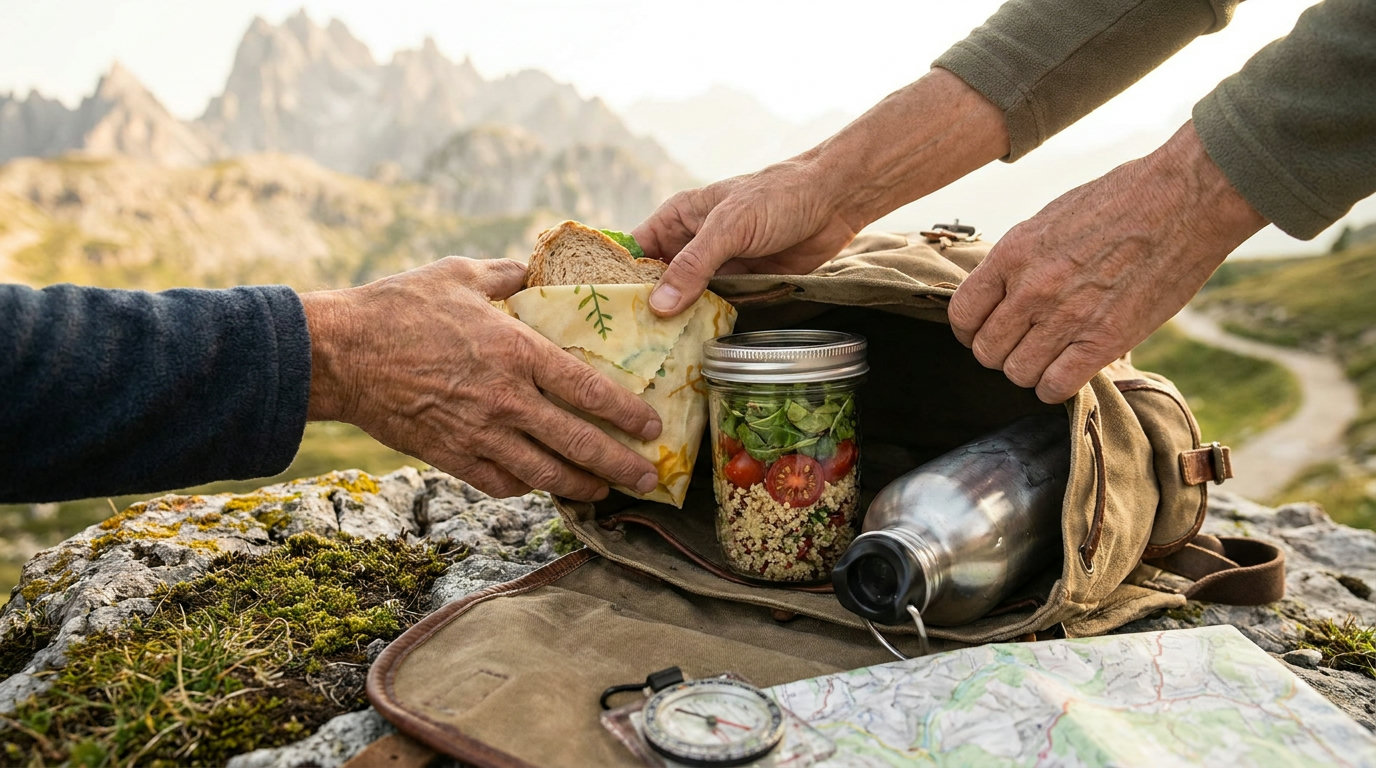
Fresh without a cool box: the key tricks
For a hike of a few hours you don't need a cool box. A few tricks are enough:
- Carry it in the shade: pack your food in the middle of your rucksack, not in the outer mesh pocket that heats up.
- Pre-chill: put salads and drinks in the fridge overnight. A frozen water bottle works as a natural ice pack.
- Keep dressing separate: add sauces just before eating so nothing goes soggy.
- Check the weather: on very hot days, stick to dry classics. Our outdoor weather tool tells you in advance how warm it will get.
What to leave at home
Not everything that tastes good at home belongs in a rucksack. This overview helps you pack and saves you from the classic squashed surprise at the summit.
What speaks for it
Bread, wraps and focaccia: sturdy and filling
Salads in a jar without mayonnaise
Hard cheese, air-dried salami, hard-boiled eggs
Nuts, dried fruit, bars and banana bread
Sturdy fruit and vegetables (apple, carrot, pepper)
What to weigh up
Spreads made with mayonnaise or cream
Cream cheese, quark or yoghurt in warm weather
Soft fruit that bruises easily (berries, loose ripe bananas)
Heavy glass containers and elaborate dishes that need a lot of cooling
Leave nothing behind
A picnic with a mountain view depends on unspoilt nature, so take everything back down that you carried up. The Leave No Trace principle is simple: leave no traces, ideally not even footprints.
And yes, that includes food scraps. Banana skins, apple cores and eggshells rot far more slowly in the mountains than in the lowlands and don't belong in nature. A small rubbish bag in your rucksack solves the problem. You create the least waste by using reusable containers from the start and avoiding individually wrapped items.
Mini packing list: what suits whom
Which picnic suits you?
- 1
If you're out with children and family
go for finger food, single portions and familiar snacks without frills
- 2
If it's a fast, sweaty hike
every gram counts. Choose compact, energy-dense food such as bars, nuts and wraps
- 3
If enjoyment comes first
treat yourself to focaccia, a nice salad in a jar and a slice of cake
Right for you if …
Anyone who wants their mountain break to be a small treat, not just a quick refuel.
Probably not for you if …
Multi-day treks with a stove, where hot trekking meals make more sense.
Frequently asked questions
What should I pack for a picnic in the mountains?
One main meal (a wrap, sandwich or salad in a jar), an energy snack such as nuts or bars, sturdy fruit, enough to drink and something to pack it in (beeswax wrap, box, screw-top jar). Always bring a small rubbish bag too.
Which recipes still hold up after two hours in a rucksack?
Tightly rolled wraps, sandwiches, focaccia, and couscous, pasta or rice salad in a jar without mayonnaise. Hard cheese and air-dried salami are also robust. Hard-boiled eggs only work if you didn't cool them in cold water; eat cold-water-cooled eggs the same day.
How do I keep food fresh without a heavy cool box?
Carry your food in the shade in the middle of your rucksack, pre-chill salads and drinks, and use a frozen water bottle as an ice pack. Add dressings just before eating.
What works best for children and families?
Finger food and single portions: small wraps, vegetable sticks, fruit, muesli bars and muffins. They're easy to eat with your hands, create little rubbish and go down well with children.
Can I leave banana skins and apple cores on the mountain?
No. Food scraps rot very slowly in the mountains and disturb wildlife and nature. Take all leftovers back down in a rubbish bag.
Tools and topics for your next hike
Inspiration, knowledge and gear for people who want more from the outdoors.