
SportFits Travel
Family hiking: how to choose routes that work for children
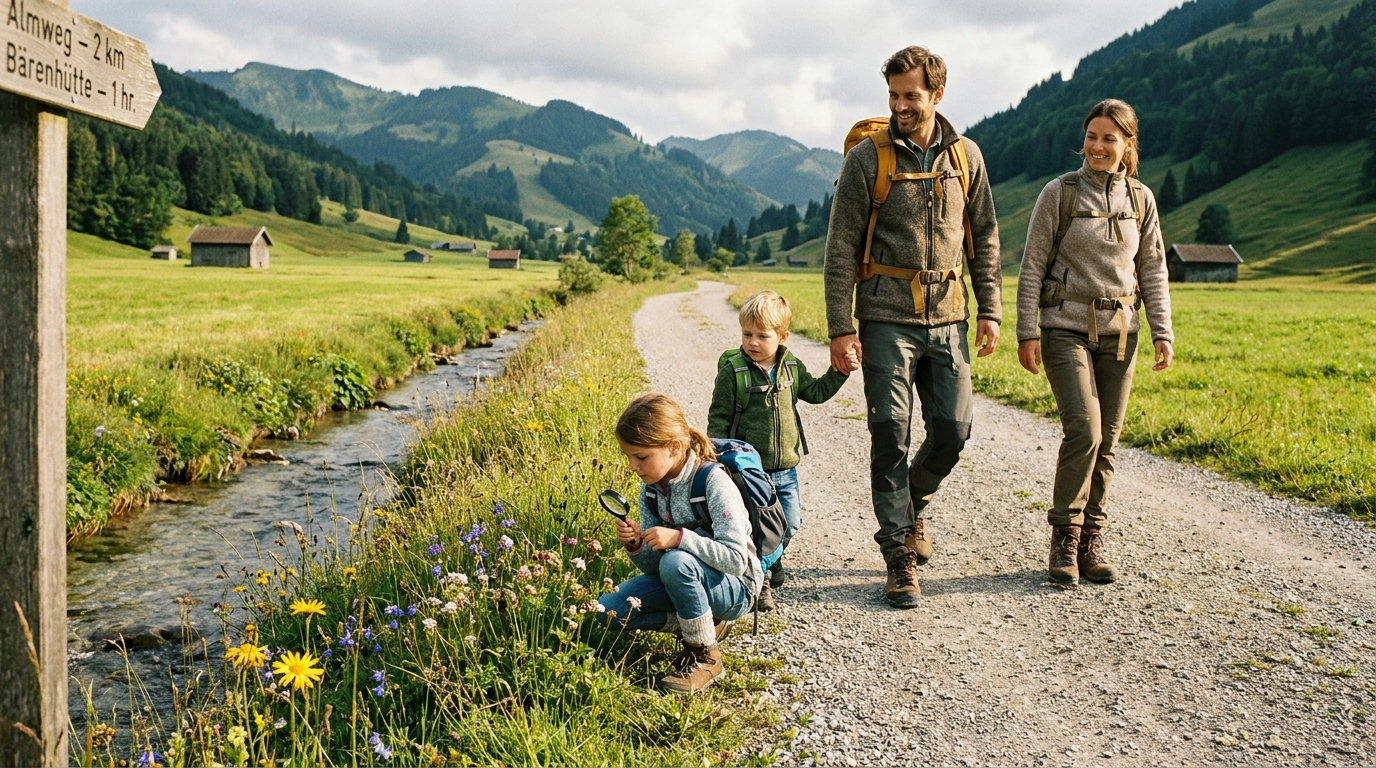
What really makes a hike child-friendly, which rule of thumb works and which routes suit which age. A practical guide for your family holidays.
Key points at a glance
- 01
A child-friendly route is varied and safe, with a clear goal such as a lake, a hut or a playground. Short alone isn't enough.
- 02
Rule of thumb for length: age × 1.5 = possible kilometres per day. Elevation gain and breaks matter more than the distance, though.
- 03
The route always has to suit the weakest member of the group. Children take detours and need more time than adults.
- 04
Themed and adventure trails motivate children far better than monotonous forest roads.
- 05
A child's backpack should weigh no more than about ten per cent of their body weight.
What really makes a route child-friendly
The holidays are coming, and with them the big question: where do we go hiking with the children? The answer is rarely the famous family classic all your friends rave about. It is a route that suits your pace, your weather and how your family is feeling that day.
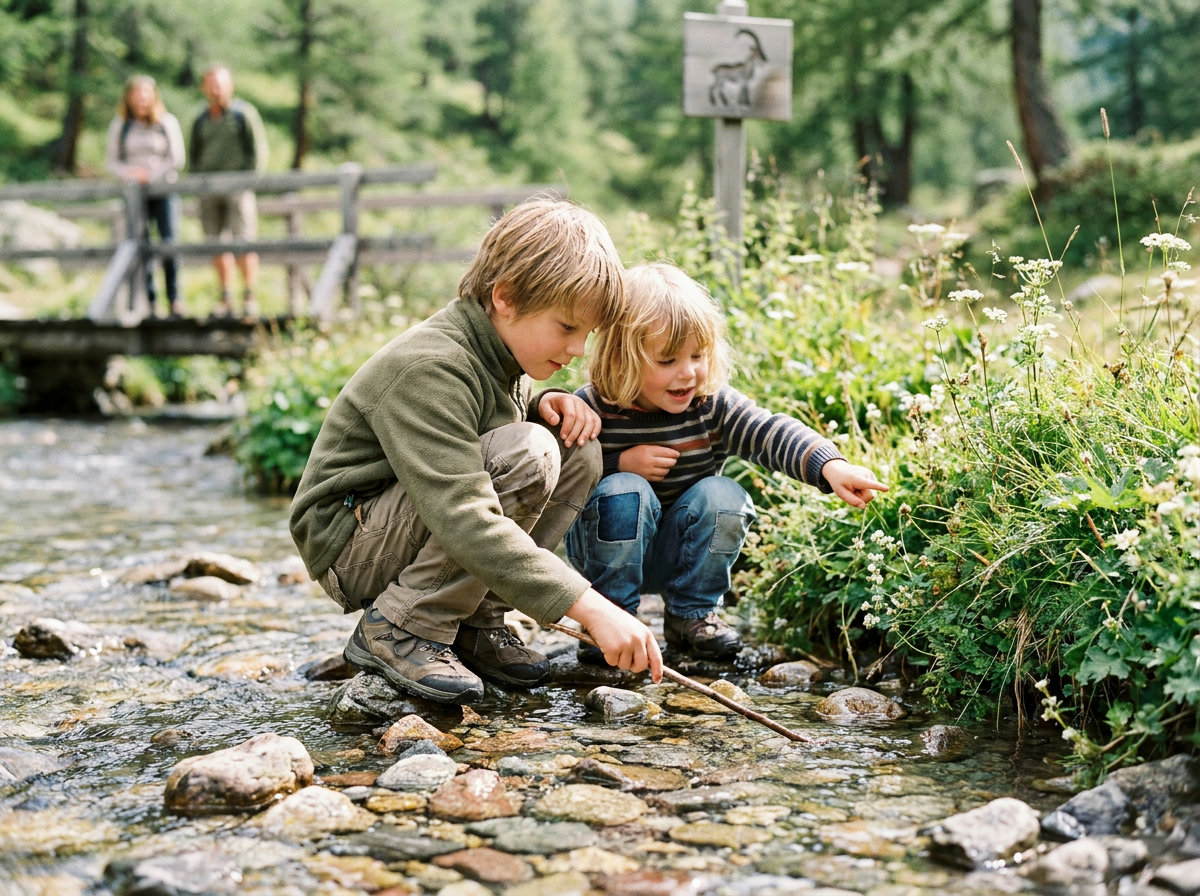
The German Alpine Club (DAV) sums it up well: child-friendly doesn't mean short, it means exciting. Children need variety, moments of discovery and small goals along the way. A lake, a mountain pasture with animals, a playground at the end: all better than a long, monotonous forest road with nothing to look forward to.
The most important rule: the route always has to suit the weakest member of the group. Children don't just walk the distance. They take detours, stop to look at things and hop from stone to stone. Plan for that. Then it won't feel like a delay.
Rule of thumb: how long should the hike be?
A widely used guide for route length is the simple formula age × 1.5, in kilometres on mostly flat ground. So a six-year-old can manage around nine kilometres, as long as the path isn't too demanding.
Distance isn't everything, though. Elevation gain, the type of path and breaks matter far more. Going uphill and downhill takes much more out of children than a flat path of the same length. Three kilometres with 400 metres of ascent are often harder than eight kilometres along a lake.
If you are unsure, check your route with our Outdoor Weather Tool for heat or rain risks. If it is too warm, choose a shorter option and start early.
Which route suits which age?
The Alpine Club distinguishes four age groups, each with its own needs. Take them into account and your planning gets easier. You also avoid that classic moment of “we should have stayed in the valley”.
The routes below are tried-and-tested examples from the Alps. They don't replace your own research before you go, but they show you where to start looking.
Route ideas by age group
| Age group | Route character | Examples in the Alps |
|---|---|---|
1–3 years | In a child carrier or suitable for pushchairs, very flat, plenty of breaks | Lake Achensee shore path (Tyrol), Falzthurn Valley to Gramai Alm, Kuhflucht waterfalls at Farchant |
3–6 years | Short themed trails with stations, max. 3–4 hours of walking | Räuber-Kasimir Trail (Allgäu), Faistenau Fairy-tale Trail (Salzburg), Hubertus Wildlife Trail (Zillertal) |
6–10 years | Adventure trails with puzzles, longer hikes possible | Galetschbach Adventure Trail (Allgäu), Flori’s Adventure Trail (Flachau), Schleifmühlklamm (Unterammergau) |
10–14 years | Proper mountain hikes, easy via ferratas, summits as goals | Moderate mountain pasture routes, easy grade A via ferratas, summits with help from a cable car |
Packing list for a family hike
Pack a little too much rather than too little, and share the load across everyone's shoulders. A child's backpack should weigh no more than about ten per cent of their body weight. For a 20 kg child, that means two kilos at most.
Summer weather is deceptive. In the mountains it turns cool fast when the sun goes behind a cloud, and thunderstorms often build in the afternoon. So a warm layer and a rain jacket belong in the pack even when the sun is blazing.
Frequently asked questions
Frequently asked questions
At what age can children really hike?
In a child carrier, from their first year. On their own feet, usually from about three, on very short, playful routes. From nursery age, first themed trails are possible, and from school age, longer day hikes.
How many kilometres can a child hike per day?
A rough rule of thumb is age × 1.5 in kilometres. Elevation gain, breaks and how your child feels on the day matter more than distance. Always build in a reserve, and cut the route short rather than pushing on.
What if a child no longer wants to walk?
Check first: are they hungry or thirsty, or is the sun too strong? A longer break somewhere interesting often works wonders. Sometimes a small task helps too: looking for stones, taking a photo, whittling a stick.
What shoes do children need for hiking?
On flat paths, sturdy trainers with good grip are enough. For uneven ground or gravel paths, ankle-high hiking boots are the better choice. Break them in first, and never set off on a big hike in brand-new shoes.
Is hiking in hot weather dangerous for children?
Children overheat faster than adults. On hot days, start early, choose shady routes and take a break at midday. Make sure they drink enough and cover their head, and at the first signs of exhaustion stop straight away somewhere cool.
Find the right hiking backpack for your family
From a light children's backpack to a daypack for the parents: the right size makes all the difference.
Explore hiking backpacks ↗Tools and topics that help families plan a hike
Inspiration, knowledge and gear for people who want more from the outdoors.