
SportFits Travel
Bikepacking for beginners: how to plan your first trip
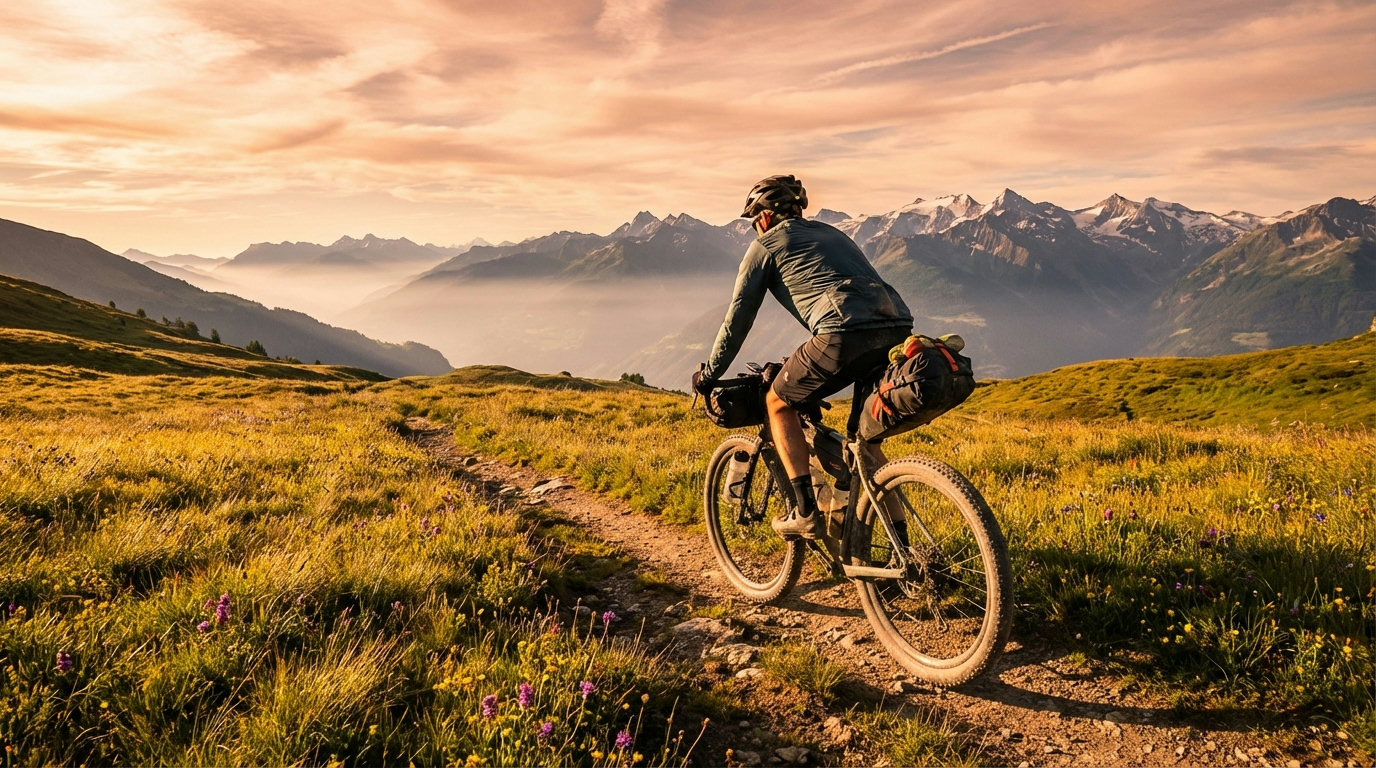
Bike, bags and route planning: start your first bikepacking trip with the kit you already have, no pro setup needed.
The key points at a glance
- 01
Almost any well-maintained bike works for getting started; you do not need an expensive gravel bike
- 02
Three bags are enough: saddle, frame and handlebar. Pannier racks are not part of bikepacking
- 03
Six to nine kilograms of kit is realistic. Carry less and enjoy more
- 04
Start with a weekend ride close to home rather than crossing the Alps
- 05
Once you have had coffee by the tent in the morning, it is hard to give it up
Morning light on the tent, the chain clicking softly as you roll away, and that first sip of coffee tasting like freedom. Bikepacking brings cycling, camping and micro-adventures together. Getting started is far easier than most people expect. No sponsorship, professional kit or three weeks of holiday required. A free weekend is enough.
What bikepacking really is
Picture the rucksack version of a cycling trip. Instead of heavy panniers on a rack, compact bags attach directly to the frame, saddle and handlebar. The bike stays light, nimble and ready for rougher ground. Perfect for gravel tracks, woodland paths and quiet back roads. Compared with traditional cycle touring, you trade some comfort for considerably more freedom and flexibility.
Which bike is suitable for bikepacking?
The good news is that almost any well-maintained bicycle will work. Gravel bike, mountain bike, trekking bike or road bike with slightly wider tyres: they can all do the job. Condition matters more than price. Gears and brakes should work cleanly, and the tyres should resist punctures. If you are unsure, ask a bike shop to check it before you leave.
The three bags that change everything
Saddle bag Rear
It hangs beneath the saddle and holds a surprising amount. Put clothing and lightweight kit here. Even experienced bikepackers regularly underestimate its capacity.
Frame bag Middle
It sits in the frame triangle and is the key place for heavy items: tools, food, stove and water. Keeping the weight close to the centre of gravity makes the bike handle most steadily.
Handlebar bag Front
Attached to the handlebar, it is ideal for a sleeping bag, tent or sleeping mat. It is also the perfect place for anything you need quickly: snacks, rain jacket and camera.
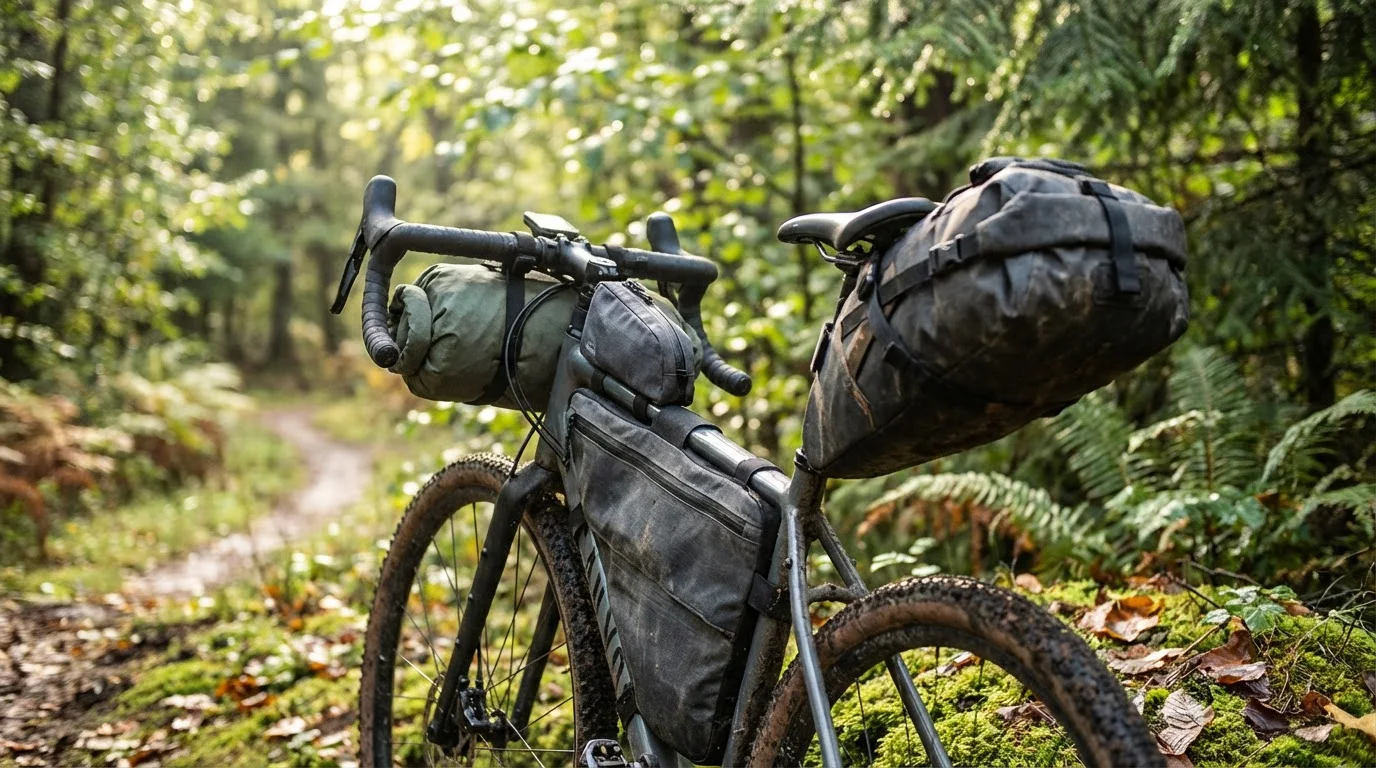
Many beginners build their first setup from dry bags and bungee cords they already own. It works surprisingly well and costs almost nothing. Dedicated bikepacking bags make sense once you know the hobby is going to stick. A complete bag set typically costs roughly €150 to €350.
What really needs to come, and what does not?
The golden rule is simple: as little as possible, as much as necessary. Experienced bikepackers manage with 6 to 9 kilograms of luggage, excluding water and food. It sounds light, but it covers the essentials. The trick is ruthless editing and kit that serves more than one purpose.
| Category | What to pack | Approx. weight |
|---|---|---|
Bike and tools | Multi-tool, mini pump, 2 spare inner tubes, tyre levers, puncture kit, chain oil, cable ties | 500–800 g |
Sleeping | Lightweight tent or bivy bag, sleeping bag, sleeping mat, head torch | 1,500–2,500 g |
Clothing | Cycling jersey, cycling shorts, rain jacket, insulating layer, buff, gloves, dry socks | 800–1,200 g |
Food and drink | Water bottles, bars, nuts, optional: stove + pot + spork | 300–600 g |
Personal | ID, cash, first-aid kit, sun cream, mini hygiene kit | 200–400 g |
Route planning: start small, dream big
Choose your route
Pick a route close to home: 70 to 90 kilometres, gently rolling, with a campsite or trekking site about halfway. Come back the next day on a different route to keep it interesting.
Plan realistic stages
With luggage and climbs, 60 to 80 kilometres a day is ideal to begin with. In most cases that is less than your usual Sunday ride, and that is completely fine.
Plan your supplies
Do not just mark climbs and viewpoints. Where can you get water? Where is the next supermarket or bakery? Where could you shelter from a storm? Build those stops into your plan.
Prepare your navigation
Use apps such as Komoot or Outdooractive with offline maps and download GPX tracks in advance. In remote areas, bring a printed map too. Batteries always die at the wrong moment.
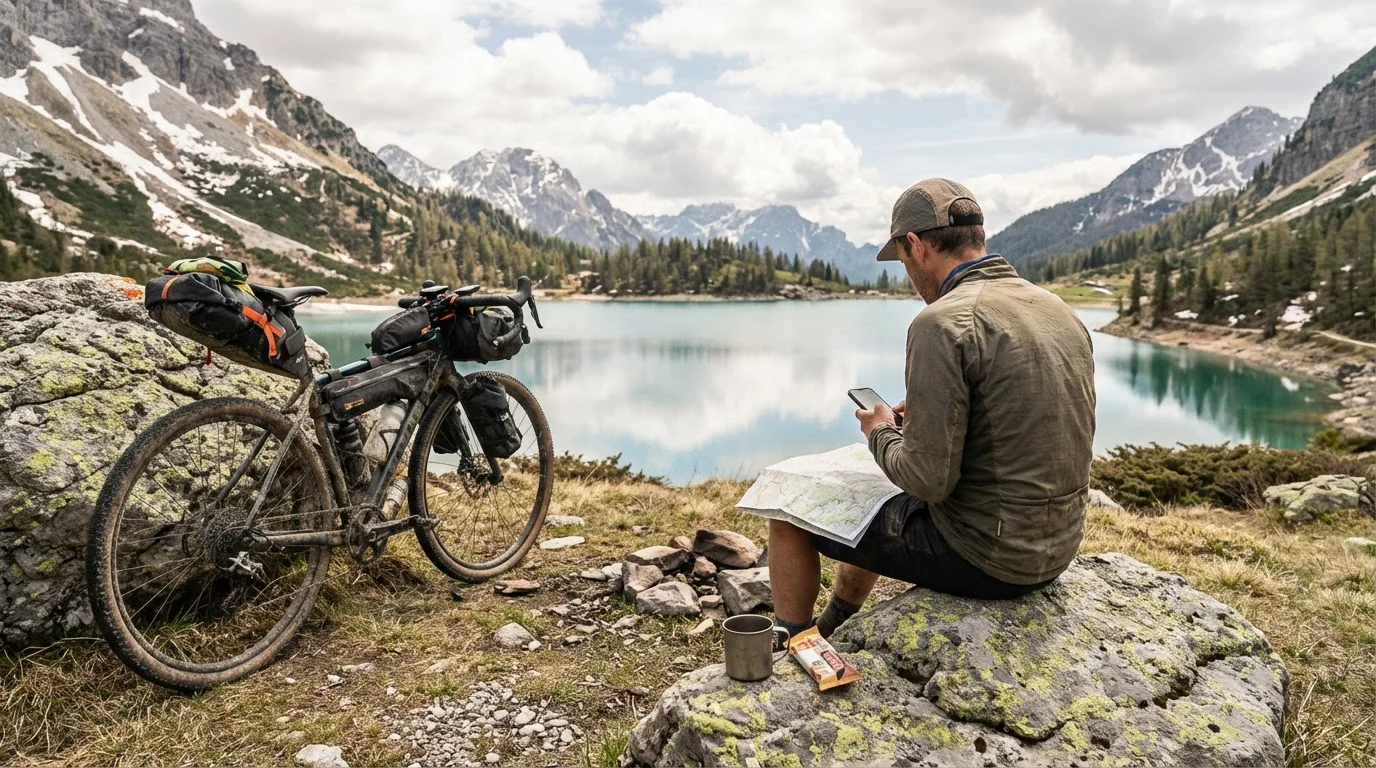
Pack like a pro
How you pack determines whether the bike still handles properly. Heavy items belong low and central, in the frame bag close to the bottom bracket. Things you reach for often, such as a rain jacket, snacks or your phone, go in a top-tube or handlebar bag. They stay within reach without a stop.
Food and energy on the road
Bikepacking burns plenty of calories, and a low point on the trail is hard to recover from. As a rule of thumb, have a bar, a handful of nuts or a sandwich every 60 to 90 minutes. Refill water regularly and plan generously in hot regions. In the evening, cook a simple one-pot meal or eat in the next village. It is a question of style and weight budget.
What speaks for it
Pure freedom: stop wherever you like, with no hotel booked and no time pressure
Low starting cost: an existing bike and a few bags are enough
An intense experience of nature away from main roads
Full-body training with a view instead of treadmill boredom
What to weigh up
Less comfort: no bed, limited clothing changes, sometimes cold and wet
Puncture potential: a damaged tyre in the woods is more annoying than in town
It takes getting used to: the first kilometres with a loaded bike feel wobbly
Safety and the right mindset
A helmet, good lights and reflectors are essential, not optional. Every frame bag should carry a small first-aid kit: plasters, blister plasters and painkillers. Never leave the bike completely unsecured overnight. A light lock is enough for short stops.
Bikepacking is right for you if ...
- 1
You choose light luggage
You gain agility and speed on the trail
- 2
You seek remote routes
You need reliable navigation and an emergency plan
- 3
You want to ride in all weather
Your rain gear must be genuinely waterproof, not merely water-repellent
Right for you if …
You enjoy being outside, fancy an adventure and do not mind giving up a little luxury. If you would rather sit by a campfire than in a hotel restaurant, you are in the right place.
Probably not for you if …
If you cannot do without a made bed, dry clothes and a daily shower, a traditional cycle tour or hut-to-hut trip will suit you better. That is perfectly fine.
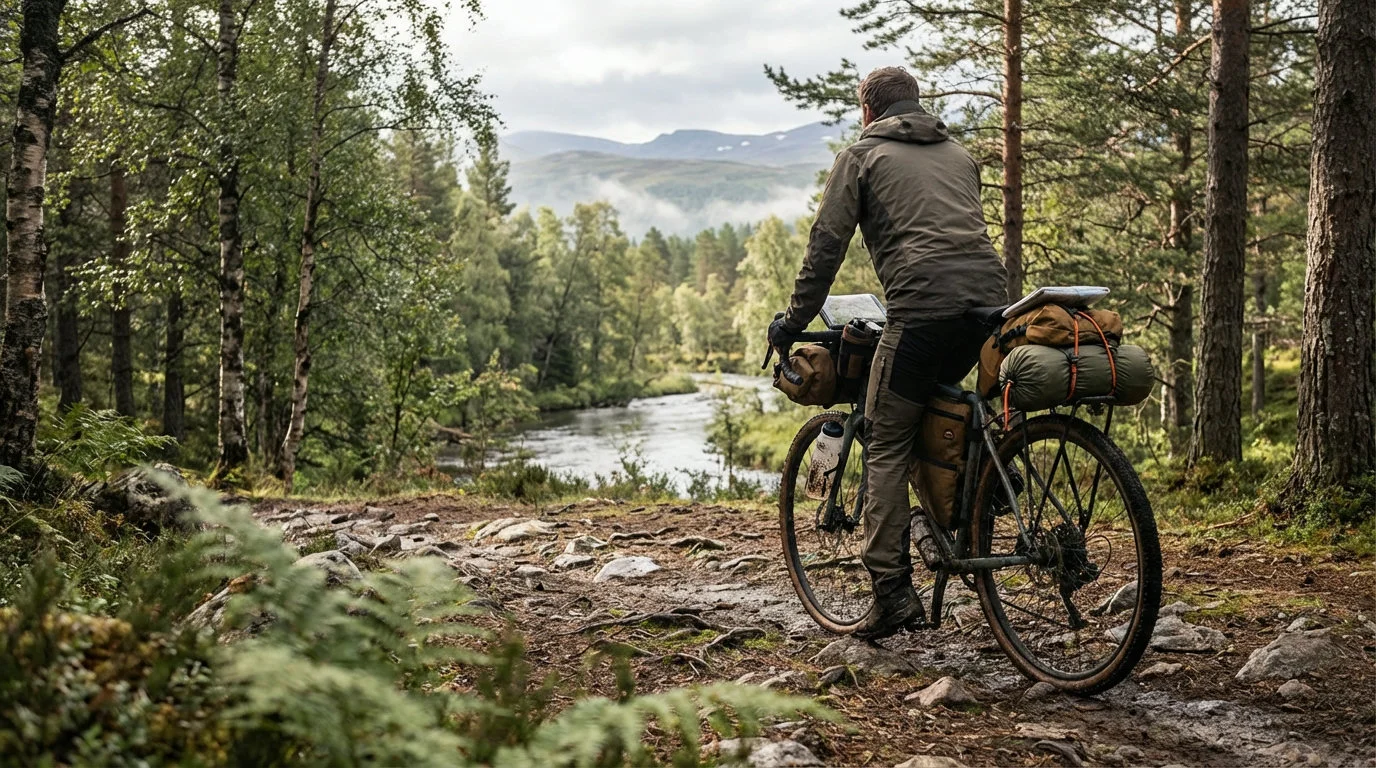
Conclusion: just set off
Bikepacking needs less preparation than most people think. A roadworthy bike, three bags and a weekend route close to home are all you need at first. Pack what you have, choose a nearby destination and set off. The best kit is useless if it stays in the cellar.
Frequently asked questions
Do I need a gravel bike for bikepacking?
No. Any well-maintained bike with puncture-resistant tyres will work: mountain bike, trekking bike or road bike with wider tyres. A gravel bike is comfortable on gravel, but it is not essential for getting started.
How much does it cost to start bikepacking?
If you already own a bike, roughly €150 to €350 will usually cover bags and a lightweight tent. Many people improvise with dry bags and bungee cords at first, which brings the cost down further.
How many kilometres a day are realistic?
For beginners carrying luggage, 60 to 80 kilometres a day is a useful guide. Climbs and unsealed surfaces take considerably more effort than a familiar evening ride.
Where can I stay overnight while bikepacking?
The rules depend on the country. In Germany, for example, wild camping is generally not allowed, so campsites, trekking sites and official bivouac areas are the legal options. In Scandinavia, right-to-roam rules make wild camping broadly possible. Check the local rules before you set off.
What is the most common beginner mistake?
Taking too much. Most newcomers pack twice as much as they need. After the first ride, you will cut it back sharply. That is normal and part of learning.
Ready for your first bikepacking adventure?
From bike bags and lightweight tents to rain jackets, SportFits has the kit you need to start bikepacking.
Discover bikepacking kit ↗Inspiration, knowledge and gear for people who want more from the outdoors.