
Buying Guides
Via ferrata gear: what to pack for a day tour
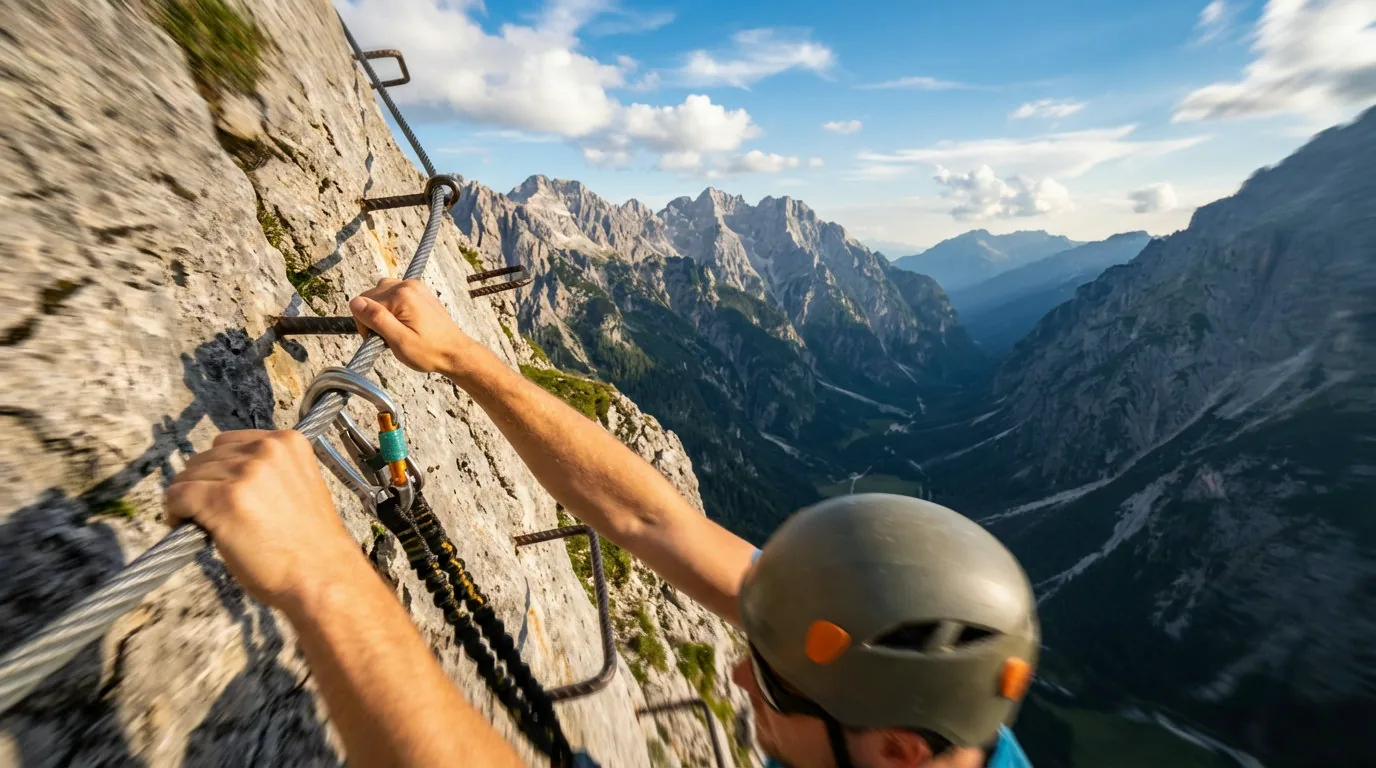
Harness, helmet, food and the rest of your kit for a day on a via ferrata, with a packing list and advice on safety and planning.
The essentials at a glance
- 01
A via ferrata set, harness and helmet are compulsory. Without all three, you have no business on the steel cable
- 02
Sturdy category B/C mountain boots give you grip on iron rungs and rock
- 03
Layered clothing lets you adapt when the weather changes quickly
- 04
Allow at least 1.5 litres of water and energy-rich snacks for a day tour
- 05
A first-aid kit, emergency blanket and charged phone belong in every pack
Steel cables, steep ladders and exposed traverses: a via ferrata tests you and your kit in equal measure. Set off well prepared and the day is far more relaxed. This guide shows which equipment you really need for a day tour on a via ferrata and what to look for when you choose it.
The basics you can't do without
Six pieces of equipment form the core of every via ferrata tour. They make sure your protection on the steel cable works and the rock under your feet doesn't turn into a slide. Nobody should go without them, however easy the route.
| Equipment | Function | What to look for |
|---|---|---|
Climbing harness | Connection to the steel cable | Sit harness with a front tie-in point and good padding for longer spells hanging in it |
Via ferrata set | Connection to the cable with energy absorber | Current EN 958 standard; weight range 40–120 kg, check the marking |
Helmet | Protection from rockfall and knocks | Adjustable fit, light, well ventilated |
Mountain boots (cat. B/C) | Grip on rock and iron rungs | Ankle-high, stiff sole, grippy tread |
Rest lanyard | A rest on exposed sections | Webbing sling with a large karabiner for clipping in |
Via ferrata gloves | Protection from frayed cable wires and better grip | Full-finger or fingerless, as you prefer |
Clothing for every kind of weather
On a via ferrata, conditions often change faster than you expect. The sun bakes the rock face while the wind whistles across the ridge. Layering is the best strategy: several thin layers you can combine to suit the situation.
Technical T-shirt Base layer
Moves moisture straight away from your skin. Synthetic fabrics or merino wool work well. Avoid cotton: it holds sweat and leaves you cold.
Fleece or softshell Insulation
Keeps you warm during breaks and on the ridge. Light and packable, so it doesn't get in the way in your pack. Fleece dries quickly, softshell adds wind protection.
Hardshell rain jacket Weather protection
Protects you from rain and wind. Waterproof and breathable; in high summer a light 2.5-layer model is enough.
Climbing or hiking trousers Freedom of movement
Hard-wearing, stretchy and easy to move in. No denim, nothing tight. If the weather looks changeable, pack light rain trousers as well.
Add technical socks that help prevent blisters and wick moisture away. On cooler days, a beanie or headband under your helmet is worth having. In strong sun, a light cap protects your neck.
Pack and food: energy for the day
A 20–25 litre daypack is usually big enough for a via ferrata tour. Look for a hip belt that shifts the weight from your shoulders to your hips. A built-in rain cover keeps the contents dry in a sudden shower. The pack should sit close to your back and not slip while you climb.
| Food and drink | Recommendation | Why |
|---|---|---|
Water | At least 1.5 litres, more in hot weather | Dehydration hurts your concentration, which is especially dangerous on the cable |
Snacks | Nuts, dried fruit and cereal bars | Quick energy on the go, light and easy to pack |
Packed lunch | Sandwiches or a lunch box | Keeps you going on longer tours with no hut on the way |
Electrolytes | Magnesium or electrolyte tablets | May help prevent cramps, especially on hot, long days |
Waste bag | Small bag | Carry wrappers and leftovers back down to the valley |
Safety and navigation
Alongside your via ferrata kit, a few safety and navigation items belong in every pack. They take up little room but can be decisive in an emergency.
A compact first-aid kit with dressings, disinfectant, blister plasters and any personal medication is a must. Add an emergency blanket or a light bivvy bag: if you are forced to stop on the rock face, either one keeps you from getting cold.
Sun protection is often underestimated on a via ferrata. Rock reflects a lot of UV radiation. High-SPF sun cream, sunglasses and lip balm always go in your pack.
For navigation, take a topographic map or a via ferrata guidebook, plus a fully charged phone. A head torch weighs next to nothing and is worth its weight in gold if the tour unexpectedly drags on into dusk.
Put on the harness and check the fit
The waist belt sits above your hip bones and every buckle is closed. Thread the front tie-in point correctly and check it twice.
Clip in the via ferrata set
Clip both karabiners to the steel cable. From now on the most important rule applies: at least one karabiner stays on the cable at all times, including when you move past an anchor.
Put on and fasten the helmet
Your helmet sits level on your head. The chin strap is closed and tight enough that the helmet doesn't slip when you bend down.
Keep your distance and start
Only one person at a time between two anchor points. That way no extra load hits the system in a fall. Don't overtake, and stay calm.
Tour planning: the key to a safe day out
The best equipment is little use if the route is beyond you. Honest self-assessment matters more on a via ferrata than almost anywhere else in mountain sports. Difficulty, length and exposure should match the experience, fitness and head for heights of everyone in the group.
Which via ferrata is right for you?
- 1
If you are travelling with children
Choose a route with short cruxes and an easy descent; K1 (A) to K2 (B) is ideal. Belay children on an adult's rope as well, because standard via ferrata sets are only approved from 40 kg.
- 2
If you want to test your fitness
Plan a route with a long approach but moderate via ferrata difficulty, around K2 (B) to K3 (C).
- 3
If you have a good head for heights
Exposed ridges and rope bridges won't bother you, so you can go straight to K3 (C).
Right for you if …
First time on a via ferrata? Start with a K1 (A) or K2 (B) route. Short approaches, moderate exposure and good protection make for a relaxed introduction.
Probably not for you if …
Routes graded K4 (D) and above demand climbing experience, strong arms and a completely steady head for heights. If exposed sections make you uneasy, work your way up gradually.
Check the mountain weather forecast before every tour. Thunderstorms on a via ferrata are life-threatening, because the steel cable becomes a lightning conductor. Start early, take the forecast seriously and switch to a plan B if the weather is unstable.
Factor in the approach and descent too. Many via ferratas are more demanding than the difficulty grade alone suggests. Underestimate the descent and you risk exhaustion in tricky terrain.
Frequently asked questions about via ferrata equipment
Frequently asked questions
Can I wear normal hiking shoes on a via ferrata?
Light hiking shoes without a stiff sole give too little grip on iron rungs and rock. Ankle-high category B/C mountain boots with a stiff sole and grippy tread are the better choice. They keep you stable on small footholds and protect against rolling your ankle.
How much does a complete via ferrata kit cost?
A solid beginner set of harness, via ferrata set and helmet costs around €150 to €250. Add mountain boots from about €150 and gloves from about €20. If you want to try it out first, many mountain schools and Alpine club sections hire out equipment.
Do I need a rope on a via ferrata?
No rope is needed on a protected via ferrata. The fixed steel cable and your via ferrata set do the job. A rope can make sense if the approach or descent crosses unprotected alpine terrain, or if you have children with you.
What should I do if a thunderstorm hits on a via ferrata?
A thunderstorm on a via ferrata is a serious danger, because the steel cable conducts lightning. If you can no longer retreat, put down all metal equipment, crouch in a hollow and keep away from the cable. Better still, check the forecast beforehand and don't set off if conditions are uncertain.
How heavy should my pack be?
For a day tour, 5 to 8 kilograms is a good guide. Too much weight costs strength and freedom of movement on the rock. Anything you don't strictly need stays in the valley.
Pack well and you're halfway up
A via ferrata day tour doesn't need an endless kit list. The right items just have to be there. Harness, via ferrata set and helmet form the base, and stiff mountain boots give you secure footing. Well-chosen layers, enough food and a small safety kit complete your pack.
Choose your route honestly to match your ability and keep an eye on the weather. Then you are ready to head for the vertical.
Via ferrata equipment at SportFits
From harnesses and mountain boots to hardshell jackets: find the right kit for your next via ferrata tour.
Shop via ferrata equipment ↗Inspiration, knowledge and gear for people who want more from the outdoors.