
Buying Guides
Lowa hiking boots: what makes the Bavarian brand special
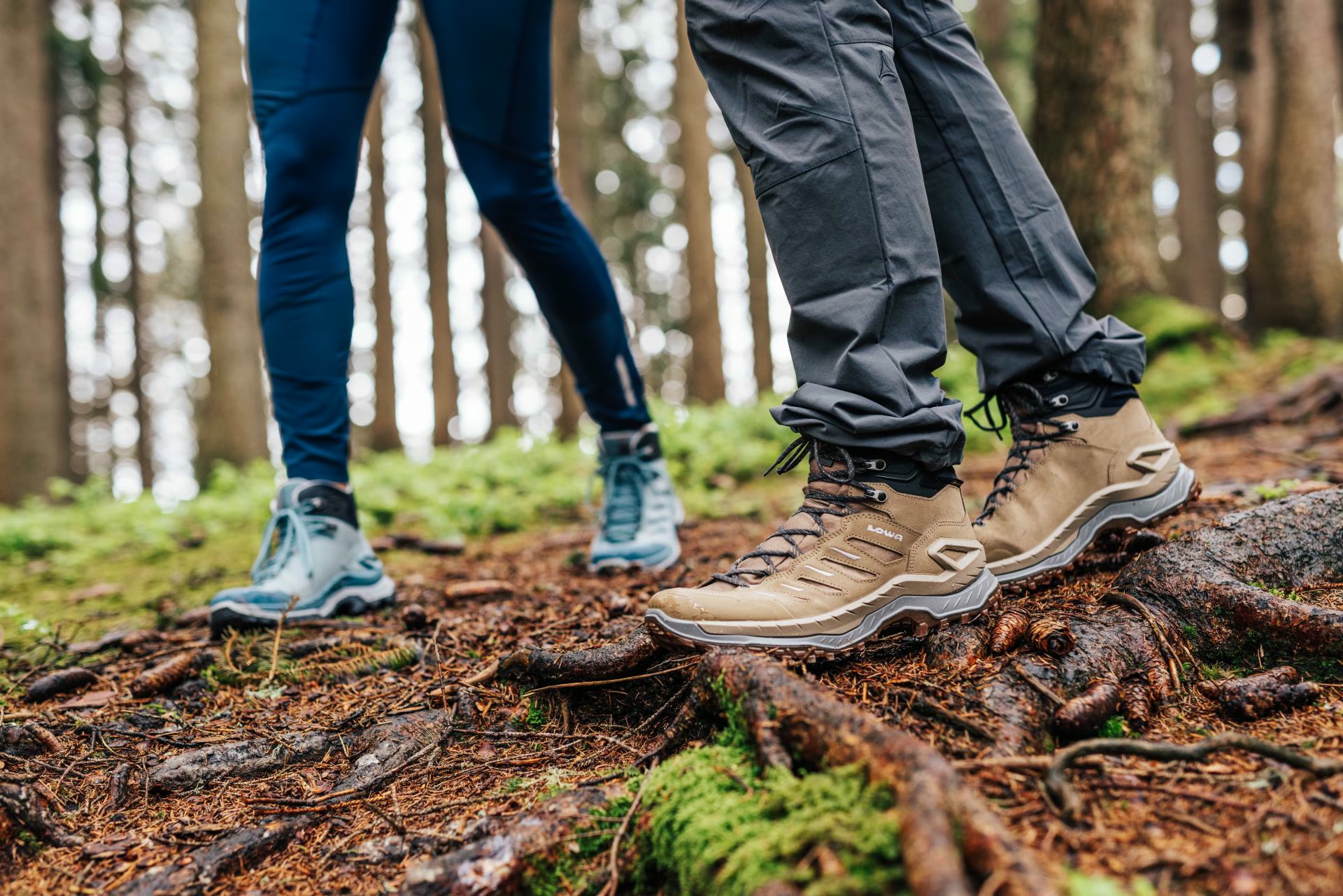
A century of shoemaking, production in Europe and the Renegade, Europe's best-selling hiking boot. Here is why so many hikers swear by Lowa.
Key facts at a glance
- 01
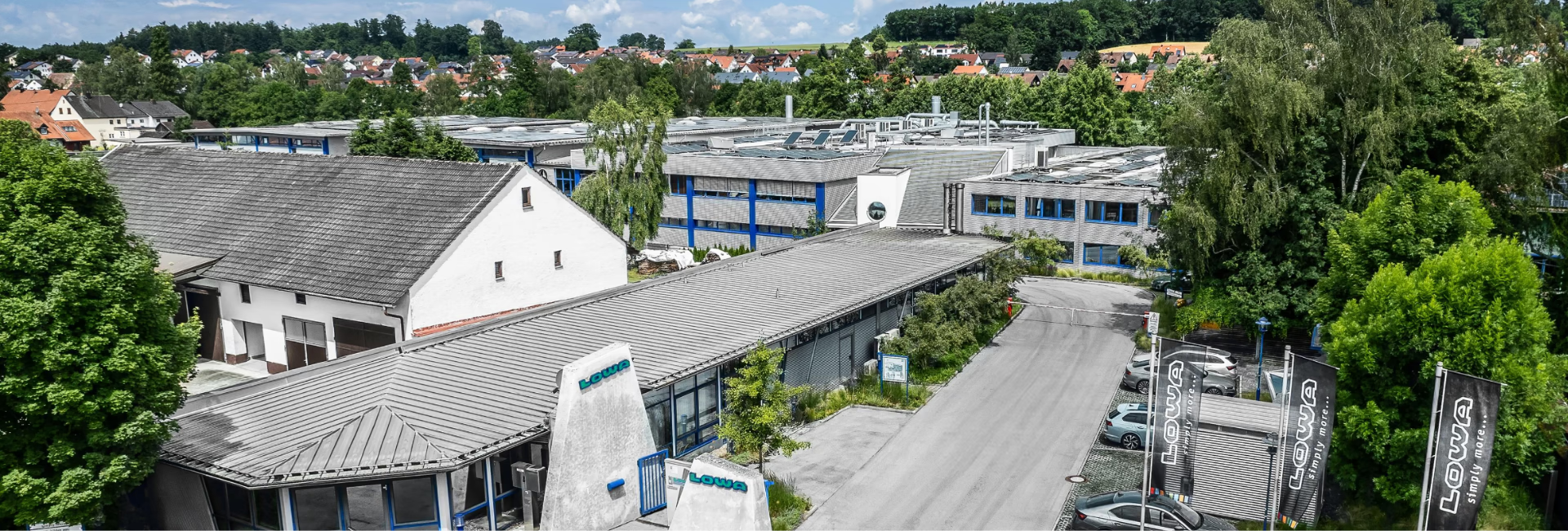
Lowa makes almost 100% of its shoes in Europe, including 400,000 pairs a year at its headquarters in Jetzendorf, Germany
- 02
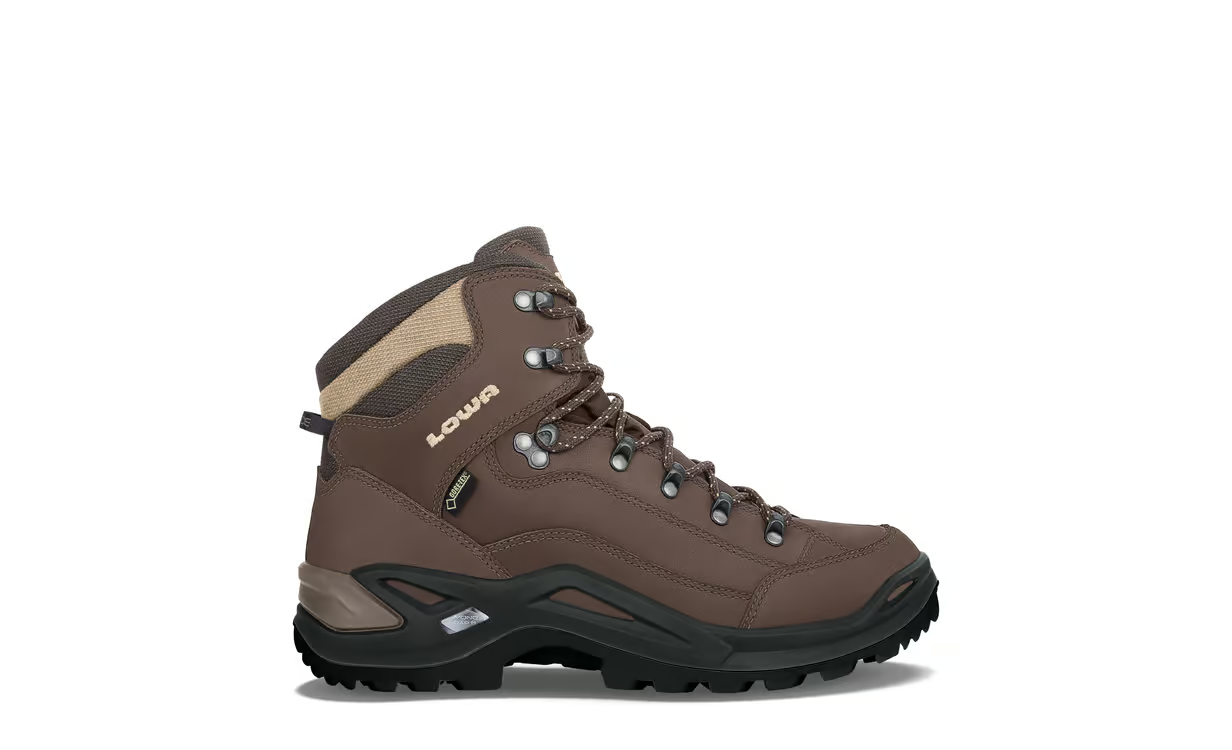
More than 12 million pairs sold make the Renegade Europe's best-selling hiking boot
- 03
Several last widths (standard, narrow, wide, extra wide) help you find a fit for your foot shape
- 04
Lowa's own repair service handles around 40,000 shoes a year. According to Lowa, a full resole costs €100
Lowa is a legend among hiking boots, and not by accident. Whether you're in the Alps or on the hills closer to home, chances are someone in your group is wearing a pair. The Bavarian brand leads the market in Germany, Austria and Switzerland and is one of the world's largest makers of hiking and mountain boots.
Is that just clever marketing? Or is there real engineering behind it? Let's look at both, from the company's history to the technology under your feet.
100 years of history: from Bavarian country shoes to mountain boots
1923: Lorenz Wagner opens a shoe workshop in Jetzendorf, north of Munich. The name LOWA comes from his initials. His brothers Hans and Adolf founded Hanwag and Hochland at the same time. Three brothers, three brands.
The turning point came in 1997 with the Renegade. Established rivals laughed and called it a slipper. Too light, not traditional enough. Lowa saw it differently and bet on new manufacturing methods, directly injected soles and a much lighter build. More than 12 million pairs later, the Renegade is one of Europe's best-selling outdoor shoes. The critics were wrong.
Made in Europe: why Lowa doesn't produce in Asia
Many manufacturers moved production to Asia long ago. Lowa stayed: almost 100% of its production takes place in Europe. That's a deliberate decision, not nostalgia.
In Jetzendorf, 280 people make around 1,000 pairs a day. Sounds like a factory? Not quite. A single trekking boot has up to 185 individual parts, and many of them are assembled by hand. Machines can't match that level of care.
The raw materials are European too: leather from northern Italy and North Rhine-Westphalia, laces from the region, even the shoe boxes come from nearby. Short distances make a level of quality control possible that global supply chains can't offer. You notice it on your feet.
The technology: lasts, soles and membranes
The last is the heart of every shoe. It's the 3D form that decides how the shoe wraps around your foot, and Lowa has been refining its lasts for a century. The result is several versions for different foot shapes: standard, S for narrow feet, W for wide feet and WXL for wide feet with extra room at the toes.
An honest word on fit: Lowa works best for narrow to average feet. Wide feet? Then look at Meindl, however good Lowa is otherwise. The wrong fit ruins even the best boot.
MONOWRAP Frame Stability
A three-dimensional midsole construction that wraps closely around the foot. The raised PU side frame combines stability with cushioning and supports the natural roll of your step.
DynaPU Cushioning
A PU foam developed exclusively for Lowa. It keeps its stability even after being compressed 1,000 times, so the shoe still cushions like new after many kilometres.
I-LOCK System Lacing
Self-locking eyelets at the instep split the lacing into two zones. You can adjust forefoot and ankle separately, which helps on climbs and descents.
Vibram soles Grip
A partnership with the world market leader in rubber soles. Different compounds for different uses: Megagrip, XS Trek, Mont for mountain boots and Arctic Grip for winter.
Need a waterproof boot? Lowa uses GORE-TEX throughout, which you'll recognise by the GTX in the model name. The membrane keeps water out while letting sweat escape as vapour. Lowa picks the GTX version by use: Performance Comfort for changeable conditions, Extended Comfort for warm days and Insulated Comfort for winter. Real specialisation instead of one membrane for everything.
The key Lowa models at a glance
From light hiking shoes to sturdy expedition boots, Lowa covers a wide range. These are the classics hikers actually choose:
| Model | Category | Best for | Weight | Price |
|---|---|---|---|---|
Renegade GTX Mid | A/B | Day hikes, rolling hills | approx. 540g | from €220 |
Innovo GTX Mid | A/B | Easy walks, everyday wear | approx. 480g | from €200 |
Camino GTX | B | Alpine trekking, hut-to-hut tours | approx. 720g | from €290 |
Tibet GTX | B/C | Demanding treks, heavy loads | approx. 940g | from €320 |
Delago GTX | B | Approaches, via ferratas | approx. 620g | from €250 |
The Renegade is the classic. Light, comfortable from the first minute and versatile. Put it on and you'll understand why it has sold 12 million times. The Tibet is the workhorse, built for long treks with a heavy rucksack, wilderness and adventure. The Camino sits in between and handles everything from rolling hills to Alpine treks.
Independent tests back this up. The Corvara GTX Mid was the 2024 test winner among mountain hiking boots, and Outdoor Magazin rated the Delago GTX "outstanding" in 2025. Test results, not marketing slogans.
Who Lowa suits, and who it doesn't
Lowa is the right choice if...
- 1
If you care about European production and repairability
Lowa's own repair service can resole your boots
- 2
If you have narrow to average feet
you'll be very happy with the Lowa fit
- 3
If you want a versatile all-rounder
the Renegade is a safe choice for day hikes and light trekking
- 4
If you have wide feet or bunions
Meindl is probably the better option, as its lasts are roomier
- 5
If a low price matters more to you than repairability
you're better off in the €50 to €100 price range
Right for you if …
People who invest in quality gear and want to use it for years. Hikers with narrow to average feet. Anyone who cares about production in Europe.
Probably not for you if …
Hikers with wide feet (Meindl often fits better). Occasional hikers who only go out two or three times a year. Beginners on a budget who first want to find out whether hiking is for them.
Strengths and weaknesses
What speaks for it
Almost 100% European production with high quality and social standards
Several last widths for different foot shapes
In-house repair service with full resoling
Own technologies such as MONOWRAP and DynaPU
Premium partners: Vibram soles and GORE-TEX membranes
Regular test wins in specialist magazines
What to weigh up
Premium prices from around €200, so not for every budget
Tends to fit narrow, so not ideal for wide feet
Some models, such as the Tibet, take longer to break in
Traditional models are heavier than ultralight trail running shoes
Repairs and resoling
This is the detail that matters: repairability. Lowa runs its own repair service, which according to the company receives around 40,000 shoes a year. Your trekking boots can be fully resoled for €100. Seams, heel linings, eyelets: all repairable. Expect two to three weeks for the work.
A boot you can repair doesn't need replacing the moment the sole wears down. Lowa also says it is aiming for PFC-free production from 2025.
FAQ: Lowa hiking boots
Frequently asked questions
Are Lowa boots really made in Germany?
Partly. At the Jetzendorf headquarters, 400,000 pairs a year are made entirely in Germany. Other models come from Italy and Slovakia. Overall, almost 100% of Lowa's production is in Europe, unlike many competitors that manufacture in Asia.
How do Lowa boots fit?
Lowa is known for suiting narrow to average feet. There are several last widths, though: standard, S lasts for narrow feet, W lasts for wide feet and WXL with extra room at the toes. If your feet are very wide, Meindl may be the better option.
Can I get my Lowa boots resoled?
Yes. Boots in the Trekking and Mountaineering categories can be fully resoled for €100. The service also repairs seams and heel linings. It takes around two to three weeks.
What's the difference between Lowa and Meindl?
Both are premium Bavarian brands with production in Europe. The main difference is fit: Lowa tends towards narrower lasts, Meindl towards roomier ones. The choice often comes down to your foot shape, as both make excellent boots.
Is Lowa worth the higher price?
It depends on how you use them. If you hike regularly and wear the boots for years, the higher price evens out, especially as trekking boots can be resoled. For occasional hikers, a cheaper entry-level model may be enough.
Our verdict
Lowa has earned its reputation. A century of shoemaking, production in Europe and steady innovation: that combination is rare. The Renegade shows how much loyalty a good boot can build. On top of that, Lowa's own repair service resoles worn boots.
Lowa isn't for everyone, though. Wide feet? Look at Meindl. Ultralight trail running shoes? Others do those better. Tight budget? There are cheaper options.
If you want a hiking boot you can have resoled and your foot shape suits the last, you can't go far wrong with Lowa. That's what hikers report after years on the trail.
Find your Lowa at SportFits
Browse our Lowa hiking boots, from the versatile Renegade to the sturdy Tibet for demanding treks.
Shop Lowa boots ↗Inspiration, knowledge and gear for people who want more from the outdoors.