

Training & Health
Tired despite coffee? How to use caffeine wisely
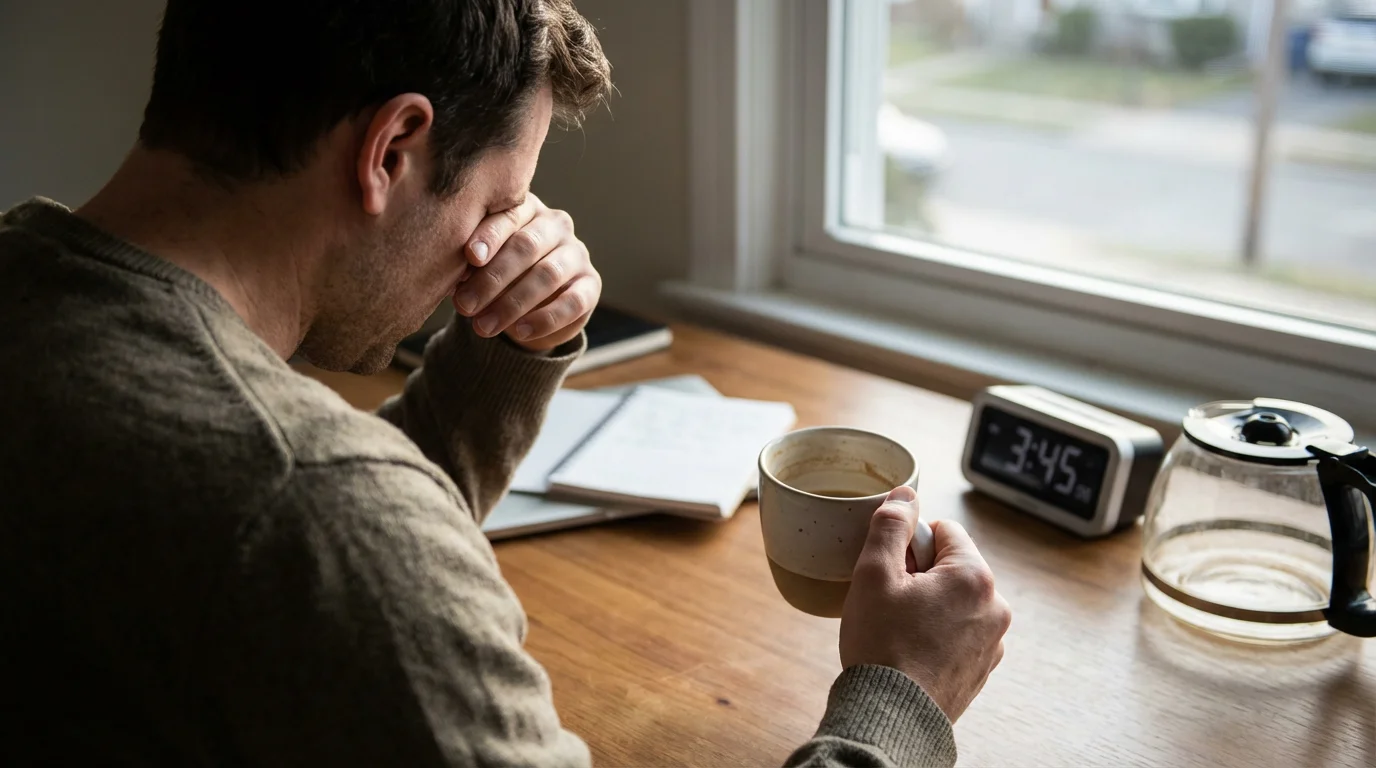
You drink coffee and still feel sluggish? Timing and dose decide whether caffeine keeps you alert or disrupts your sleep. An evidence-based guide.
The key points at a glance
- 01
Caffeine has a half-life of around 5 hours. Have your last coffee at least 8–9 hours before bedtime.
- 02
EFSA considers up to 400 mg per day safe for healthy adults. During pregnancy, the limit is 200 mg.
- 03
Poor sleep caused by caffeine often goes unnoticed, although sleep quality can deteriorate measurably.
- 04
A power nap, movement and a protein-rich snack can tackle the afternoon slump without caffeine.
Why coffee sometimes fails to make you alert
You know the feeling: it is your third coffee of the afternoon, yet the tiredness remains. You may even feel more exhausted afterwards. There are biological reasons.
Caffeine blocks adenosine receptors in the brain. Adenosine builds up during the day and signals that the body needs rest. Caffeine masks this signal while sleep pressure continues to rise.
Once the effect fades, the accumulated tiredness can hit harder. A PET study found that repeated caffeine use can occupy up to 50% of A1 receptors.
The four most common reasons for the caffeine paradox
When coffee stops working or makes you tired, one of these mechanisms is usually involved:
1. Your sleep is worse than you think: A meta-analysis of 24 studies found 45 minutes less total sleep, 9 minutes longer sleep onset and 7% lower sleep efficiency on average.
2. Tolerance: Regular caffeine intake makes the adenosine system adapt. The familiar kick fades, so the dose rises.
3. Afternoon withdrawal: Delaying or skipping a daily dose can cause tiredness, headache and concentration problems within 12–24 hours.
4. Stacking: Caffeine consumed at 11:00, 14:00 and 16:00 can still be active in the evening, reducing sleep quality.
Pharmacokinetics: why people respond so differently
Caffeine has an average half-life of about 5 hours, but the range is wide: 2 to 12 hours. A 100 mg coffee at 16:00 can leave about 50 mg in your bloodstream at 21:00.
The liver enzyme CYP1A2 breaks caffeine down. Genetic variants, medication, pregnancy and age can all slow the process.
| Factor | Effect on half-life | Practical consequence |
|---|---|---|
Genetics (CYP1A2) | Can slow breakdown significantly | Same dose, different duration |
Smoking | Tends to speed up breakdown | Higher tolerance possible |
Oral contraceptives | Tends to slow breakdown | Take care with afternoon coffee |
Pregnancy | Much longer half-life | Observe stricter limits |
Age | Often longer in older people | Set an earlier cut-off |
What the science says about caffeine and sleep
The effects of caffeine on sleep are well documented. A 2023 systematic review and meta-analysis of 24 studies found clear effects:
| Sleep parameter | Average effect |
|---|---|
Total sleep time | −45 minutes |
Sleep-onset latency | +9 minutes |
Wake time after sleep onset | +12 minutes |
Sleep efficiency | −7% |
Deep-sleep proportion | Reduced |
The study recommends leaving at least 8.8 hours between a typical 107 mg coffee and bedtime. For a 217 mg pre-workout supplement, the recommended gap is 13 hours.
The American Academy of Sleep Medicine advises avoiding substantial caffeine for at least 6 hours before sleep. For good sleep, a longer buffer is sensible.
How much caffeine is safe? Official recommendations
EFSA and the US Food and Drug Administration (FDA) have defined clear reference values:
| Group | Daily dose | Single dose |
|---|---|---|
Healthy adults | Up to 400 mg | Up to 200 mg |
Pregnant people | Max. 200 mg | |
Breastfeeding people | Max. 200 mg |
A 200 ml filter coffee contains about 90 mg of caffeine, a 60 ml espresso 60–80 mg. Black tea has about 50 mg per cup, cola around 40 mg per 300 ml can, and dark chocolate more than 40 mg per bar.
Most people get useful alertness from 50–100 mg per dose. Higher doses mainly increase nervousness, palpitations and sleep problems.
The timing algorithm: find your cut-off
Set your target bedtime
When do you want to fall asleep? Example: 23:00.
Calculate your cut-off
Bedtime minus 9 hours = 14:00. The 6-hour minimum gives 17:00 and is for exceptional situations only.
Structure your dose
One or two defined morning doses are better than constant top-ups.
Observe and adjust
Track sleep for 1–2 weeks. If problems appear, move the cut-off 1–2 hours earlier.
Which strategy is right for whom?
- 1
If you want to protect your sleep consistently
make 14:00 your standard cut-off and have no more than two morning cups
- 2
If you metabolise caffeine efficiently and sleep well
try 17:00 as your cut-off, but track your sleep objectively
- 3
If you need energy after 14:00
use caffeine-free alternatives instead of a third cup
- 4
If you are pregnant or breastfeeding
limit yourself to 200 mg per day and consult your doctor or midwife
- 5
If you have anxiety or sleep problems
reduce caffeine substantially or avoid it altogether
Right for you if …
Active adults who want to use caffeine strategically without sabotaging their sleep
Probably not for you if …
High caffeine intake is unsuitable for people with anxiety disorders, cardiac arrhythmias, serious sleep problems or during pregnancy
Three alternatives to the afternoon slump
The afternoon slump is biologically normal. These strategies often work better than risking your sleep with caffeine:
1. Power nap (10–20 minutes): A short nap is a reliable countermeasure. Keep it under 20 minutes to avoid waking groggy.
2. Light and movement (2–10 minutes): Bright light, a walk, stairs or mobility exercises can lift alertness through activation and circadian signals.
3. Protein-rich snack: Skyr with berries, nuts or vegetables with hummus can stabilise energy better than sweets.
Safety notes: brief and factual
Marked nervousness, a racing heart or sleep problems usually reflect the combination of dose, timing and habituation. This can be managed.
Caffeine is not a medicine and most people tolerate recommended amounts well. Take particular care if you have:
What speaks for it
Moderate consumption (2–4 cups) is safe for most people
Positive effects on concentration and alertness are well documented
Filter coffee has advantages over unfiltered coffee for LDL cholesterol
What to weigh up
Pregnancy: max. 200 mg/day
Anxiety disorders: symptoms may worsen
Cardiac arrhythmias: discuss with a doctor
Sleep problems: less is often more
Bottom line: caffeine is a tool, so use it wisely
Caffeine can improve alertness and concentration if you respect its pharmacokinetics. Use timing before quantity, defined doses instead of constant top-ups, and a cut-off that protects sleep.
The 14:00 rule is a good starting point. If coffee no longer works, pause or adjust the timing instead of adding more.
When the afternoon slump arrives, a short nap, movement or a protein-rich snack is often a better choice than a third cup.
Frequently asked questions
How long before bedtime should I stop drinking coffee?
At least 8–9 hours is the evidence-based recommendation. If you go to bed at 23:00, 14:00 is a good cut-off. Six hours is the absolute minimum.
Can I reset my caffeine tolerance?
Yes. Avoiding caffeine for 7–14 days can partly restore sensitivity. Headaches and tiredness usually ease after 2–9 days.
Why do I sleep well even though I drink coffee in the evening?
Subjective perception and objective sleep quality can differ. Caffeine can reduce deep sleep even when falling asleep feels easy.
Is decaf a good alternative?
Yes, especially in the afternoon. Decaf contains around 2–5 mg per cup, so you keep the ritual with little caffeine.
How much caffeine is really in my coffee?
It varies: filter coffee (200 ml) has about 60–120 mg, espresso (60 ml) 60–90 mg and instant coffee 30–90 mg.
Sources
- EFSA Scientific Opinion on Caffeine Safety
- Gardiner et al.: The effect of caffeine on subsequent sleep: a systematic review and meta-analysis (Sleep Medicine Reviews, 2023)
- Alsene et al.: Dose and timing effects of caffeine on subsequent sleep (Sleep, 2024)
- Boulenger et al.: Caffeine occupancy of human cerebral A1 adenosine receptors (Journal of Nuclear Medicine, 2012)
- Julien & Bhattacharji: Pharmacokinetics of Caffeine: A Systematic Analysis (Frontiers in Pharmacology, 2021)
- Juliano & Griffiths: A critical review of caffeine withdrawal (Psychopharmacology, 2004)
- American Academy of Sleep Medicine: Caffeine in late afternoon can disrupt sleep
- FDA: Spilling the Beans: How Much Caffeine Is Too Much?
Inspiration, knowledge and gear for people who want more from the outdoors.