

Training & Health
Japanese Walking: how interval walking works

Three minutes brisk, three minutes easy, five times over. Why this Japanese method is going viral in 2026 and what the Shinshu University research says.
The essentials at a glance
- 01
Japanese Walking is an interval walking method: 3 minutes brisk alternating with 3 minutes easy, around 30 minutes per session.
- 02
It goes back to a study at Shinshu University in Japan (Nose & Masuki, 2007) and counts as one of the fastest-growing fitness trends worldwide in 2026.
- 03
Studies show clear advantages over walking at a steady pace: better endurance, stronger leg muscles, lower blood pressure.
- 04
Ideal if you are starting out or coming back: gentler on your joints than jogging, and you need nothing but comfortable shoes.
- 05
Four to five sessions a week are enough to feel a measurable effect after a few weeks.
What is Japanese Walking?
At its core, Japanese Walking is interval walking: you switch between a brisk and an easy phase. For three minutes you walk briskly, fast enough that a longer conversation gets hard. Then come three minutes at a relaxed pace for active recovery. Repeat that five times. Around 30 minutes in total.
It sounds unremarkable, and that is exactly what makes it attractive: no gym, no expensive kit, no long learning curve. Comfortable shoes and a watch will do. Even so, switching between effort and recovery works your heart, circulation and leg muscles. That is the difference from a steady stroll.
Where does the method come from?
The method was developed by researchers Hiroshi Nose and Shizue Masuki at Shinshu University in Matsumoto. Their key study appeared in Mayo Clinic Proceedings in 2007: 246 participants with an average age of 63 were compared over five months in three groups: no walking, steady walking and interval walking training.
The result was clear. The interval group did better on every measure. Peak oxygen uptake (VO2peak) rose by around 10 per cent and leg strength by 13 to 17 per cent. Those who walked without changing pace showed hardly any change.
The method's sudden global take-off in 2026 has less to do with new research than with social media. Videos tagged Japanese Walking have millions of views on TikTok and Instagram, and according to data from fitness chains, searches have also shot up.
How the training works step by step
Warm up at an easy pace
Start with five minutes at a relaxed walking pace. Your circulation gets going and your muscles warm up. Short on time? Use this as your first easy three-minute phase.
Walk briskly for three minutes
Walk fast enough that you can still breathe but can no longer hold a long conversation. In the research, this is about 70 per cent of your peak oxygen uptake. In everyday terms, you will be slightly out of breath.
Walk easily for three minutes
Shift down a gear straight away. This is your active recovery, at roughly the pace of a relaxed Sunday stroll. Your breathing and pulse settle and you recharge for the next interval.
Repeat the switch five times
In total you complete five brisk and five easy phases, which makes 30 minutes of pure training time. A watch or timer helps you keep to the rhythm.
Cool down with an easy walk
Finish with two to three minutes of comfortable walking. This brings your pulse down gradually and helps prevent sore calves.
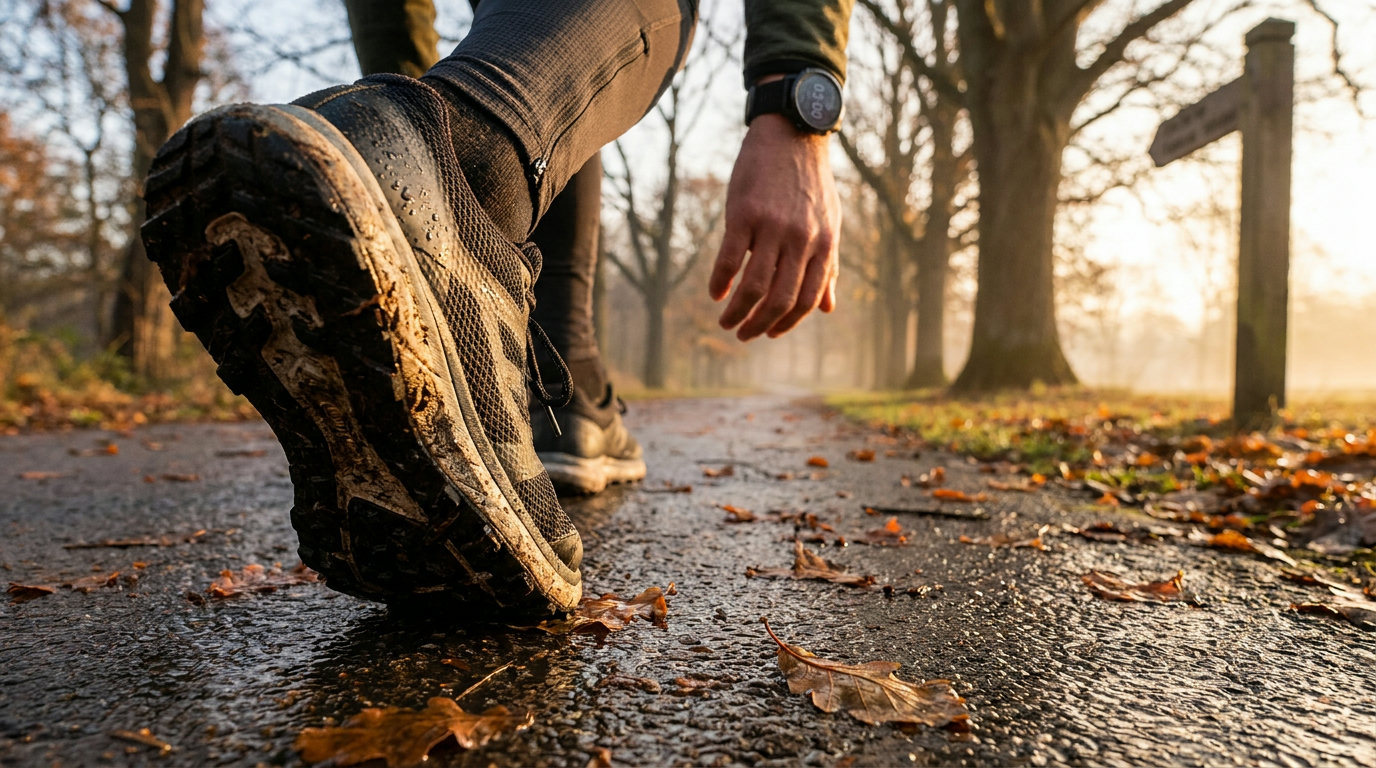
What are the benefits of Japanese Walking?
Studies back up the effects well. In the Shinshu research, endurance improved, and blood pressure also fell more than in the steady walking group, especially in participants with high starting values. Later studies confirmed effects on leg muscles, glucose metabolism and general wellbeing.
What this means day to day: after just four to five weeks of regular training, many beginners notice a clear difference. Stairs feel easier. Your pulse settles faster, and sleep often improves.
What speaks for it
Proven effects on endurance, blood pressure and leg strength, at any age
Gentler on your joints than jogging, as there is no flight or impact phase
No gym, no kit, no prior knowledge. You can start in under 5 minutes
Easy to fit into your day, for example on your commute or in your lunch break
What to weigh up
The brisk phase is harder than it sounds, and many people underestimate it at first
If you have orthopaedic or balance problems, talk to your doctor first
For ambitious runners, the stimulus is not enough as their only endurance training
Who is the method suitable for?
Japanese Walking is made above all for a group that often gets overlooked: people who want to move more but don't want to jump straight into hard endurance training. Beginners benefit, and so do people returning after a break or illness, those short on time and anyone who wants to go easy on their joints.
If you are an active mountain athlete or trail runner, the method can still be useful as extra recovery training on easy days, or to build a base when you prepare after the winter.
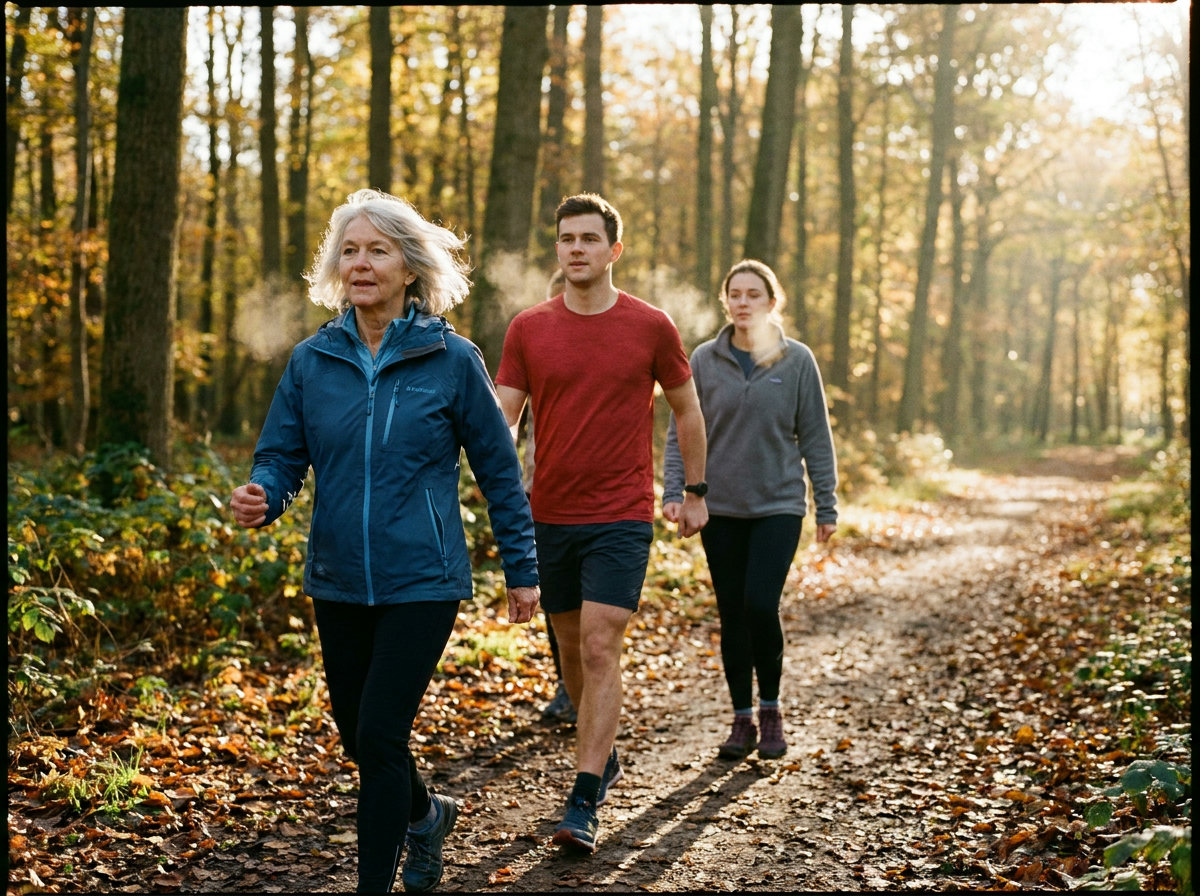
Who is Japanese Walking for, and who not?
- 1
If you want to return after a long break
Japanese Walking is ideal: a low barrier and a clear training stimulus
- 2
If you have little time but want to train regularly
The 30-minute format fits easily into your day
- 3
If you want to go easy on your joints
The method is a better choice than jogging
- 4
If you already run or go hiking in the mountains regularly
Japanese Walking complements your training on recovery days
- 5
If you are preparing for a race
The method alone is not enough. You need extra, harder stimuli
Right for you if …
Beginners, returners and anyone who wants an easy way to bring more movement into daily life.
Probably not for you if …
Ambitious endurance athletes who already do tempo runs and intense intervals.
How to get started as a beginner
You don't have to do 30 minutes in one go straight away. If you are completely new to training, start with 10 to 15 minutes and build up over two to three weeks. What matters is that the brisk phase is genuinely demanding. Otherwise you lose the training stimulus.
A flat route makes the start easier: you can focus on breathing, stride and pace instead of battling hills. If you like, use a heart-rate monitor or your smartwatch's heart-rate function to check the intensity.
Want to control the intensity even more precisely? Use heart-rate zones. Our heart-rate zone calculator shows you which range your brisk phase should hit. As a rough rule of thumb: the upper end of zone 2 to the lower end of zone 3.
Japanese Walking compared
Where does Japanese Walking sit between an ordinary stroll and jogging? This overview shows the main differences and why, for many people, the method hits exactly the right middle ground.
Three types of training compared
| Criterion | Stroll | Japanese WalkingRecommended for many | Jogging |
|---|---|---|---|
Intensity | low | medium to high (intervals) | high |
Joint load | very low | low | medium to high |
Barrier to entry | none | very low | medium |
Cardiovascular training stimulus | low | clear | high |
Effect on leg strength | low | noticeable | high |
Time per session | 30–60 min | about 30 min | 20–60 min |
Suitable in later life | yes | yes | with limitations |
Frequently asked questions
Frequently asked questions
How often a week should I do Japanese Walking?
In the original research, participants trained four to five times a week. As a beginner, three sessions are enough in the first few weeks. Regularity matters more than frequency.
How fast is "brisk", really?
Rule of thumb: you can still say short sentences, but you can't hold a longer conversation. On a heart-rate monitor, this is often 70 to 80 per cent of your maximum heart rate. For more precision, use a heart-rate zone calculator.
Does Japanese Walking help with weight loss?
Studies show a reduction in fat mass after several months of regular training. The method alone won't make the kilos drop quickly, though. Diet plays the bigger role. As part of an active everyday life, it still helps noticeably.
Do I need special walking shoes?
No. Comfortable trainers with good cushioning are enough. The only thing that matters is that your shoes don't pinch and your foot feels secure. Walking-specific models help mainly with very long sessions or sensitive joints.
Is Japanese Walking better than 10,000 steps a day?
Both approaches have their place. The 10,000-step rule targets everyday movement, while Japanese Walking aims for a focused training stimulus in a short time. In the Shinshu study, the interval group did better than the steps-only group, especially in endurance and leg strength.
More tools for your training
From the pace calculator to the layering guide, discover our calculators for smarter training.
Explore all tools ↗Related articles and tools for your training and your longevity routine.
Sources
- Nose H. et al.: Effects of High-Intensity Interval Walking Training on Physical Fitness and Blood Pressure (Mayo Clinic Proceedings, 2007) ↗
- Masuki S. et al.: High-Intensity Walking Time Is a Key Determinant to Increase Physical Fitness (Mayo Clinic Proceedings, 2019) ↗
- Shinshu University: Interval Walking Training research programme ↗
- TIME: What Experts Think About the Japanese Walking Trend ↗
- aponet: Japanese walking step by step (in German) ↗
- Barmer: Japanese walking, the small full-body workout for every day (in German) ↗
Inspiration, knowledge and gear for people who want more from the outdoors.