
Training & Health
Training in the heat: push on, scale back or postpone?
A traffic light for hot days tells you when to train as planned, when to scale back and when to postpone. Plus your own hydration numbers, a strength routine for the shade and what two weeks of heat teach your body.
Key points
- 01
Air temperature doesn't decide it. What counts is the felt temperature, which combines heat, humidity, sun and wind. National weather services across Europe issue yellow, orange and red heat warnings on that basis, and the exact thresholds differ by country.
- 02
Humidity is the real opponent. In damp air, sweat evaporates poorly and your cooling breaks down, even though you sweat more.
- 03
Steer by heart rate, breathing and the talk test rather than your usual pace. The same session costs far more in the heat.
- 04
There is no drinking volume that works for everyone. Sweat rates swing widely with the person, the weather, clothing and effort.
- 05
Your body learns heat. After one to two weeks of regular, measured exposure, your circulation and sweat glands work noticeably more efficiently.
Why heat asks something different of your body
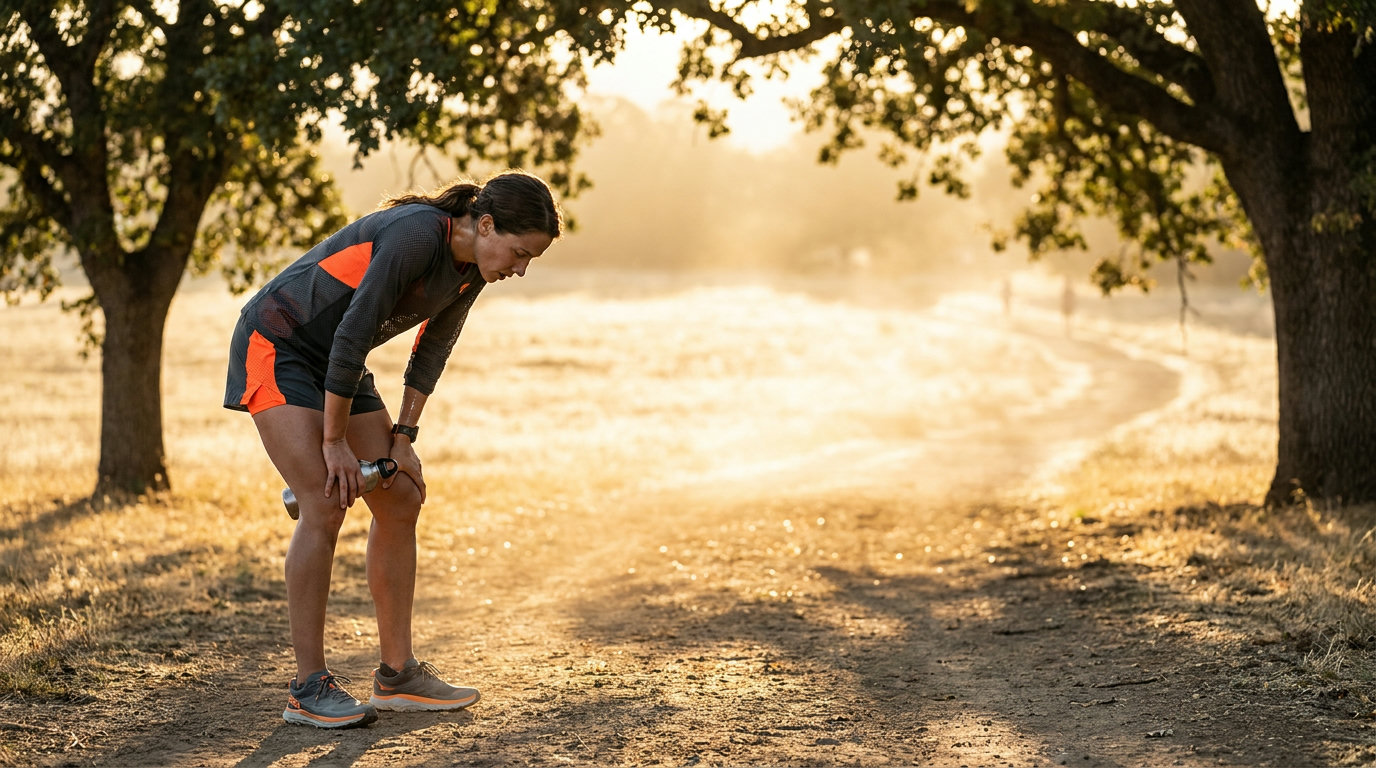
You head out on your usual loop. Same route, same plan, same mindset. Yet your heart rate sits ten beats higher, your legs feel heavy after twenty minutes, and you finish more drained than after your last long run in May. None of that means you've lost fitness.
In warm weather your circulation has two jobs at once: supplying your working muscles with blood and releasing heat through the skin. Both draw on the same cardiac output. So your heart rate climbs at the same output, the effort feels harder and performance drops. On top of that, you lose water and salt through sweat.
The number on a thermometer in the shade isn't what matters. Weather services use the felt temperature, which accounts for radiation, humidity, wind and your body's own heat balance. Europe's national weather services publish heat warnings in yellow, orange and red on that basis, and Meteoalarm collects them for the whole continent. The thresholds behind each colour are set nationally, so check the warning for the place where you actually train.
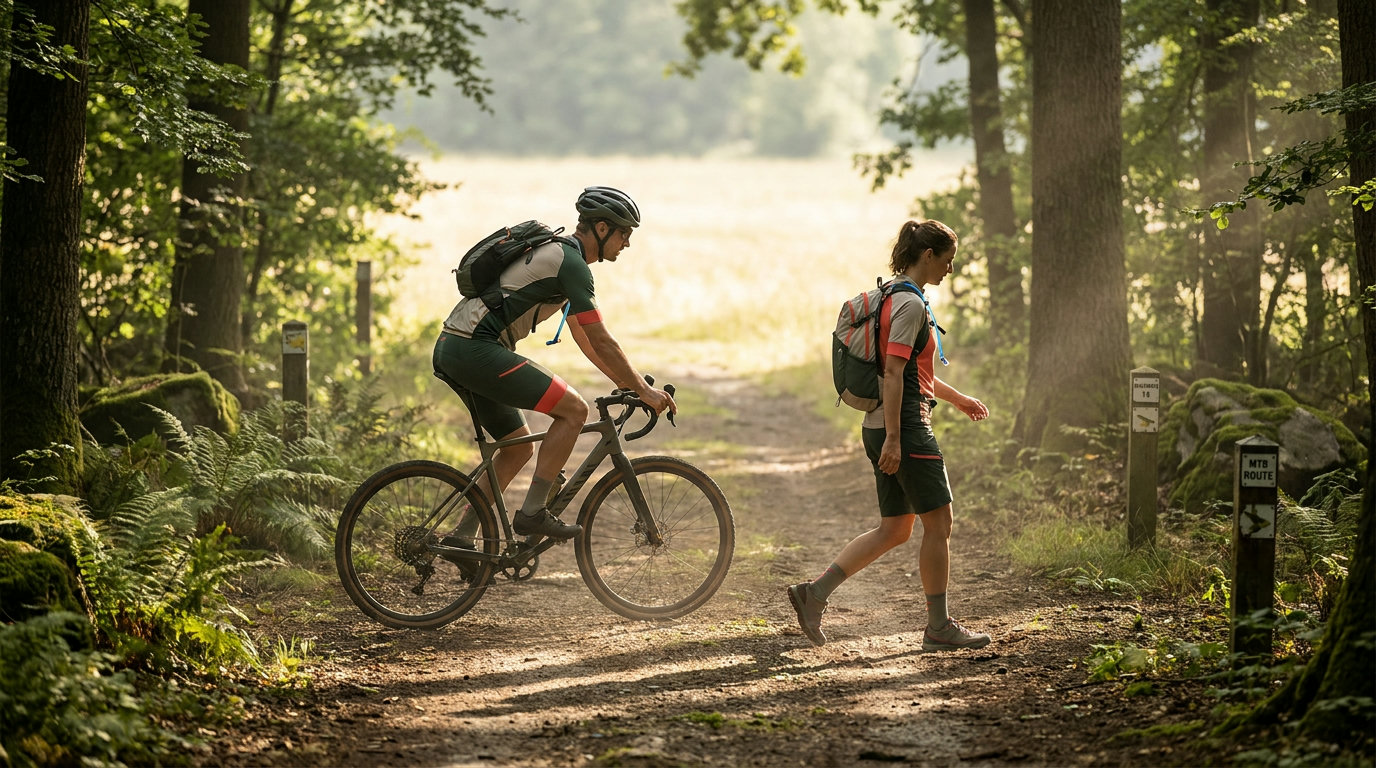
The traffic light: train, scale back or postpone
Most summer advice stops at "get out early and drink plenty". That doesn't help much at four o'clock on a Tuesday afternoon, when the only question is whether you go or not.
So here is a traffic light. It uses the felt temperature rather than the thermometer reading, and it is our editorial rule of thumb, not a medical verdict or an official warning level. As a rough guide, air temperature plus high humidity plus direct sun quickly adds up to a felt temperature well above the measured value.
The heat traffic light for your session
| Green: train as normal | Amber: scale backThe most common case | Red: postpone | |
|---|---|---|---|
Felt temperature | below about 28 °C | about 28 to 32 °C | from about 32 °C, and at the latest when an official warning is issued |
Intensity | as planned, speed work is fine | easy aerobic work, drop the hard intervals | no intense outdoor training |
Duration | unchanged | cut by 20 to 40 per cent | reduce to short, easy movement somewhere cool |
Time of day | flexible | before 9 am or after 7 pm | early morning, otherwise indoors |
Route | your choice | shade, woodland, water nearby | sports hall, cool basement, swimming pool |
Steering by | pace or watts | heart rate, breathing, talk test | feel and common sense |
The amber column is what a typical European heatwave day looks like, and it's where most mistakes happen. Running your spring interval session at 30 °C doesn't make you train harder. You just build up fatigue that comes back three days later as a bad session.
Two rules make the difference. First, steer by perceived effort. If you can talk in full sentences, you're in the easy zone. If you can't, it's too much for a 31-degree day. Second, postponing is no defeat. A session you move to the next morning isn't a lost session.
Hydration: your numbers, not a rule of thumb
"Two litres a day, half a litre an hour when you exercise." Figures like these sound practical. They don't hold up.
The scientific consensus in sport is clear: sweat rates vary enormously between people and situations. Clothing, fitness, intensity, humidity and wind can change your needs several times over. A blanket figure fits almost nobody. You end up either under-hydrated or with too much fluid sloshing in your stomach.
A better approach is to find your own number. It takes a single training session.
Weigh yourself before the session
Wear as little as possible and go to the toilet first. Note your weight.
Train normally and keep notes
Train for one hour in summer conditions. Note how much you drink along the way.
Weigh yourself again afterwards
Again wearing very little, after towelling dry. The difference plus what you drank gives you your approximate sweat loss per hour.
Interpret the result
If you lose more than about two per cent of your body weight, you drank too little. Adjust the amount in your next session rather than doubling it.
Think about salt
For sessions over an hour, heavy sweating or white salt marks on your skin, electrolytes start to matter. For short, easy runs, water is enough.
Two per cent of 75 kilograms is one and a half kilos. That sounds like a lot, and on a humid day you reach it quickly. What matters is the direction, not the decimal point: you want to know whether you're a heavy or a light sweater. Everything else follows from there.
Your muscle account: the underrated summer session
This is the part that lasts beyond summer. The real question isn't how you get through July. It's whether at 70 you can still do the mountain hike you managed at 40.
For that, muscle is the hardest currency. From around the age of 30 we lose it steadily unless we do something about it. The WHO recommends that adults do muscle-strengthening activities on at least two days a week, on top of aerobic exercise. In observational studies, regular strength training is linked to a lower risk of cardiovascular disease and all-cause mortality. That's no promise of a longer life, but it is a very good reason.
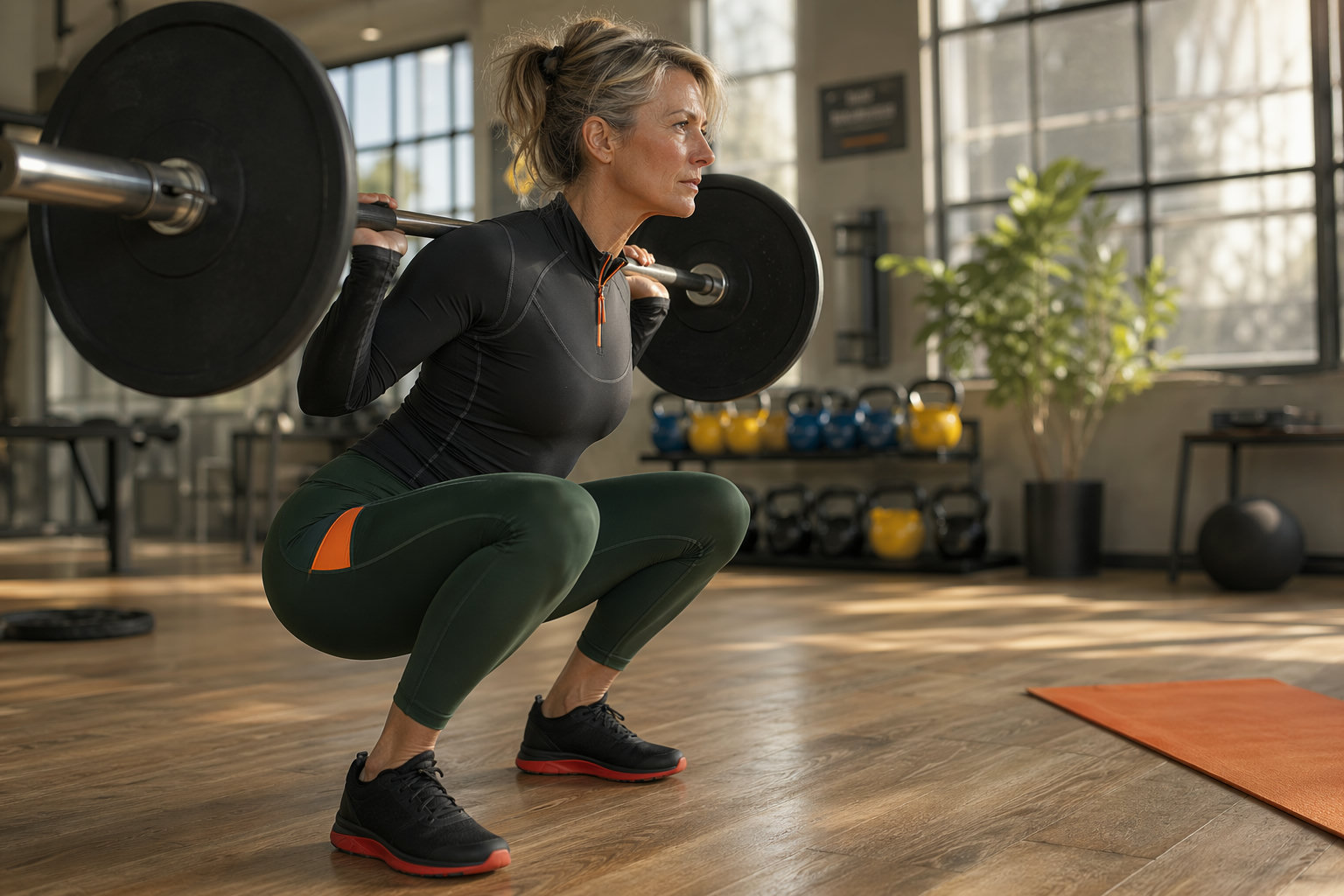
A hot summer is no obstacle here. It's an opportunity. Strength training moves easily to a cool basement, a shaded courtyard or the terrace in the evening. It replaces the run you were about to cancel anyway.
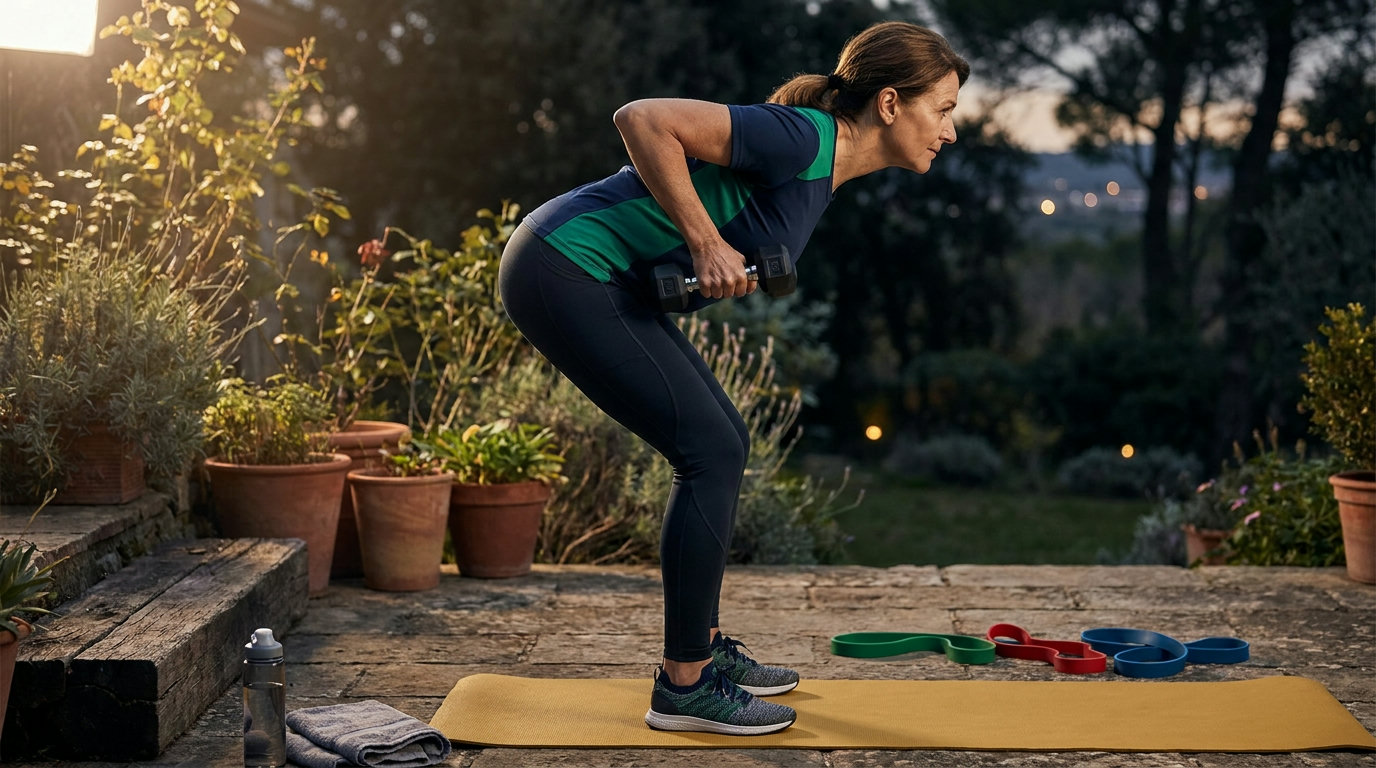
Your 20-minute summer routine without a gym
Your legs carry you up the mountain, so they come first.
Put your hands on a bench if you can't yet do clean reps on the floor.
Balances out all those hours at a desk.
Works the glutes, often the weakest link in runners.
Carry two heavy bags. Grip strength is one of the best markers of how well you manage everyday life as you age.
Balance prevents falls. It's the simplest exercise for healthy ageing there is.
Two rounds a week are enough to start. Choose a weight where the last two reps are hard but still clean. And train in the coolest hour of the day, not the most convenient one.
Tropical nights: when recovery goes missing
The night counts as much as the day. If it stays above 20 °C after dark, which meteorologists call a tropical night, you sleep worse, never fully cool down and start the next day already in deficit. Two or three of those nights in a row and your training quality drops, even though you've done nothing wrong.
The consequence is simple. After a bad night, the hard session becomes an easy one. That's arithmetic, not an excuse. Load without recovery doesn't build fitness. It only wears you down.
Heat acclimatisation: your body learns
The good news to finish: heat isn't a fixed opponent. It's a training stimulus, and your body responds to it surprisingly fast.
If you expose yourself regularly and in measured doses to warm conditions for about one to two weeks, measurable adaptations follow. Plasma volume rises, heart rate at the same effort falls, and you start sweating earlier, with less salt in your sweat. The first effects appear within a few days. Full adaptation of the sweat glands takes longer.
What happens over one to two weeks
- until the first measurable effects
- 3–5 days
- more plasma volume
- 10–15 %
- of heat exposure a day are enough
- 60–90 min
- for full adaptation
- 2 weeks
The key word is measured. Adaptation comes from easy sessions in the warmth, not from racing the thermometer. An official heat warning doesn't turn this into a challenge. The red column still applies.
So what does this mean for you?
- 1
If you are building towards an autumn race
move the quality sessions to the early morning and accept slower times for the same effort
- 2
If you are only just getting started
start in the shade, short and easy, and don't let the heat become your first reason to give up
- 3
If you have a cardiovascular condition or take medication
get your summer training checked by a doctor before you follow this traffic light
- 4
If you are over 60
your threshold is lower, as your sense of thirst and your thermoregulation both decline with age
- 5
If you want to do something regardless
do the strength routine somewhere cool. On hot days it's the better session
Right for you if …
Anyone who wants to stay active through the summer without overdoing it, from beginners to committed endurance athletes.
Probably not for you if …
Anyone looking for a fixed drinking volume, a hard cut-off or permission to push through at 35 degrees. You won't find those here.
Frequently asked questions
At what temperature should I stop exercising outdoors?
There's no single number, because humidity, sun and wind all play a part. As a guide, use the heat warnings from your national weather service, issued in yellow, orange and red and collected for Europe on Meteoalarm. From the first warning level, review any intense outdoor training. Once the warning escalates, cancel or move it.
Why am I so much slower in the heat even though I'm well trained?
Because your circulation has to supply your muscles and get rid of heat at the same time. Your heart rate rises at the same output, and so does perceived effort. That's physiology, not a loss of form. Steer by heart rate and the talk test rather than your spring pace.
How much should I drink when exercising in summer?
As much as you lose, and that varies from person to person. Weigh yourself before and after a session: the difference plus what you drank gives you your approximate sweat loss per hour. Losing more than two per cent of your body weight is too much. Blanket figures in litres fit almost nobody.
Do I need electrolytes or is water enough?
For easy sessions under an hour, water is usually enough. For longer or very sweaty sessions, visible salt marks on your skin or several sessions a day, sodium and other electrolytes start to matter.
Is humidity really worse than heat?
For cooling, yes. Sweat only cools you when it evaporates, and in humid air it barely does. You lose fluid without the cooling effect. That's why a humid 28-degree day can feel harder than a dry 33-degree day in the mountains.
Can I get used to the heat?
Yes. Over one to two weeks of regular, measured heat exposure, plasma volume rises, heart rate falls at the same load and sweating becomes more efficient. It works with easy sessions, not with hard efforts during a heat warning.
Hydration only works if the bottle comes with you
A bottle you actually use on the move is worth more than any rule of thumb.
Shop water bottles ↗Sources
- Meteoalarm: heat warnings from Europe's national weather services ↗
- WHO: Climate change, heat and health ↗
- WHO: physical activity recommendations ↗
- Consensus Recommendations on Training and Competing in the Heat (Sports Medicine) ↗
- Muscle-strengthening activities and health outcomes: systematic review and meta-analysis ↗
- Physical activity across adulthood and mortality: meta-analysis ↗
Inspiration, knowledge and gear for people who want more from the outdoors.