
SportFits Travel
Glacier summer skiing: 5 resorts where winter carries on
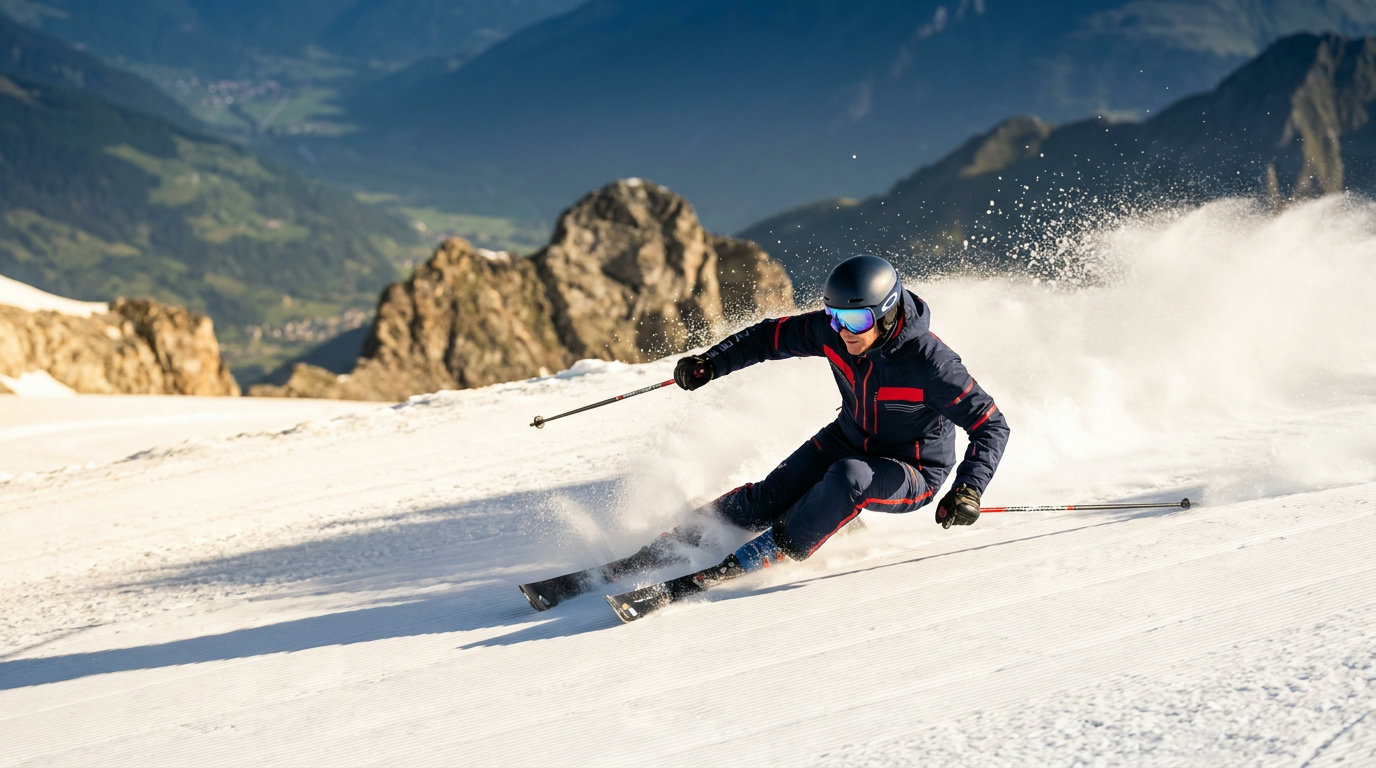
Hintertux, Zermatt, Saas-Fee, Kitzsteinhorn and Stubai: where you can still ski in summer, compared by altitude, summer operation and what each glacier is really good for.
Key points
- 01
Hintertux is Austria's only year-round ski area. Zermatt, with the Klein Matterhorn (3,883 m), is the highest and largest summer ski area in the Alps.
- 02
Only Hintertux and Zermatt reliably offer real skiing in midsummer. Saas-Fee doesn't open until mid-July.
- 03
Kitzsteinhorn and the Stubai Glacier are better described as areas with an extended season than as classic midsummer spots.
- 04
Start early. The corn snow skis best in the morning and turns soft from midday.
- 05
Sun and UV radiation on the glacier are extreme. Pack category 4 goggles and SPF 50+.
Summer skiing on a glacier: swimming weather below, snow above
Summer skiing in Austria and Switzerland stopped being a niche pursuit long ago. While the thermometer in the valley climbs to 30 degrees, the high glaciers still hold enough corn snow for clean turns. The appeal: empty pistes, cool mountain air and a chance to keep your technique and feel for the snow sharp in the warm months.
For ambitious skiers and training groups, these weeks are gold. Race teams polish their carving, ski tourers stay in shape, and anyone who simply can't wait until December gets a snow fix. But not every glacier area really stays open in midsummer. In this comparison we separate the true summer ski areas from those that just have an extended season.
Climate change makes things more complicated. The glaciers are retreating and the reliable summer months are getting shorter. Even top resorts have had to suspend operations for a while in years with little snow. So check the current status before you travel, and know which area fits your plans.
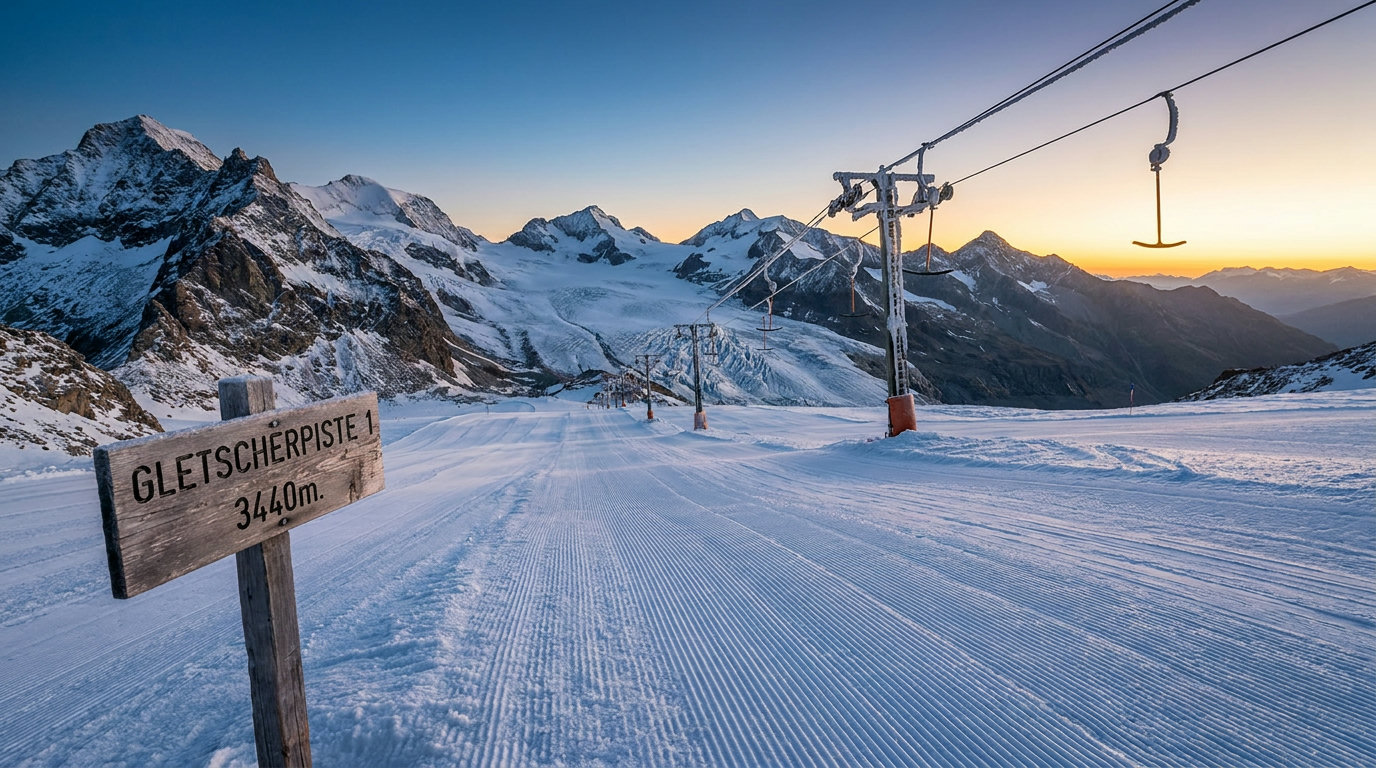
The 5 glacier ski areas compared
Five areas stand out: two in Switzerland, three in Austria. The main differences are altitude, summer operation and character. Here's the quick overview:
Summer ski areas in the Alps at a glance
| Area | Country | Max. altitude | Summer operation | Character |
|---|---|---|---|---|
Hintertux Glacier | Austria | 3,250 m | Year-round* | Only year-round area, training hotspot |
Zermatt / Klein Matterhorn | Switzerland | 3,883 m | Year-round, mornings | Highest and largest, Matterhorn backdrop |
Saas-Fee | Switzerland | 3,500 m | From mid-July | Compact, quiet, good for training |
Kitzsteinhorn / Kaprun | Austria | 3,000 m | Oct. to early summer | Extended season, easy to combine with Kaprun |
Stubai Glacier | Austria | 3,210 m | Oct. to May | Austria's largest glacier ski area |
*Hintertux is generally open all year, but has had to pause operations for a few weeks in summers with little snow. You'll always find the latest status on the official glacier website or on SnowOnline (in German).
1. Hintertux Glacier (Austria)
Hintertux at a glance
- Highest point
- 3,250 m
- skiing possible
- 365 days
- of piste in summer
- up to 20 km
- First lift
- 08:15
The Hintertux Glacier in the Zillertal is the fixture for summer skiing in Austria. It's the only area in the country with skiing almost all year round. At up to 3,250 metres there's still plenty of corn snow in July, and in good years up to 20 kilometres of piste were open through the summer months.
For early risers, training groups and anyone who wants proper turns in summer, Hintertux is the obvious choice. The lifts run from 08:15, and that's exactly when you should be up there, before the sun softens the slope. Not ideal if you want lots of piste kilometres: in midsummer the terrain is reduced and the focus is clearly on carving and training.
2. Matterhorn Glacier Paradise / Zermatt (Switzerland)
Zermatt at a glance
- Klein Matterhorn
- 3,883 m
- of piste in summer
- 21 km
- Operation
- all year
- Best time
- mornings
Zermatt is the iconic summer ski area of the Alps, and also the highest and largest. The lifts take you via Trockener Steg up to the Klein Matterhorn at 3,883 metres, where around 21 kilometres of piste on the Theodul Glacier await you in summer. Add what is probably the most spectacular backdrop in the Alps, with the Matterhorn in view all day.
The extreme altitude makes conditions particularly reliable. Skiing happens mainly in the morning: until about midday the corn snow feels wintry, then it softens. An early start pays off twice. Summer ski pass rates apply from early May to the end of October. Not ideal if you're after a cheap weekend: Zermatt sits at the top end of the price range.
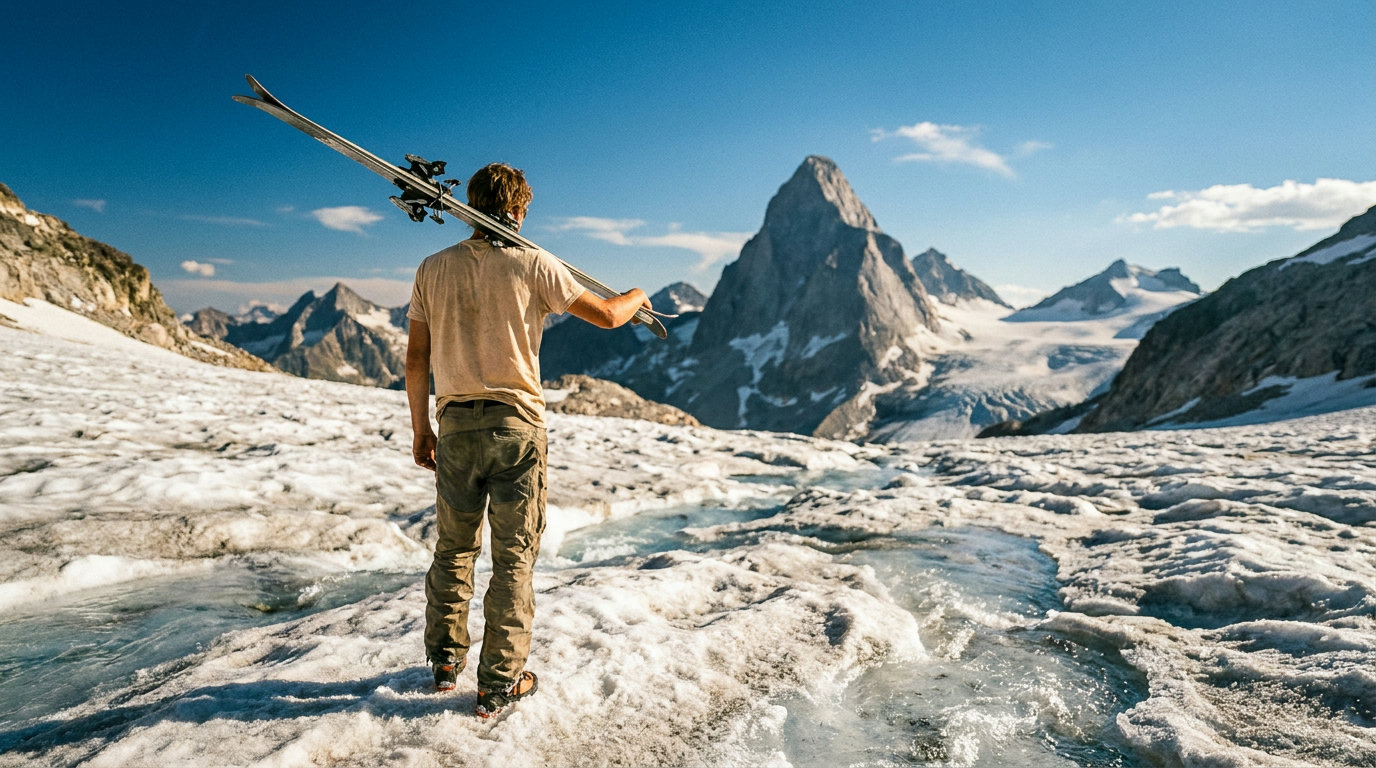
3. Saas-Fee (Switzerland)
Saas-Fee at a glance
- Mittelallalin
- 3,500 m
- Summer season starts
- mid-July
- Character
- compact
Saas-Fee is the classic for glacier fans who like it quiet and high up. The area around the Allalin is compact, easy to navigate and very well suited to training. It's no coincidence that many race and national teams do their summer blocks here.
The key difference from Hintertux and Zermatt: Saas-Fee only opens its summer season in mid-July. If you want to ski in June, this is the wrong place. In return you get consistent corn snow at high altitude and an atmosphere that appeals to ambitious racers and hobby skiers alike. Not ideal if you expect an extensive piste network. Its strength is focus and quality, not kilometres.
4. Kitzsteinhorn / Kaprun (Austria)
Kitzsteinhorn at a glance
- Highest point
- 3,000 m
- Season
- Oct.–early summer
- Holiday base
- Kaprun
The Kitzsteinhorn above Kaprun is one of Austria's best-known glacier resorts and a sensible option for the late season in particular. Skiing usually runs from October into early summer, and a little longer depending on snow conditions.
The appeal is the combination: glacier, modern lifts, training operations and the resort town of Kaprun, with Zell am See right next door. If you want to combine skiing with an active family or mountain holiday, this is the most well-rounded choice. Not ideal if you're looking for classic midsummer skiing in July and August, when skiing is usually on hold.
5. Stubai Glacier (Austria)
Stubai Glacier at a glance
- Top of Tyrol
- 3,210 m
- Ski season
- Oct.–May
- Largest glacier ski area in Austria
- No. 1
The Stubai Glacier is Austria's largest glacier ski area and belongs on any list of summer skiing in the Alps. Its altitude, size and reputation make it a permanent fixture, though with a clear focus on an extended season rather than classic midsummer skiing.
The ski season usually runs until mid-May. In summer the area is open to day trippers, hikers and visitors to the Top of Tyrol viewing platform, while skiing pauses. For spring turns on big terrain the Stubai Glacier is excellent. For skiing in July, head to Hintertux or Zermatt instead.
Real summer skiing or an extended season?
When you plan, it helps to draw a clear line. Real summer skiing in the strict sense, meaning reliable skiing in July and August too, is practically only available at Hintertux and Zermatt. Saas-Fee joins them from mid-July.
Kitzsteinhorn and the Stubai Glacier are better described as glacier areas with an extended season: strong in autumn and spring, but usually without skiing in midsummer. Both are great destinations. Just not for turns in high summer.
What to watch out for on a glacier in summer
Summer skiing isn't a winter holiday in July. Conditions work differently. The sun is high, UV radiation above 3,000 metres is extreme and the corn snow changes a lot over the course of the day. Plan for that and you'll get the most out of your day.
Packing list and preparation for summer skiing
UV protection at altitude is crucial
Reapply several times
Cold in the morning, T-shirt weather by midday
Altitude dehydrates you
The corn snow is best before the midday sun
Which area suits you?
- 1
If you want reliable snow in midsummer
go to Zermatt or Hintertux
- 2
If you want to train in a compact, quiet area
Saas-Fee is the best choice from mid-July
- 3
If you're combining skiing with a family holiday
Kitzsteinhorn with Kaprun is a good fit
- 4
If the most spectacular scenery matters to you
nothing beats Zermatt and its Matterhorn views
- 5
If you want big terrain in spring
the Stubai Glacier is ideal
Right for you if …
Skiers and snowboarders who want to keep turning and working on their technique in the warm months too.
Probably not for you if …
Anyone expecting guaranteed midsummer skiing with valley comforts and the full piste network.
Frequently asked questions
Where can you ski in the Alps in summer?
Reliably in midsummer on the Hintertux Glacier (Austria) and in Zermatt (Switzerland). Saas-Fee opens from mid-July. Kitzsteinhorn and the Stubai Glacier focus more on autumn and spring.
Which is the highest summer ski area in the Alps?
Zermatt, with the Klein Matterhorn at 3,883 metres. It's also the largest summer ski area, with around 21 kilometres of piste on the Theodul Glacier in summer.
What time of day is best for skiing on a glacier?
In the morning. Early on, the corn snow is at its grippiest and feels wintry. From midday the sun softens it. Depending on the area, lifts start at around 8 am, so getting up there early pays off.
When does Saas-Fee open for summer skiing?
Saas-Fee's summer season usually starts in mid-July. Unlike Zermatt or Hintertux, there's no summer skiing here in June.
Is summer skiing still reliable with the glaciers shrinking?
The reliable summer months are getting shorter, and in years with little snow even top areas have had to pause operations for a while. Very high areas such as Zermatt and Hintertux hold up best. Always check the current status before you travel.
Useful tools and topics for planning your trip
Inspiration, knowledge and gear for people who want more from the outdoors.