
SportFits Travel
Wild swimming in Alpine lakes: 7 lakes, rules and safety
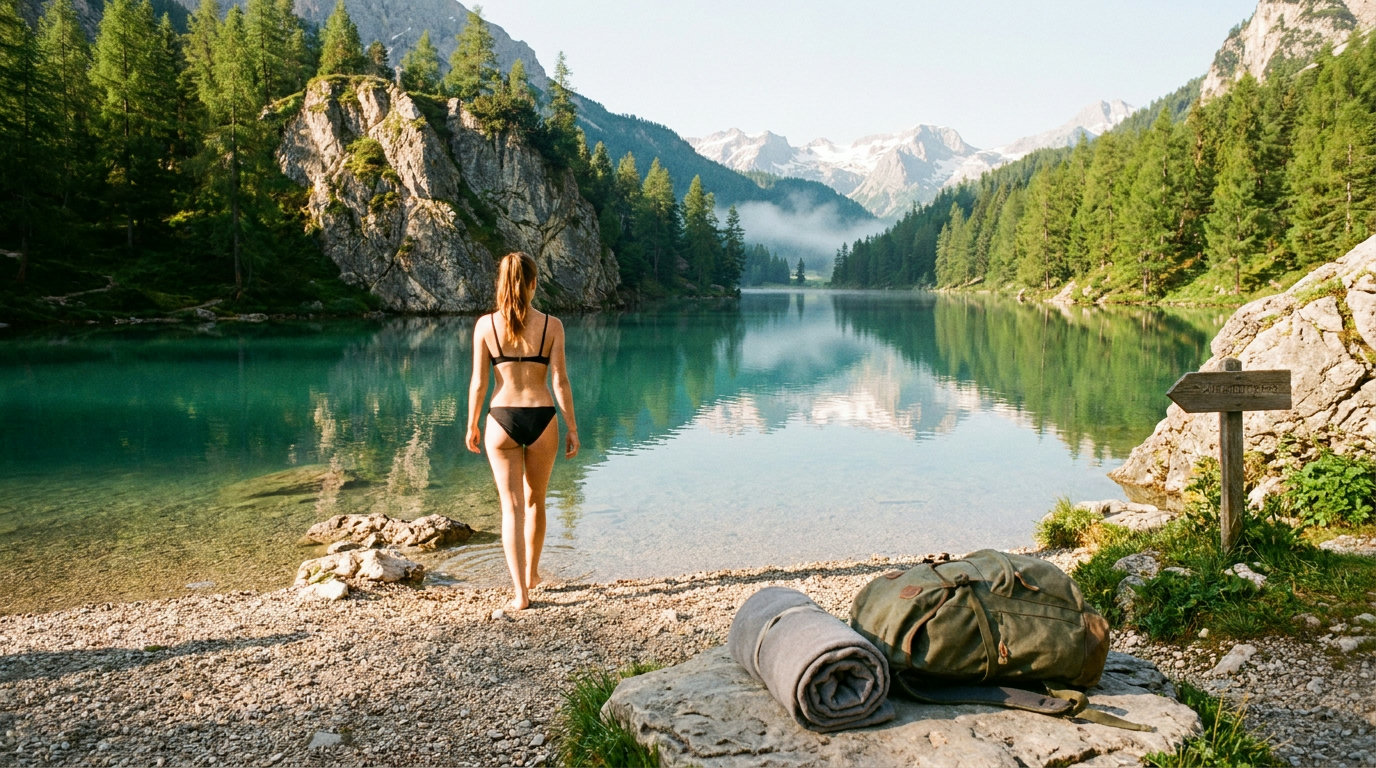
Clear water, mountain views and a cold rush: the rules, conservation basics and real risks of swimming in Alpine lakes, plus seven lakes in profile.
Key takeaways
- 01
Swimming in mountain lakes is often allowed in the Alps, but local rules, reservoir restrictions and protected areas can limit access.
- 02
Keep sunscreen, soap and shampoo out of sensitive lake ecosystems. Rinse off before swimming and take all rubbish with you.
- 03
Cold-water shock is the underestimated danger: enter slowly, never swim alone and keep swims short.
- 04
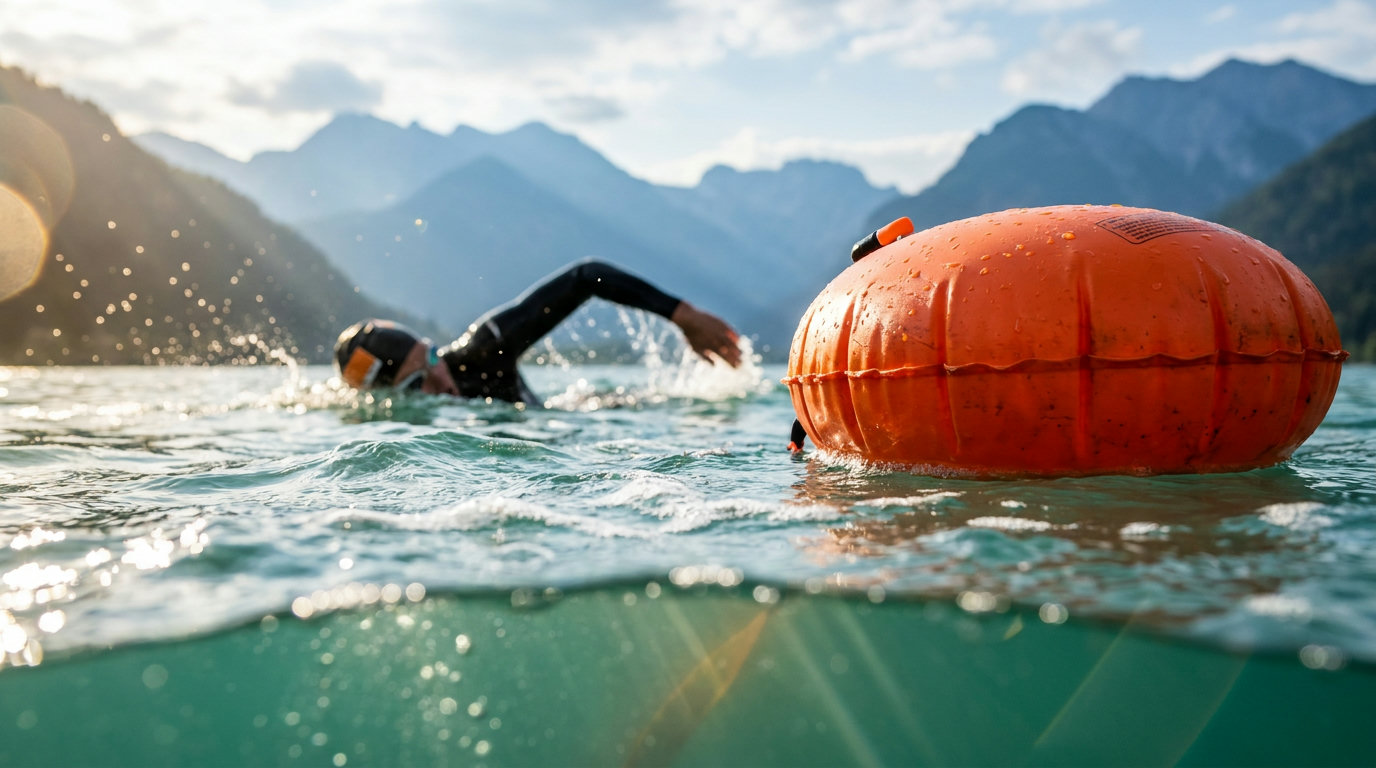
A bright tow float improves visibility and provides flotation, especially in deep, clear, cold lakes.
- 05
Our seven lakes range from a family beach to a quiet walking destination, each with its own rules and safety notes.
Why mountain lakes are so captivating
There is a moment just before you enter the water: the air smells of larch trees, a cowbell rings somewhere and the lake mirrors rock faces and sky. Then comes the first step, and your body realises that this water is different from any swimming pool.
Swimming in mountain lakes or wild swimming is more than cooling off. It combines a sense of nature, attention and a little courage. This article covers the rules, the real risks and seven Alpine lakes worth considering for your next swim trip.
Rules and conservation at mountain lakes
A common assumption: “It is nature, so I can go in.” That is not always true. Swimming is generally allowed in many Alpine regions, but local rules can change the picture.
Reservoirs and drinking-water storage lakes are often strictly off limits. National parks and designated biotopes have their own rules, and access to the shoreline may be restricted. Read local signs and follow guidance from the local tourism board.
Mountain lakes are often nutrient-poor and sensitive. Keep sunscreen, soap and sweat out of the water. In practice:
- Before swimming, wipe off excess sunscreen or apply it after your swim
- Use soap and shampoo away from the lake
- Leave no rubbish on the shore, including glass or fire remains
- Dogs and groups may be restricted locally, so check first
- Follow Leave No Trace principles and leave the place as you found it
Safety: cold-water shock and the real risks
Mountain lakes are cold. Even in midsummer, many high-altitude lakes reach only 12 to 18°C, while large, deep lakes often remain below 20°C. That makes them more hazardous than they look.
The underestimated danger is cold-water shock. Entering cold water too quickly can trigger gasping, a rapid pulse and a rise in blood pressure. You may inhale water in the first few seconds, and exhaustion can follow within minutes. Even trained swimmers drown this way.
Other risks include:
- No lifeguards and often no mobile reception
- Rapid weather changes and summer thunderstorms
- Steep drop-offs close to shore
- Submerged rocks and weeds
- Currents at inlets and outlets
Preparation helps. The next sections turn that into a practical plan.
Eight-point check before entering the water
Before you get in, run through a short safety check. It takes two minutes and can make all the difference in an emergency.
Seven mountain lakes for your swim trip
These seven lakes cover a broad range, from a lifeguarded family beach to a quiet walking destination. For each one, you will find a short profile, a rule reminder and a safety tip. Local rules can change seasonally, so check the official website before travelling.
| Lake | Region | Character | Best for |
|---|---|---|---|
Königssee | Germany, Berchtesgaden | Deep, clear, protected | Experienced swimmers |
Eibsee | Germany, Zugspitze | Scenic, popular | Beginners to advanced swimmers |
Lago di Braies | Italy, South Tyrol | Photogenic, cold | Short swims |
Caumasee | Switzerland, Graubünden | Lifeguarded beach | Families and beginners |
Weissensee | Austria, Carinthia | Shallow, warmer | Families and children |
Achensee | Austria, Tyrol | Large, windy | Swimmers with a tow float |
Lago di Tenno | Italy, Trentino | Turquoise, popular | Families, short swims |
1. Königssee (Berchtesgaden, Germany)
Below the Watzmann east face, Königssee is deep, very clear and usually below 20°C. Swimming is possible in certain places, while many areas are protected and boats or air mattresses may be restricted.
- Rule: Use designated swimming areas and follow boating regulations
- Safety: Test rocky or gravel entries and never swim alone
2. Eibsee (Zugspitze, Germany)
One of Germany’s best-known mountain lakes, with views of the Zugspitze. Watercraft are allowed only in designated areas. Visit early or late in the day during peak season.
- Rule: Follow local bathing-area guidance and give others space
- Safety: Expect sudden depth changes, cold water and steep paths
3. Lago di Braies (South Tyrol, Italy)
Probably the most photographed Alpine lake. Infrastructure is limited and visitor numbers are high, so early or late hours work best.
- Rule: Check seasonal restrictions, parking and visitor-management rules
- Safety: Rocky shore and low water temperatures call for short swims
4. Caumasee (Graubünden, Switzerland)
An enclosed beach with clear, relatively warm water and paid summer access. It is a mountain lake where families can swim in a managed setting.
- Rule: Pay attention to admission, opening times and bathing zones
- Safety: The bathing area is supervised, but pack warm layers for longer stays
5. Weissensee (Carinthia, Austria)
A shallower, warmer lake with drinking-water quality and family-friendly facilities.
- Rule: Check regional rules for dog areas and facilities
- Safety: The shallow entry suits children under supervision. Watch out for boats
6. Achensee (Tyrol, Austria)
Tyrol’s largest lake, often called the “Tyrolean Sea”. Strong wind can make open water hazardous.
- Rule: Stay within marked bathing areas and respect boating zones
- Safety: Stay ashore in strong wind, watch for currents and boats, and take a tow float
7. Lago di Tenno (Trentino, Italy)
A turquoise lake above Lake Garda, reached by mountain road. It has a small kiosk and beach, and is busy in high season. The water remains pleasantly cool.
- Rule: Follow parking and designated bathing-area rules and take rubbish with you
- Safety: There is no continuous supervision, so enter slowly and do not swim far out alone
Who is wild swimming for?
Which mountain lake suits you?
- 1
If this is your first mountain-lake swim
Choose a supervised lake such as Caumasee or Weissensee
- 2
If you want an iconic setting for photos
Go to Eibsee or Lago di Braies early in the morning
- 3
If you want to swim longer distances
Take a tow float and wetsuit, and consider Achensee or Königssee
- 4
If you want turquoise scenery near Lake Garda
Go to Lago di Tenno early, before it gets busy
- 5
If you are travelling with children
Weissensee, with its shallow entry, is the safer choice
Right for you if …
Outdoor-active people who want to combine nature, movement and respect for sensitive ecosystems.
Probably not for you if …
Swimmers who jump alone into icy deep water without preparation: the risk is real and avoidable.
Frequently asked questions
The right gear for your swim trip
From wetsuits to swimwear, SportFits has what you need for a day at the mountain lake.
Discover swimwear ↗Related articles and tools for your next outdoor trip
Sources
- German Alpine Club – Protecting mountain waters (in German) ↗
- BR – Swimming in mountain lakes: sunscreen and sweat affect ecosystems (in German) ↗
- Bergwelten – Wild swimming: everything you need to know (in German) ↗
- Swimy – Swimming in high-altitude lakes: safety for children (in German) ↗
- Faszination Berge – Swimming in mountain lakes (in German) ↗
Inspiration, knowledge and gear for people who want more from the outdoors.