

Buying Guides
Washing ski clothing: how to cut microplastic release
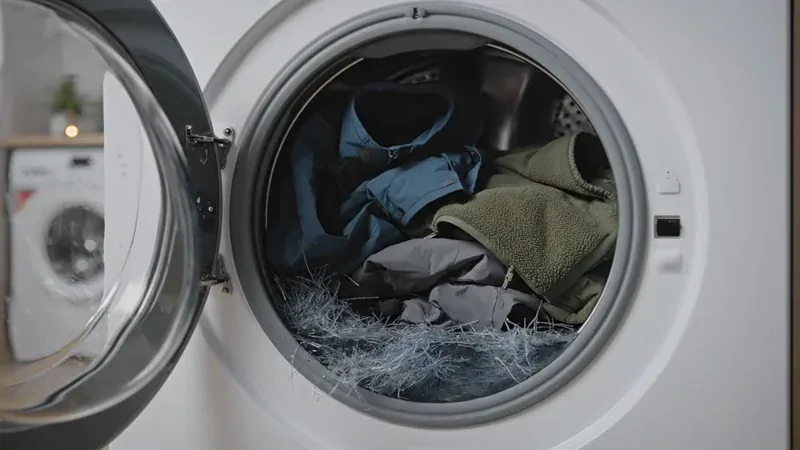
Every wash of synthetic ski clothing sends hundreds of thousands of microfibres into the wastewater. With these tips you can cut that by up to 90%.
Watch the article video
Key points
- 01
The delicate cycle releases nine times more fibres: use the eco programme or a normal wash instead
- 02
A full drum releases five times less microplastic than a half-empty one
- 03
Laundry bags cut fibre shedding by up to 86%
- 04
Two or three washes per ski season are plenty
- 05
Merino wool is a plastic-free option for base and mid layers
The scale of the problem: figures that should worry us
After a long day on the slopes, your ski jacket goes into the washing machine. Most of us don't give it a second thought. What happens next is less obvious: every wash loosens thousands of tiny plastic fibres from synthetic performance clothing, and they are too small for wastewater treatment plants to filter out completely. These microfibres end up in rivers, lakes, seas and farmland, and eventually find their way back to us through the food chain.
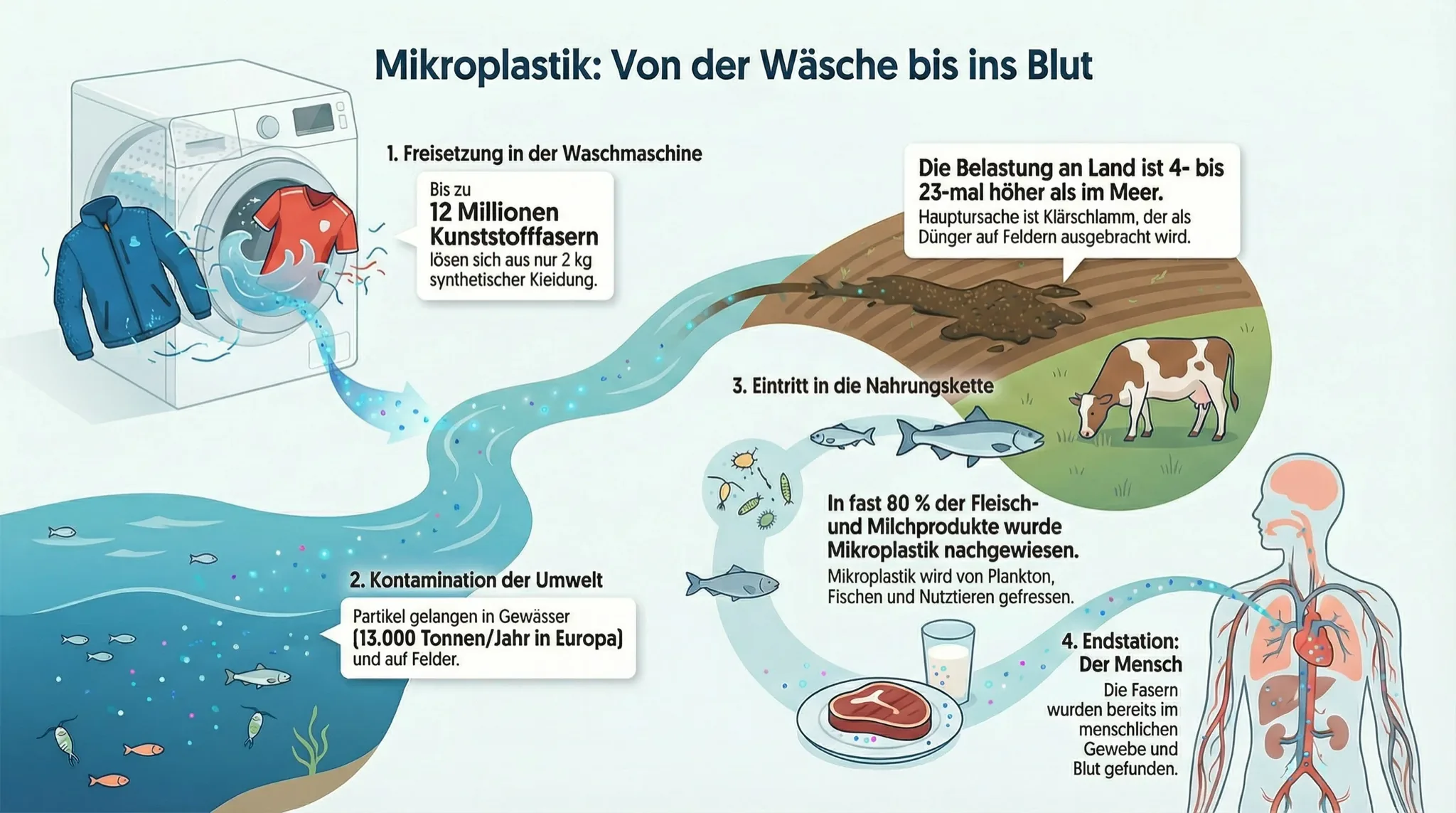
The problem has reached a worrying scale: around 35% of the microplastics in our oceans come from clothing, not from plastic bags or packaging. To be precise, they come from washing synthetic textiles. Your fleece jacket, your ski trousers, your mid layer: they are mostly made of polyester, polyamide or acrylic, and they lose fibres every time they are washed.
The numbers are sobering. Pure polyester sends around 496,000 fibres into the wastewater per wash, acrylic as many as 730,000. Fleece jackets, a staple of ski clothing, are especially problematic: a new fleece jacket can release up to two grams of microfibres in a single wash. That is more than a million individual fibres.
| Material | Fibres per wash |
|---|---|
Polyester-cotton blend | approx. 138,000 |
Pure polyester | approx. 496,000 |
Acrylic | approx. 730,000 |
Fleece (new) | up to 1,000,000+ |
In Germany alone, laundry sent 300 tonnes of microplastics into wastewater in 2018. Modern treatment plants do filter out more than 95%, but that only shifts the problem. 70% of the filtered sewage sludge is incinerated, which releases emissions into the air, and 30% is spread on farmland as fertiliser, where the particles build up in the soil. The remaining 5% goes straight into rivers and seas.
Now the good news: with fairly simple measures you can cut the fibres your ski clothing sheds by more than 80%. The usual advice to pick a "gentle" wash is trickier than it sounds, though. Recent research shows that if you really want to reduce microplastics, you need to do things differently from what was long assumed.
The delicate-cycle paradox: well meant, badly done
The biggest surprise in the research concerns the delicate programme. You would expect gentler washing to cause less fibre abrasion. Studies from the University of Plymouth show the opposite: delicate cycles release up to 800,000 additional microfibres per wash. That is nine times the normal amount.
The reason is water. A delicate cycle uses considerably more of it, and that extra water flushes more fibres out of the fabric. The gentler drum movement can't make up for it.
The key washing factors at a glance
Load: a full drum, fewer fibres
How full you load the machine matters a lot. Studies show that a small load releases five times more microplastics than a full drum. With less laundry, the ratio of water to fabric weight is worse, and the garments move around more freely, which means more mechanical friction.
Temperature and spin
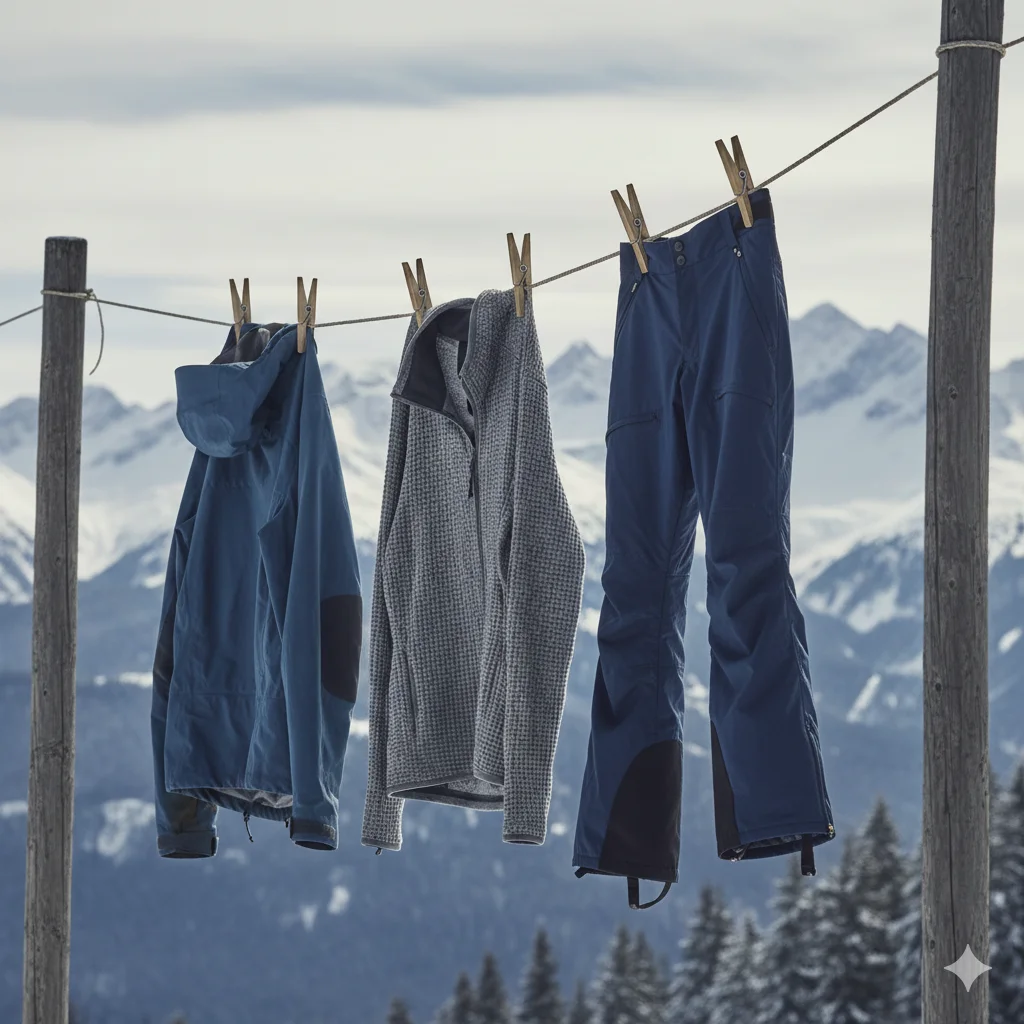
High temperatures weaken synthetic fibres, so they break sooner. 30 °C is ideal, 40 °C is still fine. Keep the spin speed low or skip the spin altogether. Synthetic fabrics dry quickly in the air anyway, so you can leave out the tumble dryer too. It loosens even more fibres.
Detergent and fabric softener
Leave fabric softener out when you wash technical clothing. According to studies it loosens more fibres and also impairs the membrane's performance. As for detergent, liquid beats powder: powder contains abrasive particles and bleach, which increase fibre abrasion.
| Recommendation | Avoid | |
|---|---|---|
Programme | Normal or Eco | Delicate cycle |
Temperature | 30 °C (max. 40 °C) | 60 °C or higher |
Load | Full drum | Half-empty drum |
Spin | Low or off | High spin speed |
Detergent | Mild liquid detergent | Powder with bleach |
Fabric softener | Leave it out | Any fabric softener |
Drying | Air dry | Tumble dryer |
Laundry bags: a simple fix with a big effect
Special laundry bags for technical clothing are the most effective step you can take straight away. Good fine-mesh bags made from sturdy material don't release microfibres themselves and cut fibre shedding from fully synthetic clothing by 86% on average.
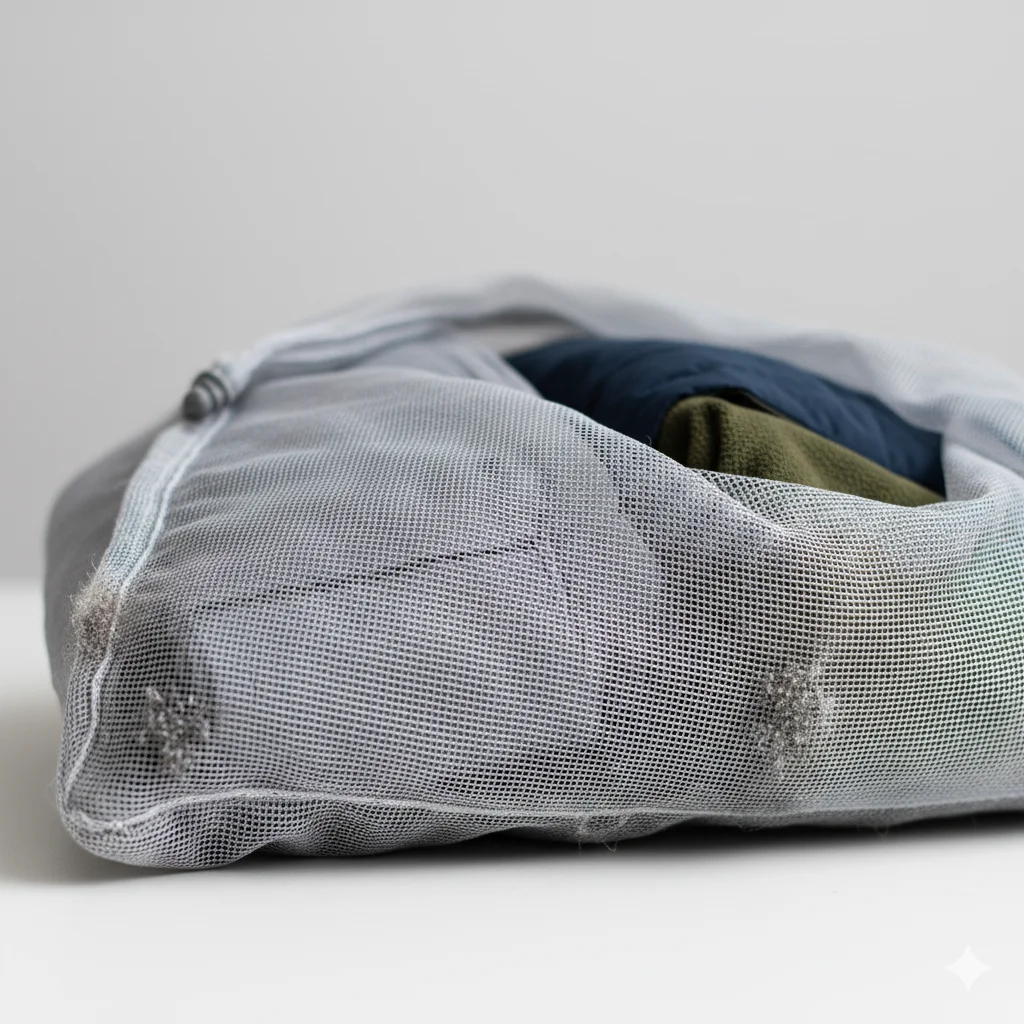
Two things are at work here. First, there is less friction in the machine because the bag holds the clothes together. Second, broken fibres get caught in the fine mesh and stay out of the wastewater. After the wash, the fibres gather in the corners of the bag, and you can simply pick them out and put them in the general waste bin.
Separate your textiles
Not everything should share a drum. Hard items such as jeans, running shoes or hardshell jackets and trousers with zips don't belong in the same load as soft ski clothing. The friction they cause leads to noticeably more fibre loss. Wash your fleece mid layers and base layers together with other soft textiles instead.
Wash less: the simplest step
The most effective way to reduce microplastics is simple: wash less often. Synthetic ski clothing doesn't need to go in the machine after every outing. A good airing is often enough, ideally overnight outdoors. Small stains can be rinsed out by hand, so the whole jacket doesn't have to go in the wash.
Over a normal ski season, two or three washes are plenty. As a bonus, your clothing lasts longer and the membrane keeps its performance for longer.
Choosing materials: thinking long term
Next time you buy, it pays to look at other materials. For base and mid layers in particular, merino wool has plenty going for it on the slopes: it regulates temperature, absorbs moisture and barely smells even after several days. The key environmental advantage: merino doesn't shed plastic microfibres, and it needs washing far less often.

Washing merino: 30 to 40 °C at most, with a protease-free wool detergent, no fabric softener and no bleach.
Semi-synthetic fibres such as Tencel (lyocell) are another option. They are made from wood pulp, not from crude oil.
Outlook: new filter technology on the way
Work on stopping fibres at the source is ongoing. Researchers at the University of Bonn have developed a filter modelled on fish gills that removes more than 99% of microfibres from wastewater without clogging. Other approaches use vortex filtration, which captures more than 90% of particles and can be built into existing washing machines.
Regulation is moving too: since 2025, France has required new washing machines to have a microfibre filter. Australia plans similar rules by 2030. Until such solutions are widely available, though, it is up to us as consumers. And the measures in this article already make a real difference today.
Checklist: washing ski clothing with fewer microfibres
Use a laundry bag
Put fleece, mid layers and technical jackets in a fine-mesh laundry bag. It cuts fibre shedding by up to 86%.
Wait until you have a full load
Collect synthetic items and wash them together. A half-empty drum releases five times more fibres.
Choose the right programme
Use the eco programme or a normal wash at 30 °C at most. Avoid the delicate cycle.
Skip fabric softener
Fabric softener increases fibre shedding and harms the membrane. Diluted vinegar works as an alternative.
Spin gently or not at all
Lower the spin speed or skip the spin. Synthetics dry quickly in the air.
Air dry
Skip the tumble dryer. It loosens more fibres and wears the fabric.
Bin the fibres from the bag
After the wash, take the collected fibres out of the bag and put them in the general waste. Don't rinse them down the drain.
Small changes, big effect
New filter technology for washing machines is coming. Eventually. You don't have to wait for it. With these simple tips you can cut the microplastics you release by up to 90%, starting with your next wash. Seas and soils stay cleaner, your ski clothing lasts longer, and your wallet benefits too.
Frequently asked questions
How often should I wash ski clothing?
Two or three times a season is plenty. Synthetic performance clothing doesn't need washing after every wear. A thorough airing overnight is often enough.
Why is the delicate cycle bad for performance clothing?
The delicate cycle uses more water and can release up to nine times more microfibres than a normal wash. Use the eco programme at 30 °C instead.
Do laundry bags really help against microplastics?
Yes. Good fine-mesh laundry bags cut fibre shedding by up to 86%. They hold the clothes together and catch loose fibres.
Which detergent is best for Gore-Tex and performance clothing?
A liquid detergent without bleach is ideal. Powder contains abrasive particles that increase fibre abrasion. Leave out fabric softener completely.
Are laundry bags such as the Guppyfriend really effective?
Yes. Studies show that laundry bags such as the Guppyfriend can catch up to 86% of microfibres. They are one of the most effective things you can do as a consumer.
Find the right ski clothing
Looking for ski jackets, ski trousers or mid layers? In our shop you'll find the right gear for how you ski.
Shop ski clothing ↗Sources
- Consumer Advice Centre Hesse: Microplastics from synthetic clothing ↗
- Nature Scientific Reports: The impact of wash load on microplastic release ↗
- Bavarian State Ministry: Reducing microplastics during washing ↗
- Federal Environment Agency: Tracking pollutants in ski clothing ↗
- Science Daily: Fish-gill inspired filter for microplastics ↗
Inspiration, knowledge and gear for people who want more from the outdoors.