
Buying Guides
Houdini Aero Houdi vs Aero Jacket: which midlayer suits you?

Houdini builds its Aero line from Polartec Power Air Active: more breathability and, according to Polartec, less microfibre shedding during wear and washing. Here is who the Aero Houdi and the Aero Jacket are right for.
What makes a good midlayer?
In a three-layer system, the midlayer has a central job: it insulates while letting moisture move outwards. If your activities vary in intensity, from ski touring to trail running and mountain hiking, you know how much the right choice matters.
The classic requirements for a technical midlayer:
- Warmth without bulk: insulation, but nothing that feels like a block on your body
- High breathability: sweat should not build up when the pace picks up
- Close fit: so a shell jacket sits smoothly over it
- Fast drying: after a climb, so you do not get chilled
Classic fleece ticks these boxes on paper, but it has a well-known problem: microfibre shedding. Every wash and every movement releases fibres that end up in rivers, lakes and seas. Houdini and Polartec developed Power Air Active in response.
Polartec Power Air Active: the technology explained
Power Air Active is not a simple fleece update. It takes a fundamentally different approach. The knitted construction has two layers: the outside is smooth and easy to layer, while the inside holds filament fibres enclosed in small pockets. These pockets trap air and create warmth without letting the fibres move freely.
According to the manufacturer, the result is up to 80% less microfibre shedding than conventional premium fleece. That does not mean 80% less plastic in production, which is a different matter. It refers to shedding during wear and washing, a measurable difference in what ends up in waterways.
The Aero Houdi and Aero Jacket are made from 52% recycled polyester and 48% elastomultiester. The elastomultiester gives four-way stretch, so the jacket moves comfortably in every direction without losing warmth. According to Houdini, using elastomultiester instead of conventional elastane also makes the Aero line easier to recycle.
Aero Houdi vs Aero Jacket: which one suits you?
Both models use the same Polartec Power Air Active fabric and are almost identical in material, weight and functional details. The key question is a different one: hood or no hood?
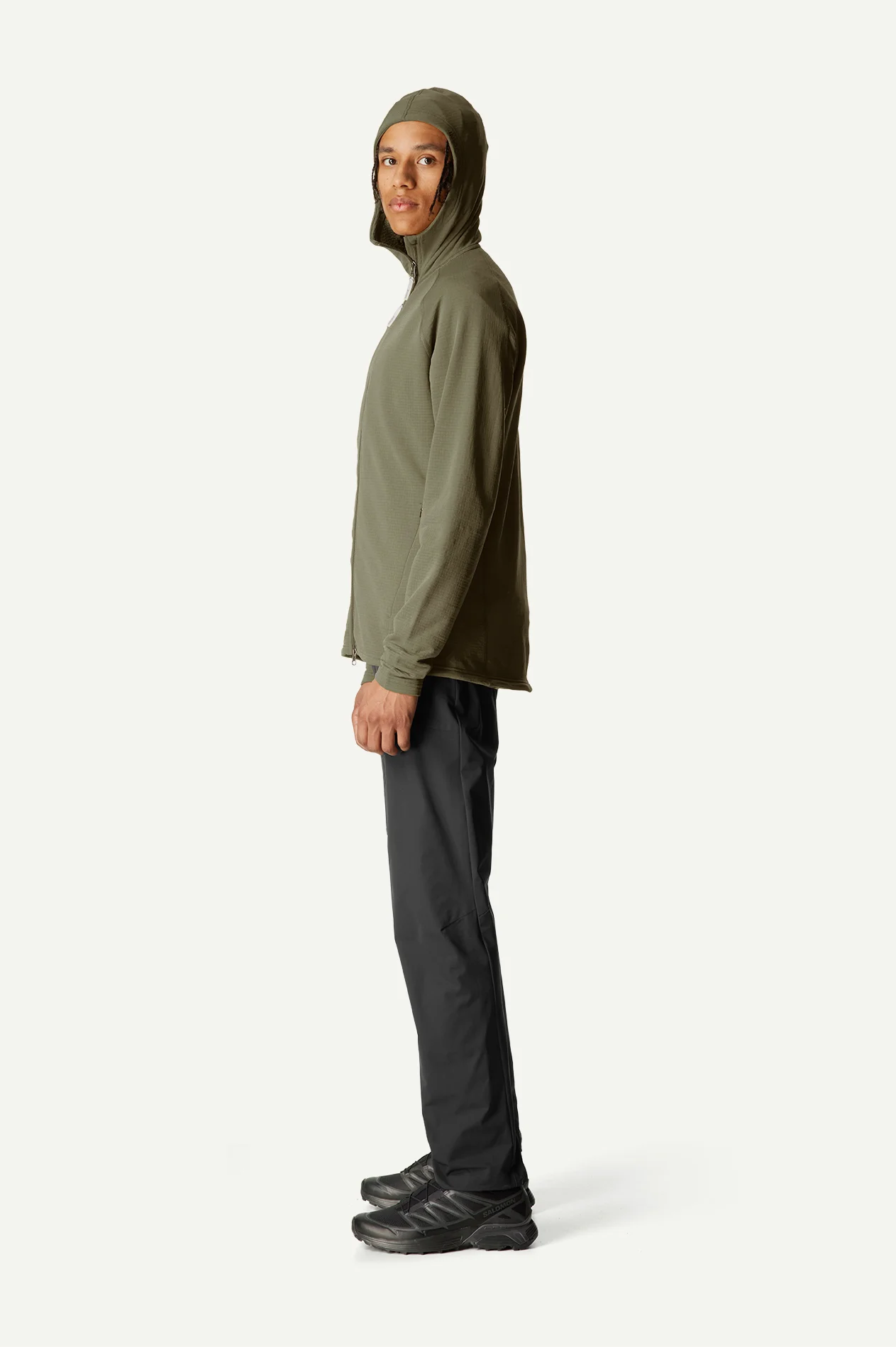
The Aero Houdi has a close-fitting technical hood. It is not removable, but it is designed to fit under a helmet. It sits close to your head and adds real value on ski tours, freeride days and alpine outings. If you often wear a helmet or want your ears covered when running, this is your model.
The Aero Jacket looks cleaner, without a hood or with a simpler solution. It plays the same layering role but has a more urban feel, so it is as at home on a trip or in town as it is in the mountains. If you do not need helmet compatibility and want a more versatile jacket, it is the better fit.
So your choice mainly comes down to what you will use it for, not to technical performance.
Where the Aero midlayer shines
Houdini describes the Aero Houdi as "never too warm, never too cold". That sounds like marketing, but it sums up the product well. Power Air Active delivers solid warmth with good breathability, yet it is not built for maximum insulation. That makes it a midlayer for high-movement activities, not for long stops in severe cold.
The Aero line is particularly strong in these situations:
- Trail running in autumn and spring: as your only jacket at 5 to 12°C and an active pace
- Mountain hiking in spring and autumn: as a second layer under a light windbreaker
- Climbing and via ferrata: the stretch gives your arms full freedom of movement
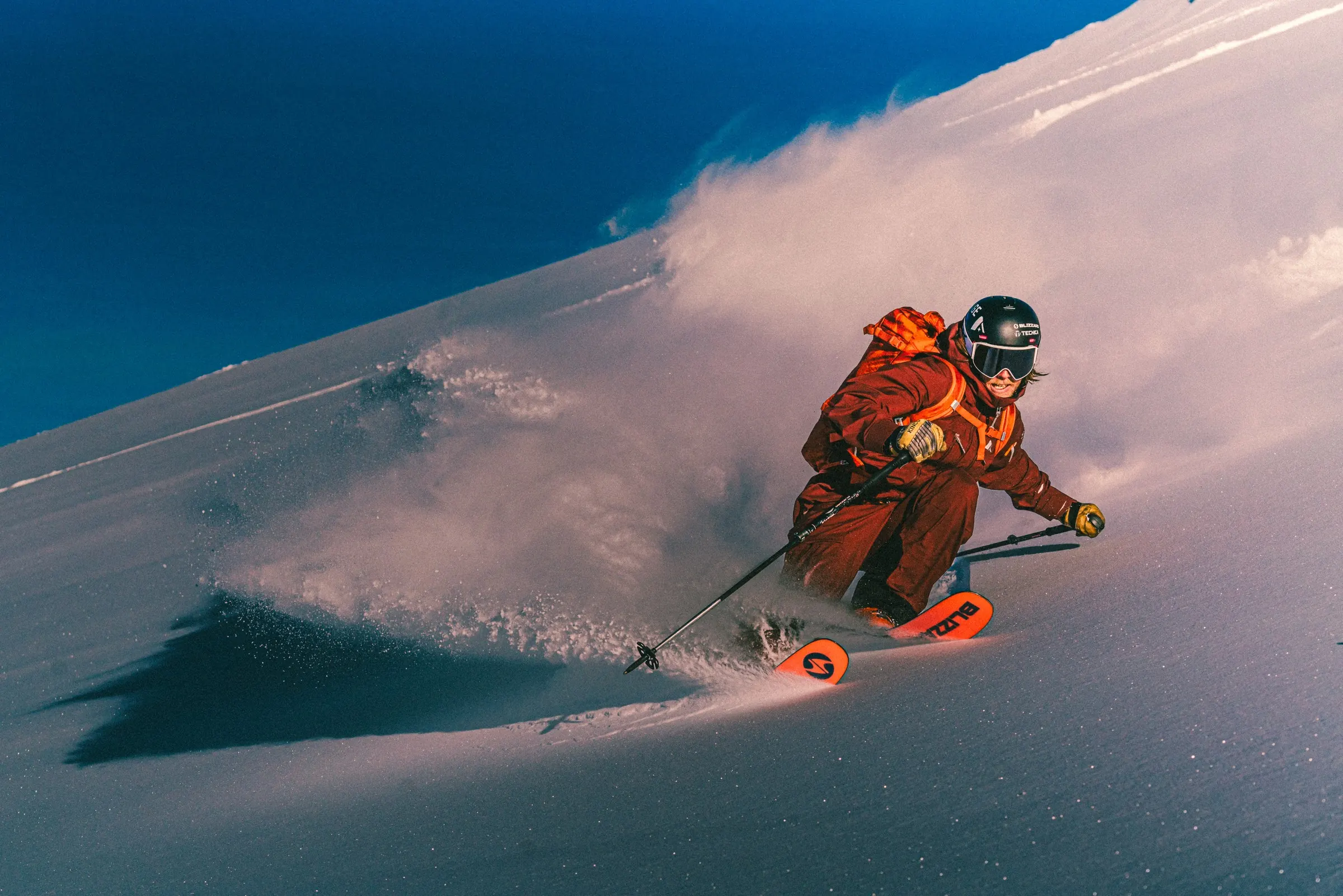
- Ski touring and freeride under a shell: four-way stretch means nothing holds you back on the ascent
Less suitable for:
- Static activity in severe cold: you need warmer insulation such as down or thicker fleece
- Wet conditions without a shell: Power Air Active is not water-repellent
Material choices and microfibre shedding
The Aero line shows how technical performance and material choices can be thought through together. Three points deserve a closer look:
- Recycled raw materials: the polyester (52% of the fabric) is fully recycled, from post-consumer material rather than new production. Many brands do this now, but it still counts.
- Recyclable, according to Houdini: the manufacturer says the fabric and garment can serve as raw material again at the end of their life. Houdini runs a take-back programme for this: used jackets are collected and turned into new textiles.
- Less microfibre shedding: the most important point in the material profile. Classic fleece releases thousands of microplastic particles in every wash, and wastewater treatment plants do not filter all of them out. According to the manufacturer, Power Air Active cuts this by up to 80%, through the construction itself rather than filtration.
It is still a plastic product. Compared with conventional fleece, though, it is a serious step.
What speaks for it
Up to 80% less microfibre shedding thanks to the Power Air Active construction (manufacturer's figure)
Four-way stretch for unrestricted movement while climbing, ski touring and running
Close-fitting Houdi hood that works under a helmet
Houdini take-back programme for used jackets
Balanced warmth and breathability for high-movement outings
Easy care and quick drying
What to weigh up
At around 490 g (men's M), it is not an ultralight midlayer
The Aero Houdi hood is not removable
Who should choose the Aero line?
- 1
If you go ski touring, freeriding or on alpine tours
the Aero Houdi with its technical hood and helmet compatibility is the better choice
- 2
If you want one jacket for everyday wear, travel and occasional outdoor use
the Aero Jacket is the more versatile option
- 3
If less microfibre shedding and recycled materials matter to you
the Aero line is worth a close look
- 4
If you are looking for an ultralight midlayer under 300 g
you should look at other options: both models weigh about 490 g
- 5
If you want maximum weather protection without an additional shell
the Aero is no shell replacement: it needs an outer layer in rain and wind
Discover Houdini
Visit the Houdini brand page ↗Key takeaways
- 01
According to the manufacturer, Polartec Power Air Active cuts microfibre shedding by up to 80% compared with standard fleece
- 02
Aero Houdi with technical hood: ideal for alpine and high-intensity use
- 03
Aero Jacket without a hood: more versatile and urban, also suited to travel and everyday wear
- 04
Both models offer four-way stretch and weigh about 490 g (men's M)
- 05
Premium price, backed by the material quality and take-back programme. Check the current price in the shop
Frequently asked questions
Is the Houdini Aero Houdi a softshell or fleece?
Neither, in the classic sense. The Aero Houdi is a technical midlayer made from Polartec Power Air Active, a two-layer fleece with enclosed filament fibres. It insulates like a fleece and has more stretch than classic Polartec, but it lacks the wind resistance of a softshell.
Can I wear the Aero Houdi without a shell jacket?
Yes, in dry conditions and mild weather it works well. The fabric is not water-repellent, so you need a shell jacket over it in rain or snow.
How should I wash the Houdini Aero Houdi?
You can machine wash it in cold water with a mild detergent. Avoid fabric softener, because it settles in the fabric and reduces breathability. A wash bag filter such as the Guppyfriend is still recommended, even with the reduced microfibre shedding.
What is the difference between the Aero Houdi and Power Air Houdi?
The Power Air Houdi is an older Houdini model from the first Power Air generation. The Aero Houdi uses Power Air Active, a further development with more elasticity, a softer feel and better breathability. Both reduce microfibre shedding, and the Aero is the newer model.
Is the Aero line worth the price?
It is a genuine trade-off. On the technical side, the Aero line offers high-quality materials, solid construction and a well-thought-out material concept. If price or weight is your main priority, you will find cheaper or lighter midlayers. If you want a versatile jacket with transparent material information, the Aero is a good choice.
Related content and tools
Inspiration, knowledge and gear for people who want more from the outdoors.