

Training & Health
Electrolytes in heat and sport: what your body needs

Sodium, potassium, magnesium: when do you actually need electrolytes? What sweat costs you, how to dose it and why plain water can become a risk on long efforts.
The short version
- 01
One litre of sweat carries away 400-1,100 mg of sodium. That range is huge, and it is personal.
- 02
Drinking plain water on long efforts can tip you into hyponatraemia, which is dangerous.
- 03
Under 60 minutes and under 25°C, water is normally all you need.
- 04
Magnesium gets more credit than it deserves in sport. Sodium is the big loss in sweat.
- 05
For long sessions in the heat, an isotonic drink with 400-800 mg sodium per litre makes the most sense.
Why electrolytes matter so much in the heat
Sweat is not chemically neutral. Alongside water it carries mineral ions, the electrolytes, that your body needs to hold its osmotic balance, pass signals along nerve cells and contract muscle.
Sweat losses during exercise run higher than most people assume: 0.5 to 2 litres an hour is the normal range. Push hard in the heat, say a marathon on a 30°C summer day, and it can reach 2.5 litres. What matters is not only how much you sweat, but what leaves with it.
The biggest losses are sodium and chloride, which together make up common salt. They are the dominant ions in sweat by quantity. Potassium, magnesium and calcium go too, in far smaller amounts. The exact loss is highly individual. Some people have remarkably salty sweat (the so-called "salty sweaters"), others barely shed sodium at all.
Electrolyte loss during exercise at a glance
- Sweat loss
- 0.5-2 L/h
- Sodium in sweat
- 400-1100 mg/L
- Potassium in sweat
- 100-150 mg/L
- Performance drop from 2% dehydration (heat)
- up to 10 %
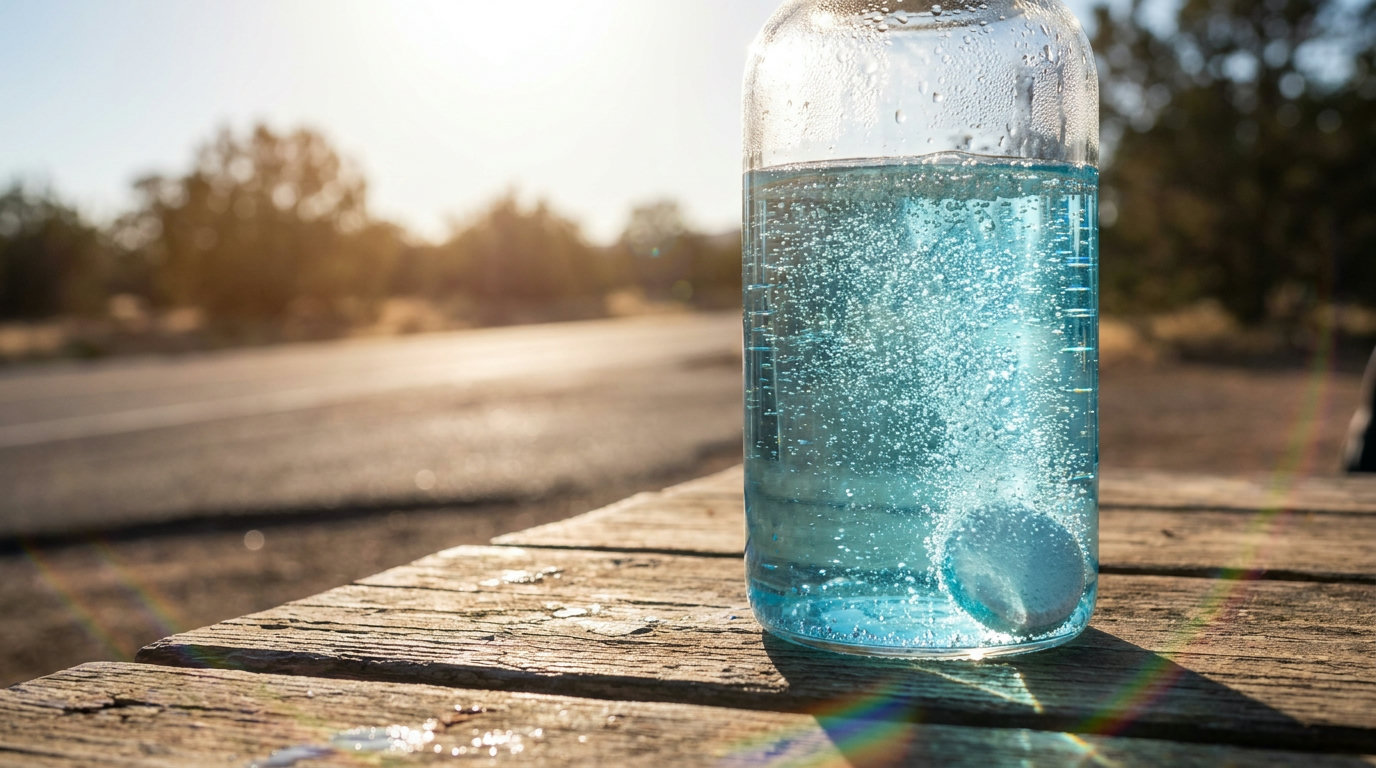
The four electrolytes that count
Electrolytes are not equally important, and they do not all leave your body in meaningful amounts. Here is where the four central ions actually stand:
Sodium (Na+): the dominant cation in sweat by quantity. It regulates water balance, blood volume and nerve signalling. Losses of 400-1,100 mg per litre of sweat are normal, and that spread explains why blanket advice so often misses.
Potassium (K+): mostly sitting inside your cells. Involved in muscle contraction and nerve function. Sweat losses are comparatively small (100-150 mg/L) and rarely critical on a mixed diet.
Magnesium (Mg2+): a cofactor for more than 300 enzymes, essential for ATP production and neuromuscular transmission. Sweat losses are minimal at 5-15 mg/L. The attention magnesium gets in sports nutrition is often out of proportion.
Chloride (Cl-): follows sodium. As its counter-ion it helps regulate pH and forms part of stomach acid. It is seldom discussed on its own, because you replace it together with sodium anyway.
Electrolytes in sweat: loss and function
| Electrolyte | Loss per litre of sweat | Main function | Relevance for athletesPriority |
|---|---|---|---|
Sodium (Na+) | 400-1,100 mg | Water balance, nerve signalling | Very high: the most common shortfall |
Chloride (Cl-) | 300-800 mg | pH regulation, acid-base balance | High: follows sodium automatically |
Potassium (K+) | 100-150 mg | Muscle contraction, heart rhythm | Medium: rarely critical on a normal diet |
Magnesium (Mg2+) | 5-15 mg | ATP synthesis, enzyme activation | Low in sweat, but still worth covering through food |
Sodium: the athlete's key electrolyte
Sodium is the electrolyte endurance athletes fixate on, and the fixation is earned. Sports drinks are typically recommended to carry 400-800 mg of sodium per litre; for long races or heavy sweat losses, up to 1,100 mg/L can make sense.
Individual sweat composition varies enormously. Two runners of the same height, holding the same pace over the same distance, can differ threefold in sodium loss. You can spot a "salty sweater" by white residue on clothing after training, a salty taste on the skin, or frequent cramping despite drinking enough.
If you lose a lot of sodium, salty snacks work as well as commercial electrolyte products, and cost far less: pretzels, salted crackers, olives. On timing, the point worth remembering is that sodium taken during the effort beats sodium taken afterwards. It drives thirst and helps you hold on to water, which keeps hydration steadier over long sessions.
Magnesium, potassium and chloride in detail
Magnesium is the most talked-about mineral in sports nutrition, usually with expectations it cannot meet. European reference values put adequate intake at around 350 mg a day for men and 300 mg for women. Athletes need slightly more, because magnesium also leaves via urine and sweat, though the sweat side is tiny at 5-15 mg per litre.
The intake side matters more. Studies show a substantial share of the population falls short of the daily reference value. In athletes, a subclinical shortfall can drag on sleep quality and muscle recovery. Pumpkin seeds, cocoa powder, pulses and wholegrain foods are good sources.
Potassium leaves at roughly 100-150 mg per litre of sweat. With a reference intake around 4,000 mg a day, and a single banana supplying some 400 mg, an exercise-driven potassium shortfall is unlikely on a normal diet. In very long races (ultramarathons, multi-day events) some deliberate potassium intake through sodium-containing sports drinks can be worthwhile.
Chloride physiologically follows sodium and is covered by ordinary salt intake. An isolated chloride deficiency in everyday sport is essentially never described.
When do you actually need electrolytes?
Electrolytes: yes or no?
- 1
If you train for less than 60 minutes
plain water is enough. Electrolyte products add no measurable benefit
- 2
If the effort runs past 60-90 minutes and it is hot
reach for something with sodium: a sports drink, or water with a pinch of salt
- 3
If you are racing an ultramarathon, a triathlon or similar
a deliberate electrolyte protocol with regular sodium is essential. Drink to thirst, not to a plan
- 4
If you are a salty sweater (white residue, frequent cramps)
watch your sodium on shorter sessions too and start electrolytes earlier
- 5
If you only sweat lightly and train briefly
an electrolyte drink does no harm, but no real good either
Right for you if …
Endurance athletes training beyond 60 minutes, especially in heat above 25°C
Probably not for you if …
Short strength or interval sessions under an hour at normal room temperature
Estimate your sweat rate
Weigh yourself before and after a one-hour session without drinking. Every 1 kg lost is roughly 1 litre of sweat. That gives you a personal baseline.
Know how salty your sweat is
White residue on clothing or skin after training is a good marker for high sodium loss. Sports physicians and specialist labs also offer sweat analysis.
Drink to thirst
The current consensus in sports medicine: drink to thirst rather than to a fixed schedule. That guards against over-hydration as much as against dehydration.
Get the electrolyte timing right
Beyond 60 minutes, bring in sodium-containing drinks or snacks (salted pretzels, olives) from the first hour. Do not wait for cramps.
Replace deliberately afterwards
Fluid and electrolyte restoration works best with electrolyte drinks alongside a normal meal. Expensive recovery products are not required.
Dosing: concrete recommendations for athletes
The table below follows European sports-medicine recommendations for sports drinks and current endurance research. Treat it as orientation. Individual variation, training intensity and climate can move the numbers a long way.
An isotonic drink usually carries 400-800 mg of sodium per litre at 4-8% carbohydrate. That mix empties from the stomach quickly and absorbs efficiently. Hypotonic drinks (under 4% carbohydrate) absorb faster but are less practical when you need energy. Hypertonic drinks (over 8% carbohydrate) slow gastric emptying and are a poor choice mid-effort.
| Situation | Sodium | Potassium | Drink recommendation |
|---|---|---|---|
Training under 60 min, under 25°C | Water is enough, no electrolytes needed | ||
Training 60-90 min in the heat | 400-600 mg/L | 100-200 mg/L | Isotonic sports drink, or water with a pinch of salt |
Endurance beyond 90 minutes | 600-800 mg/L | 100-200 mg/L | Sports drink at 4-8% carbohydrate, every 30-45 min |
Ultra / beyond 4 hours | 800-1,100 mg/L | 150-250 mg/L | Deliberate protocol, solid sodium-rich snacks |
Hot day without sport | as needed | Salt your meals normally, drink mineral water |
What speaks for it
A home-mixed solution (water, a pinch of salt, a little sugar, lemon juice) is cheap, dose-able to your own needs and works as well on long sessions as expensive products
Commercial sports drinks have consistent formulations, which is what you want on race day when experimenting is off the table
Sodium-rich foods (salted pretzels, olives, sports bars) are a practical solid alternative to liquid electrolytes
A cheap electrolyte powder with a known formulation beats a pricey ready-made product at the same sodium content
What to weigh up
Home-mixed solutions vary in concentration, so if you do not know your dose you risk too little sodium or too much
Plenty of commercial products push magnesium and potassium in their marketing while supplying too little sodium for real endurance loads
Starting electrolytes too late (once cramps hit, instead of from minute 60) is the most common mistake, whether you mix your own or buy them
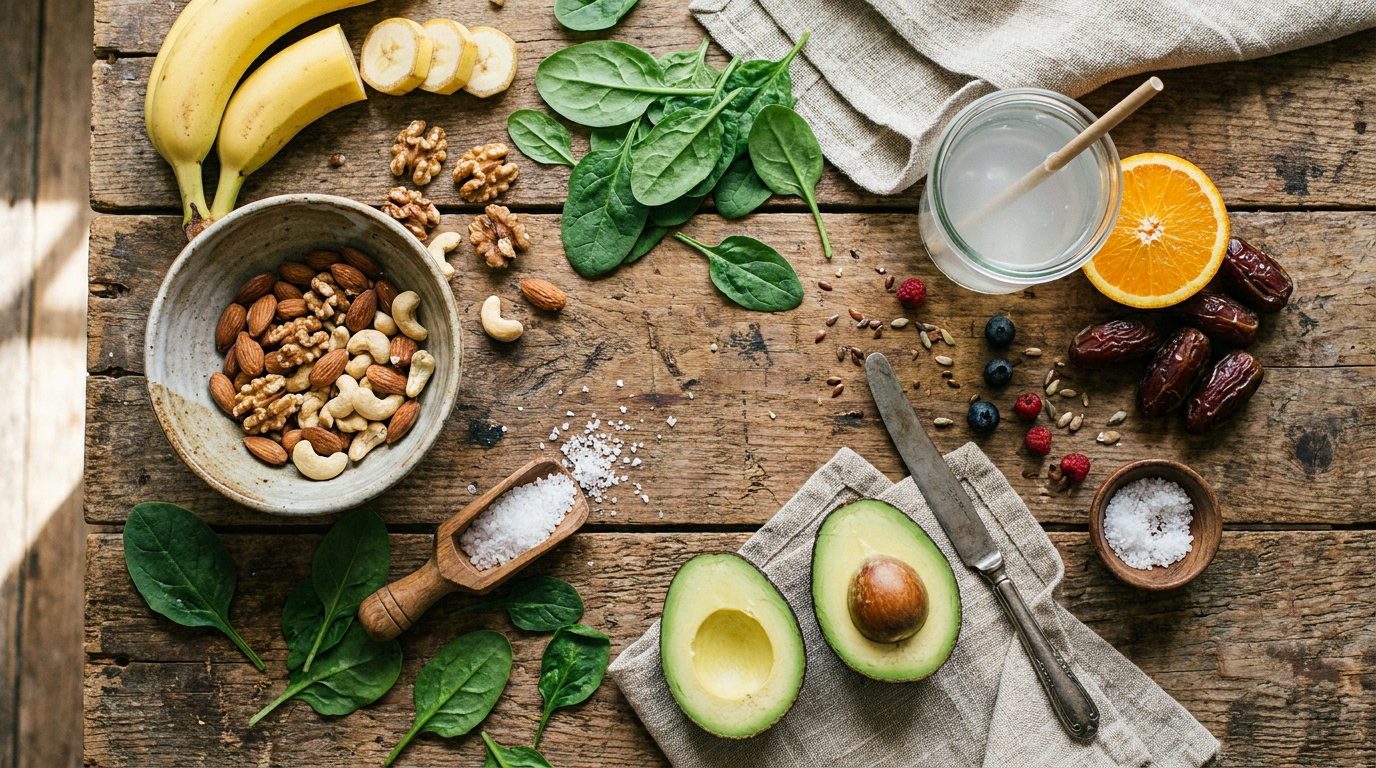
Common mistakes and how to avoid them
Mistake checklist: what to avoid when training in the heat
Risk: hyponatraemia, especially beyond four hours of effort
Sodium is by far the biggest loss in sweat
Taking them during the effort works better
Ad libitum drinking protects better against both over- and under-hydration
Many contain little sodium and a lot of marketing
Variation is wide, and a weigh-in before and after a session is enough to start
On brief efforts they bring no measurable advantage
Frequently asked questions
Do I need electrolytes for every summer session?
Usually not. Under 60 minutes at moderate intensity, plain water covers you even in the heat. Electrolytes become relevant once you are sweating hard for more than an hour, or if your sweat is unusually salty.
Can I take too many electrolytes?
Yes. Too much sodium with too little fluid can lead to hypernatraemia. Take electrolyte products with enough water, and match them to the effort you are actually doing.
Do electrolytes really prevent muscle cramps?
Only up to a point. Dehydration and hyponatraemia can encourage cramping, but the evidence that an electrolyte shortfall is the main cause of endurance cramps stays weak. Neuromuscular fatigue and genetic disposition matter at least as much.
Which is the best electrolyte drink for endurance athletes?
It depends on the effort. Under 90 minutes, water with a little salt is fine. For longer efforts, isotonic drinks with 400-800 mg sodium per litre and 4-8% carbohydrate are well evidenced. A home mix can be just as effective as an expensive ready-made product.
Is coconut water a good source of electrolytes?
As a potassium source, yes. As a sodium source, no. Coconut water carries little sodium (under 100 mg/L), which makes it a poor match for the typical athlete's sweat profile. Fine alongside sodium-containing drinks, not enough on its own.
Sources
- Hyponatraemia in endurance sport – Deutsche Zeitschrift für Sportmedizin (in German) ↗
- Exercise-associated hyponatraemia – Deutsches Ärzteblatt (in German) ↗
- Mineral loss through heavy sweating – Verbraucherzentrale (in German) ↗
- Electrolytes and fluid intake in sport – ActivePeople (in German) ↗
- Electrolyte drinks in sport: when they are genuinely necessary – DocMedicus (in German) ↗
Inspiration, knowledge and gear for people who want more from the outdoors.