
 AI-generated
What a World Cup player really wears on their body
GPS vests, compression clothing and smart textiles: the invisible high-tech gear used by World Cup professionals, and what the data reveals.
AI-generatedWhat a World Cup player really wears on their body
GPS vests, compression clothing and smart textiles: the invisible high-tech gear used by World Cup professionals, and what the data reveals.
What is inside a GPS vest?Contents
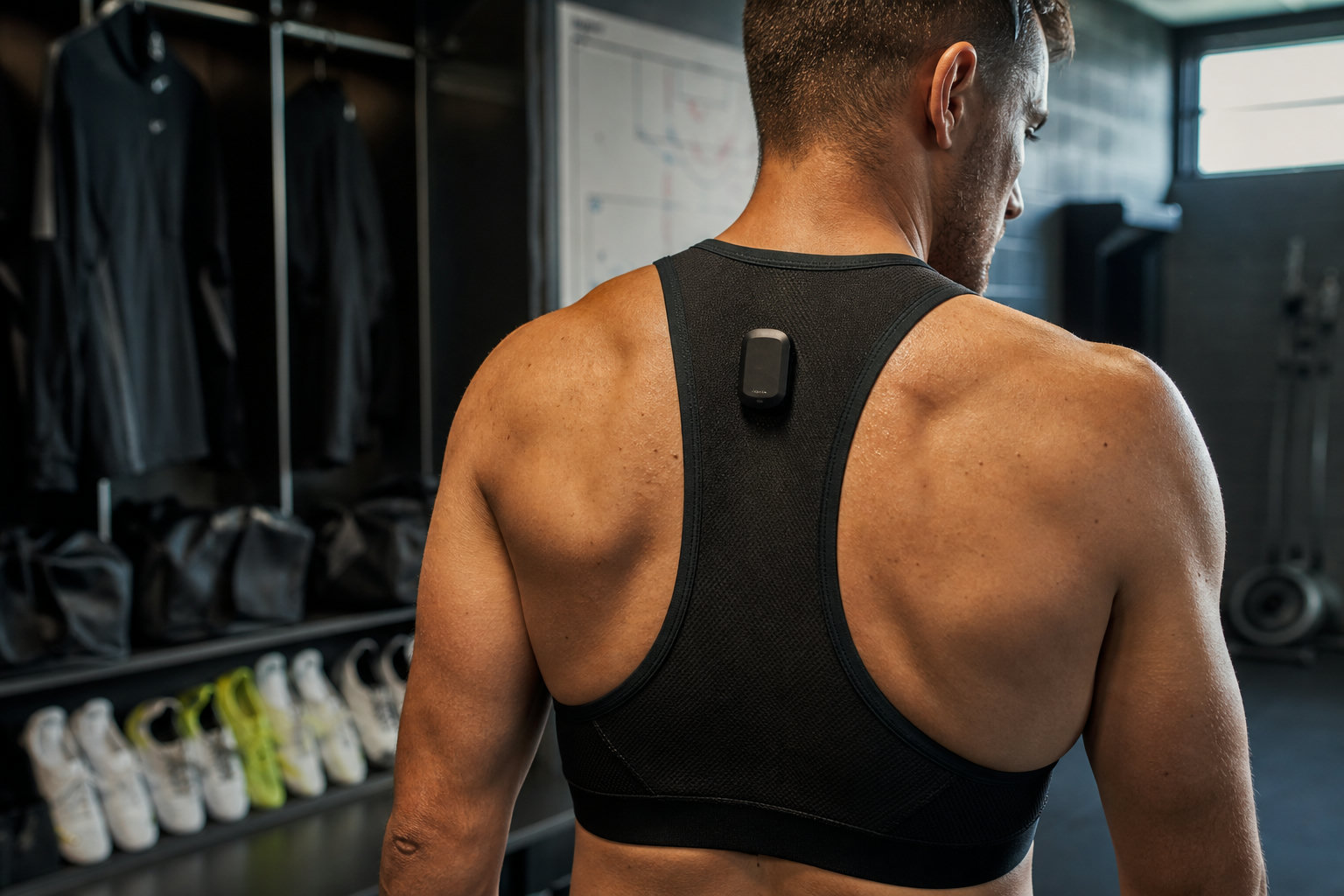
When you watch a World Cup match and wonder why some players briefly reach beneath their shirts at half-time, there is a system behind it. The so-called GPS vest is a close-fitting compression garment with a small sensor inserted between the shoulder blades. The sensor is roughly thumb-sized, weighs 50–80 grams and delivers data at a density that is hard to imagine: up to 1,250 data points per second.
The device combines GPS signals for positional data with an IMU (inertial measurement unit), which combines an accelerometer and gyroscope. Many systems also measure heart rate directly through the skin. The result is a complete movement profile showing where a player was on the pitch, how fast they were moving and how their heart was responding.
The market leaders are Catapult (used by Bayern Munich, Chelsea, Real Madrid and more than 3,200 teams worldwide) and STATSports (the official supplier to, among others, US Soccer, PSG, Juventus and the Brazil national team). STATSports is the only system certified as a standard for accuracy, reliability and consistency following a four-year FIFA study.
What the coach sees on the tablet may sound dry, but in a match context it is remarkably detailed: total distance in km, current and maximum speed, number and quality of sprints, so-called high-speed running (>19.8 km/h), live heart rate, accelerations and decelerations. All live. All during the match.
 AI-generated
Allowed or banned? The FIFA rulesContents
For a long time, GPS vests occupied a grey area. They have only been officially permitted since February 2015 by the IFAB (International Football Association Board), and since March 2018, coaches have even been allowed to receive the data live during a match. Before then, the vest had to be handed in at half-time.
FIFA runs its own certification scheme, the FIFA Quality Programme for EPTS (Electronic Performance and Tracking Systems). It was expanded to include performance testing in 2019, and since 2023 it has also covered wearables worn on the lower leg. Systems that are not certified may not be used in competitive matches.
There are clear restrictions: no physical receiving devices are permitted in the technical area. Coaches receive the data on a laptop or tablet in the dressing room, not at the touchline. Brand logos on the device must also be covered while it is worn. The data itself must not be passed on to third parties, such as betting providers. Data protection is a genuine factor here.
Compression clothing: more than marketing?Contents
Beneath the GPS vest, some professionals also wear a close-fitting base-layer shirt and short tights. It is fair to ask whether this really makes a difference or simply looks good. The answer is nuanced. Brands such as adidas call these products Techfit, for example: they fit close to the body, wick away sweat and provide a secure feel. It is fair to ask whether this really makes a difference.
Strengths
- Reduces muscle vibration during sprints and changes of direction, placing less mechanical stress on the tissue
- Delays fatigue in the short term and reduces muscle soreness after intense sessions
- Improved venous circulation supports oxygen supply and lactate clearance
- Protects against abrasions on ground contact, especially in positions involving frequent challenges
Weaknesses
- Does not make you faster or directly increase strength: it is not a performance booster
- Studies show effects mainly on recovery and comfort, rather than acute performance parameters
- Limited benefit for low training volumes or occasional sport
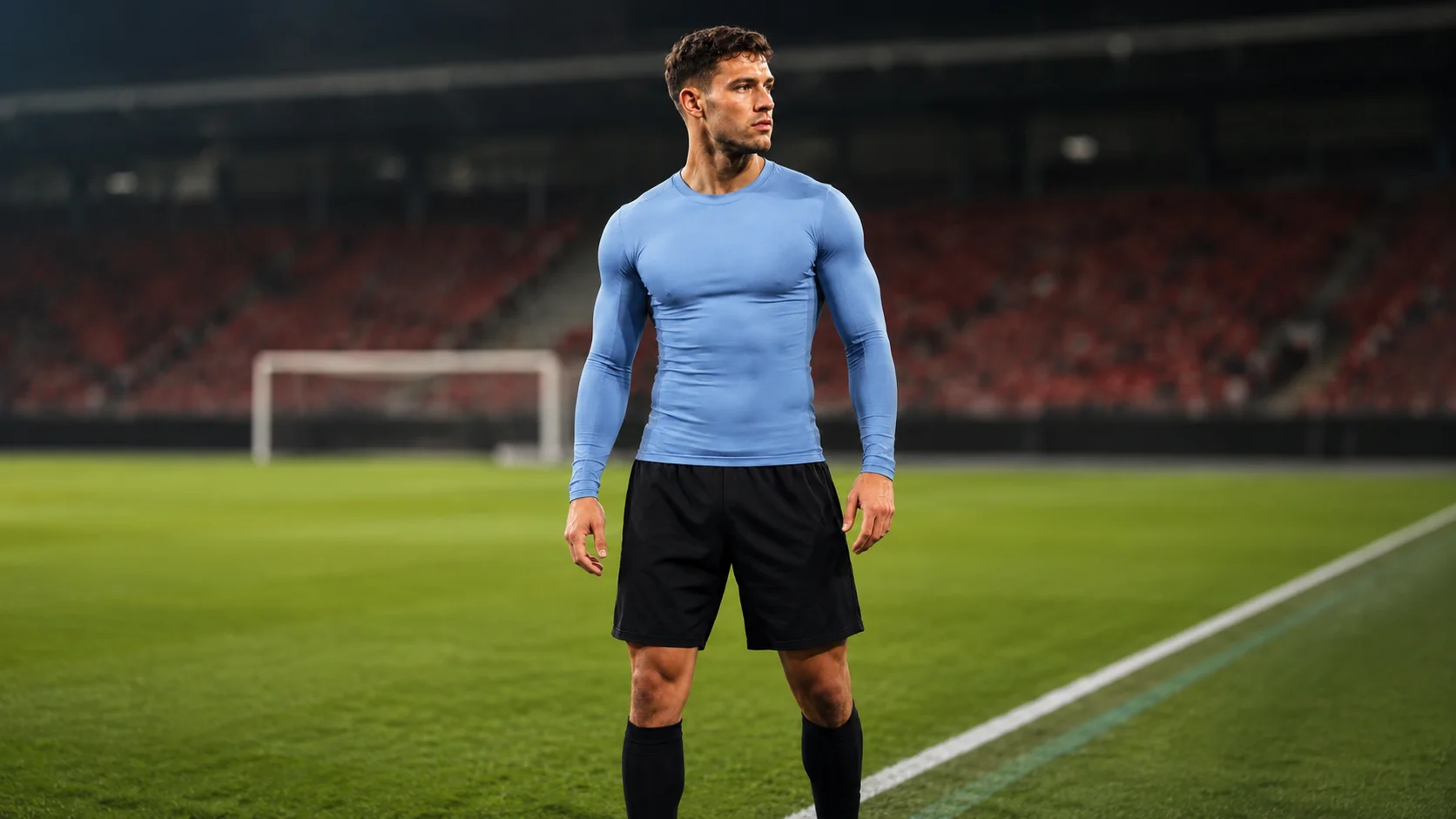
When it comes to materials, professionals rely on polyester-spandex blends that wick away moisture and dry quickly, or highly elastic nylon. Flatlock seams and seamless constructions prevent chafing during intense movement, which is particularly relevant for tackles or ground contact. The GPS vest is worn as an additional layer over the compression shirt, with the sensor pod positioned directly over the spine.
When playing without a GPS vest, compression clothing also offers protection: it guards against abrasions and keeps muscles close to the body, making it a practical choice especially for players involved in plenty of challenges.
Adidas base layers for your training
Compression clothing like the pros wear: discover Adidas Techfit for maximum support and optimal muscle support.
World Cup 2026: the most technologically advanced World Cup everContents
The 2026 World Cup in the USA, Canada and Mexico will open up a new dimension, not only because of its 48 teams but also because of the sheer volume of data. In collaboration with Lenovo, FIFA has launched the "Football AI" project, taking data capture to a new level.
Skeletal tracking is the core element: all 1,248 players are 3D-scanned in around one second and reconstructed as volumetric avatars. The system records 172 million data points per match, roughly three times more than before. Cameras operating at 25 frames per second provide precise real-time positional data for every player simultaneously.
Particularly interesting is the smart ball. The official 2026 World Cup match ball contains an integrated IMU that transmits positional data 500 times per second. Goal or no goal, ball control, shooting angle and rotation speed can all be measured precisely. This takes goal-line technology to a new level of quality.
GPS vest data density
1,250/sec
World Cup 2026 skeletal tracking
172m
Smart ball sensors
500/sec
Distance covered record
16.7 km
What recreational athletes can take from itContents
What the pros wear cannot be transferred one-to-one to amateur players: GPS vests for recreational footballers are still niche products. But there are two things you can take away directly.
First: compression clothing. The technology World Cup players wear beneath their vests has long been available from specialist retailers. Compression shorts and shirts also offer measurable recovery benefits in recreational sport, especially after intense training sessions or matches. Prices are far more accessible than they were five years ago.
Second: heart rate training. GPS data shows that professionals reach 85–98% of their maximum heart rate during a match. This is a useful reference point for amateur players: training in this range realistically simulates match demands. A simple heart rate chest strap or armband makes this possible without FIFA certification.
What has not yet reached the recreational market is coming over the next few years: smart textiles. Compression clothing with woven-in sensors, such as conductive yarns, biometric seam strips and graphene pressure sensors, already exists technically but has not yet reached the mass market. Manufacturers such as Adidas and Nike describe 2026 as a milestone for the first generation of consumer smart sportswear. Anyone who wants it today will pay specialist prices for technology that is not yet fully mature.
Conclusion: the trend is clearly moving towards measurable body data for everyone, but in this respect, the 2026 World Cup player is still at least three to five years ahead of the recreational footballer.
Is compression and tracking gear worth it for you?
Ideal for
Active footballers, runners and anyone who wants to support their training with data
Not ideal for
Occasional athletes without recovery demands or with a very low training volume
Train like a pro
Under Armour baselayer technology for recreational athletes: optimal muscle support and fast recovery for your training.