Buying Guides
Style meets high-tech: why the new Alpina VIZZARD is more than just good-looking
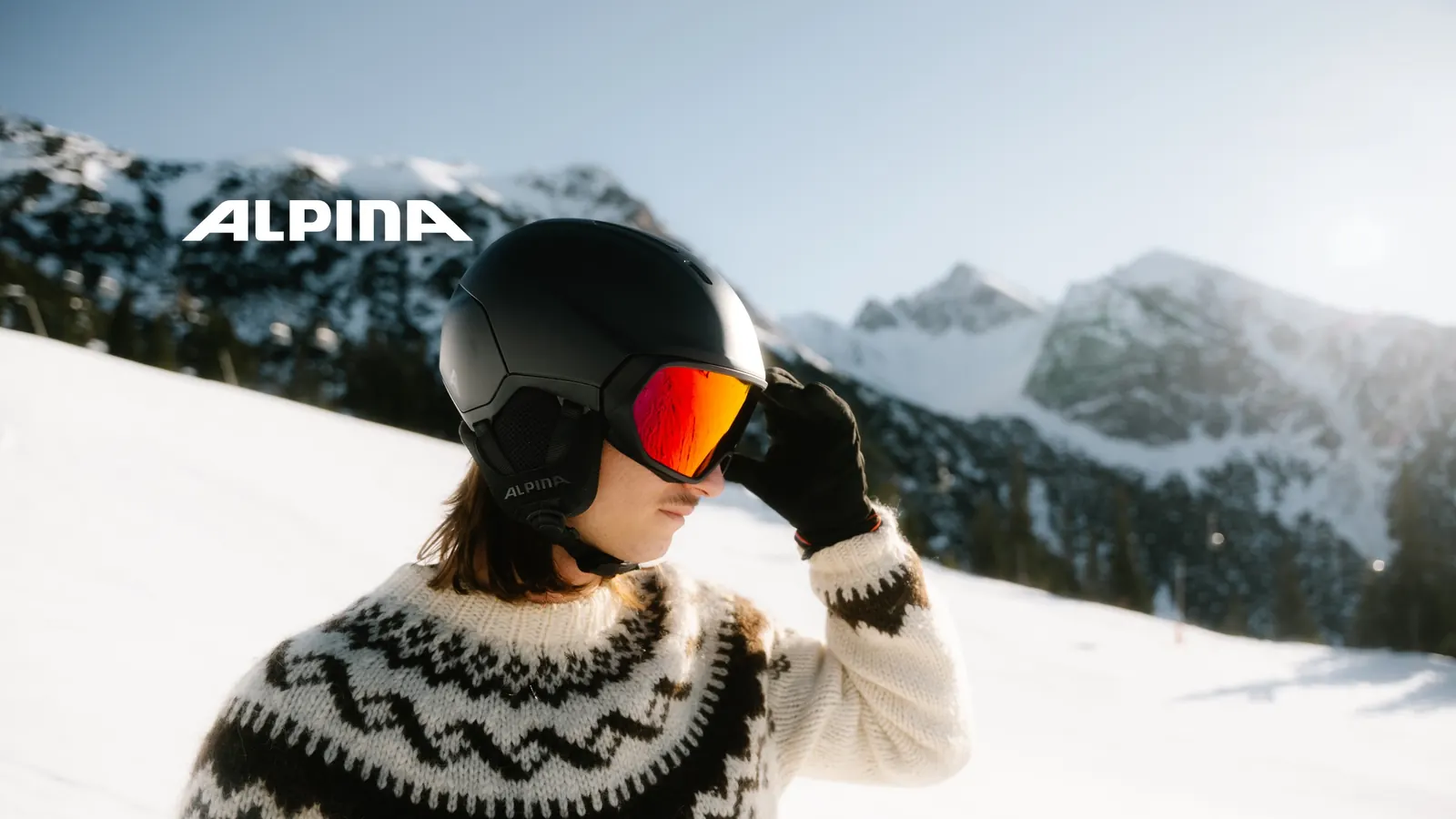
From the cold morning at the bottom station to an espresso on the sun terrace. We take the Alpina VIZZARD through a full day of skiing and show where the visor, MIPS and ventilation really help on the mountain.
The essentials at a glance
- 01
Alpina started out with ski goggles. With the VIZZARD, the goggles are integrated directly into the helmet as a large, polarised visor.
- 02
Wide Vision gives you a broad field of view, while TRM 2.0 brings the visor close to your face with one movement.
- 03
MIPS is designed to reduce rotational forces in angled falls, while the Multi Shell made from several layers makes the helmet robust.
- 04
Glasses wearers can wear their own glasses under the visor. Trying the helmet on will show how well they fit.
- 05
The VIZZARD is available as the Q MIPS with an S2 visor and as the QV MIPS with a self-tinting visor (S1 to S3).
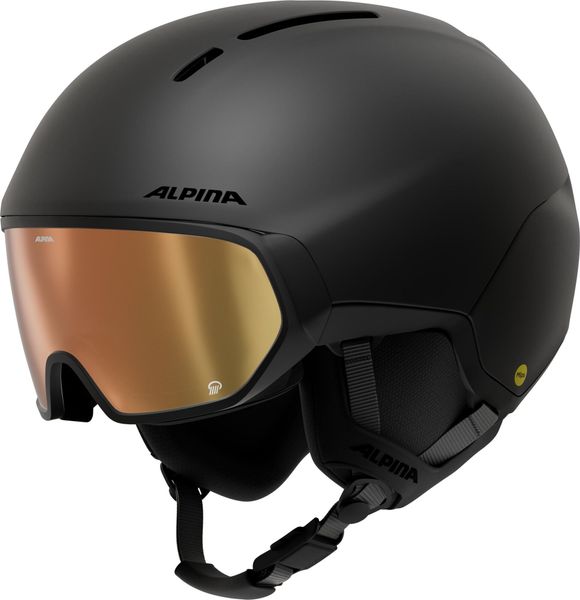
Alpina started out with ski goggles and today combines clear vision, reliable protection and high comfort in its helmets. You can see that heritage at first glance in the Alpina VIZZARD: the large, mirrored visor sits close to the face and forms the centre of the helmet. Its matt shell with clean lines frames it and looks just as fitting with a Norwegian jumper at the bottom station as it does with a hardshell on the glacier.
The VIZZARD is available in two MIPS models that are built in the same way and differ only in their visors. The VIZZARD Q MIPS has a polarised, contrast-enhancing visor for most ski days, while the VIZZARD QV MIPS has a visor that tints itself according to the light. At SportFits, the Q MIPS is available in black, dark grey, old rose and white, while the QV MIPS comes in dark grey, sand and white, each with a matt shell and coloured mirrored visor.
The Alpina VIZZARD at SportFits
Q MIPS and QV MIPS in all colours and sizes

Prices from the shop, checked when this page loaded. The price shown in the shop applies.
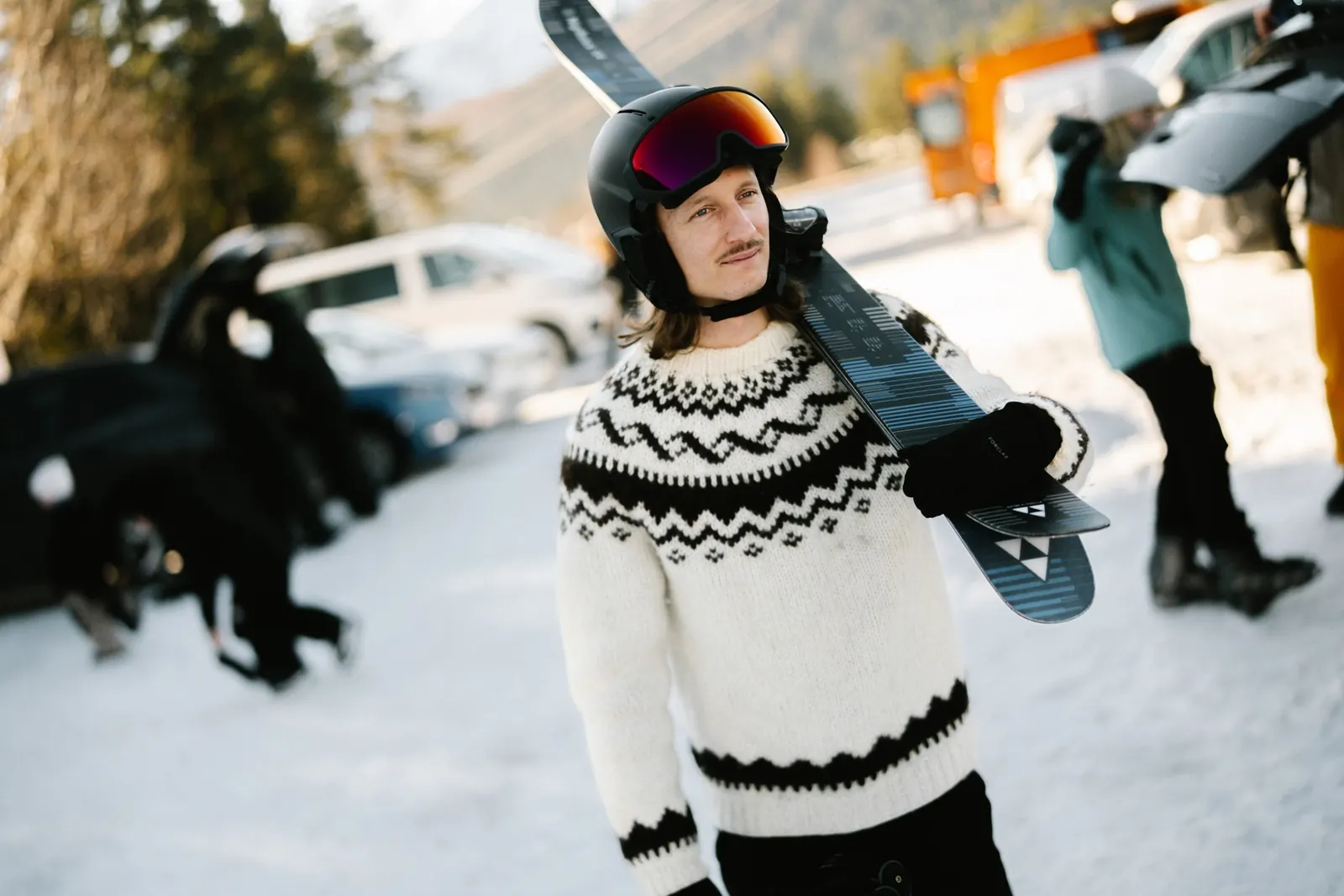
In the morning, the car park at the bottom station is still in the shade. The ski boots are fastened, the skis are over your shoulder, and the familiar ritual begins: helmet on, ski goggles over it, strap pulled over the shell, chin strap fastened. With gloves on, this is often awkward; without them, your fingers quickly get cold.
With the VIZZARD, it is easier because the goggles are already integrated into the helmet as a visor. The chin strap is also quick to fasten: the Fidlock magnetic buckle pulls the two parts together by itself and, according to Alpina, can be fastened even one-handed and while wearing gloves. One click and you are ready to go. The helmet looks like one complete unit, with no gap between visor and shell and no goggle strap slipping around the back of your head.
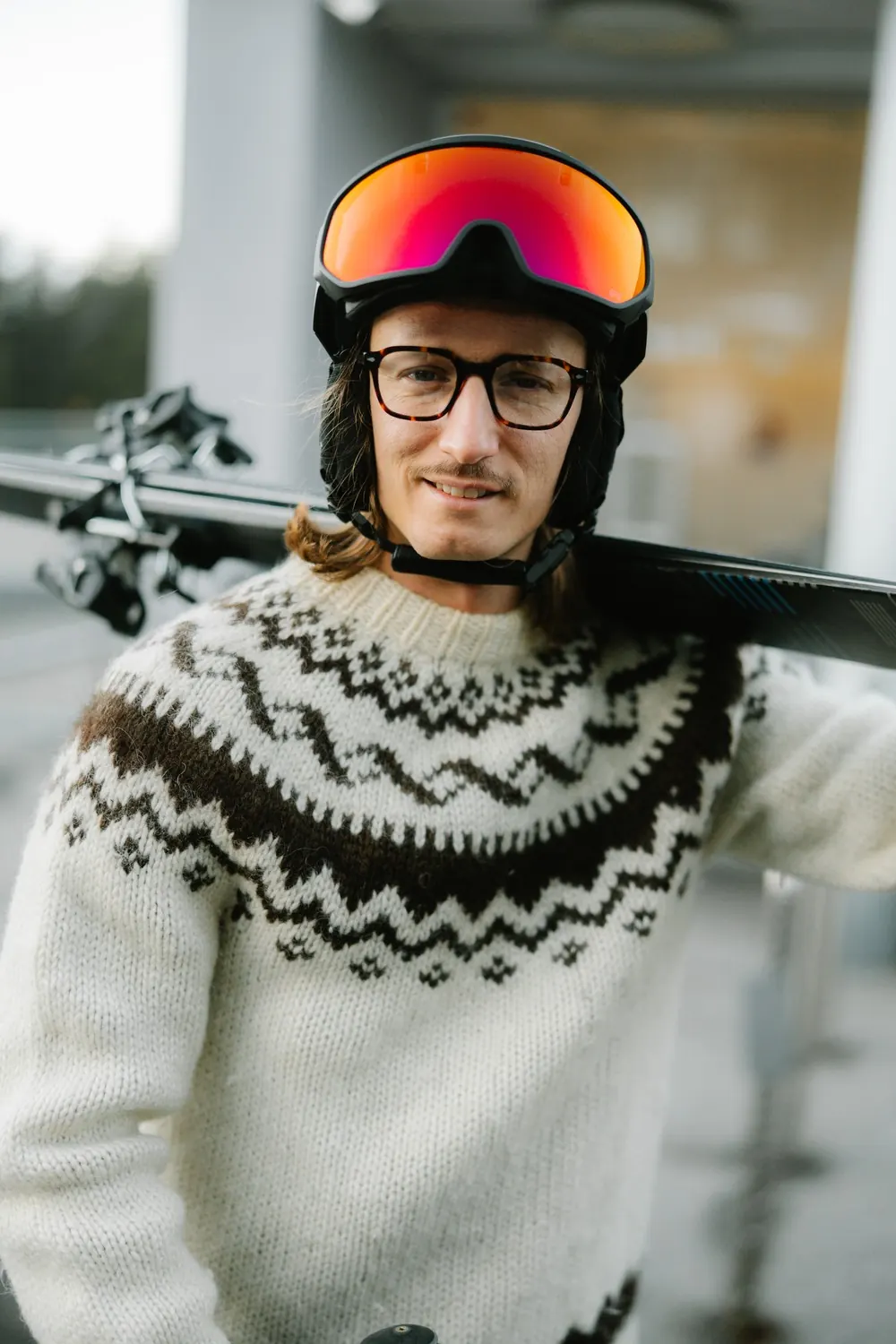
For glasses wearers, this ritual is often the least comfortable moment of the day. The ski goggles press on the arms of your glasses, and on the lift two lenses fog up instead of one. Some people therefore prefer to leave them in the car and ski with slightly blurred vision.
Under a visor helmet, by contrast, there is room for your glasses and they simply stay on your nose. That is how the skier in Alpina’s photos wears them with the VIZZARD. How well they fit depends on your frames, though. Narrow glasses fit more easily than wide, angular frames. So take the glasses you wear skiing with you when trying the helmet on, and open and close the visor several times.
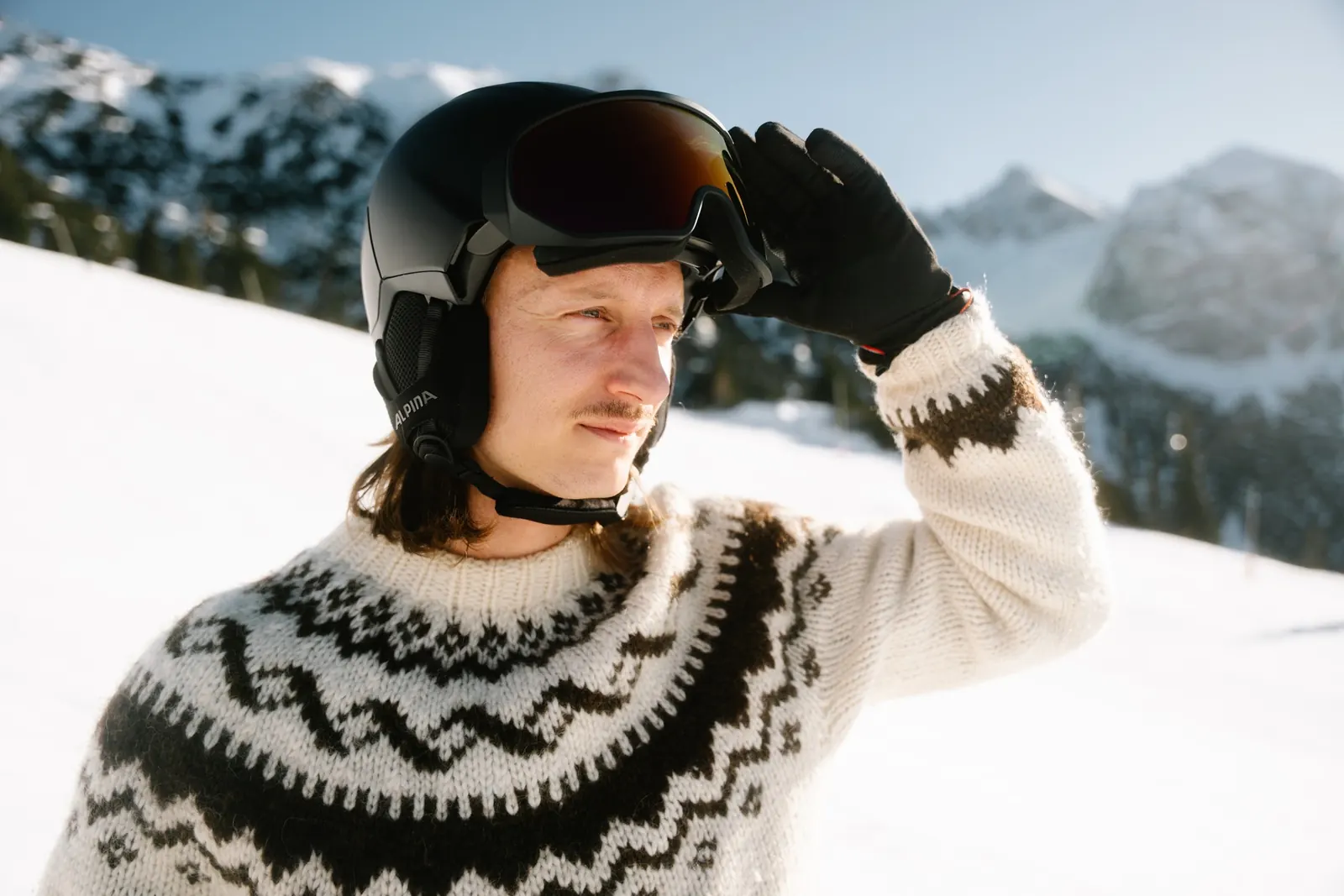
At the top station, the wind whistles over the ridge and the first descent is still in the shade. Now it matters how closely the visor sits against your face, because cold air reaches your eyes through every gap.
This is where TRM 2.0 comes in, the second generation of Alpina’s translational-rotational mechanism. The unwieldy name describes a simple movement: you lower the visor, and on the final part it moves slightly backwards, closer to your eyes. According to Alpina, this makes it sit particularly close to the face while still allowing you to raise it with one hand.
In cold weather, you can also close the ventilation, which you control yourself via Active Venting. Keep it closed on a frosty morning, then open it as soon as the sun comes out.
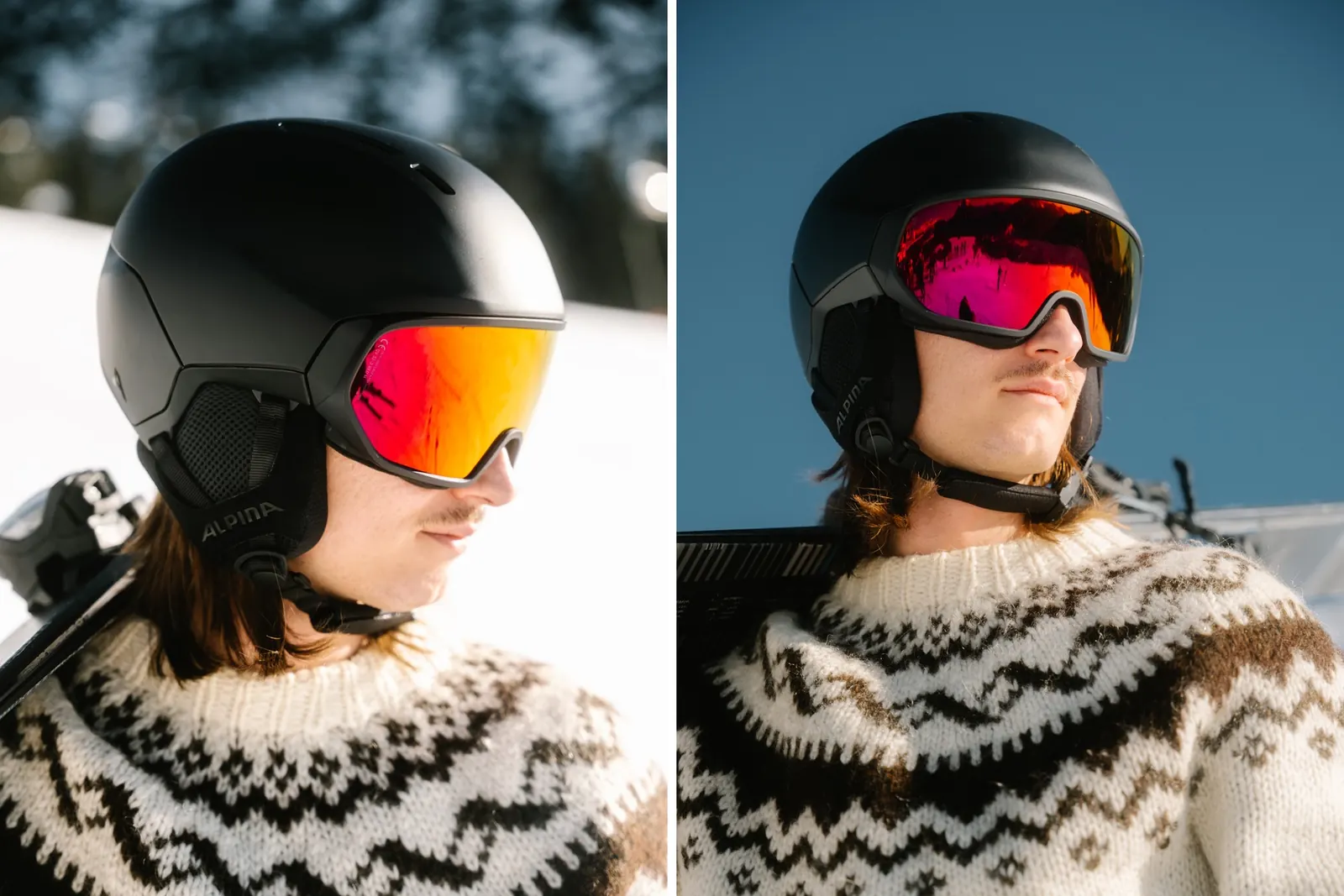
Eventually, the sun rises above the edge and the slope suddenly comes into the light. That is when you see what the large visor was designed for. Alpina calls it Wide Vision: it extends far around the face and, according to the manufacturer, provides an extra-large field of view. This means you can keep an eye to the side when someone approaches faster from the left, as well as look down at your ski tips.
Alpina’s heritage is most apparent in the lens. Both VIZZARD visors are polarised and reduce glare on hard, shiny snow, making undulations and icy patches stand out more clearly. According to Alpina, they fully filter UVA, UVB and UVC radiation and have been tested to the standard for ski goggles.
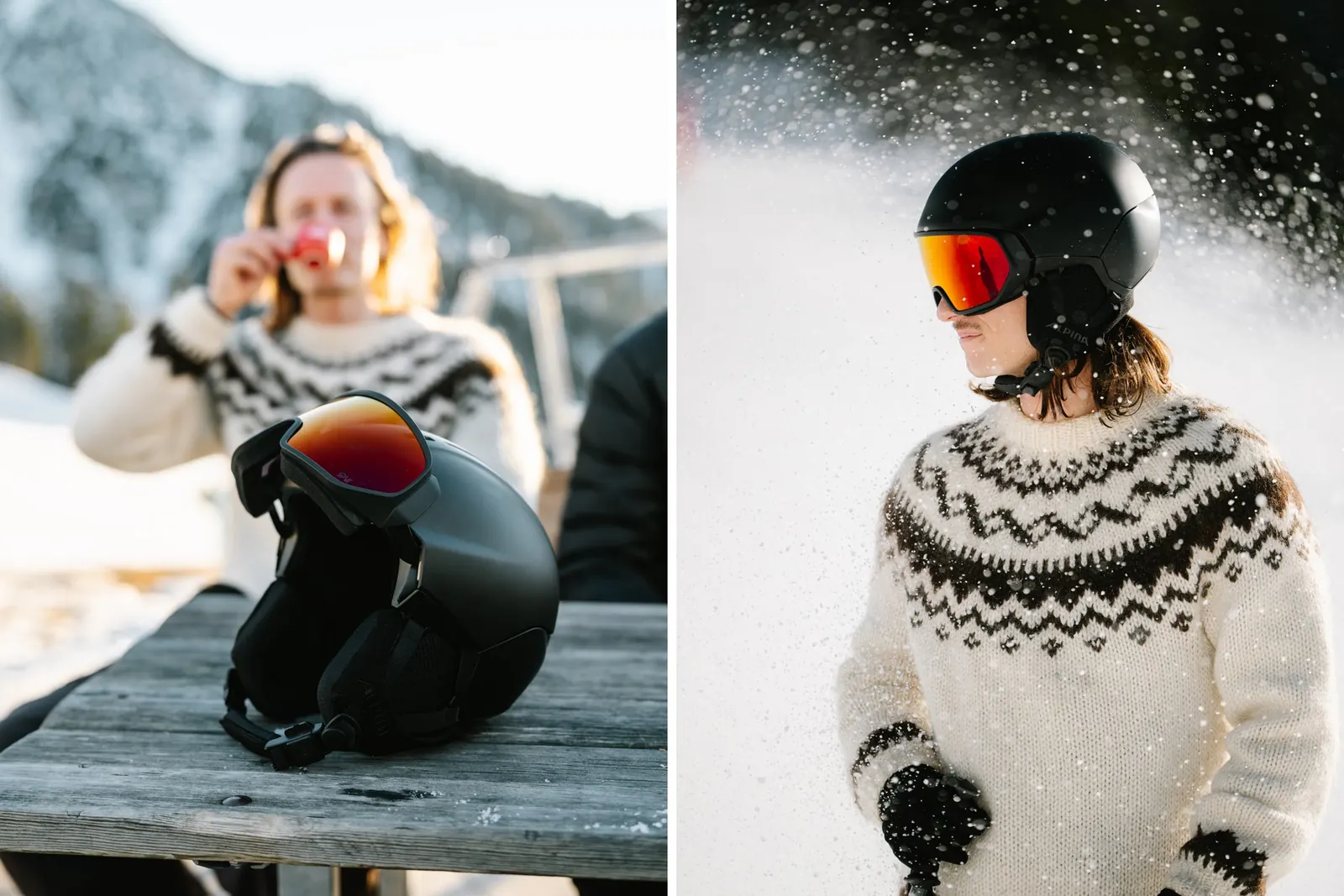
By late morning, the untracked slope beside the piste is tempting. If a turn in the powder ends in a fall, your head usually hits at an angle. To deal with the rotational forces this creates, Alpina has equipped the VIZZARD with MIPS, the Multi-directional Impact Protection System. According to Alpina, the thin low-friction layer between the head and shell can move 10 to 15 millimetres in any direction, redirecting some of the rotational movement before it reaches the head.
The shell itself is also multi-layered. In the Multi Shell, a core of Hi-EPS, a hard foam with many small air chambers, absorbs the energy of an impact on the inside. On the outside, an ABS hard shell and a Ceramic Shell protect it, with EdgeProtect, a polycarbonate strip, providing additional protection along the lower edge. It protects the foam from marks precisely where a helmet is most likely to get knocked: in the gondola, in the boot of the car or on the mountain-hut table.
At around 700 grams, the VIZZARD weighs slightly more than a helmet without a visor because the goggles are permanently integrated as a visor. Thanks to its good fit, the weight is distributed evenly across the head, so the helmet remains comfortable even on long ski days.
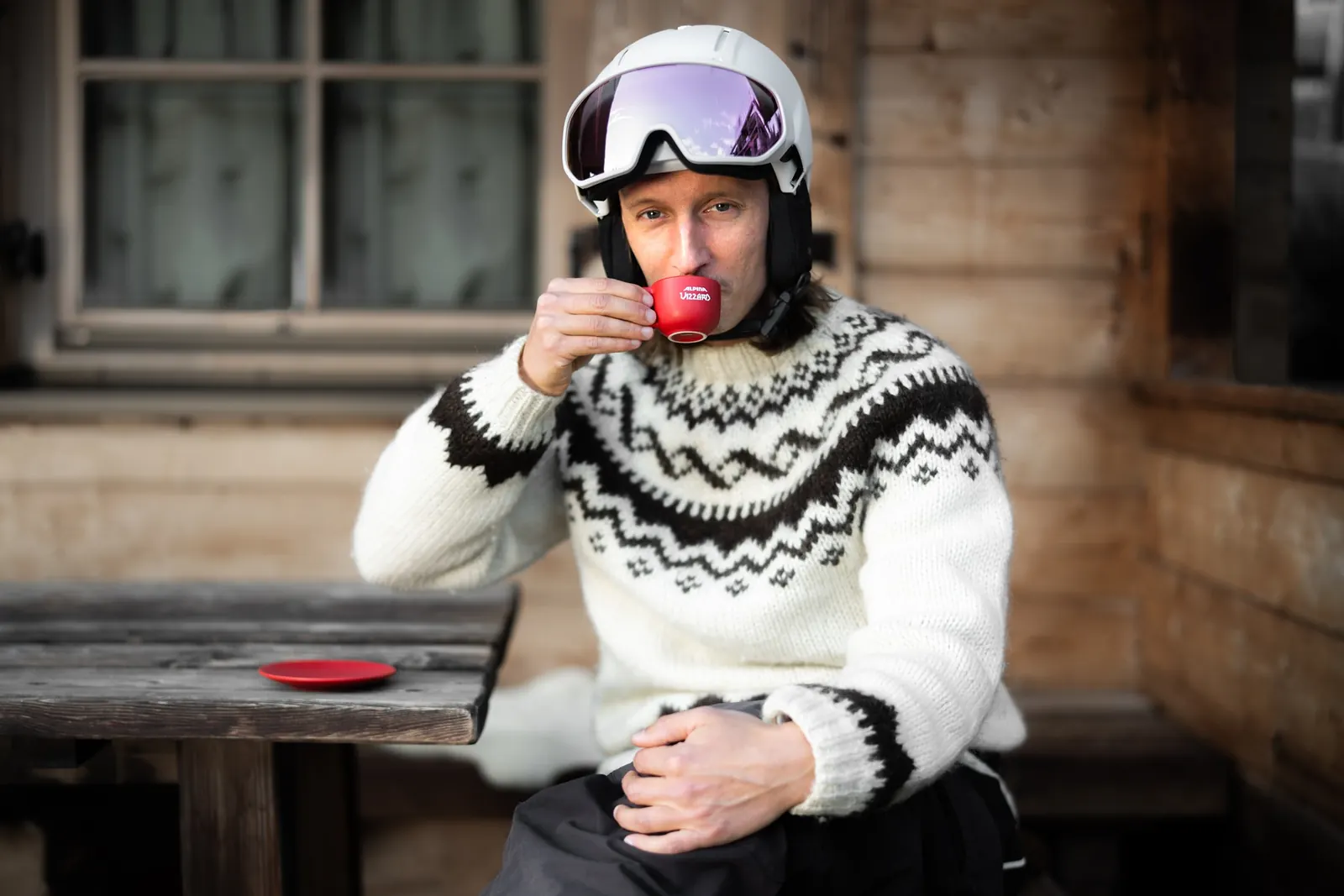
At lunchtime on the sun terrace, classic ski goggles usually end up on your forehead, fog up there or land beside your espresso cup.
With the VIZZARD, you simply raise the visor and leave the helmet on. It is back down with one movement when you set off again. With the ventilation open, heat does not build up even in the midday sun, and the 2D Fit System keeps the helmet securely in position. The QV MIPS also includes a neck warmer.
In the afternoon, cloud often moves in, the light becomes flat, and edges and bumps blur together. By then at the latest, it becomes clear which visor suits you. Both models have Wide Vision, TRM 2.0, MIPS, Multi Shell and ventilation; the only difference is the lens.
The Alpina VIZZARD Q MIPS has the polarised, contrast-enhancing Quattroflex visor in filter category S2. This gives you good coverage on most ski days with changeable weather. On a glaringly bright glacier day, however, it may be too light, and in dense fog too dark.
The Alpina VIZZARD QV MIPS uses the QuattroVarioflex visor, which is also polarised and additionally tints itself. Depending on the light, it changes between filter categories S1 and S3, from overcast skies to bright sunshine. This means the QV MIPS covers almost every type of weather with a single visor.
| Model | Visor | Filter category | Weight according to Alpina |
|---|---|---|---|
VIZZARD Q MIPS | Quattroflex, polarised, contrast-enhancing | S2 | 692 g |
VIZZARD QV MIPS | QuattroVarioflex, polarised, self-tinting | S1 to S3 | 705 g |
The Q MIPS and QV MIPS are each available in the same three sizes. Measure your head about one finger’s width above your eyebrows and across the widest point at the back of your head.
Which model suits you depends less on your skiing ability than on where and in what weather you usually ski.
Which VIZZARD is right for you?
- 1
If you usually ski on the piste in changeable weather
VIZZARD Q MIPS with high-contrast S2 visor.
- 2
If you want to ski in sunshine, cloud and flat light with just one visor
VIZZARD QV MIPS with self-tinting visor.
- 3
If you wear prescription glasses
both models are suitable; the deciding factor is trying them on with your own glasses.
- 4
If you often go ski touring and every gram counts on the ascent
a lightweight helmet with separate ski goggles is the better choice.
Right for you if …
skiers who want a helmet and goggles in one, glasses wearers and anyone who values visibility, protection and a clean look
Probably not for you if …
anyone looking for the lightest possible helmet or wanting to change their ski goggles depending on the day
In the end, trying it on is what counts. Put the helmet on at home with the balaclava or thin hat you wear on the mountain, and keep it on for a few minutes. It should fit firmly without pressing, stay in place when you shake your head, and the visor should press neither on your nose nor on your glasses.
Alpina at SportFits
You can find visor helmets, ski helmets and ski goggles from Alpina in our shop.
View Alpina ski helmets ↗Frequently asked questions
What is the difference between the VIZZARD Q MIPS and VIZZARD QV MIPS?
The difference is in the visor. The Q MIPS has a polarised, contrast-enhancing visor in filter category S2. The QV MIPS has a polarised visor that tints itself and changes between S1 and S3. Both have Wide Vision, TRM 2.0, MIPS and ventilation.
Can I wear the Alpina VIZZARD with glasses?
A visor helmet is more comfortable for many glasses wearers than ski goggles because there is room for your own glasses behind the visor. Try the helmet on with your glasses and open and close the visor several times.
What does MIPS do in a ski helmet?
MIPS is a low-friction layer between the head and helmet shell. In an angled impact, according to Alpina, it can move 10 to 15 millimetres in any direction and is designed to reduce rotational forces acting on the head.
How much does the Alpina VIZZARD weigh?
According to Alpina, the VIZZARD Q MIPS weighs 692 grams and the VIZZARD QV MIPS 705 grams. The visor is already included in this figure, so you do not need separate ski goggles.
What should I do if the visor is scratched?
Treat the visor like an eyeglass lens: dab it dry only with a soft cloth and do not rub it over the snow. The QV MIPS comes with a visor protector that protects the lens during transport. After a hard fall, you should replace the entire helmet, even if there is no visible external damage.
SportFits
outdoors looks good on you