Wissen
Streif and Ganslern: Kitzbühel’s two faces
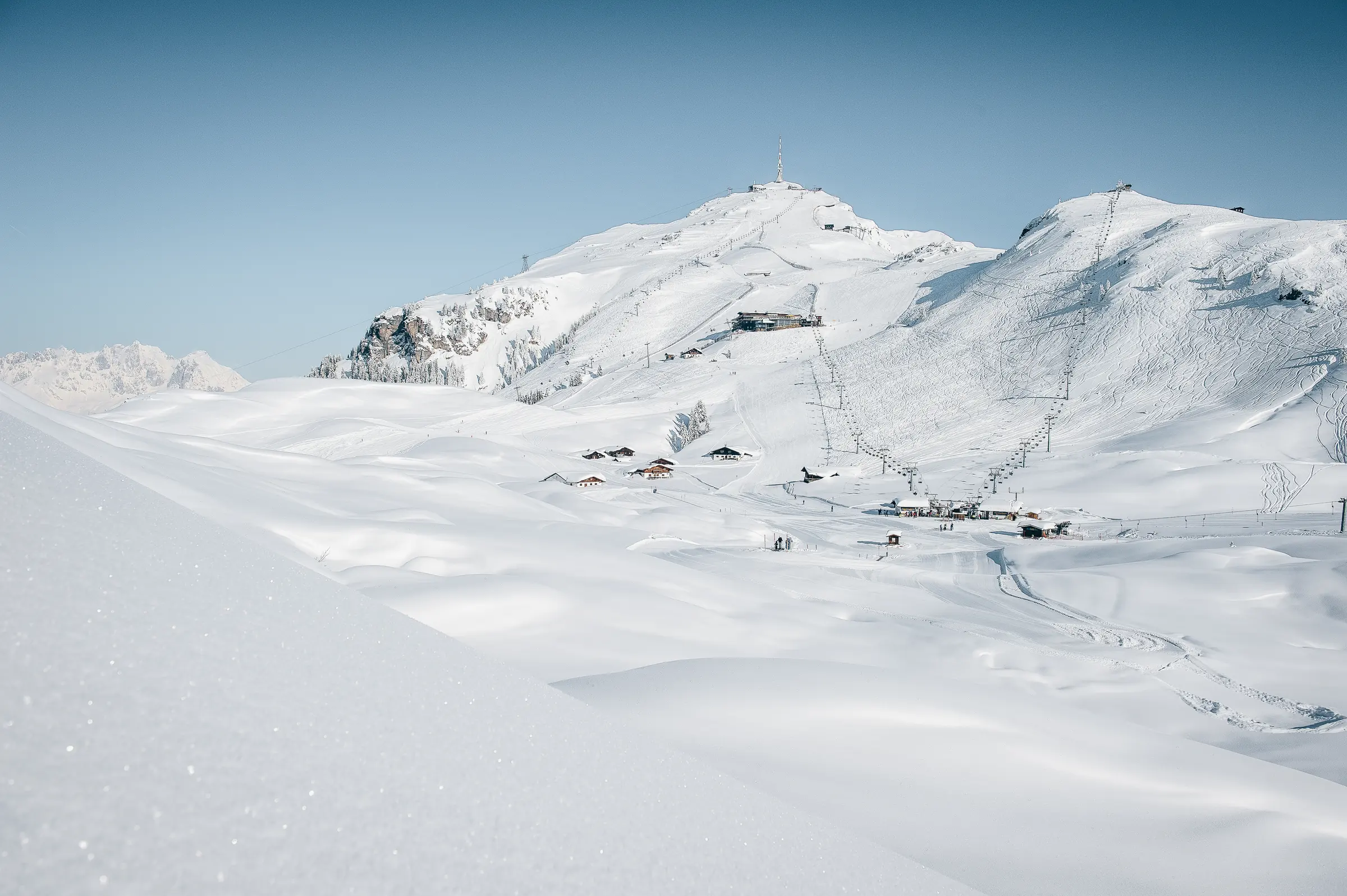
An 85 per cent gradient on the Streif, tight gates on the Ganslern: Kitzbühel’s two race slopes, their key sections and where to watch.
The Streif is a downhill course with plenty of space between its famous sections. If you only wait for the Mausefalle, you miss the glide through the Gschöss and the preparation for the Hausbergkante. Right next to it, the Ganslern demands a different kind of attention: short turns, waves and a slope that drops away to the side. In Kitzbühel, you can experience two very different forms of ski racing.
Both courses deserve a closer look. The downhill is about managing speed over a long slope. In the slalom, with its closely spaced changes of direction, the terrain comes into play over a smaller area. This portrait follows the organiser’s course descriptions; our advice on where to watch is editorial guidance.
Comparing the two slopes sharpens your perspective. On the Streif, there is plenty of speed between the technical challenges; on the Ganslern, changes in terrain come in quick succession over a confined area. That is precisely why we think both courses deserve a portrait. Anyone who reduces Kitzbühel to the Mausefalle misses a significant part of its ski racing.
The Streif in Numbers
- 01
Start and finish: 1,665 and 805 metres.
- 02
Course length: 3,315 metres according to the organiser.
- 03
Vertical drop: 860 metres.
- 04
Maximum gradient: 85 per cent.
From the Mausefalle to the Gschöss
The approach to the Mausefalle already determines what follows. After the jump come the Karussell and the steep slope, a sequence of changes in direction where the line has to suit the next section. The steepest point alone therefore explains only part of the difficulty. Pay attention to how the sections connect.
The picture changes in the Gschöss. The downhill becomes a gliding challenge, where a low body position and carried speed are crucial. The organiser explicitly describes this section as the counterpart to the technical steep slope. For you, it is precisely this change that makes it compelling: a racer can handle a spectacular section and still lose time on terrain that appears unremarkable.
A single viewing spot rarely shows this connection in full. If you are standing at an authorised section of the course, pay particular attention to the beginning and end of your view. How does the racer enter it? How does he leave it? This is often more revealing than trying to read the whole race from a single jump.
Seidlalm and Hausberg demand preparation
Further down, the course passes over the Seidlalmsprung and into the Seidlalmkurve. Here, the direction of the jump and the turn that follows have to work together. The section gets its character from the turn after the landing. For context, it is therefore also worth looking at the official course map.
At the Hausbergkante, a compression follows the jump — a dip in the terrain that presses the racer more firmly onto the skis. The course then continues into the traverse and towards the final straight. The line requires work right to the end. On television, the finish already appears close; out on the course, several challenges still lie between you and it.
The modern Streif was first raced in 1937. As a historical comparison, the organiser cites Fritz Strobl’s course record of 1:51.58 minutes from 1997. This time belongs to the history of the downhill. It is not a meaningful direct benchmark for an arbitrary race with a changed start or altered course.
Ganslern: Terrain in a short rhythm
The Ganslern has been used for slalom since 1937. Its profile lists 1,004 metres at the start and 811 metres at the finish, along with a course length of 590 metres and a vertical drop of 193 metres. The maximum gradient is 70 per cent according to the organiser. These figures belong to this slope, not to the neighbouring Streif.
Goasweg, Hinterganslern and the Doppelwelle interrupt the rhythm of the turns. A wave changes the pressure on the skis; a traverse shifts the challenge sideways as well. The Hohenegg traverse in particular, followed by the Stadl-Kurve, shows how closely the terrain and sequence of gates work together. A slalom on this slope cannot be described by the number of gates alone.
The Ganslern is rewarding to visit if you want to recognise the work between individual turns. Watch the racer’s position as the terrain changes and the direction after the Stadl-Kurve. The final, flatter section depends on the speed carried into it. That is where a short course becomes one continuous challenge.
Separate watching from getting around
The official visitor information distinguishes between spectator access and normal ski operations. First choose the event, then the area covered by your ticket. A familiar section name on the map does not prove that it can be reached on foot. For a first visit, we recommend a designated finish area whose entrance and return route you have checked in advance.
The railway takes you to Kitzbühel; check the organiser’s information to find out which station works best for your accommodation and entrance. Plan a race visit as a separate block in your day. Trying to fit it between two long ski sessions takes the ease out of watching. If you want to ski as much as possible yourself, it is better to focus on one event.
Start looking for accommodation by making one decision: should your daily journey to the ski area or to the viewing spot be short? You can find the season context under Dates and start times in Kitzbühel.
Sources
- The Streif: profile, key sections and record, Hahnenkamm organiser, accessed 22 October 2026 (in German) ↗
- Ganslern: profile and sections, Hahnenkamm organiser, accessed 22 October 2026 (in German) ↗
- Questions and answers for visitors, Hahnenkamm organiser, accessed 22 October 2026 (in German) ↗
- Town and travel planning, Kitzbühel Tourismus, accessed 22 October 2026 (in German) ↗
Inspiration, knowledge and gear for people who want more from the outdoors.