Wissen
Oberhof: Biathlon and cross-country skiing at Grenzadler
Loops of up to 3.3 kilometres and the Birxsteig with a 13 per cent gradient: Oberhof for biathlon and cross-country skiing, with routes to the spectator areas.
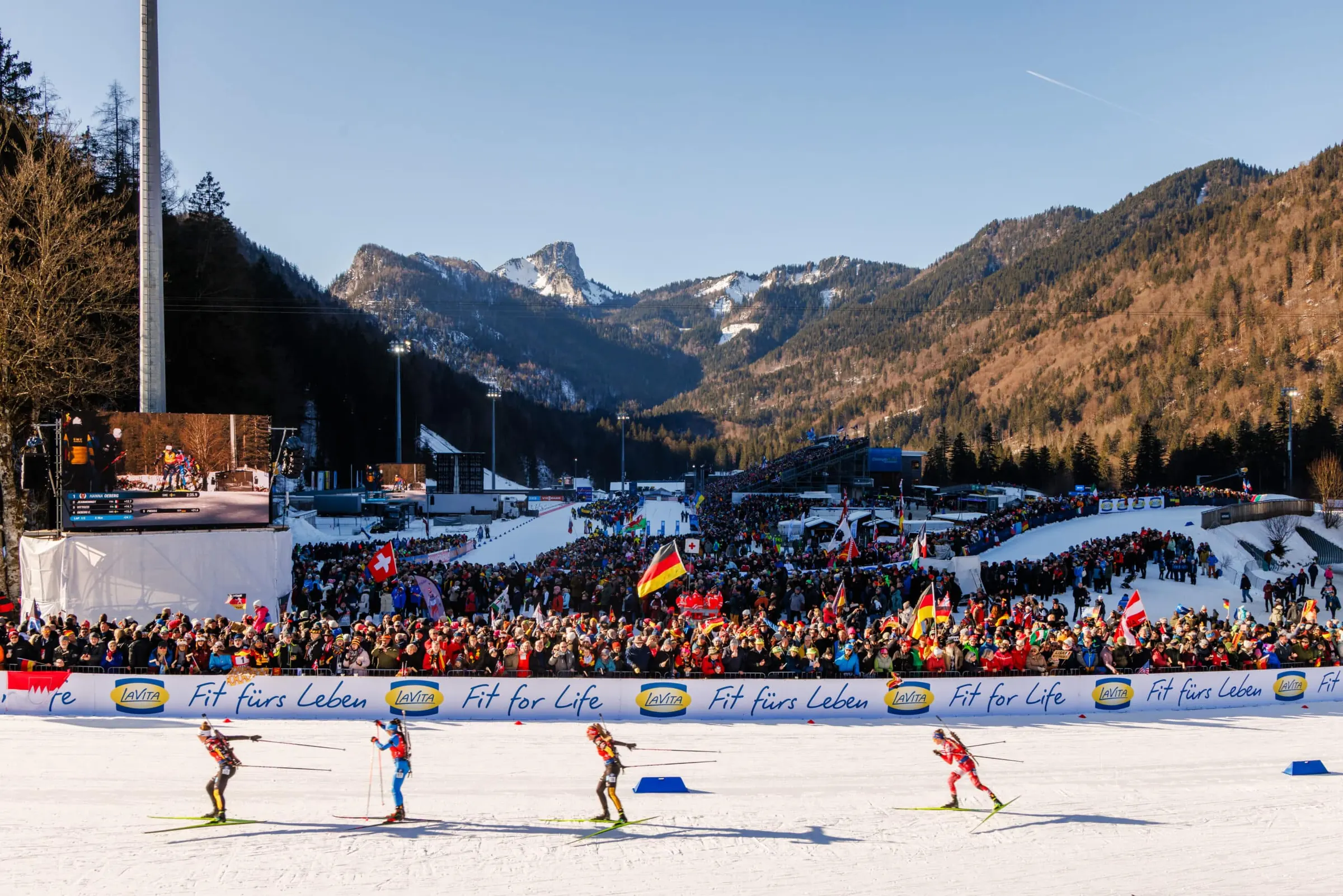
Oberhof's race courses are located at Grenzadler on the ridge of the Thuringian Forest. Arena am Rennsteig combines a stadium with forested loops. Here, you can understand biathlon and cross-country skiing as taking place at the same sports venue, without treating them as the same event. The programme determines which loops are used and what happens in the stadium.
Birxsteig is one of the places where the terrain visibly demands effort. In biathlon, there is also the return to the shooting range. For a first visit, we recommend choosing your sport before choosing a spectator area. A familiar arena name replaces neither the course map nor information about which areas are open on your day.
Running remains the common core. In cross-country skiing, it is the focus without shooting stages; in biathlon, it repeatedly leads to an additional task in the stadium. This difference is decisive when choosing your day. Choose a sport and a format before comparing the same arena under different programme names.
Biathlon: Loops and Birxsteig with source references
- 01
Published biathlon loops: 2 to 3.3 kilometres.
- 02
Birxsteig according to the 2023 World Championships description: 270 metres long.
- 03
Birxsteig according to the same description: 41 metres of ascent.
- 04
Steepest section of Birxsteig according to the World Championships description: 13 per cent gradient.
Birxsteig: The climb begins early
The organiser describes Birxsteig as a demanding climb at the start of the lap. A local 2023 World Championships description gives the section's length as 270 metres and its ascent as 41 metres. These figures apply to Birxsteig, not to the entire lap. In a conversation about preparation, coach Jens Filbrich explains why good pacing is necessary there. The terrain presents its challenge early. If you see the climb only as a short section, you should therefore consider it in the plan alongside the rest of the lap.
For spectating, it is worth following the transition out of the climb. After the ascent, an athlete has to find a runnable rhythm again. That is our recommendation for where to watch. It directs attention to the connection between the different terrain features, rather than making visible exertion alone the measure of a good run.
The official biathlon plan distinguishes between loops for the sprint, pursuit and relay. The published lengths between two and just over three kilometres apply to individual laps. The total distance only results from the respective format. When reading the plan, therefore, first look for your competition's loop and then for the number of times it is repeated.
The shooting range is only part of biathlon
In biathlon, shooting interrupts the running movement. The athletes enter the stadium, take up their positions and leave the range after the shooting stage, heading back towards the course. The tourist information office specifically describes the combination of the climb and demanding shooting range as a characteristic feature of the venue. Weather and course preparation must be reassessed for each race day.
Cross-country skiing has no shooting stage. The focus is on skiing, gaps and the competition format. The arena can provide the same physical setting, but the sequence of events is different. Do not transfer a biathlon penalty loop or biathlon ticket category to a cross-country skiing visit.
The DSV announced a freestyle sprint and a 10-kilometre interval start in classic technique for the Oberhof cross-country World Cup in January 2026. In an interval start, the athletes set off at staggered times. For spectators, this distinction matters: an immediate lead in the visible section is not yet a complete ranking.
A venue shaped by several phases of development
The local tourist information office gives 1982 as the year the sports venue was built and describes a major renovation from 2001 to 2003. It also lists biathlon and cross-country skiing competitions among its uses. Grenzadler is therefore a permanent sports venue. Its history extends beyond a single World Cup weekend.
The Rennsteig tourist information office places the arena geographically on the main ridge. Other sports venues around Oberhof have their own destinations, however. An address for ski jumps or ice sports does not automatically lead to the spectator entrance at Grenzadler. For your visit, the specific venue matters more than the general designation of a winter sports resort.
Outside competition and training times, the tourist information office mentions opportunities for walks. This does not mean that the cross-country trails are freely available on any given day. For your own cross-country skiing, check which public trails are open. If you mainly want to ski yourself, reserve a separate day and do not make your visit dependent on a last-minute course opening.
Stadium or designated course area
The biathlon FAQ explicitly distinguishes between arena and course tickets. A course ticket does not entitle you to a place in the arena. The organiser also lists video screens at Birxsteig and Henkelschleife, among other locations. Check their positions on the current plan if you want to follow the shooting from a section of the course.
For a first biathlon visit, we would choose a stadium area if the connection between shooting and setting off again is important to you. A course-side position is better if you want to see the skiing up close. The forest perspective has its appeal, but it requires additional attention to understand the rest of the race. Not every section offers the same overview.
The organiser provides shuttle services from designated park-and-ride locations and announces detailed information before the event. We therefore do not carry over an older stop or departure time. If you travel by train, check the entire onward journey to the current entrance and the return journey after the race. The final leg is part of the outing.
Begin your accommodation search with a decision: should the daily journey to the trail access or spectator area be short? Then determine the specific connection to Grenzadler. Under Dates and start times in Oberhof, you can place the competition within the season. The elevation travel overview helps you plan other winter days as separate outings instead of squeezing them between entry and the journey home.
Sources
- Oberhof organiser: Course maps and length of the biathlon loops, accessed 22 October 2026 (in German) ↗
- Oberhof organiser: Jens Filbrich on Birxsteig, conditions and preparation, accessed 22 October 2026 (in German) ↗
- Oberhof Tourism: Sven Fischer explains Birxsteig and the shooting range, accessed 22 October 2026 (in German) ↗
- Oberhof Tourism: Arena, construction history, biathlon and cross-country skiing, accessed 22 October 2026 (in German) ↗
- Oberhof Tourism: Rennsteig and the location of the arena at Grenzadler, accessed 22 October 2026 (in German) ↗
- Oberhof organiser: FAQ on course tickets, video screens and shuttle services, accessed 22 October 2026 (in German) ↗
- Oberhof Tourism: Birxsteig profile from the 2023 World Championships, length, ascent and gradient, accessed 22 October 2026 (in German) ↗
- German Ski Association: Oberhof cross-country skiing programme in January 2026, accessed 22 October 2026 (in German) ↗
Inspiration, knowledge and gear for people who want more from the outdoors.