Wissen
Stelvio: Bormio’s downhill with a long memory
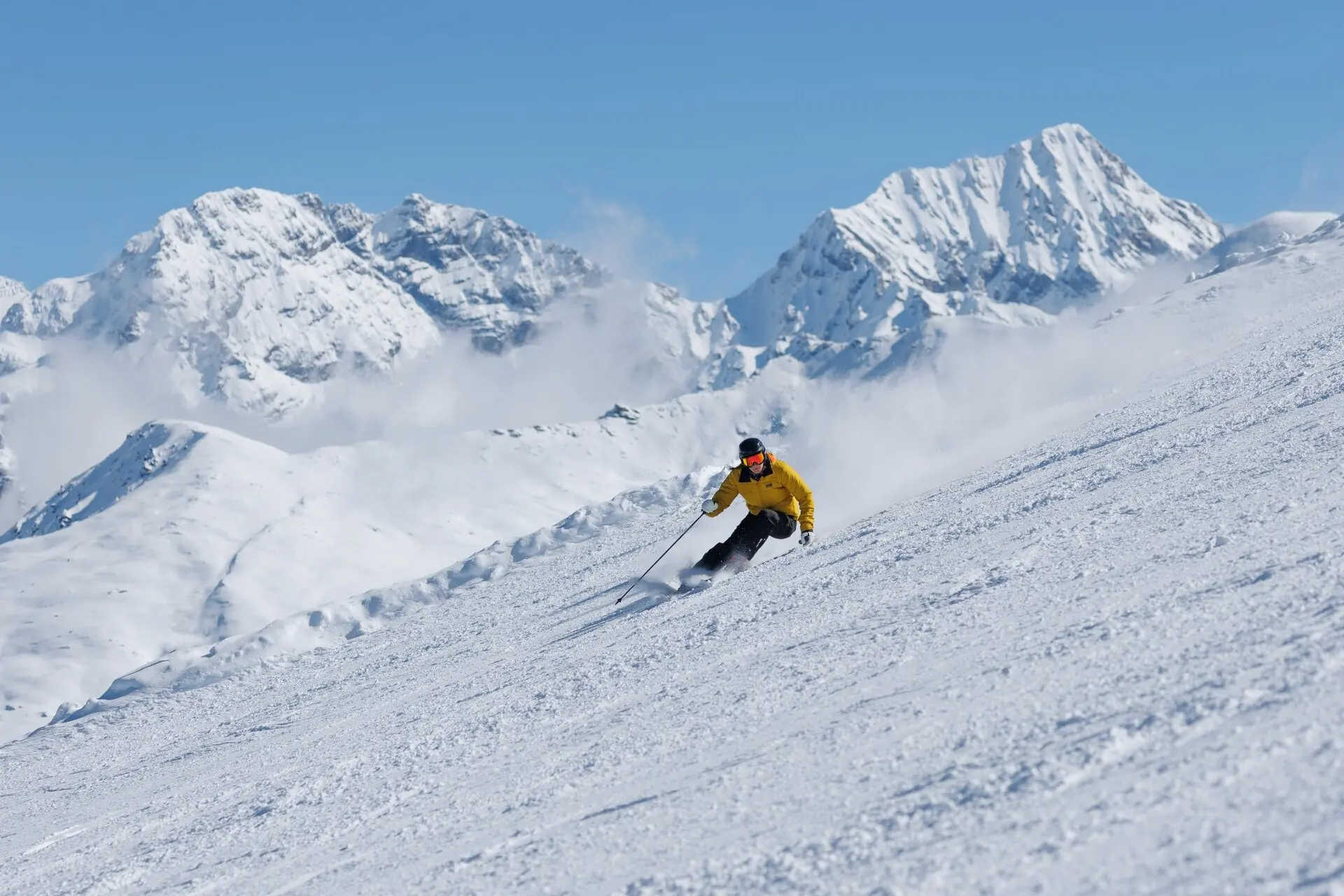
More than 1,000 metres of vertical drop and gradients of up to 63 per cent: the Stelvio in Bormio, its history and where to watch.
The Stelvio runs from the mountain down to the edge of Bormio. Jumps, steep sections and a demanding traverse follow one another in a long sequence. You can recognise a downhill course that repeatedly demands a different movement. The finish is already imaginable in the valley, while plenty of the course still lies ahead further up.
Its name can cause confusion when planning a trip. Here, it refers to the race piste above Bormio, not the summer ski area at the Stelvio Pass. The organiser describes the start as being in the Praimont area and the finish down in the town. For your visit, it is worth connecting these two points on the map first.
The traverse is a useful anchor in the course plan. It shows a difficulty that does not result from the vertical drop alone. The slope falls away sideways while the course demands a specific direction. Once you have followed this shape on the plan, the sections that follow also fit together more clearly.
Stelvio: the published downhill profile
- 01
Start and finish: 2,268 and 1,245 metres.
- 02
Length: 3,442 metres.
- 03
Vertical drop: 1,023 metres.
- 04
Maximum gradient according to the organiser: 63 per cent.
A course shaped by Peccedi’s vision
Oreste Peccedi designed the Stelvio in preparation for the Alpine World Championships in Bormio. The organiser describes how the former coach took on the task on the condition that he could shape the line freely. This planning produced a course whose sections connect to form one continuous downhill.
It opened in 1982 as part of the World Series. The Alpine World Championships in 1985 and 2005 gave it further major stages; according to the organiser, it has been a regular part of the World Cup calendar since 1993. For this portrait, these milestones are more informative than a list of every daily result. They show how closely Bormio’s racing history is tied to this slope.
The figures in the box describe the published downhill variant. They do not promise that every competition uses the same start and the same line. The super-G presents a different challenge. When reading a programme, therefore, check the discipline before comparing course lengths or times.
Rocca and San Pietro: think beyond the landing
The organiser’s technical description names the Rocca and San Pietro jumps. In sporting terms, a jump is more than the moment in the air. The approach and landing determine how the next section begins. This is a worthwhile thought when watching: looking at how a section ends often explains more than its most spectacular movement.
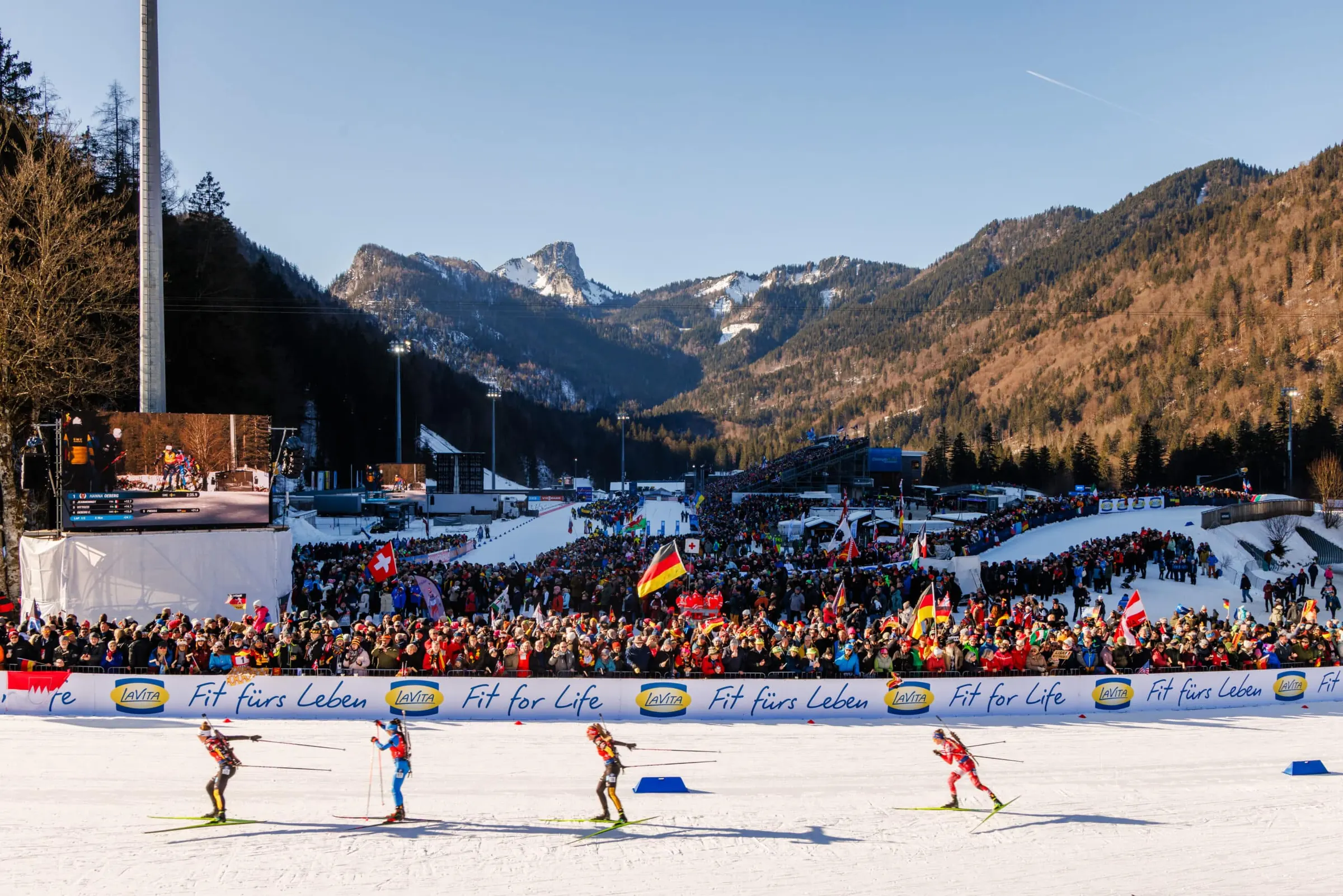
Before visiting, we recommend checking the locations of the named sections on the official plan. A finish area does not automatically provide a direct view of the upper jumps. Anyone wanting to see a particular section up close needs a designated spectator area and an authorised access route. The race line itself is not a route for visitors.
The length makes the Stelvio an interesting course to observe. A section can look very calm and still be important for what follows. If you compare several runs from the same spot, pay attention to the speed and direction in which the athletes disappear from your view. Gradually, this gives you a feel for the line.
Carcentina and Konta: difficulty all the way to the bottom
Carcentina is a traverse across terrain that falls away sideways. The organiser explicitly highlights this slope angle. The skier has to hold the intended route while the piste falls differently beneath them from the direction of travel. This spatial challenge can only be read to a limited extent from a flat television image.
Konta follows in the lower section. The steep slope demands further precise changes of direction before the finish. The published course description makes clear that the difficulties are spread throughout the downhill. That is where its character lies for us: the Stelvio gives its racers no single section after which everything important is over.
A stadium visit still has its limits. You experience the finishes and the action at the finish area, but you mainly get to know the higher traverse through the plan and the broadcast. For a first visit, that is a sensible compromise. Anyone wanting to understand the terrain more closely can plan a separate day to explore the open ski area.
The finish is in Bormio
The organiser describes the finish area as a place for watching and the supporting programme. For your visit, choose an officially offered area and check its entrance. We recommend considering the routes to your accommodation and to the lift separately. A short route to the ski area does not have to be a short route to the grandstand you want.
Bormio and Bormio 2000 lead to different daily routines. Staying down in the town makes planning a visit to the finish easier, while staying higher up the mountain puts more emphasis on your own days on skis. For the race evening, the second option requires a confirmed return journey. Do not rely solely on a lift’s usual daytime service for this.
Begin your accommodation search with one decision: should the daily journey to the ski area or to the spectator area be short? Then check both routes for the specific address. The name “Bormio” alone is too broad for this decision.
Sources
- Bormio World Cup organiser: history, course design, start and finish elevations; accessed 22 October 2026 ↗
- Bormio World Cup organiser: technical profile and key sections; accessed 22 October 2026 ↗
- Bormio World Cup organiser: finish area and published course metrics; accessed 22 October 2026 ↗
- Bormio Tourism: ski areas, Bormio and the separate Stelvio Pass; accessed 22 October 2026 (in Italian) ↗
- Bormio Tourism: Bormio ski area and Bormio 2000; accessed 22 October 2026 (in Italian) ↗
Inspiration, knowledge and gear for people who want more from the outdoors.