
Training & Health
Sleep better without the pressure: 5 levers that matter
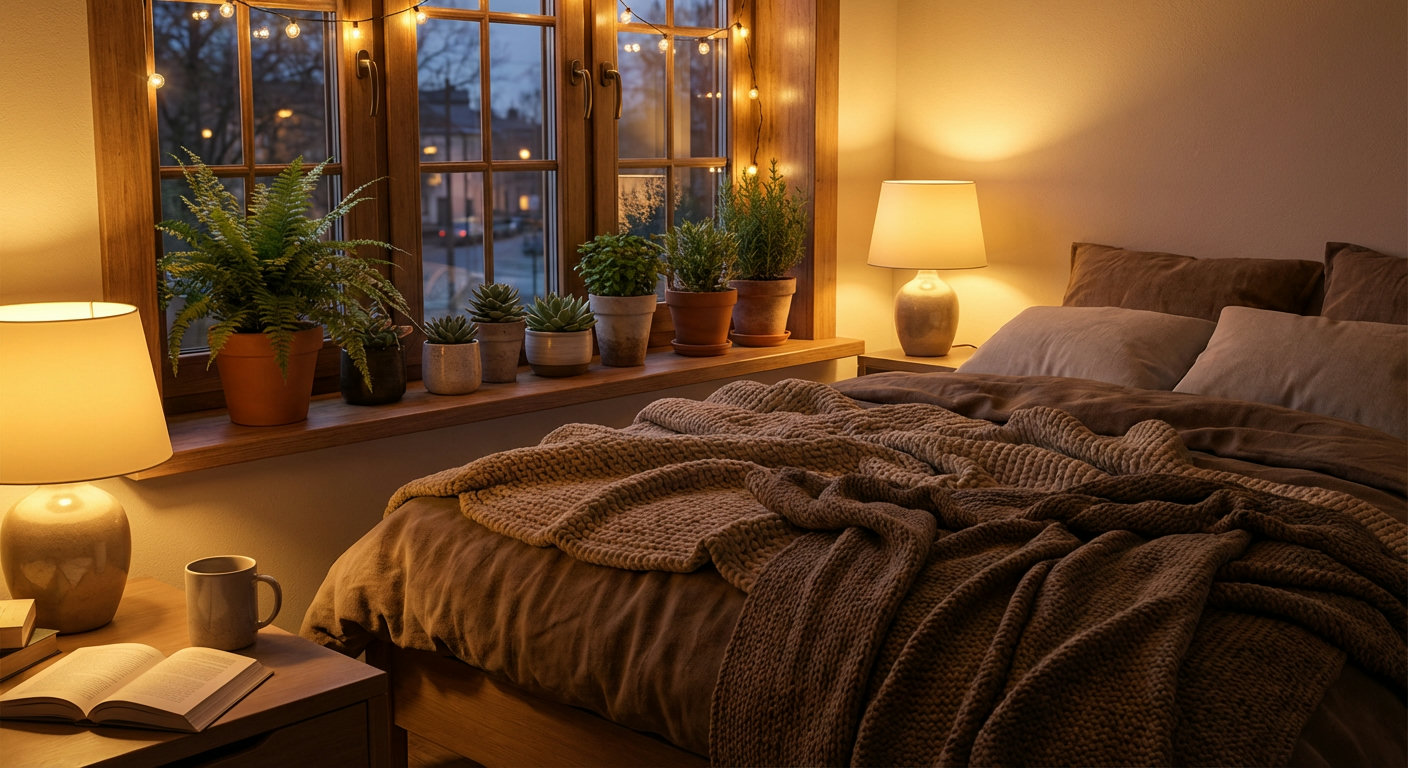
Better sleep without rigid rules. These five evidence-based levers fit into everyday life and work without any pressure to be perfect.
Key points at a glance
- 01
Sleep quality matters more than sleep duration alone, and it depends on a handful of key factors
- 02
The 5 levers: light and timing, evening routine, sleep environment, stress regulation and realistic expectations
- 03
Avoid caffeine after 2 pm: its half-life is 6–8 hours, so it can still disrupt your sleep hours later
- 04
Sleep trackers can help but are optional. If you tend towards perfectionism, they can even add pressure
- 05
Small, consistent changes work better in the long run than a radical overhaul
Why sleep is your biggest lever
Good sleep isn't a performance you have to deliver. Yet it is one of the biggest levers for health, energy and longevity. Sleep research in 2026 shows that sleep quality matters more than sleep duration alone.
The catch: many people put themselves under pressure to sleep perfectly. Trackers show scores you feel you should improve. Guides hold up eight hours of deep sleep as the ideal. And that very pressure to optimise can backfire and make your sleep worse.
The good news is that you don't need a 20-step routine or expensive gadgets. There are five key levers backed by evidence, and you can adjust them without chasing perfection. Here is what they are and how to fit them into your day.
Lever 1: light and timing
Your body runs on an internal clock: the circadian rhythm. Light is its strongest signal. When you see natural light in the morning, your brain registers that it is daytime and time to be awake. When it gets dark in the evening, your body starts producing melatonin, the sleep hormone.
Blue light in the evening from your phone, laptop or TV suppresses melatonin by up to 90%. Your body stays in wake mode for longer, even when you feel tired.
What you can do:
- Get outside into daylight in the morning, even when it is cloudy. 10–15 minutes is enough to stabilise your rhythm.
- Dim the lights in the evening, about 1–2 hours before bed. Use warm, indirect light instead of bright ceiling lights.
- Cut down on blue light by switching your phone and laptop to night mode from 8 pm, or putting them away earlier.
- Avoid caffeine after 2 pm. Its half-life is 6–8 hours, so a coffee at 4 pm is still working at midnight.
Less suitable if you work irregular hours, for example shifts. A fixed evening ritual still helps.
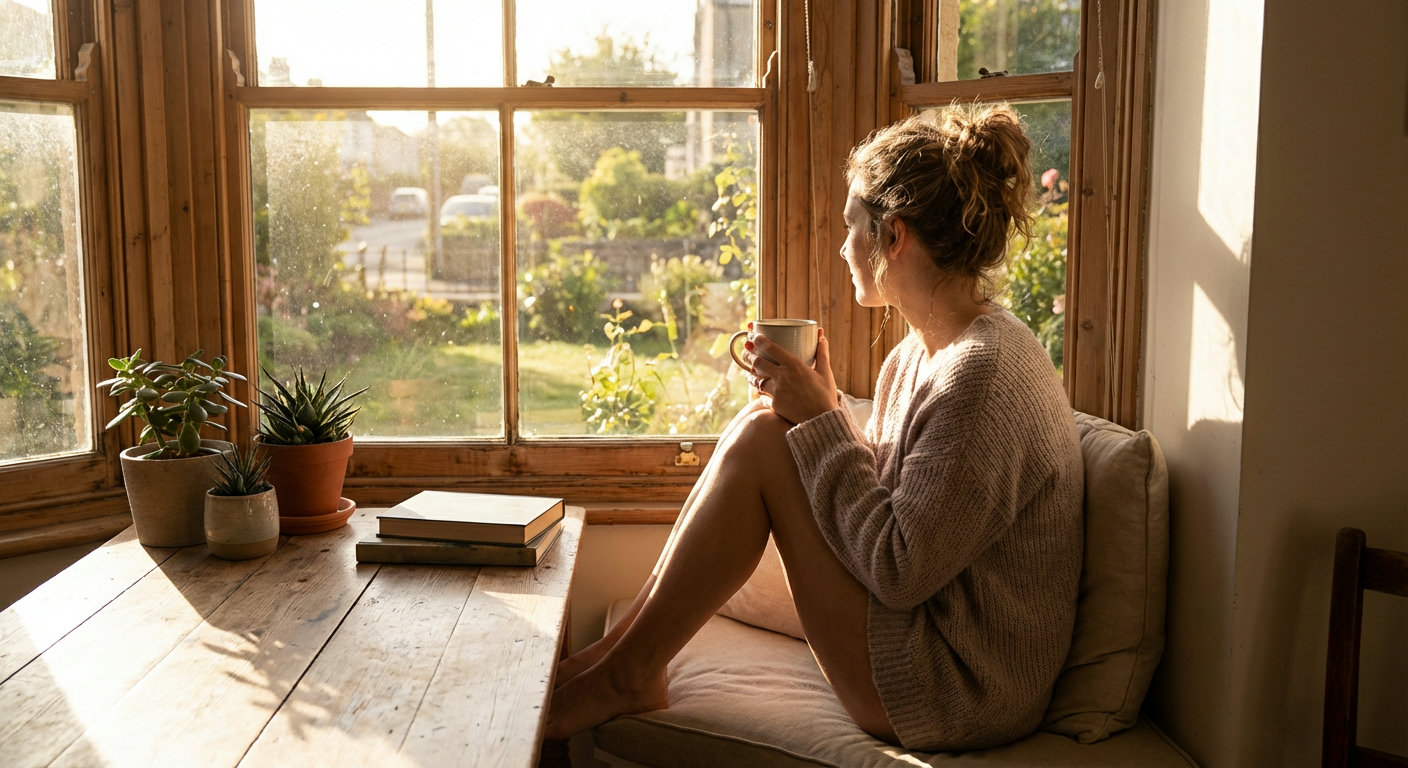
Lever 2: evening routine and a calmer nervous system
Your nervous system has two modes: the sympathetic nervous system for activation and stress, and the parasympathetic nervous system for rest and recovery. Go to bed stressed and the sympathetic side stays switched on. You can't fall asleep.
A regular evening routine helps your body shift into rest mode. The German Society for Sleep Research and Sleep Medicine (DGSM) recommends 30–60 minutes of relaxing activities before bed, at the same time every evening.
For example:
- A warm shower or bath, which lowers your body temperature afterwards and signals that it is time to sleep.
- Reading a real book rather than your phone, which occupies your mind without stimulating it.
- Gentle stretching or yoga to release physical tension.
- Journalling to get thoughts out of your head.
- Breathing exercises such as 4-7-8 breathing, which activate the parasympathetic nervous system directly.
Important: you don't have to do all of it. Pick 2–3 things that feel good to you and make them a habit.
After normal, short-lived stress, the nervous system settles within 20–30 minutes. With chronic stress it can take weeks or months, which makes daily rituals all the more important.
Lever 3: temperature, darkness and quiet
Where you sleep has a direct effect on how well you sleep. Three factors matter most:
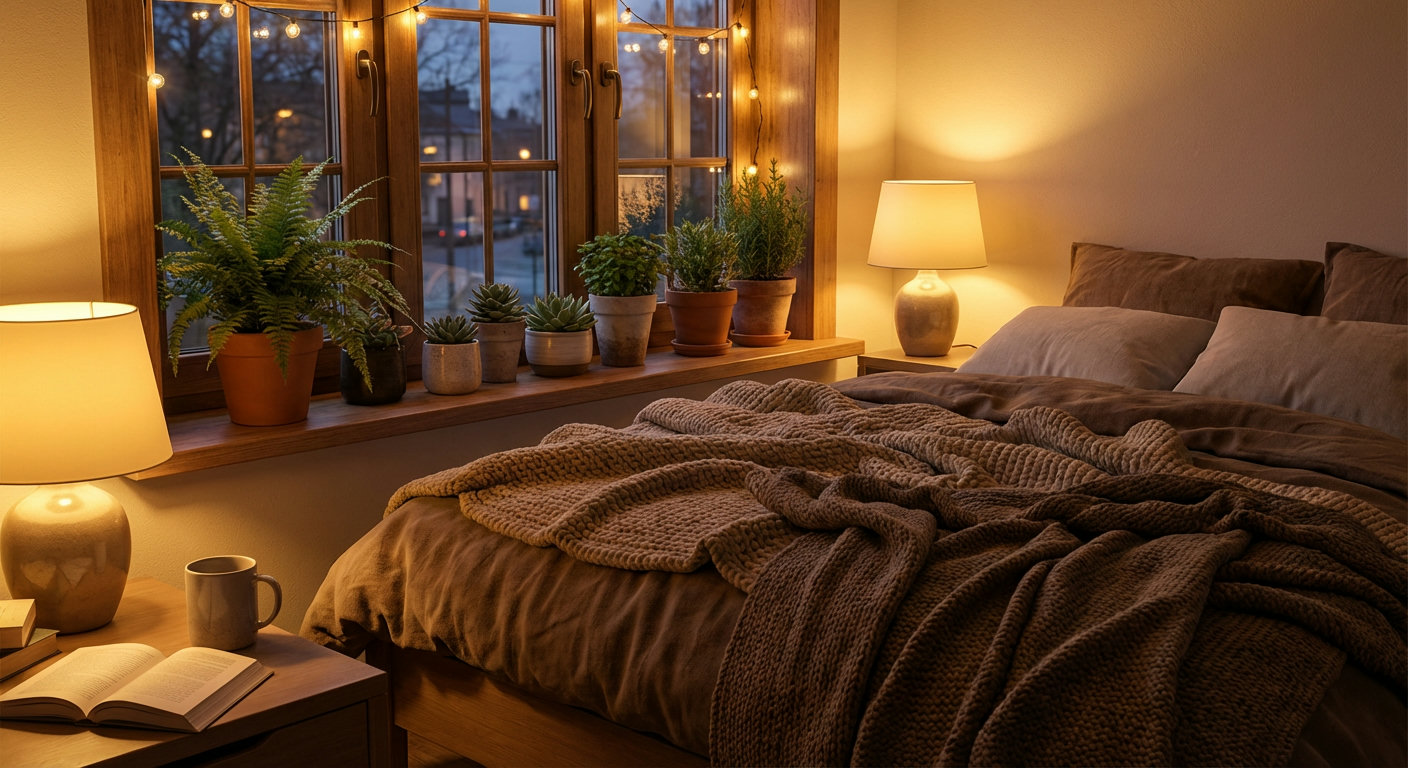
Temperature: The ideal bedroom temperature is 16–18°C. That sounds cool, but it suits your body: your core temperature naturally drops as you fall asleep. If the room is too warm, your body stays activated.
Darkness: Even small light sources, such as LEDs or standby lights, can disrupt melatonin production. Complete darkness is ideal. If that isn't possible, use a sleep mask.
Quiet: Noise interrupts sleep, even when you don't consciously notice it. If you live somewhere noisy, earplugs or white noise (from an app, for example) can help.
Other factors:
- Mattress and pillow should suit your sleeping position: side, back or front.
- Keep electronics out of the bedroom, or at least switch them to flight mode. Blue light is one reason. Mental calm is the other.
- Air quality: open the window briefly before bed to let in fresh air.
Less suitable if you share a flat or a bed and have different needs. Then compromises help, such as separate duvets or individual sleep masks.
Lever 4: less stress and mental overload
Mental overload is one of the most common reasons for poor sleep. Your mind keeps racing, thoughts go round in circles and the to-do list keeps growing. Your nervous system stays in stress mode.
Signs of an overstimulated nervous system:
- Palpitations, constant tension
- Sleep problems, waking in the night
- Irritability, trouble concentrating
- Chronic muscle tension
What helps:
During the day:
- Exercise outdoors: walking or light training helps break down stress hormones.
- Plan breaks: don't work straight through until the evening. Short pauses help your nervous system.
- Social contact: talking to friends or family activates the parasympathetic nervous system.
In the evening:
- Write your thoughts down instead of carrying them around in your head. A worry journal can help break the cycle of rumination.
- Breathing techniques such as 4-7-8 breathing: breathe in for 4 seconds, hold for 7, breathe out for 8. This activates the parasympathetic nervous system directly.
- Avoid heavy topics just before bed: no work emails, no distressing news.
In the long term:
- Manage stress during the day so you aren't left trying to repair the damage at bedtime.
- Meditation or mindfulness exercises build stress resilience over weeks and months.
If stress is chronic, it can take weeks or months for your nervous system to settle again. Patience and consistency count for more than quick fixes.
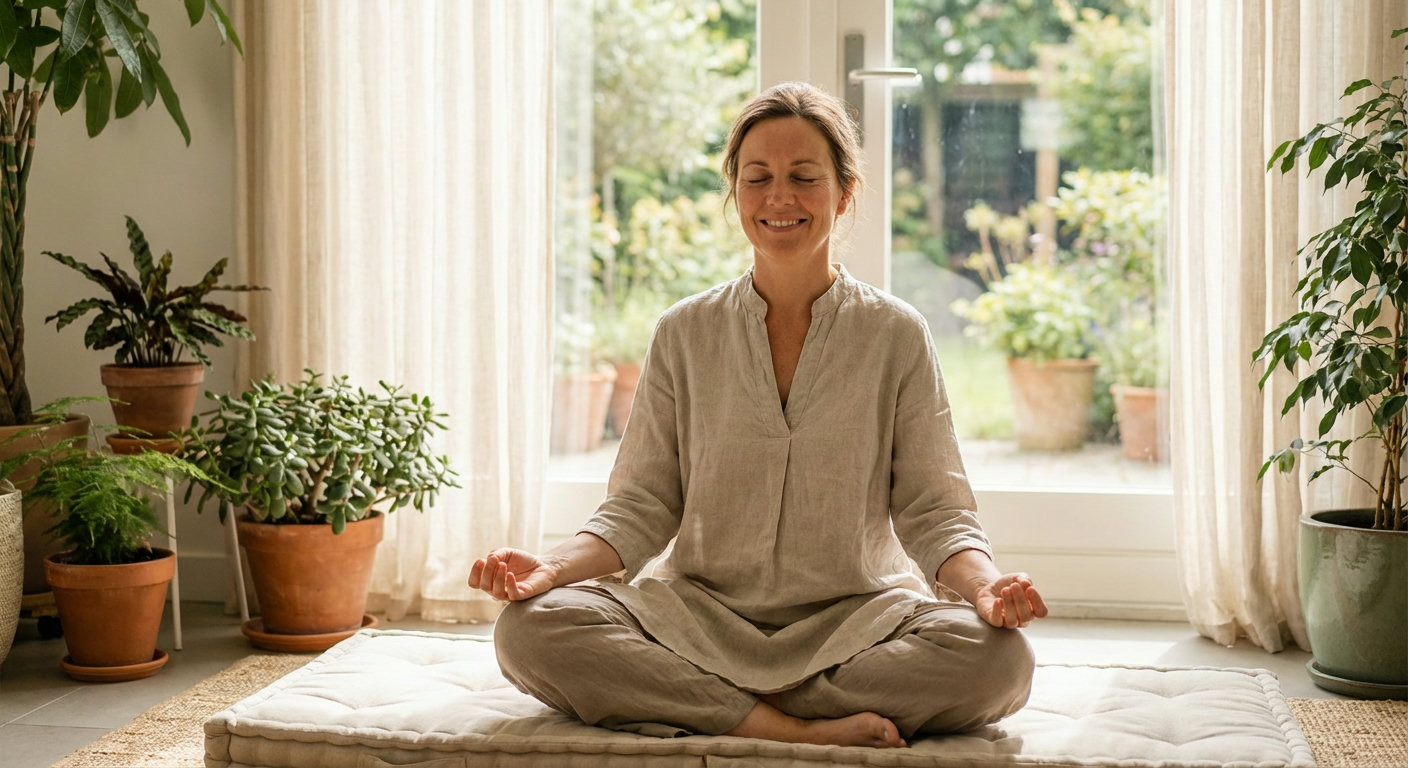
Lever 5: realistic expectations
Sleep trackers show you how many hours you slept, how much deep and REM sleep you got and how often you woke up. That can be useful. It can also drive you mad.
There is a name for it: orthosomnia, sleep problems caused by tracking itself. People prone to perfectionism put pressure on themselves: “I have to get 8 hours!” or “Why did I only get 18% deep sleep?”
The truth: sleep needs are individual. Some people are fine on 7 hours, others need 9. Sleep stages vary too, and that is normal.
How useful are sleep trackers?
- Accuracy: 70–90% compared with a sleep lab. Good, but not perfect.
- Upside: they reveal patterns and help you spot habits (“I sleep worse after afternoon caffeine”).
- Downside: they can create pressure and focus your attention too much on numbers.
When do trackers make sense?
- With irregular schedules (shift work, studying) as a feedback tool.
- When you want to test evening routines, light or exercise in a targeted way.
- As a starting point for talking to a sleep specialist about existing problems.
Less suitable if:
- The numbers unsettle you or put you under pressure.
- You tend towards perfectionism and poor scores get you down.
The most important rule: how you feel in the morning matters more than any number on a screen. If you wake up rested and have energy during the day, your sleep is good, whatever the tracker says.
Which lever to prioritise
People sleep badly for different reasons. Here is a quick guide to the lever that may matter most for you:
Which lever is right for you?
- 1
If you go to bed late because you cannot wind down
prioritise lever 2 (evening routine and nervous system)
- 2
If you often wake up at night and ruminate
focus on lever 4 (stress and mental overload)
- 3
If you drink a lot of coffee or spend evenings in front of screens
start with lever 1 (light and timing)
- 4
If you sleep in a noisy or bright environment
optimise lever 3 (sleep environment)
- 5
If sleep tracker data makes you feel stressed
work on lever 5 (realistic expectations)
Right for you if …
For anyone who wants to sleep better without rigid rules or pressure to be perfect, and is looking for practical, evidence-based tips that fit into everyday life.
Probably not for you if …
Less suitable if you already have a clinical sleep disorder such as sleep apnoea or insomnia. In that case, see a doctor.
Small steps to get started
Choose ONE lever
Don't tackle everything at once. Start with the lever that makes most sense for you (see the overview above). Consistency beats perfection.
Set a fixed evening ritual (10–15 minutes)
For example, at 9.30 pm: phone away, lights dimmed, read a book or stretch. Do this at the same time for 7 days.
Set a caffeine cut-off
Try it for 14 days: no caffeine after 2 pm. Notice whether you fall asleep more easily.
Check your sleep environment
Is it cool (16–18°C)? Dark? Quiet? If not, improve one thing: better curtains, earplugs or turning the heating down.
Establish a morning light routine
Get outside into daylight for 10–15 minutes after you get up, even when it is cloudy. It stabilises your rhythm.
Use a tracker if it helps
If you have one, use it for feedback rather than as a performance score. If it stresses you out, put it away.
Frequently asked questions
How long does it take for sleep to improve?
It varies. With quick adjustments such as caffeine timing or light, you will often notice the first changes after 3–7 days. With chronic stress, it can take weeks or months for your nervous system to settle. Small, consistent changes work better in the long run than a radical overhaul.
Do I really need to skip coffee in the afternoon?
That depends on how sensitive you are to caffeine. Caffeine has a half-life of 6–8 hours, so a coffee at 4 pm can still be working at midnight. If you struggle to fall asleep, go without caffeine after 2 pm for 2 weeks and see whether things improve. Some people handle caffeine well later in the day too. That comes down to genetics.
Are sleep trackers useful or not?
It depends. Trackers can help you spot patterns, such as worse sleep after caffeine or alcohol. Their accuracy is 70–90%. They become a problem when the numbers stress you out or you start chasing perfect scores. If you tend towards perfectionism, skip the tracker and listen to your body instead.
What should I do if I wake up at night and can’t get back to sleep?
Don't lie in bed worrying. Get up, go to another room and do something calm in dim light, such as reading, stretching or listening to quiet music. When you feel sleepy again, go back to bed. Avoid bright light and screens: they tell your body it is daytime and make it harder to drop off again.
How important is bedroom temperature, really?
Very important. The ideal temperature is 16–18°C. That sounds cool, but it suits your body: your core temperature naturally drops as you fall asleep. If the room is too warm, your body stays activated and sleep quality suffers. A cool room with a warm duvet beats a warm room with a thin one.
More on recovery and health
Related articles and tools for your health
Sources
- Dagsmejan: Sleep tips for 2026 – the science-backed guide ↗
- AVEA Life: 7 science-backed strategies for better sleep ↗
- HelloBetter: Sleep hygiene – 10 rules from sleep therapy ↗
- HelloBetter: Calming the nervous system – psychological tips ↗
- BLACKROLL: Calming the nervous system – techniques and tips ↗
- AOK: Better sleep – how useful are sleep trackers, really? ↗
- Smart Home Fox: The 5 best sleep trackers – our comprehensive 2026 test ↗
Inspiration, knowledge and gear for people who want more from the outdoors.