Wissen
Saslong: Waves, jumps and the Ciaslat
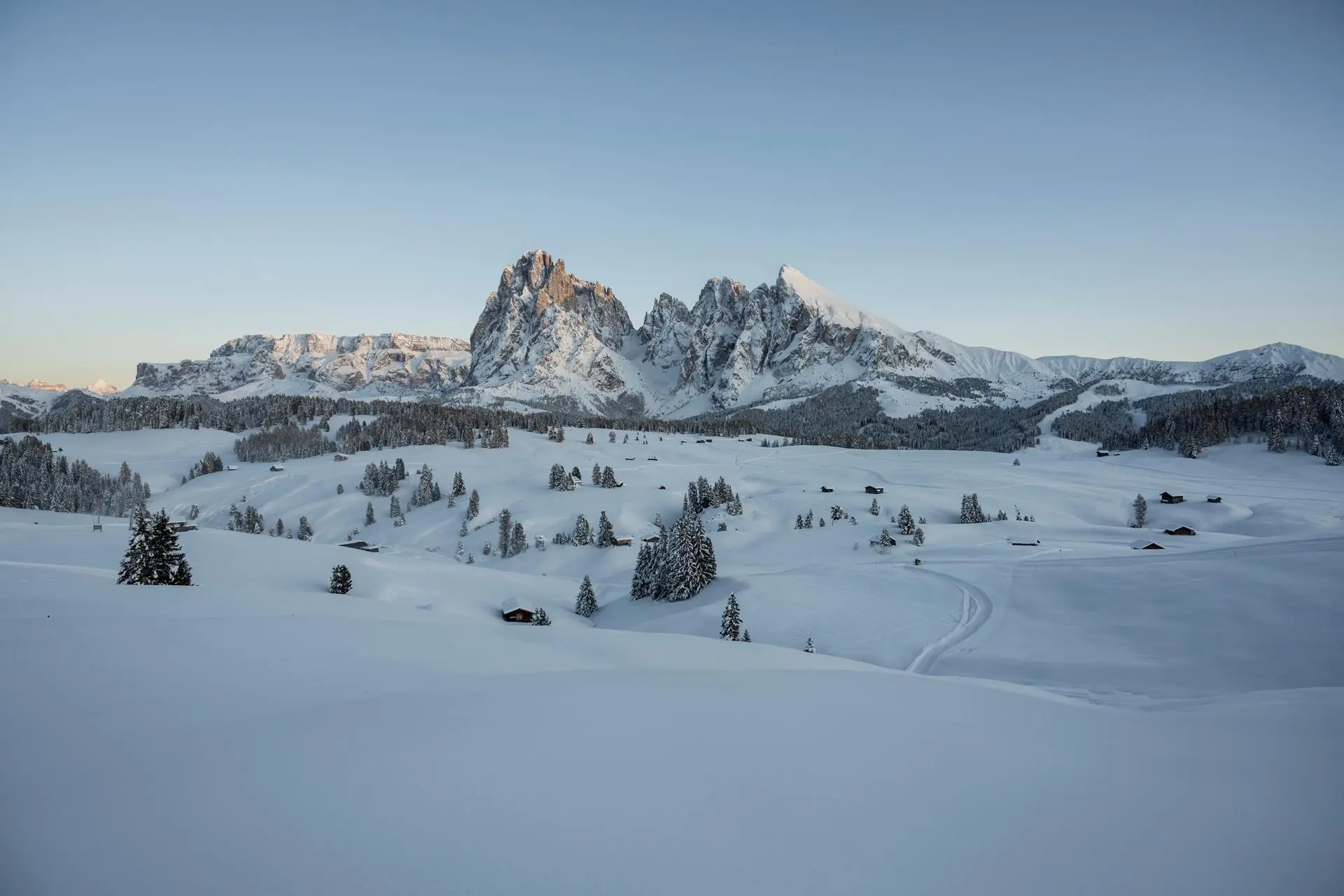
839 metres of vertical drop over 3.4 kilometres, the Camel Humps and the Ciaslat: Saslong in Val Gardena and your spots along the course.
You can recognise Saslong by its waves. From Ciampinoi, it leads to Ruacia near St Christina, over jumps and gliding sections to the undulating Ciaslat meadow. As a spectator, the appeal lies in the transitions: a jump is only complete when the landing fits the next line. The terrain remains part of the challenge.
The downhill is part of Val Gardena’s winter sports history. Its preparation was linked to the 1970 Alpine World Championships, while the first World Cup race took place as early as 1969. Today, looking at this course also helps you understand the valley. Even so, the race finish and your daily starting point for skiing do not have to be in the same place during your trip.
On the Ciaslat, a small wave changes the following turn. This makes the section a useful counterpart to the large jumps further up. Both require preparation, but show it in different ways. For this portrait, we therefore give the undulating lower section just as much attention as the famous Camel Humps.
The Saslong downhill in the organiser’s profile
- 01
Start and finish: 2,249 and 1,410 metres.
- 02
Length: 3,446 metres.
- 03
Vertical drop: 839 metres.
- 04
Maximum gradient in the archived course profile: 56.9 per cent.
A slope for the World Championships
The organiser recalls the first World Cup race on 14 February 1969. The course already ran from Ciampinoi to Ruacia. The verified local editorial team links Saslong to preparations for the 1970 World Championships. This explains why the course gained a firm place in international racing from the outset.
The figures come with an important qualification. The details in the box are taken from the published, archived organiser’s profile of the downhill. They describe this version of the course; a current course layout may differ. The super-G in particular has a different start and a different length. Sharing a piste name does not make them the same racing line.
Before visiting, we would compare both courses on the organiser’s plan. The downhill shows the complete route from the high start, while the super-G sets a different challenge over parts of the same terrain. Which discipline you want to watch is therefore also a decision about which section of Saslong you want to get to know.
Camel Humps: The jump needs an exit
The Camel Humps are among the best-known sections. The organiser describes several successive waves that allowed different lines. In 1980, Uli Spiess was the first to clear them in a major jump. The history explains the name as a sporting challenge, without turning it into instructions for trying it yourself.
When watching, the landing deserves at least as much attention as the take-off. Where does the skier touch down? How smoothly do they continue afterwards? These questions help you spot differences, even when you do not have an intermediate time in front of you. The fastest visible movement is not automatically the best way out of the section.
Alongside the famous jumps, the slope also has gliding sections. Their effect can easily remain hidden from a single spectator position. Try to connect the famous spot on the course map with the sections before and after it. This gives a photo of the Camel Humps a spatial context instead of showing only a big flight.
Ciaslat: The line through the undulating terrain
Further down comes the Ciaslat meadow. Waves and changes of direction come together here; the organiser particularly highlights the entry. The race still demands a precise line at this point. The finish is close enough to remain in the skier’s mind, but the sporting challenge is by no means over.
This section shows especially clearly why Saslong is more than a jump course. The skier must absorb the shape of the terrain while keeping to the intended route. Anyone who focuses only on spectacular aerial images misses this work. Our suggestion for watching: compare the same transition in the terrain over several runs, along with the body position immediately afterwards.
There is one limitation. From a chosen position on the slope, it is difficult to assess the race as a whole. If understanding the placing and time is particularly important to you, a designated area at the finish may be a better fit. Visiting a higher section is worthwhile mainly if the official spectator plan actually provides the access you want.
Ruacia as the finish, Val Gardena as the ski region
The finish is near St Christina. Val Gardena’s tourist information describes the event and its location in the valley; the organiser publishes the areas for race spectators. Use this information to check which grandstand or course section your ticket covers. Access via open ski pistes is not a substitute for a confirmed visitor route.
For a train journey, the onward connection into the valley is by regional bus. The tourist information provides separate travel guidance for this. We recommend planning the final leg to the entrance and the return journey separately from your daily ski-bus route. Accommodation in Selva or Ortisei may suit your ski days, but could make the journey to the race longer.
Start your accommodation search with one decision: should the daily journey to the ski lift or to the spectator area be short? A major circuit such as the Sellaronda deserves its own day; your return journey should not depend on the last racer in the event.
Sources
- Archive profile with statistics for downhill and Super-G, Saslong organiser, accessed 22 October 2026 <https://archive.saslong.org/?lang=ita&pagid=2> (in Italian) ↗
- Key sections and history of the Camel Humps, Saslong organiser, accessed 22 October 2026 <https://archive.saslong.org/?artid=1702&lang=ita&pagid=290> (in Italian) ↗
- Review of the first World Cup in 1969, Saslong organiser, accessed 22 October 2026 ↗
- Race event and location, Gröden Tourismus, accessed 22 October 2026 ↗
- Travel by train and onward journey, Gröden Tourismus, accessed 22 October 2026 ↗
Inspiration, knowledge and gear for people who want more from the outdoors.