Wissen
Rettenbachferner: Sölden’s steep start to the season
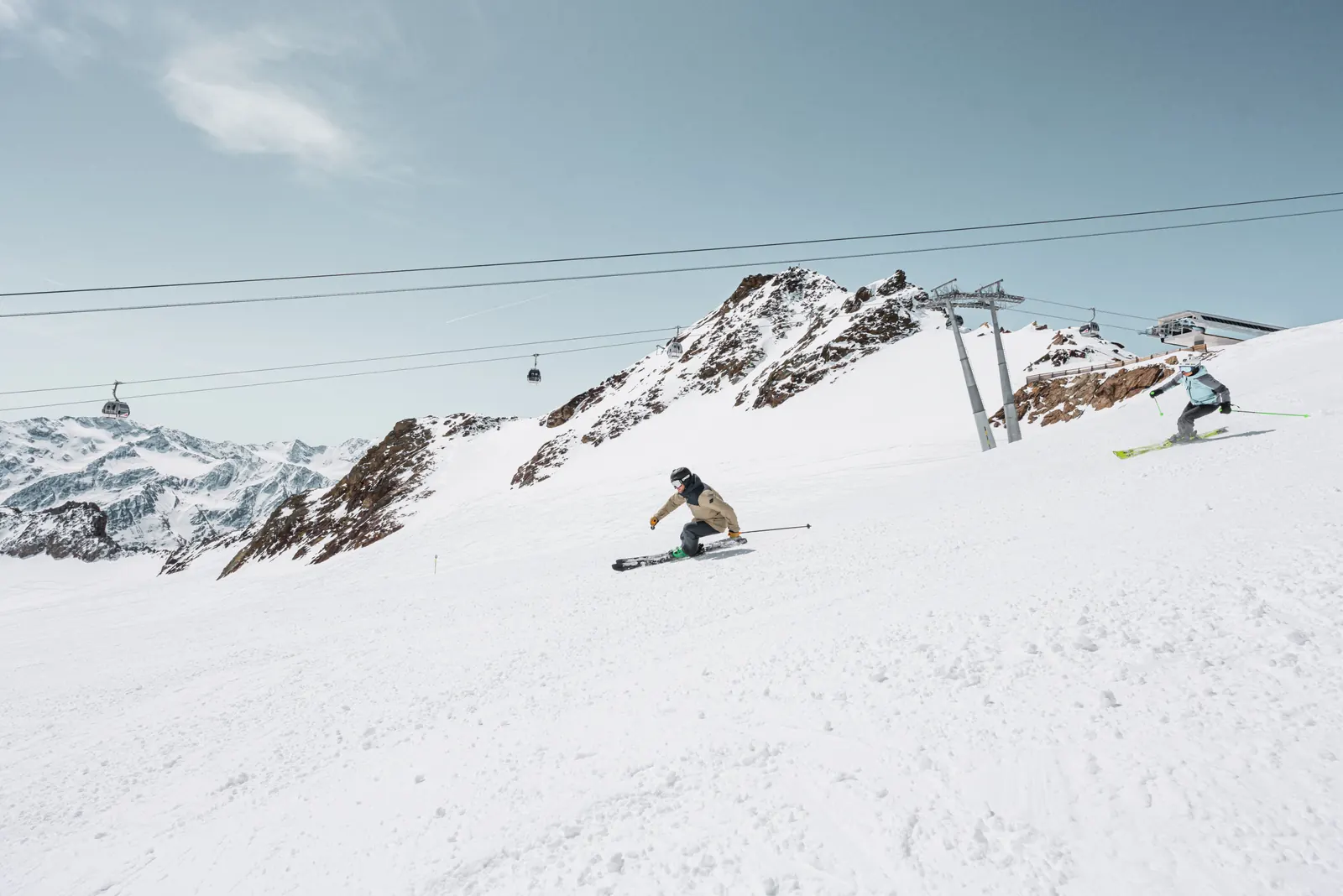
Start at 3,040 metres, 68 per cent at the steepest point: the glacier slope in Sölden where the World Cup winter begins.
At Rettenbachferner, the steep part of winter comes into focus early. Above Sölden, the race slope runs from the flatter start through a long steep section to the finish at the glacier. You can recognise its structure from the opposite side: find your rhythm at the top, hold your line on the steep section and carry speed into the lower part. It only looks simple on the course map.
The village of Sölden and the race arena are a long way apart. A visit includes the drive along the glacier road as part of the day. The race is therefore a trip into the mountains. Anyone staying in the valley should plan the spectator transfer as carefully as their chosen spot in the finish area.
At Rettenbach, it helps to look at the longitudinal profile. The flatter start and run-out explain why the steep middle section remains important beyond its visible edge. Anyone who loses speed there needs to regain a fluid rhythm afterwards. For watching, the transition matters just as much as the steepest gradient.
Rettenbach: World Cup piste profile
- 01
Start and finish: 3,040 and 2,670 metres.
- 02
Length: 1,198 metres.
- 03
Vertical drop: 370 metres.
- 04
Steepest section of the race profile: 68.2 per cent.
The flatter start prepares you for the steep slope
Ötztal Tourismus describes the upper section of the course as the part where the racers need to find their rhythm. This is followed by the long steep slope. A giant slalom requires more changes of direction than slalom; on this piste, they must work together across a clear change in gradient. The next section begins in the mind before the edge.
The transition is particularly interesting to watch. Pay attention to the direction in which a racer reaches the steep section and how quickly the next turn follows. That is our observation tip. It helps you read the course as a sequence of connected movements instead of following only the most noticeable skid in the steep section.
According to the tourism description, the names Gletscherkante, Eisfall and Elefantentränke belong to the recognised sections of the course. You should check their exact location on the official map. A named point is initially a reference point in the terrain. Whether it is directly visible from your spectator position depends on the area map and your actual viewing direction.
The steep middle section has an impact all the way to the finish
The organiser’s description highlights the importance of actively choosing a line on the long steep slope. Afterwards, speed must be carried into the flatter finish area. That is how the course fits together: a mistake on the steep section can still have an effect where the piste looks less difficult.
The figures in the box come from the profile explicitly described as a World Cup piste. Other tourist descriptions of the Rettenbach glacier give different gradient figures for the public piste. For us, these are different reference frameworks. A general piste figure does not replace a race profile, and the race profile does not confirm a specific gate sequence.
The start is more than 3,000 metres above sea level. For visitors, the glacier location is therefore already part of the planning. We recommend adapting your clothing and daily schedule to a longer stay in the spectator area. Your own day of skiing and a visit to the race require different breaks. Plan the return journey so that a late finish does not immediately put the whole group under pressure.
From the first race to an early sign of the season
The first World Cup event in Sölden took place in 1993. The cable-car operators describe how, after the early events, it became a fixed date at the end of October. Rettenbachferner therefore took on a special role: attention turns here to the new season, while winter operations in the valley and on other mountain sides may still be at a different stage.
This history also explains why a race visit and a normal skiing holiday are not the same thing. An open glacier area does not necessarily mean that all parts of the later winter ski area are connected. The public information for the race venue explicitly distinguishes early glacier operations from the later start of the season for the entire area. Check which lifts and facilities are actually open on your day.
For a short visit, we would choose one main focus. If the race is the reason for your trip, the spectator transfer remains the fixed axis of the day. If you mainly want to ski yourself, the choice of open pistes needs more weight. Both can complement each other; a full day of skiing and a full race visit nevertheless compete for the same hours.
Plan the finish arena and glacier road together
Ötztal Tourismus describes a spectator area in the finish stadium. For the race weekend, the organiser arranges transport to the Rettenbach glacier. Use the current information on departure times, return journeys and ticket validity. You should not apply a normal local bus timetable from an earlier autumn day to the race weekend.
If you travel by train, the route leads via Ötztal-Bahnhof to Sölden, followed by your own leg to the glacier. This separation helps when choosing accommodation. A property near a valley station does not necessarily have to be near the departure point for your spectator transfer. Check the final walk just as carefully as the main connection into the Ötztal valley.
Start your accommodation search with one decision: should the daily journey to the ski start or to the spectator area be short? For the opening, choosing a spectator area also means being at the right transfer on time.
Sources
- World Cup course, key figures, key sections and finish stadium, Ötztal Tourismus, accessed 22 October 2026 (in German) ↗
- Events and first World Cup in 1993, Bergbahnen Sölden, accessed 22 October 2026 (in German) ↗
- Rettenbach Glacier and spectator slopes, Ötztal Tourismus, accessed 22 October 2026 (in German) ↗
- Opening, travel arrangements, glacier road and spectator transfers, Ötztal Tourismus, accessed 22 October 2026 (in German) ↗
- 30 years of the Ski World Cup and the development of the opening event, Ötztal Tourismus, accessed 22 October 2026 (in German) ↗
Inspiration, knowledge and gear for people who want more from the outdoors.