
Buying Guides
Nordisk sleeping bags 2026: down or synthetic?
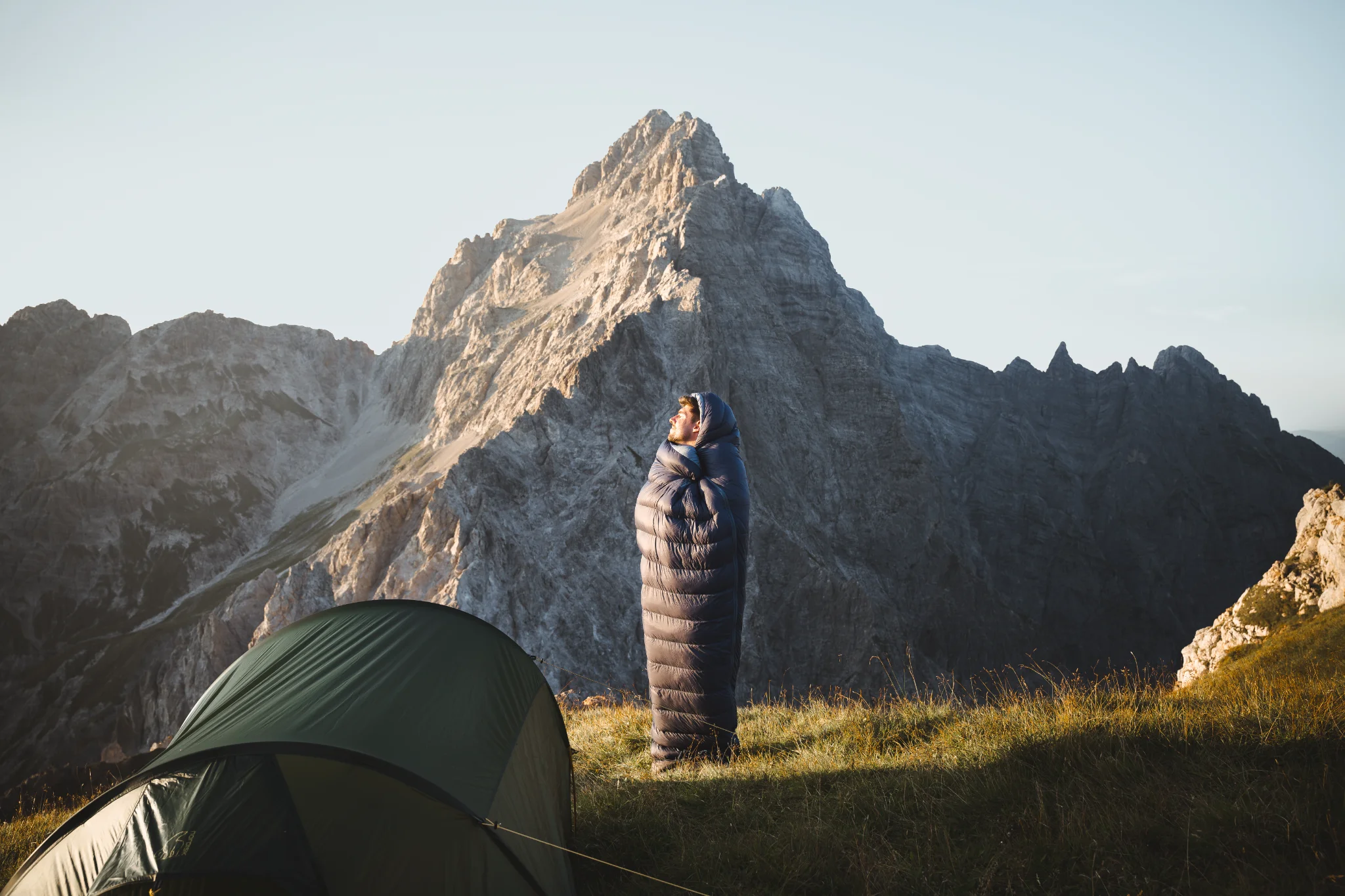
Down or synthetic, mummy or blanket: what really matters when you buy a sleeping bag, and the four Nordisk models worth a closer look this season.
125 years of down expertise
Nordisk is no newcomer to the outdoor market. Founded in Copenhagen in 1901 as Northern Feather, the company started out processing feathers and down for bedding. The move into outdoor gear came in 1941 with its first sleeping bag, and that story is still running today.
The company has traded as Nordisk since 1991 and has become one of Europe's leading sleeping bag manufacturers. One detail stands out: every down model in the collection is still made in Germany. Nordisk presents this as a commitment to European quality standards and short supply chains.
Down vs synthetic: the direct comparison
Down or synthetic? The question comes up with every sleeping bag purchase. Both fills have genuine strengths and real weaknesses, and the right choice depends on where and how you sleep.
Down owes its outstanding warmth to its structure: the three-dimensional clusters trap air and form a natural insulating cushion. What counts is fill power, measured in cuin (cubic inches per ounce). The higher the figure, the more air the same amount of down traps, and the warmer and lighter the bag. Nordisk's CRYSTAL DOWN® sits firmly in premium territory, for example at 750 cuin in the Nansen and even 800 cuin in the Walloe.
Synthetic fill copies the principle of down using reconstructed polyester fibres. Its decisive advantage: it keeps insulating when damp or wet, whereas down clumps and loses much of its loft as soon as it gets wet. For rainy coastal regions, humid woodland or trips with frequent bivvies under the open sky, synthetic is the safer bet.
Care is simpler too. Synthetic bags can go straight into the washing machine, while down models need specialist care. The effort pays off, though. Good down lasts considerably longer when you treat it properly.
Cuts explained: mummy, wide and blanket
After the fill, the shape of the bag is one of the most important factors, and the one people most often underestimate. Nordisk offers three cuts for different sleeping styles and conditions.
Mummy: a mummy bag hugs your body closely and tapers from shoulders to feet. That keeps the air space your body has to heat to a minimum. The result is maximum warmth at the lowest weight and the smallest packed size. It is the pick if you count grams, sleep in the cold or go on long backpacking trips. The downside: if you toss and turn at night or like space, the snug cut can feel restrictive.
Wide: the wide cut keeps the benefits of the mummy, the tapered shape and a good thermal seal, but frees up room across the shoulders and chest. Ideal for broader shoulders, side sleepers and anyone who feels boxed in by a mummy. The extra weight is small. The gain in comfort is considerable.
Blanket: a blanket bag unzips completely and lies flat, so you can use it as a blanket, a quilt or, zipped to a second bag, a double. That makes it the most versatile format, but it is less efficient thermally: your body is less enclosed and more warmth escapes. On mild summer nights or as a hut blanket, though, it is often the most comfortable option.
Browse Nordisk sleeping bags in every shape
Shop Nordisk sleeping bags ↗Four models, two material worlds
The current collection covers three shapes (mummy, wide, blanket) and a range of temperature ratings. For most outdoor trips in Central Europe and the Alps, four models stand out: Ides and Iver represent the down line, Knuth and Bjarni the synthetic side.
Ides: the down all-rounder

The Ides is Nordisk's most versatile down model and a natural companion for three-season use. With 600+ cuin fill power and 90/10 European duck down, it offers an excellent balance of warmth, weight and packed size.
It comes in mummy and wide versions, which matters if you need more room to move in your sleep. The Ides ±0° mummy is rated comfort 4°C, limit -1°C and extreme -17°C. That covers spring and autumn trips as well as summer tours in the Alps up to mid altitudes. The down is certified CRYSTAL DOWN®: RDS-audited, processed PFC-free and sourced from European farms.
Iver: the winter expedition bag
If you head out in the depths of winter or plan expeditions above 3,000 metres, you need more than a standard sleeping bag. The Iver was developed for exactly that. With 700+ cuin fill power, a comfort rating of -4°C and a limit of -10°C, it is built for serious winter conditions. Those figures apply to the Iver -10, the warmest of the three versions. For less extreme plans, the Iver 0 (limit 0°C) and the Iver +5 (limit +5°C) cover spring, autumn and summer.
All three versions share one thing: the inner space stays identical, and the insulation only builds outwards. Freedom of movement and lying comfort are the same whichever warmth rating you choose.
In terms of construction, Nordisk gives the Iver an extra-wide chest section, which leaves room to move even over a thick base layer, and a 3D hood that fits snugly around your head and minimises heat loss where it matters most. Like every Nordisk down model, the Iver is made in Germany with CRYSTAL DOWN® and a PFC-free water-repellent finish.
Knuth: synthetic for any weather
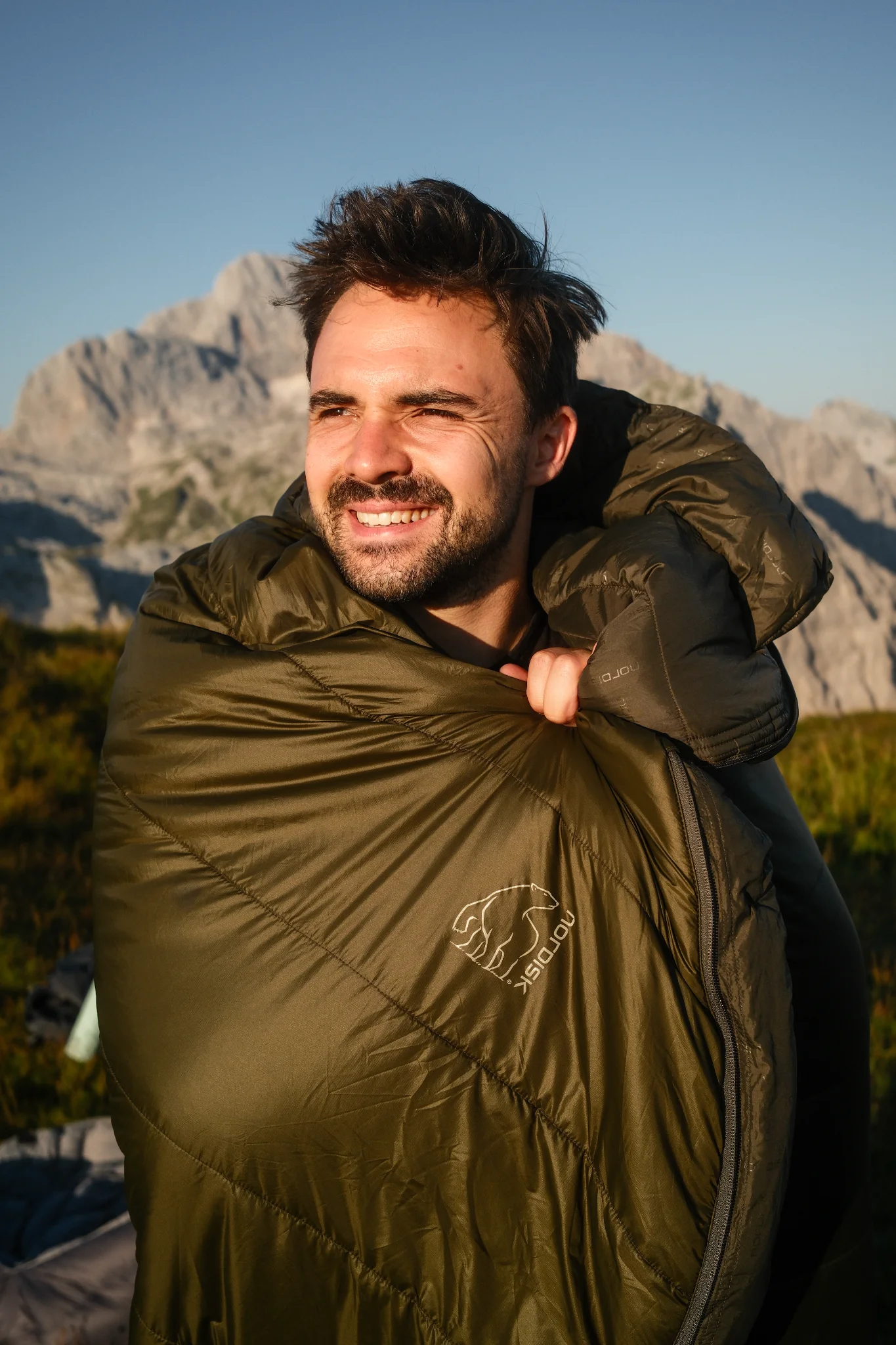
The Knuth is Nordisk's synthetic answer if you avoid down, regularly travel in damp climates or simply want a bag that is easier to look after. It comes in four temperature versions: +10°C, ±0°C, -10°C and -20°C. Together they span everything from summer camping to a serious winter trip.
One thing sets it apart. The Knuth is the only model in the collection that also comes in size S, which matters for smaller people and for teenagers who have not yet grown into an adult bag. The fill is Norguard S-PO 85, a high-grade recycled polyester fibre that insulates well and dries quickly.
Bjarni: the all-rounder made from recycled materials
The Bjarni is for you if you want to know exactly what your sleeping bag is made of. According to Nordisk, it uses 100% recycled outer and lining fabrics and 100% recycled fill, and it is completely PFAS-free.
The three versions (+10°C, ±0°C, -10°C) cover the typical three-season range in Central Europe. For spring and summer trips in the Alps, camping in the Alpine foothills or hut tours outside winter conditions, the Bjarni is an alternative made from recycled fabrics and recycled fill, with no compromise on comfort.
Materials and quality standards
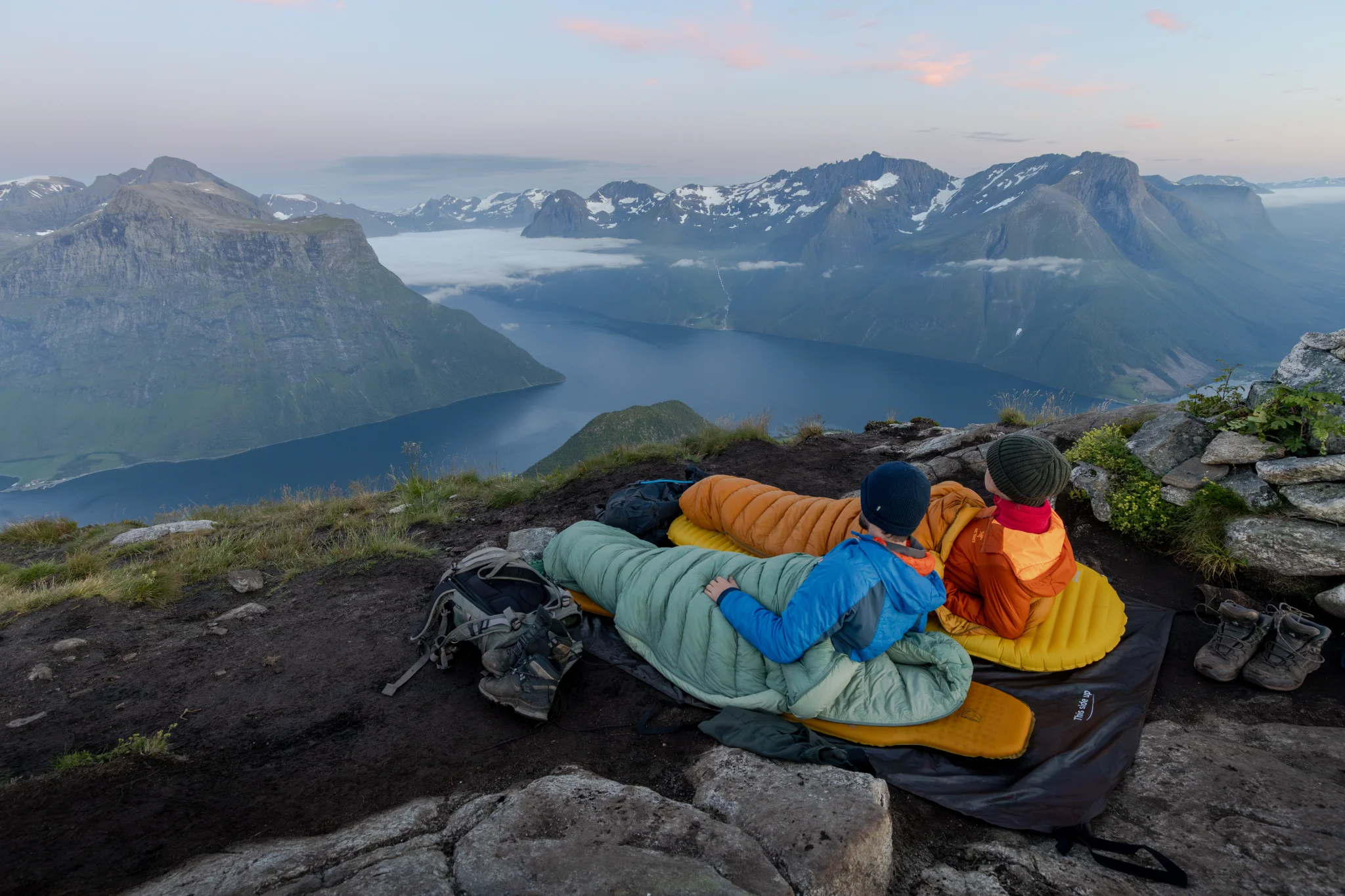
According to Nordisk, the models meet these material standards:
Down models (Ides, Iver):
- CRYSTAL DOWN®: Nordisk's own down quality, RDS-certified (Responsible Down Standard)
- European duck down from controlled farming
- PFC-free water-repellent finish on all outer fabrics
- Made in Germany
Synthetic models (Knuth, Bjarni):
- 100% recycled fill (Norguard S-PO 85 / proprietary recycled fibre)
- 100% recycled outer and lining fabrics on the Bjarni
- Completely PFAS-free, no fluorochemicals
Which Nordisk sleeping bag suits you?
- 1
If you want one versatile three-season bag for spring through autumn
the Ides is the best choice: light, compact and well made
- 2
If you are planning ski tours, winter camping or high-altitude mountain routes
there is no getting past the Iver, with comfort -4°C and limit -10°C
- 3
If you are often out in wet weather, or avoid down on ethical grounds
the synthetic Knuth copes better with moisture and comes in four temperature ratings
- 4
If recycled materials are your top priority
the Bjarni, with 100% recycled fabrics and fill and no PFAS, is the most consistent choice
- 5
If you need a bag for a smaller person or a teenager
the Knuth is the only model in the collection offered in size S
- 6
If you sleep on your side or have broader shoulders
the Ides Wide is worth it: more room without losing the warmth of the mummy cut
Right for you if …
Outdoor enthusiasts who value RDS-certified down, recycled fill and transparent material standards
Probably not for you if …
Occasional campers looking for a cheap one-off solution. Nordisk is deliberately positioned in the premium segment
Frequently asked questions
What is the difference between comfort and limit ratings?
Comfort is the temperature at which an average woman sleeps comfortably. Limit is the point at which an average man still sleeps warm. Both are measured to the EN ISO 23537 standard. If you tend to feel the cold, go by the comfort figure rather than the limit.
Down or synthetic: which is better for a sleeping bag?
For the same weight, down gives you more warmth and a smaller packed size, ideal for backpacking and saving weight. Synthetic fill is the clear winner when moisture is involved: it stays warm when wet, is easier to care for and contains no animal materials. The right choice depends on where you go and what matters most to you.
Mummy, wide or blanket: which shape is right for me?
The mummy is the warmest and lightest option, made for cold nights, high routes and backpacking. The wide cut frees up space across shoulders and chest, ideal for side sleepers and broader builds. The blanket is the most versatile shape but loses the most warmth, so it suits milder conditions.
How do I care for a down sleeping bag?
Wash down bags at 40°C with a special down detergent in a front-loading washing machine. Then tumble dry on low heat with several tennis balls, which fluff up the down and stop it clumping. Never wring the bag out hard, and never store it damp.
What does CRYSTAL DOWN® mean at Nordisk?
CRYSTAL DOWN® is Nordisk's proprietary standard for high-grade duck and goose down. The down is RDS-certified (Responsible Down Standard), comes from European farms and is processed PFC-free. According to Nordisk, production in Germany stands for European manufacturing standards and short supply chains.
Inspiration, knowledge and gear for people who want more from the outdoors.