
Stories
Halti Ski Collection: Outfits for Piste, Touring and Cross-Country
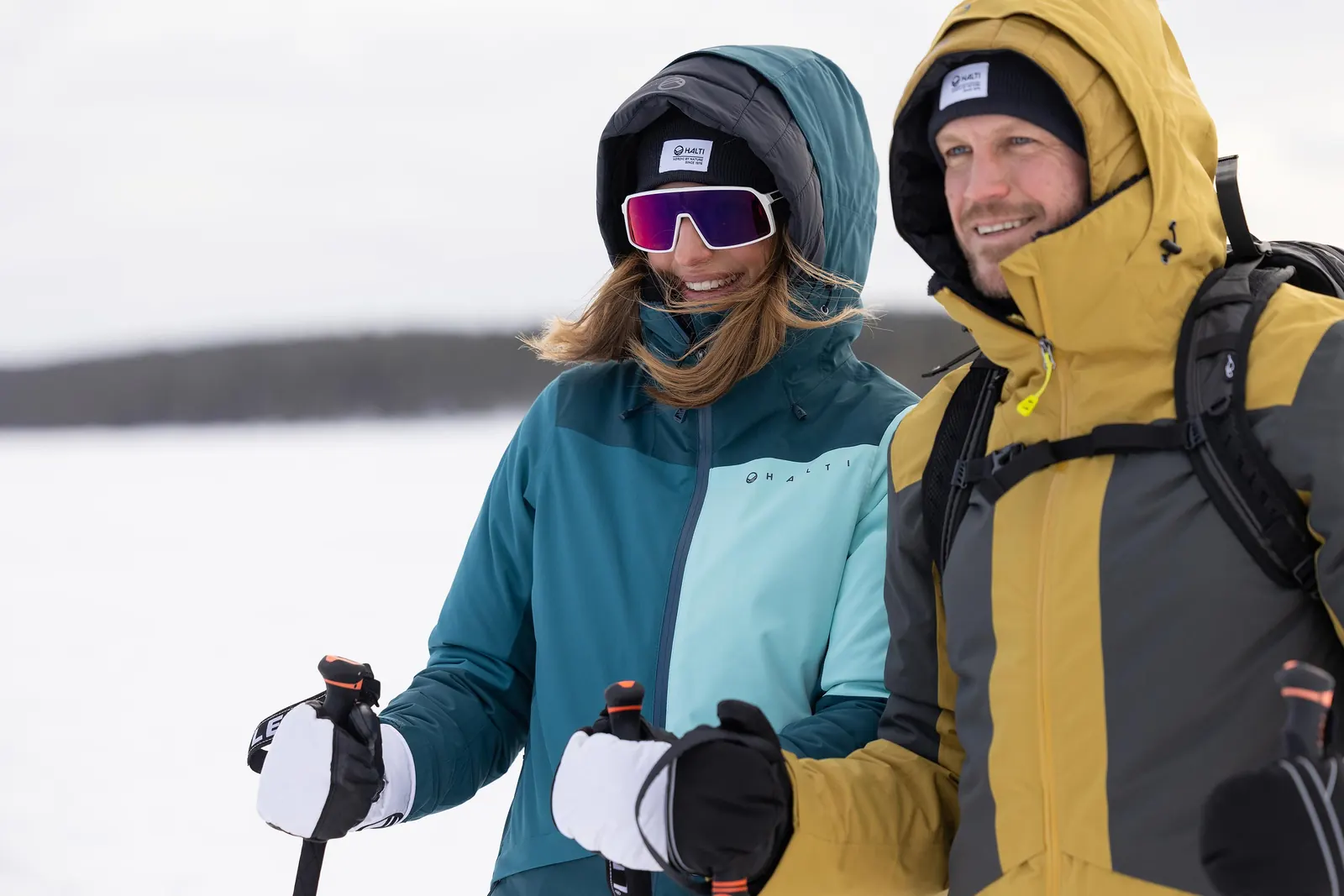
Settler or Chowper on the piste, Alpine on ski tours, Veloce or Hanki on the cross-country track: how to choose Halti ski clothing by weather protection, warmth and intensity, with concrete material specs.
Key points for choosing your kit
- 01
For lift-served ski days: compare a shell like the Settler with the insulated Chowper Anorak and plan your midlayer to match.
- 02
For ski touring: pick Alpine for waterproof shell protection or look at the Adrenaline Lite softshell pants when water-repellent stretch fabric is enough.
- 03
For cross-country skiing: match insulation to your pace. Compare Veloce for high-output sessions with the insulated zones on the Hanki pants.
- 04
Check fabric specs on the exact garment you buy. A recycled percentage refers to the named fabric, not an overall rating for the whole range.
After a fast run, you sit still on a cold chairlift. On a ski tour, climbing generates plenty of heat. That shift decides which Halti skiwear works: on alpine pistes you are choosing between shells like Settler and insulated pieces such as Chowper, while touring puts Alpine and the Adrenaline Lite pants in focus. On the cross-country track, Veloce and Hanki split mainly by movement-first construction versus targeted warm zones.
The Finnish brand covers very different demands. One all-round suit would always be a compromise. Use the table below to narrow down your direction; after that, the exact construction and how it fits over your existing layers make the decision.
Choosing Halti outfits by winter sport
| Discipline | Examples | What matters most | Common mistake |
|---|---|---|---|
Alpine skiing | Settler 3L Drymaxx, Chowper Anorak | Weather protection and reliable warmth on cold lifts | Buying an uninsulated shell without a matching midlayer |
Ski touring | Alpine 3L Drymaxx, Adrenaline Lite Pants | Ventilation, freedom of movement and weather-matched protection | Treating water-repellent softshell as waterproof hardshell |
Cross-country | Veloce XCT, Hanki XCT | Wind protection and warmth matched to your actual pace | Dressing for the whole loop as warmly as for standing still |
The Settler 3L Drymaxx Ski Jacket Unisex is an outer weather-protection shell. For the corresponding men's version, Halti specifies fully taped seams, a fixed snow gaiter and ventilation zips. According to product specs, the water column stands at 20,000 mm. That figure measures resistance to water pressure, not warmth.
Warmth comes from underneath. Halti builds the Settler without separate padding. That gives you flexibility across mild spring sessions and sub-zero mornings, as long as you pair it with the right midlayers. When trying it on, check that the jacket still moves freely over your insulating layer when leaning forward and planting poles.
The Chowper W Ski Anorak, by contrast, carries synthetic insulation. According to the product description, the linked model includes a snow gaiter and a long side zip for easy entry. For mostly lift-assisted days, it is a straightforward alternative to building a separate shell-and-midlayer system. On steep, sweaty climbs, however, fixed padding cannot be stripped off.
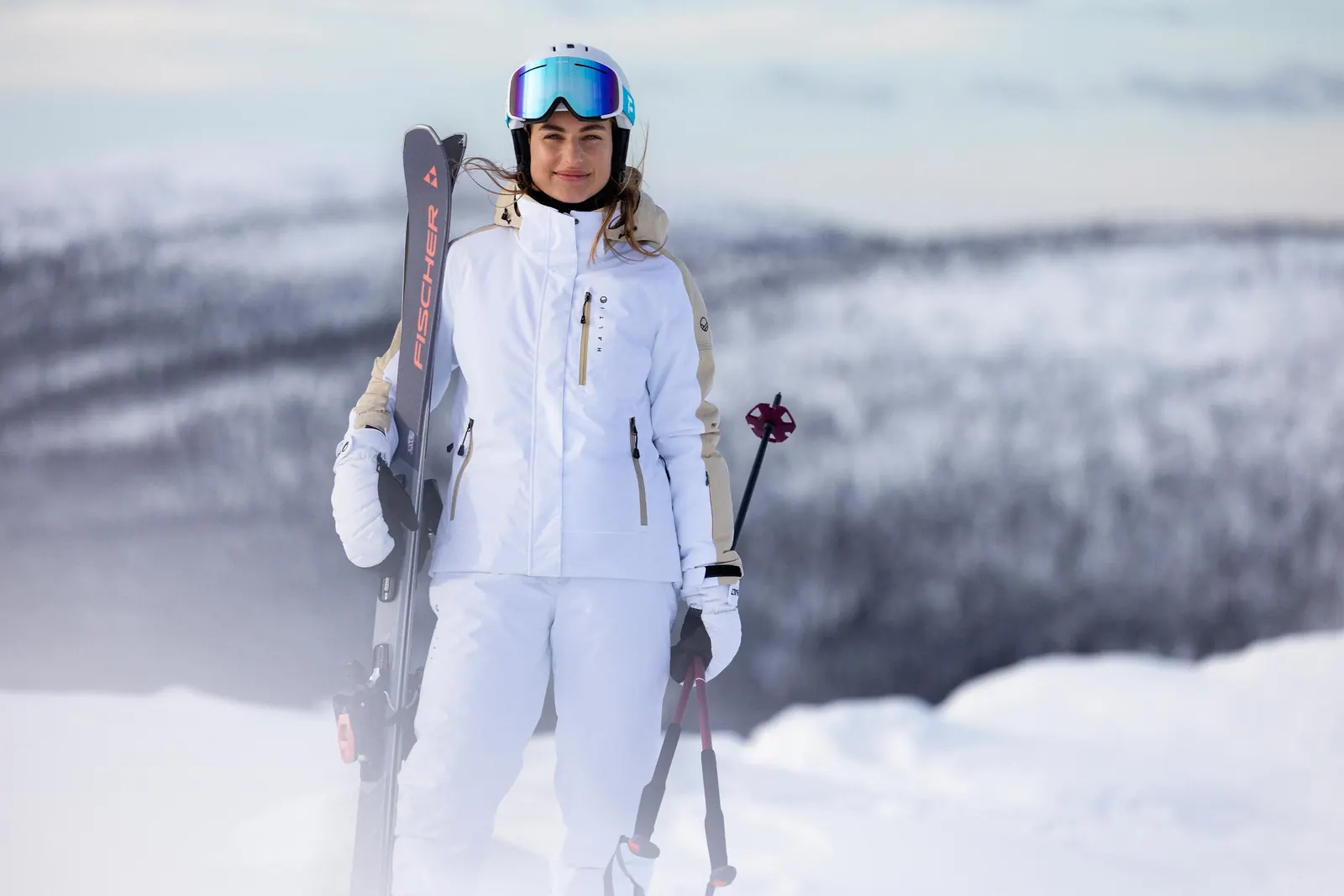
For the Alpine Unisex 3L Drymaxx Shell Jacket, Halti lists a DrymaxX Nano waterproof membrane alongside underarm vents and a helmet-compatible hood. A detachable snow gaiter is part of the setup as well. According to Halti, the jacket has no separate lining, so pack an extra insulating layer for summit stops and descents.
Handling matters just as much as membrane numbers. Can you reach the pit zips with your backpack straps fastened? Does the hood turn with your head, and do the sleeves stay long enough when reaching upward? Open the vents early before sweat builds up in your base layers.
The Adrenaline Lite Pants Men's take a different approach: Halti describes the stretch softshell as wind- and water-repellent, with a brushed interior and thigh ventilation zips. In dry winter weather that construction works well. For steady snow or sleet, carry waterproof overtrousers. Extra thermal tights never turn a water-repellent fabric into a waterproof shell.
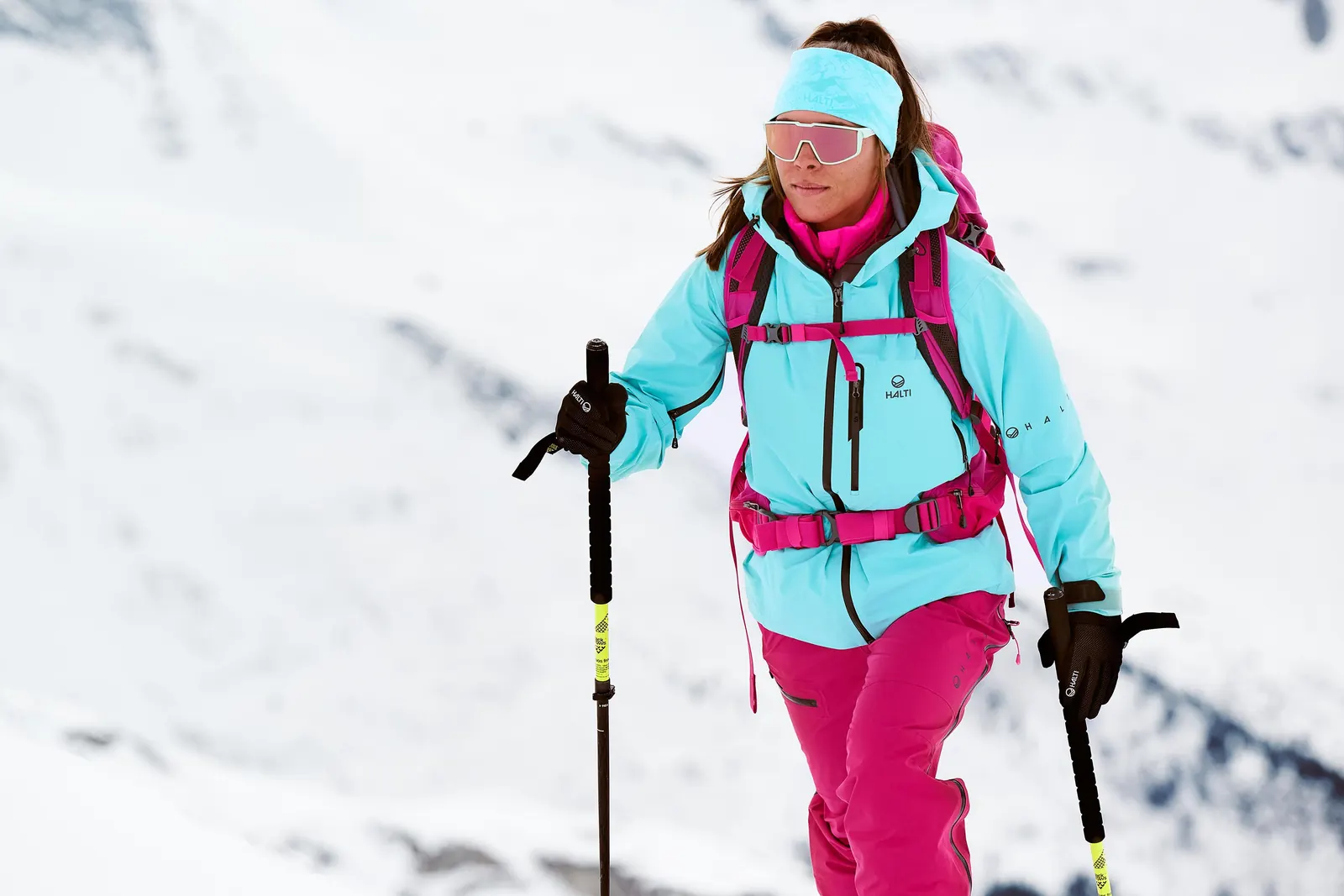
On groomed tracks, your speed dictates how much warmth you need. For brisk training loops, the Veloce XCT Pants Men's are built around Stormwall softshell panels paired with stretchy jersey fabric at the back. Each fabric zone does a distinct job; the trousers are not designed as fully waterproof rain pants.
According to the product description, the Hanki XCT Pants Women's add padded panels across the front thighs and upper rear hip area. That points toward lower-intensity outings or skiers who feel the cold quickly. During fast skate skiing, extra padding can feel too warm. Labels like beginner and expert rarely help here: someone new to the sport can still push hard.
Match your outfit to the pace of the loop you plan to ski. Slower outings favour targeted insulation, while hard intervals work better with thinner layers. You can pair both pants with tops from the Halti Nordic ski clothing range. Check shoulder mobility and waistband comfort when putting a set together.
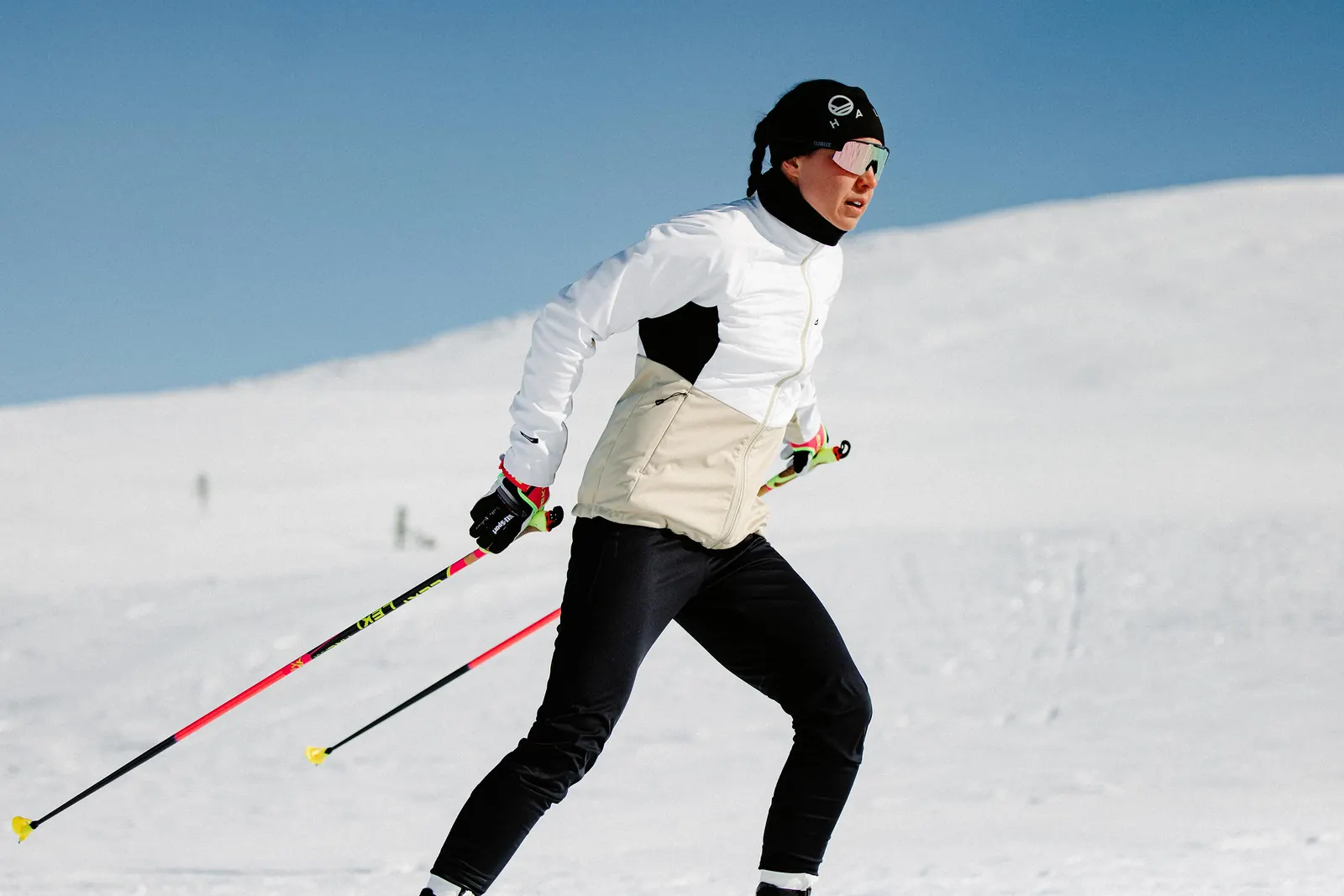
For the Alpine Unisex 3L Drymaxx Shell Jacket, Halti specifies DrymaxX Nano Grid Ripstop made from 55 percent polyamide and 45 percent recycled polyamide. That is a concrete manufacturer specification. It describes the stated outer fabric, not automatically every component of the jacket or other Halti models.
Check those details on each individual version. Similar product names can use different fabric blends. A single recycled-fibre share also does not provide a complete environmental assessment of a garment or prove an overall advantage across an entire collection.
Start with what you already own. If you have a dependable insulating midlayer at home, adding a technical shell makes sense. If most of your days are spent riding lifts in freezing temperatures, try an insulated ski jacket alongside a shell before deciding. For backcountry outings, the Halti ski touring clothing category covers both shells and stretch softshells; verify weather protection and vents on the exact item.
Which construction suits your skiing?
- 1
If you ski in both mild and freezing conditions
an uninsulated shell with interchangeable midlayers gives you more range.
- 2
If you prefer a fixed insulated ski jacket
remember you cannot remove the padding during steep climbs.
- 3
If you choose water-repellent softshell pants
pack waterproof shell protection for sustained snow or rain.
- 4
If you overheat quickly while cross-country skiing
check your base layer and trouser insulation before switching jackets.
Right for you if …
Choosing by sport, weather and existing layers
Probably not for you if …
One identical outfit for every intensity level
Finally, check the fit in motion. Zip up jacket and trousers over the layers you plan to wear, drop into a ski stance and raise both arms. For ski touring, put your pack on too. If the waistband pinches or the back pulls tight, a higher membrane rating will not fix it.
Combine Halti skiwear to fit your days on snow
Compare specific models against the layers you already own. Sizes, colours and current stock are shown on each product page.
View Halti ski clothing ↗Frequently asked questions
Which Halti ski jacket works well on the piste?
Settler is a strong choice if you want to separate weather protection from warmth using your own midlayers. According to its product description, the Chowper W Anorak comes with synthetic insulation built in. Choose by warmth preference and check the fit over your base and midlayers.
Is the Halti Alpine a warm winter jacket?
The Alpine Unisex model described here is a weather-protection shell with no separate lining, as Halti states explicitly. For cold breaks and descents you need an insulating midlayer underneath.
Are the Halti Adrenaline Lite pants waterproof?
Halti describes the Adrenaline Lite as water-repellent softshell. In sustained snow or rain, pair them with waterproof overtrousers or choose a waterproof DrymaxX shell pant instead.
What is the difference between Halti Veloce and Hanki for cross-country skiing?
The linked Veloce pants combine Stormwall softshell with stretchy jersey panels at the back. The Hanki pants add insulated zones on the front thighs and rear hips. Your pace and personal warmth needs decide; note that the men's and women's models described here also differ in cut.
Sources (5)
- Halti: Settler 3L DX Men's, construction and features ↗
- Halti: Alpine 3L DX Unisex, fabric composition, features and care ↗
- Halti: Adrenaline Lite Men's touring pants, material and weather protection ↗
- Halti: Veloce Men's cross-country pants, fabric zones and construction ↗
- Halti: How to choose the right clothing for cross-country skiing ↗

SportFits editorial team
Marketing & Sales Manager at SportFitsNiklas is Marketing & Sales Manager at SportFits and studied applied sports science in Regensburg. In the magazine he writes about training science, fitness and longevity, putting trends into scientific context instead of simply celebrating them. He also looks at what really matters in outdoor gear: honest facts instead of empty advertising language.
Author profile →SportFits
outdoors looks good on you