Training & Health
Caffeine in sport: dose, timing and tolerance
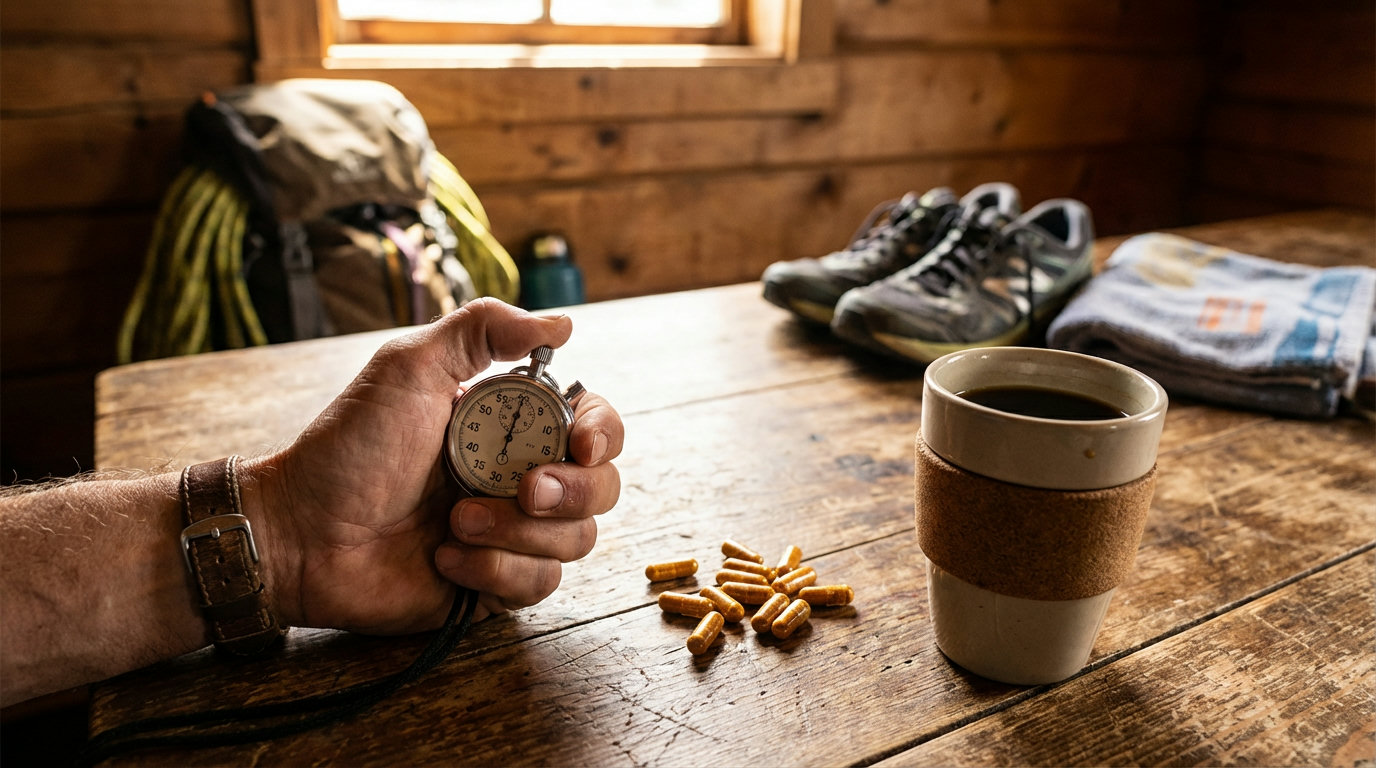
How caffeine blocks adenosine receptors, which dose works, when to take it and who really benefits from caffeine as a supplement.
Key points at a glance
- 01
Caffeine blocks adenosine receptors (A1 and A2A) in the central nervous system, so you perceive fatigue and effort as less intense
- 02
The evidence-based dose is 3–6 mg per kg of body weight, taken 45–60 minutes before training
- 03
Endurance performance improves by 2–4% on average, and by up to 9% versus placebo in some studies
- 04
Tolerance is real: four days without caffeine before a competition can make it work significantly better
- 05
For most athletes, caffeine after 2 pm measurably impairs sleep quality and therefore recovery
How caffeine works in the body: blocking adenosine
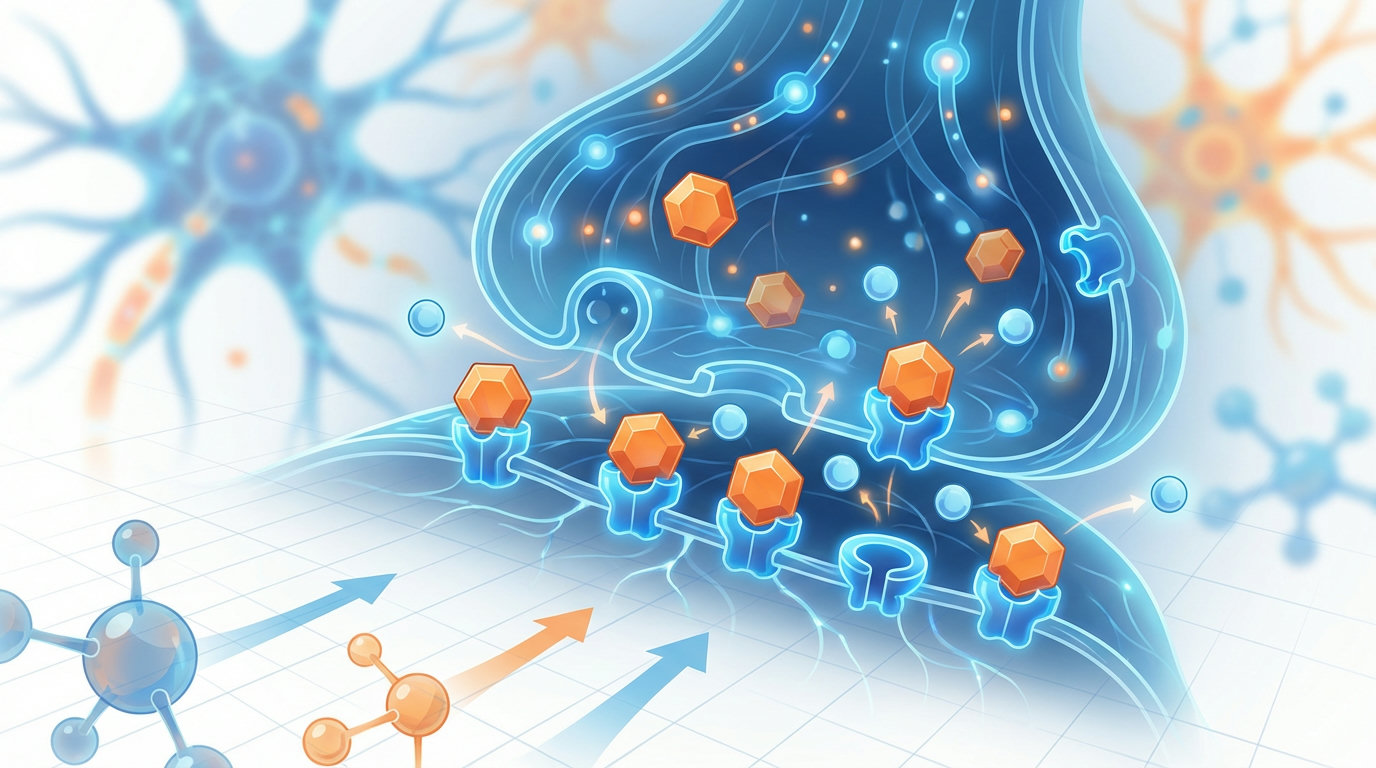
Caffeine belongs to the methylxanthine group. Pharmacologically, it is a competitive antagonist at adenosine receptors, mainly the A1 and A2A subtypes in the central nervous system. This mechanism explains most of its performance effects.
Adenosine is a nucleoside the body produces itself. It builds up in the brain continuously: the longer you are awake and the harder you work, the more there is. It binds to A1 and A2A receptors and has a damping effect there: drowsiness, lower neurotransmitter release and greater sensitivity to pain.
Caffeine and adenosine are both purine derivatives with a similar structure. That allows caffeine to bind to the same receptors without triggering the usual adenosine response. As long as it stays bound, the receptor is blocked.
What this means for training: you perceive fatigue and effort as weaker. Your RPE (rating of perceived exertion) drops at the same objective workload. At the same time, more dopamine and noradrenaline can be released, because adenosine normally inhibits their release.
At higher doses (above 6 mg/kg), caffeine also inhibits phosphodiesterase and so prevents the breakdown of cyclic AMP (cAMP). Higher cAMP levels activate hormone-sensitive lipase in fat tissue and promote lipolysis. This metabolic effect can matter in endurance efforts lasting more than 90 minutes.
A third mechanism acts directly on the muscles. Caffeine modulates calcium release from the sarcoplasmic reticulum, which increases the contraction force of individual muscle fibres.
What caffeine does in sport: endurance, strength and cognition
Among all legal performance-enhancing substances, caffeine has one of the most robust bodies of research. The International Society of Sports Nutrition (ISSN) Position Stand (Grgic et al., 2021) sums it up: at 3–6 mg/kg, caffeine significantly improves aerobic endurance performance, with moderate effect sizes of 0.3 to 0.5.
Endurance performance benefits most. Time trials lasting 1 to 60 minutes consistently show improvements of 2–4%, and up to 9% versus placebo in individual studies. The effect has been demonstrated in cyclists, runners and triathletes alike.
Strength performance: a 2025 meta-analysis (PMC) confirms that caffeine increases mean power and maximal strength in resistance exercises to a statistically significant degree. The effect is moderate but reliably reproducible, especially for upper-body exercises.
Cognitive performance is often underrated. Reaction time, decision speed and focus measurably improve. That matters in technically demanding sports such as badminton, climbing or mountain biking.
A study published in 2025 (Frontiers in Nutrition) with elite badminton players found that acute caffeine intake significantly improved both sport-specific and cognitive measures.
Where it falls short: responses to caffeine vary a lot from person to person. CYP1A2 polymorphisms, genetic variants of the enzyme that breaks caffeine down, determine whether you metabolise it quickly or slowly. Slow metabolisers (roughly 40–50% of the population) sometimes show a smaller performance effect in studies and face a higher cardiovascular risk at high doses.
The right dose: what the research recommends
The most commonly used and recommended dose is 3–6 mg per kilogram of body weight. Below 3 mg/kg, the effects get smaller and less consistent. Above 6 mg/kg, side effects increase while the performance benefit stops growing.
Until 2004, caffeine was on the WADA doping list once certain urine concentrations were exceeded. Today it is no longer banned, although the World Anti-Doping Agency still keeps it in its monitoring programme. From around 12 mg/kg, heart rate and blood pressure rise sharply, and such doses are considered medically problematic.
In practice: an athlete weighing 70 kg aims for 210–420 mg of caffeine. That is roughly two to four cups of filter coffee or one standardised caffeine supplement.
| Body weight | Low dose (3 mg/kg) | Medium dose (4.5 mg/kg) | High dose (6 mg/kg) |
|---|---|---|---|
55 kg | 165 mg | 248 mg | 330 mg |
65 kg | 195 mg | 293 mg | 390 mg |
75 kg | 225 mg | 338 mg | 450 mg |
85 kg | 255 mg | 383 mg | 510 mg |
95 kg | 285 mg | 428 mg | 570 mg |
Timing: 60 minutes before the start, but the form matters
The standard advice is 45–60 minutes before training or competition. That is how long it takes to reach peak plasma concentration when you take caffeine capsules or coffee by mouth. The half-life is typically 5–6 hours, and in some people (slow CYP1A2 metabolisers) up to 9 hours.
The best time to take it depends on the form:
- Caffeine capsules / coffee: 45–60 minutes before the start
- Caffeine gum: 10–15 minutes, as absorption through the mouth is much faster
- Energy gels with caffeine: 30–45 minutes (depending on the formula)
- Caffeinated bars: 45–60 minutes (they pass through the stomach much like capsules)
Timing around sleep matters just as much. With a half-life of 5–6 hours, 25% of the caffeine you took is still circulating in your blood 10–12 hours later. Take 300 mg at 2 pm and around 75 mg of active caffeine is still in your system at 8 pm.
Studies show that caffeine measurably changes sleep architecture. Deep sleep and REM sleep in particular decrease, even if it hardly takes you longer to fall asleep. Your sleep feels normal. Biochemically, it isn't.
Rule of thumb: stop taking caffeine at least 8–9 hours before bedtime. In hard training weeks or during competition phases, this is an underrated lever for better recovery.
Habituation and tolerance: do I need a caffeine break?
The evidence on tolerance is more nuanced than it is often made out to be. Two lines of research seem to contradict each other.
Cross-sectional studies show that regular coffee drinkers with a high daily intake respond to an acute dose of caffeine about as strongly as low consumers. This suggests the performance effect is not completely lost through habituation.
Controlled crossover studies with 4 to 28 days of caffeine withdrawal, on the other hand, show that the effect is strongest on the first day after abstinence and fades with continued daily intake. After about a week, it measurably levels off.
For competition preparation, that points to a clear strategy: four days completely without caffeine before the key race can significantly strengthen the performance effect. The approach is common in elite sport. The downside: withdrawal symptoms can appear in the first one or two days, such as headaches, fatigue and poorer concentration.
The duration of the effect differs too. In regular consumers, the performance boost typically lasts around 3 hours, in non-consumers up to 6 hours.
Drinking caffeine every morning to wake up and also using it as a pre-training supplement is not ideal. It still works, but the effect is dampened. If you want to use caffeine specifically to support performance, keep an eye on your everyday intake.
Contraindications and side effects
Caffeine is not a risk-free supplement, especially at higher doses and for certain groups of people.
Cardiovascular system: at moderate to high doses, caffeine reduces the widening of the coronary arteries during exercise, so the heart gets less oxygen under heavy load. For healthy athletes this is generally not a problem. If you have coronary heart disease, cardiac arrhythmia (especially atrial fibrillation) or uncontrolled high blood pressure, be careful.
Stomach and gut: in 15–30% of endurance athletes, caffeine before training causes stomach discomfort, nausea or increased bowel activity. This happens more often when caffeine is taken on an empty stomach and right before the start.
Pregnancy: the EFSA recommends a total intake below 200 mg a day during pregnancy, counting caffeine from all sources.
Interactions: caffeine interacts with certain medicines. Fluoroquinolone antibiotics (such as ciprofloxacin) inhibit caffeine breakdown via CYP1A2 and can raise blood levels sharply. Caution is also needed if you take MAO inhibitors.
Anxiety disorders and chronic sleep problems: caffeine can trigger anxiety and heighten nervousness and restlessness. If you tend to be nervous anyway or have persistent sleep problems, weigh up its use carefully.
What speaks for it
Strong, consistent evidence for endurance performance (+2–9% versus placebo)
Also measurably improves reaction time, focus and strength
Cheap, legal and available in many forms and doses
Tolerance is lower than often assumed: everyday coffee doesn't cancel out the effect
What to weigh up
Impairs sleep quality when taken after 2 pm, which puts recovery at risk
Stomach and gut problems in 15–30% of athletes, especially on an empty stomach
Individual responses vary widely due to CYP1A2 genetics
Cardiovascular risks with pre-existing conditions or very high doses (above 6 mg/kg)
Who benefits from caffeine as a supplement?
- 1
If you compete in endurance events lasting more than 30 minutes
caffeine is one of the most effective legal supplements there is
- 2
If you consume little caffeine day to day
you'll feel a stronger and longer-lasting effect than regular consumers
- 3
If you are prone to a racing heart or stomach problems
test the dose in training first, never for the first time on race day
- 4
If you train late in the evening
caffeine before training often backfires: the loss of sleep and recovery outweighs the performance gain
- 5
If you mainly do strength and hypertrophy training
the effect is real, but smaller than for endurance performance
Right for you if …
Endurance athletes, triathletes, cyclists, runners, competitive athletes with structured preparation
Probably not for you if …
People with cardiac arrhythmia, high blood pressure, anxiety disorders or high sensitivity to caffeine
Frequently asked questions
How much caffeine should I take before training?
The evidence-based recommendation is 3–6 mg per kilogram of body weight, taken 45–60 minutes before training. At 70 kg, that is 210–420 mg. Start at the lower end (3 mg/kg) and only increase if you tolerate the dose well.
Do I have to give up coffee for a caffeine supplement to work?
Not necessarily, but the effect is weaker in regular consumers. For everyday training, that's not a problem. Before important competitions, four days without caffeine are worth it to restore receptor sensitivity and get the most out of the effect.
Does caffeine count as doping?
Caffeine has not been on the WADA prohibited list since 2004. The World Anti-Doping Agency does keep it in its monitoring programme. National federations may have their own rules in some sports, so check with your federation beforehand.
Why does caffeine work less well for me than for others?
Often it comes down to genetic differences in CYP1A2, the liver enzyme that breaks down caffeine. Slow metabolisers (roughly 40–50% of the population) clear it more slowly, so it affects their sleep for longer, and in some studies they respond less strongly to the performance effect.
Can I take caffeine during long endurance sessions?
Yes, that's a common strategy. Caffeinated gels or bars in the last third of a long session can delay the drop in performance. Test timing and dose in training first, because stomach problems are more common during exercise than at rest.
More on training and nutrition
Evidence-based articles and tools for athletes
Sources
- ISSN Position Stand: Caffeine and Exercise Performance (Grgic et al., 2021), PubMed ↗
- Caffeine and Sports Performance: Conflict between Performance and Sleep Quality (2025), Springer ↗
- Effects of Caffeine Dose and Administration Method on Time-Trial Performance, Nutrients 2025 ↗
- Acute caffeine ingestion improves sport-specific performance in elite badminton athletes, Frontiers in Nutrition 2025 ↗
- Koffein: Genussmittel mit pharmakologischer Wirkung (German), Pharmazeutische Zeitung ↗
Inspiration, knowledge and gear for people who want more from the outdoors.