
HöhenmeterPractice
The Search
Someone is buried under the snow and you have a transceiver. Find them on a real slope near Kühtai: signal search, coarse search, fine search and probe, the way avalanche courses teach it.

Start the exercise
One buried person, two buried people, or the time trial with this week’s scenario.
Does not replace an avalanche course. Avalanche courses by the Ortovox Safety Academy
How the search works
1
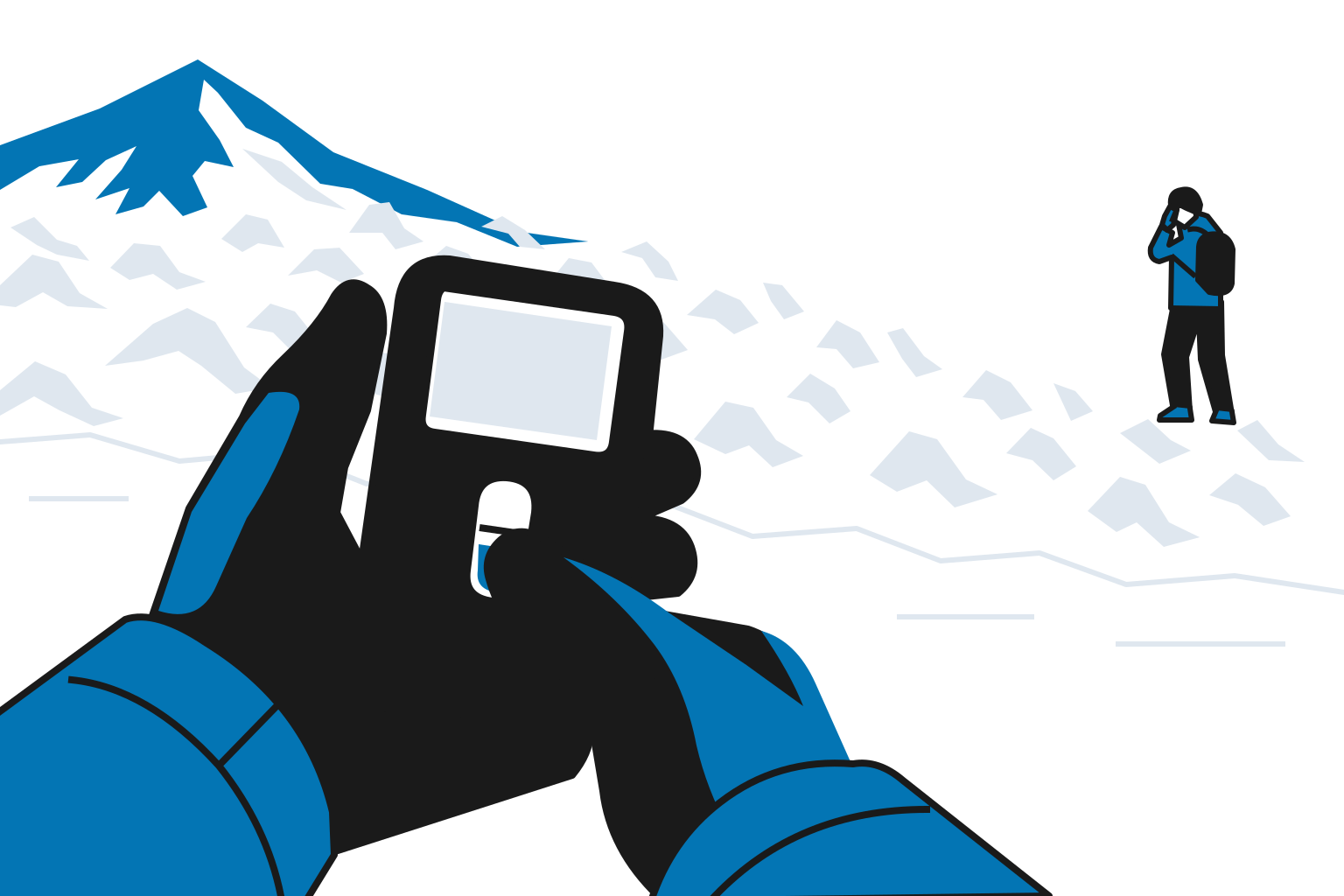
Alert, switch over
Stay calm, get an overview and remember the last seen point. One person calls the emergency number (112) and stays 25 m away from the searchers; everyone else switches their transceiver to search.
2
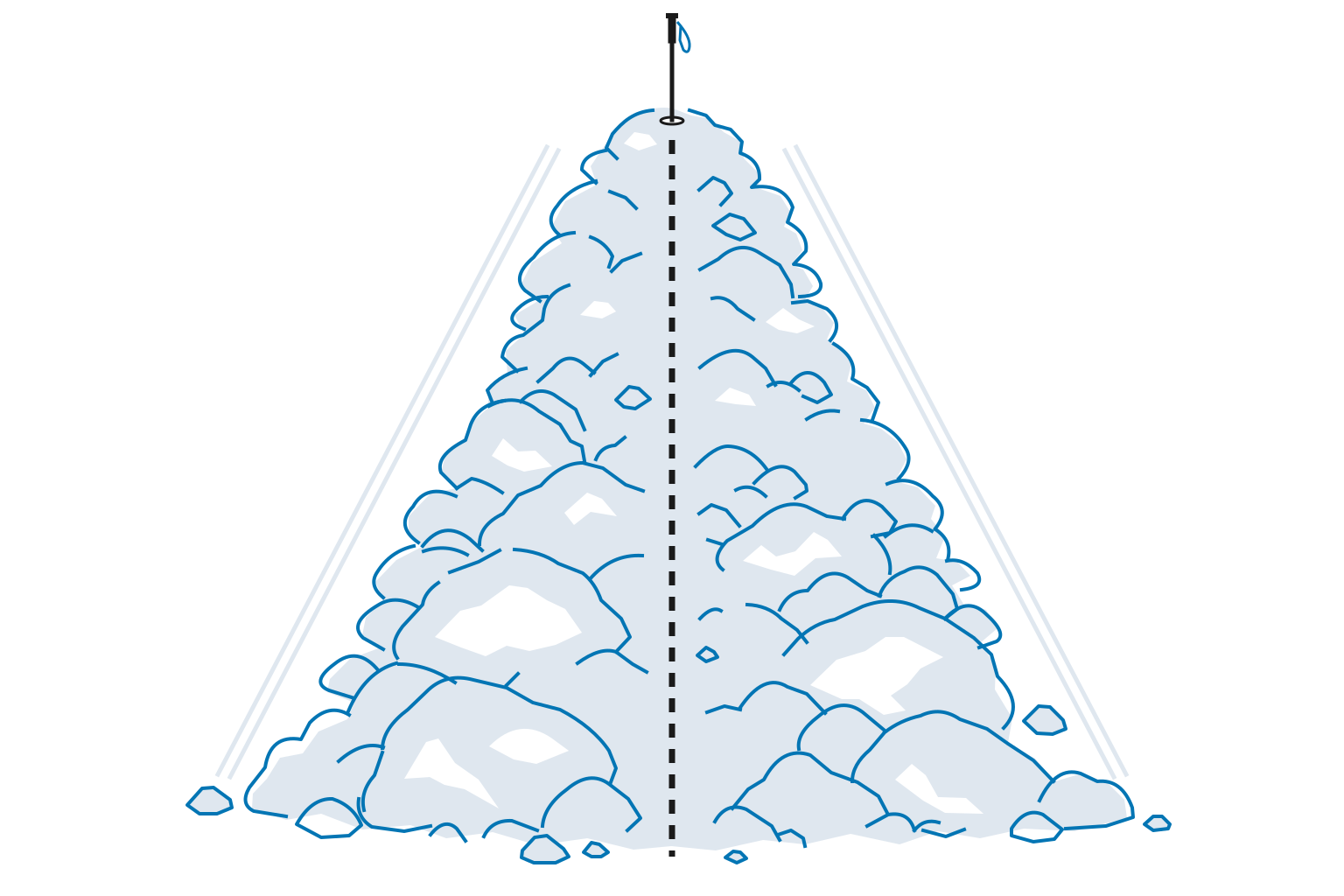
Signal search
Move quickly downhill from the last seen point and watch the debris. A transceiver with an 80 m search strip such as the Focus Voice picks up signals up to 40 m on each side.
3
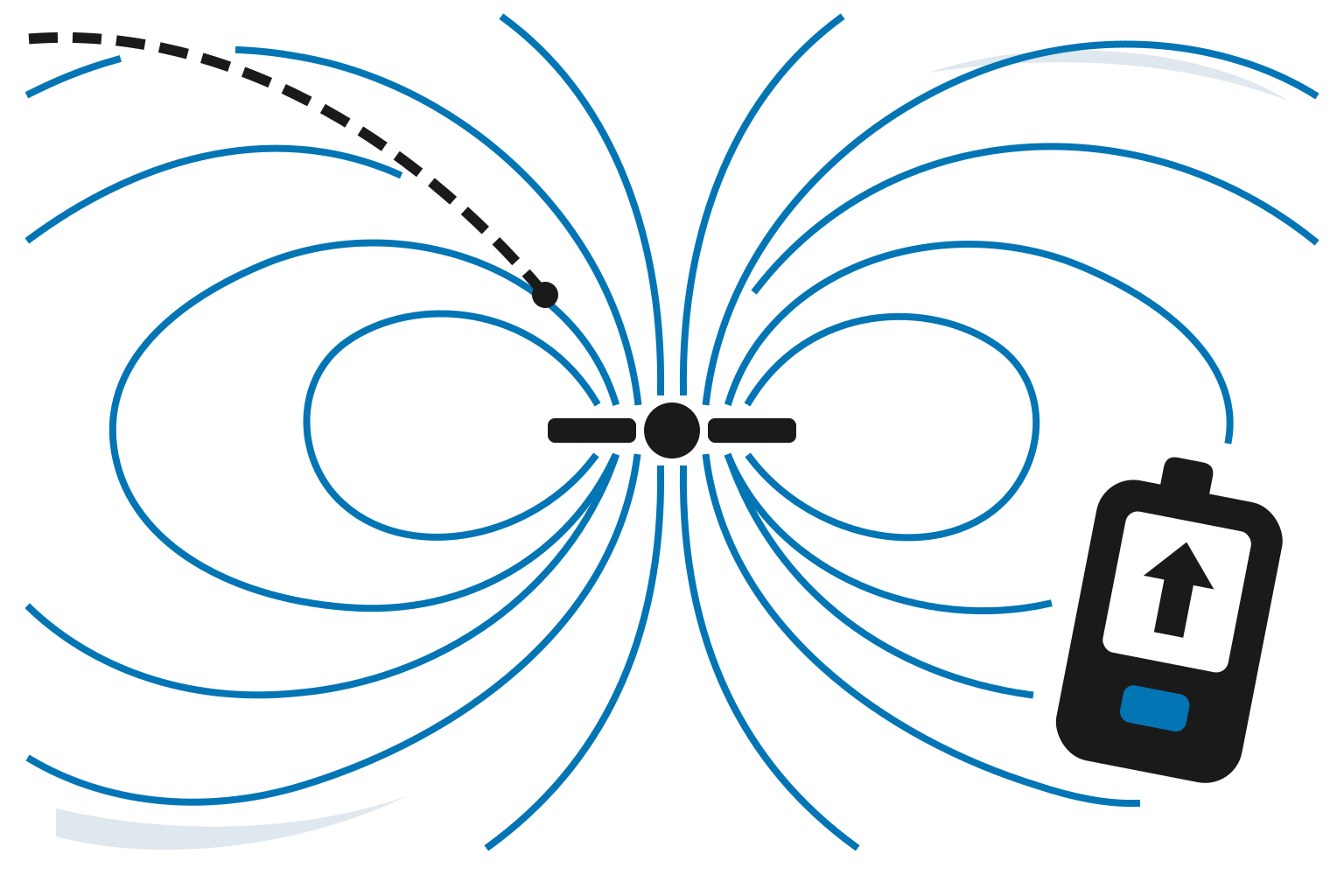
Coarse search
Follow the arrow. It leads along a curved field line, not in a straight line. If the numbers rise, turn around. Below 10 m slow down, from 5 m lower the device towards the snow.
4
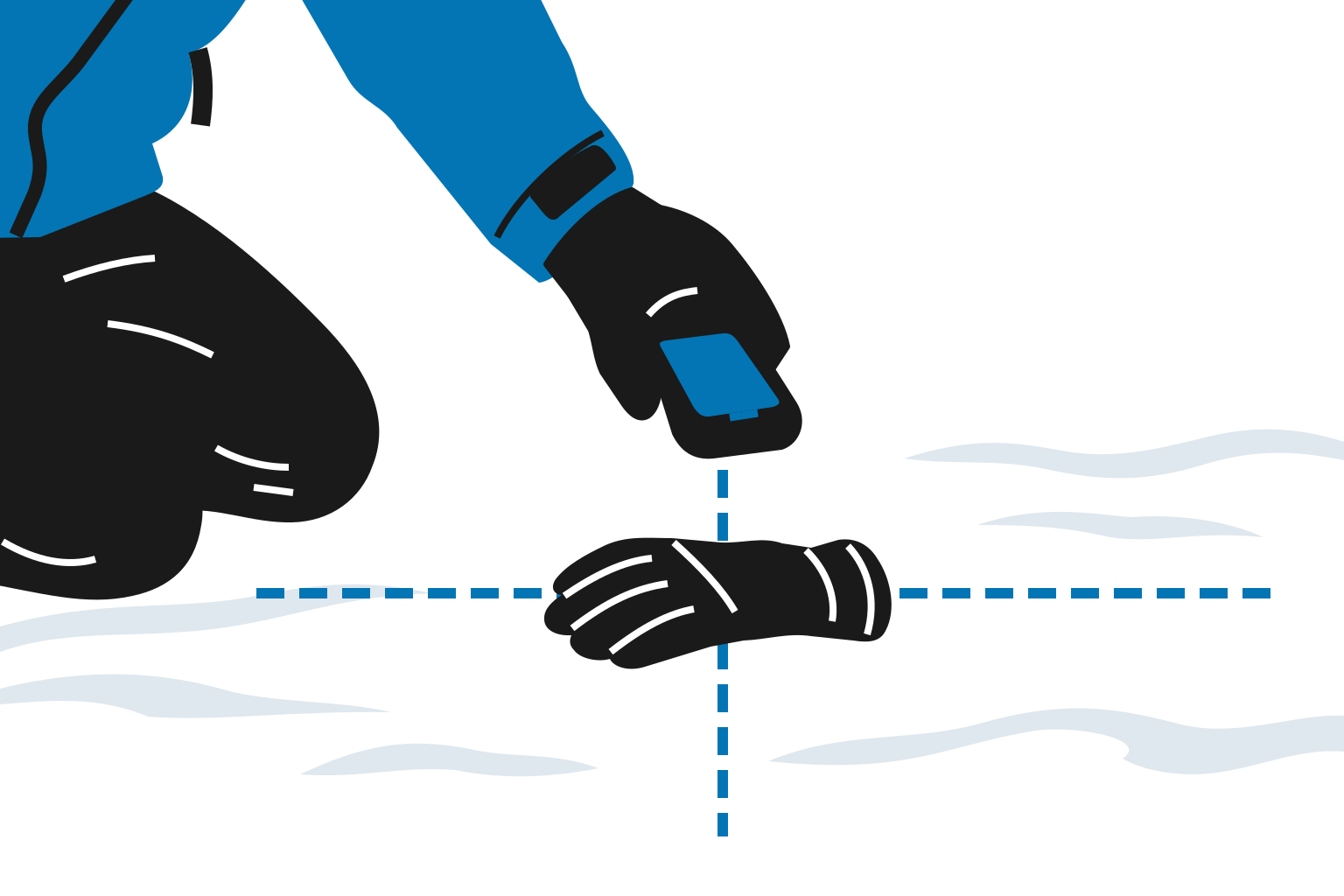
Fine search
Below 3 m the arrow disappears. Hold the device just above the snow, do not turn it, about 25 to 30 cm per second. One axis to the lowest value, then across it. Mark the spot.
5
Probing
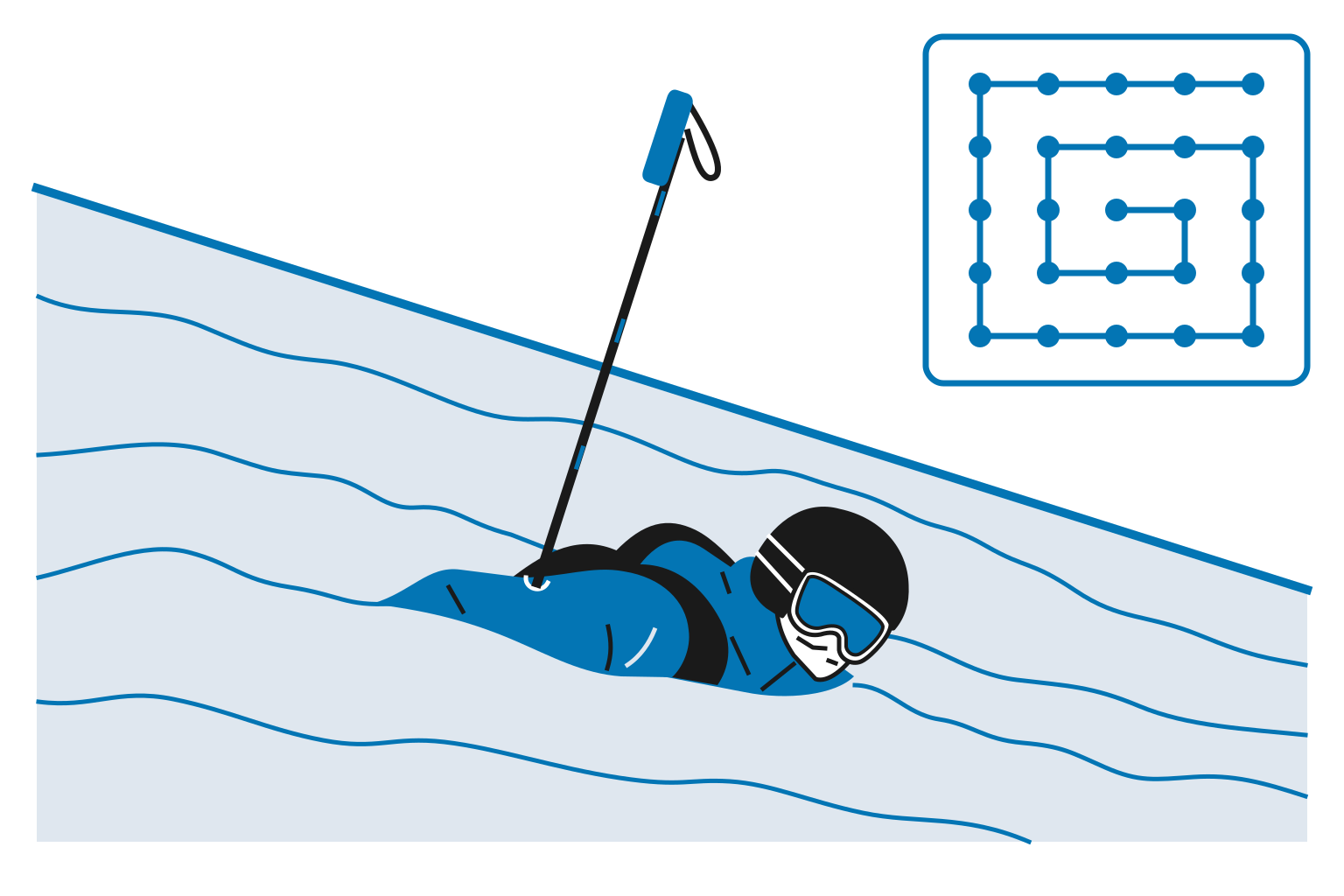
At right angles to the snow surface, in a spiral from the inside out, about every 20 cm. A body feels soft and springy. After a hit, the probe stays in.
6
Shovelling
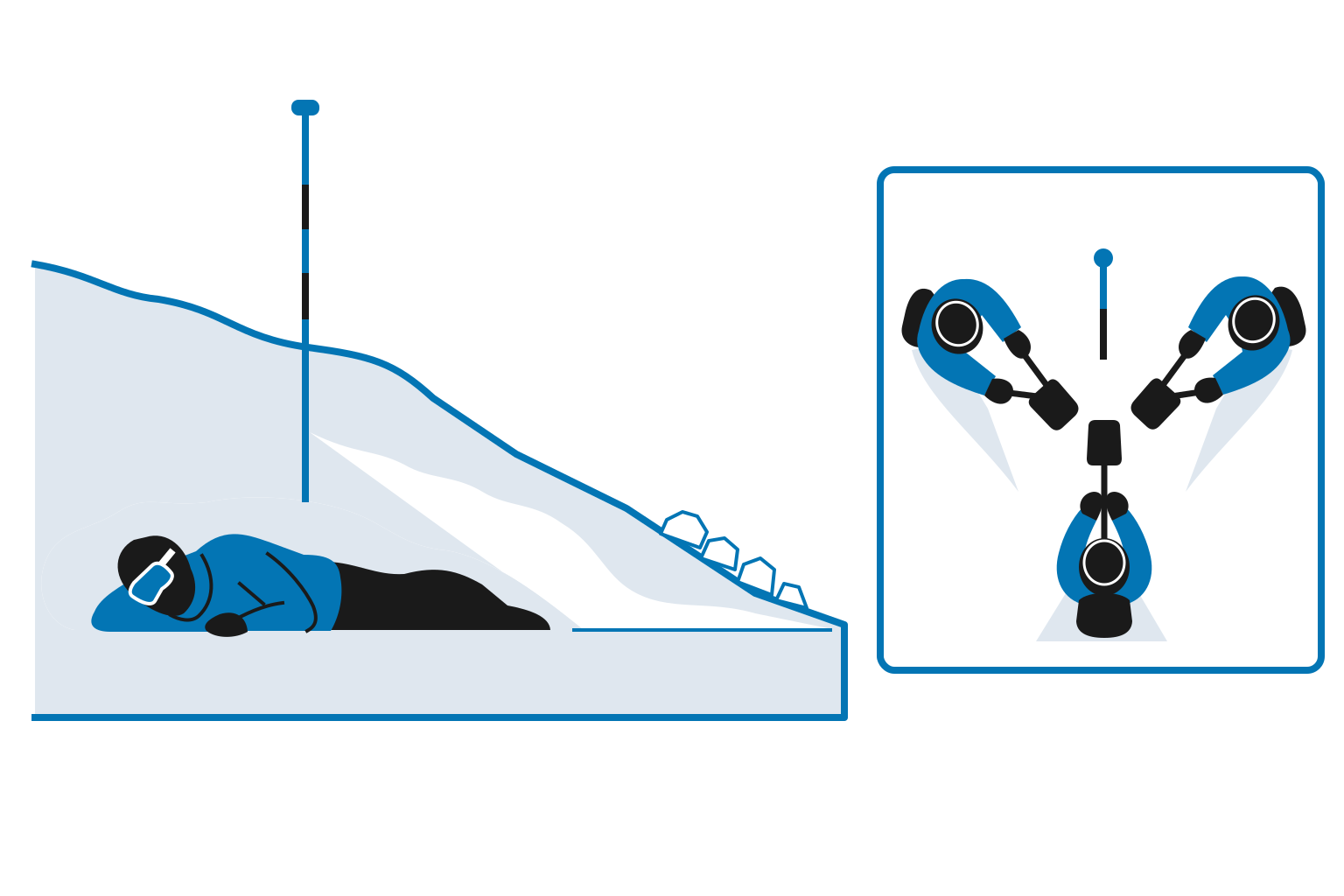
Start downhill at 1.5 times the burial depth, three people in a V, rotate every 60 seconds. Digging usually takes the longest, often 4 to 5 minutes.
Several buried people
The transceiver leads to the nearest signal first. Once one person is located and helpers are probing and digging there, you mark the transmitter. On the Focus Voice this works within 5 m; then the device shows the next signal.
Time matters
An analysis of avalanche accidents in Switzerland from 1981 to 2020 shows: 91% of completely buried people survive if they are recovered within the first 10 minutes. Between 10 and 30 minutes it is 31%. Companion rescue on site is therefore crucial.
Rauch, Brugger, Falk et al., JAMA Network Open 2024, data from the SLF
What experienced rescuers do differently
- They check everyone’s transceiver before every tour.
- They assign roles first: one person coordinates, one calls for help, every device is on search or switched off.
- In the signal search they move fast and watch the debris, not only the display.
- The closer they get, the slower they move, so they do not walk past the buried person.
- They do not hunt for the perfect value. They mark the lowest value and probe, which is faster.
- They practise regularly, including probing and digging, not only the transceiver search.
Does not replace an avalanche course
The exercise shows the sequence. How the device feels in real snow, how deep a probe goes and how heavy avalanche debris is, you only learn outside, ideally on a course.
Avalanche courses by the Ortovox Safety AcademyThe basics in LAB SNOW
Experience Ortovox
After the practice
- Experience OrtovoxOn the body, on the back, in your head: everything from Ortovox on one page.Overview
- Transceiver, probe, shovelWhat has to be with you in an emergency, step by step.See the gear
- Which transceiver suits you?Device only or the full set: a few questions and you know what suits you.Open the guide
- The first 15 minutesWhat to do after an avalanche, station by station.Read the article
Based on: Ortovox Safety Academy (LAB SNOW), Focus Voice user manual, SLF and the German Alpine Club (DAV). Terrain: Land Tirol – data.tirol.gv.at (CC BY 4.0). A north-facing cirque in the Stubai Alps near Kühtai; the avalanche is made up.