

Training & Health
Vitamin D and sunlight: how much daylight do you need?

Your body makes most of its vitamin D through sunlight on the skin. How much you need, what it does for long-term health and when a supplement can help.
The key points
- 01
Your body makes around 80–90% of its vitamin D itself through UVB radiation from sunlight. Diet alone rarely covers the requirement.
- 02
In summer, depending on skin type, 5–25 minutes of sunlight on your face, hands and forearms several times a week is often enough. Sunburn causes harm and offers no benefit.
- 03
In Germany and at similar latitudes, the sun is too low from October to March for meaningful vitamin D production. Your body then draws on its summer stores.
- 04
The German Nutrition Society (DGE) uses 20 micrograms (800 IU) per day as a guide when the body makes none itself. A blood level of 20 ng/ml marks good provision.
- 05
Supplements can help with a confirmed deficiency or for people at risk, but they are no longevity miracle. High doses without medical supervision can be harmful.
Why vitamin D is more than just a vitamin
Technically, vitamin D is a precursor to a hormone rather than a classic vitamin. The special part: your body can make it with the help of sunlight. That makes it relevant for anyone who wants to stay fit and well over the long term.
Vitamin D helps your body absorb calcium, making it central to strong bones and teeth. It also supports muscle strength and the immune system. A lasting deficiency is often vague, with symptoms such as fatigue, muscle weakness or increased susceptibility to infection.
The catch: foods such as oily fish, eggs and fortified products provide only small amounts. Most of the rest depends on daylight. Next, we look at how your skin turns sunlight into vitamin D.
How sunlight helps your skin make vitamin D
The decisive factor is the sun’s UVB radiation. When it reaches your skin, it converts a cholesterol precursor into vitamin D. Your liver and kidneys then turn it into the active form your body can use.
Whether this works depends mainly on the sun’s angle. When it is high in the sky, enough UVB reaches your skin. When it is low, the atmosphere filters out much of the radiation. That is why timing matters: during the warmer half of the year, production is highest between about 11 am and 3 pm.
It also matters what blocks the radiation. Glass, clothing and high-SPF sunscreen allow very little UVB through. Behind a window, or with your body fully covered, your body therefore makes almost no vitamin D, even when it feels warm and sunny.

How much sunlight do you really need?
The good news: it takes less than many people think. In midsummer, short sessions are often enough to fill your stores. As a rule of thumb, expose around a quarter of your skin, such as your face, hands and parts of your arms and legs, to sunlight several times a week.
Exactly how long depends on your skin type and the season. Fair skin makes vitamin D faster. Darker skin needs considerably longer. The balance matters: you want enough sunlight for vitamin D production, but no sunburn. Staying out longer than needed adds no benefit and increases the risk of skin cancer.
The table below offers a rough guide for unprotected skin around midday. It is only a rough measure, but it helps you get a feel for the timings.
| Skin type | Summer | Spring / autumn |
|---|---|---|
Very fair (I–II) | 5–10 min | 10–20 min |
Medium (III) | 10–15 min | 15–25 min |
Darker (IV–VI) | 45+ min | 60–90 min |
Vitamin D and longevity: what the research says
In longevity circles, vitamin D is often marketed as a key to a longer life. The evidence is more restrained, and that is where a closer look pays off.
Its role in bones and muscles is well established: good vitamin D status lowers the risk of falls and fractures in older people. There are also plausible indications for the immune system. For active, independent ageing, that is no small thing.
The bigger promises, such as living longer and having fewer cancers or heart attacks, rest on thin evidence. The large 2019 VITAL trial found that additional vitamin D did not reduce cancer or major cardiovascular events. Some meta-analyses suggest long-term use may slightly lower overall mortality, but the results are inconsistent.
Vitamin D is an important building block. It is no miracle cure. Correcting a deficiency is beneficial. If you already have a good supply, extra tablets offer little additional value.
When do supplements make sense?
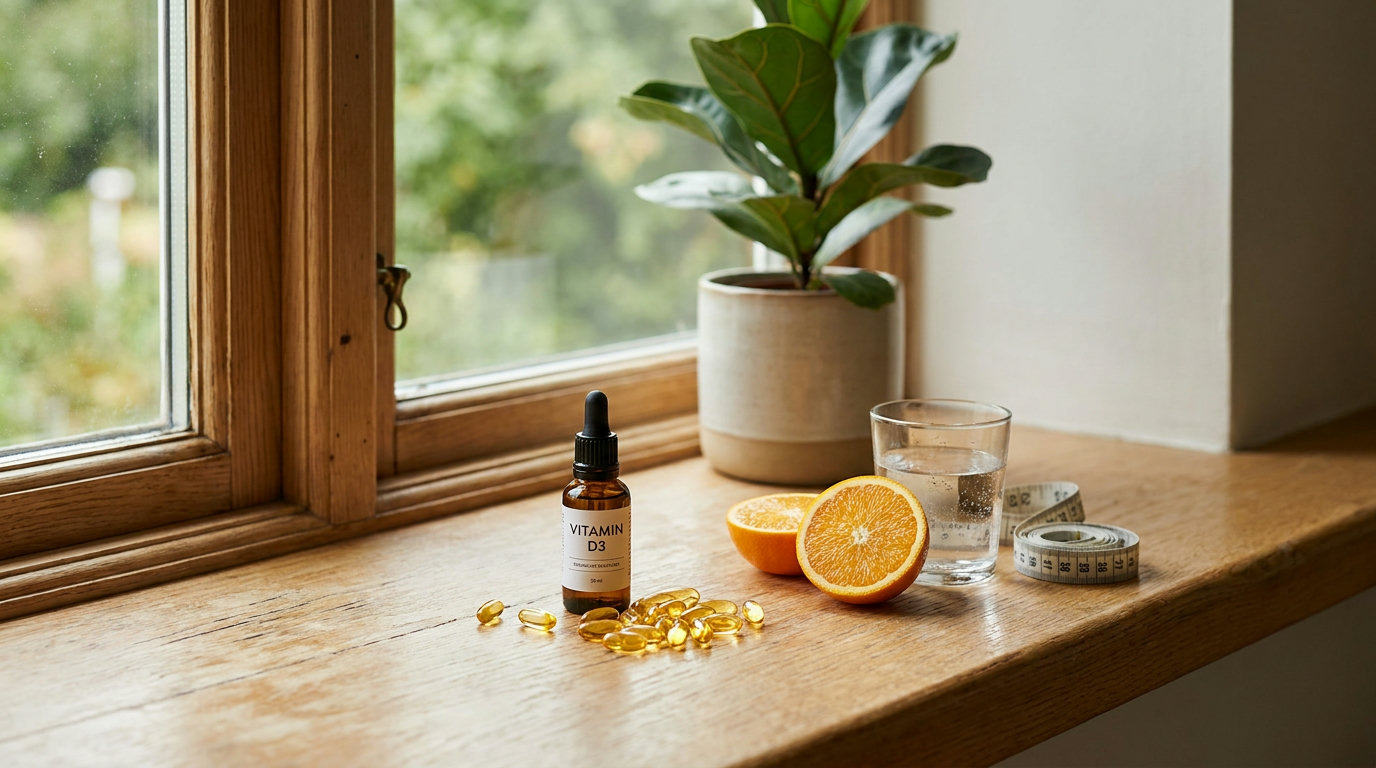
Winter is when many people start thinking about drops or capsules. They are most useful when you make little vitamin D from sunlight or belong to a risk group, such as older people, people with darker skin, those who rarely go outdoors or people who usually keep most of their body covered.
The German Nutrition Society (DGE) gives 20 micrograms (800 IU) per day as a guide when the body makes no vitamin D of its own. This matches the daily maximum for food supplements cited by Germany's Federal Institute for Risk Assessment (BfR). A low daily dose is preferable to occasional high-dose boluses. National recommendations can differ, so check the guidance where you live.
Before taking a high dose over a long period, check your actual level. A simple blood test at the doctor’s can measure your 25-OH-D level. That lets you supplement deliberately rather than guess, and avoids taking more than you need.
What speaks for it
Reliably corrects a confirmed deficiency
Useful in winter and for people at risk
Low doses are affordable, simple and usually well tolerated
Supports bones, muscles and the immune system when levels are low
What to weigh up
No longevity miracle. Little extra value with good levels
High doses without supervision can harm your health
Does not replace an active lifestyle outdoors
The right dose depends on your blood level
Do you need a supplement?
- 1
If you regularly spend short periods in the summer sun
you will usually fill your stores without a supplement
- 2
If it is winter or you rarely go outdoors
a low-dose supplement may fill the gap
- 3
If you belong to a risk group or have symptoms
have your blood level checked and discuss the dose with a doctor
- 4
If your levels are already good
extra vitamin D is unlikely to add much
Right for you if …
People who get little sunlight or belong to a risk group
Probably not for you if …
People with good vitamin D levels who spend plenty of time outdoors
What to do day to day
You do not need to track your daylight with precision. A few simple habits can get you through the year: sunlight on your skin in summer, with a little support in winter. Our Health check helps you assess your routines, while Outdoor Weather helps you find the best window for your time outside.
Move your activity outdoors
Plan a walk, run or bike ride around midday, when the sun is high. In summer, 10–20 minutes with uncovered arms is often enough.
Consider your skin type
Fair skin needs less time, darker skin needs longer. Once your skin reddens, stop and apply sunscreen or move into the shade.
Rethink winter
In Germany and at similar latitudes, skin produces little vitamin D from October to March. That is when summer stores, vitamin D-rich foods and possibly a supplement matter.
Measure if unsure
A blood test at the doctor’s shows your level. Use the result to decide whether and how much to supplement.
Frequently asked questions
Can I cover my vitamin D needs through food alone?
Hardly. Only a few foods, such as oily fish, eggs and fortified products, provide meaningful amounts. Most is made in the skin through sunlight. Supplements can help in winter.
Does my skin make vitamin D behind glass?
Almost none. Window glass filters out nearly all the UVB radiation required. Vitamin D production needs direct sunlight outdoors.
Do I get enough vitamin D if I use sunscreen?
High SPF reduces vitamin D production considerably. Use the brief exposure needed for vitamin D first, then apply sunscreen before your skin reddens.
How much vitamin D should I take each day?
The German Nutrition Society (DGE) gives 20 micrograms (800 IU) per day as a guide when the body makes none itself. Take higher doses only after medical advice and ideally based on a blood test.
Does more vitamin D automatically make me healthier and help me live longer?
No. Correcting a deficiency clearly helps. With good levels, more offers little extra benefit, and very high doses can be harmful.
Useful tools and topics for health and the outdoors
Get outside
The best source of vitamin D is free: sunlight on your skin while you are outside. Find the right gear for your next adventure.
Read our buying guides ↗Sources
- DGE (German Nutrition Society) – reference values and FAQ on vitamin D (in German) ↗
- BfR (German Federal Institute for Risk Assessment) – questions and answers on vitamin D (in German) ↗
- Verbraucherzentrale (German consumer advice centre) – can you overdose on vitamin D? (in German) ↗
- VITAL trial – vitamin D supplements and prevention of cancer and cardiovascular disease (NEJM) ↗
Inspiration, knowledge and gear for people who want more from the outdoors.