

Training & Health
Strength training for longevity: how little it really takes
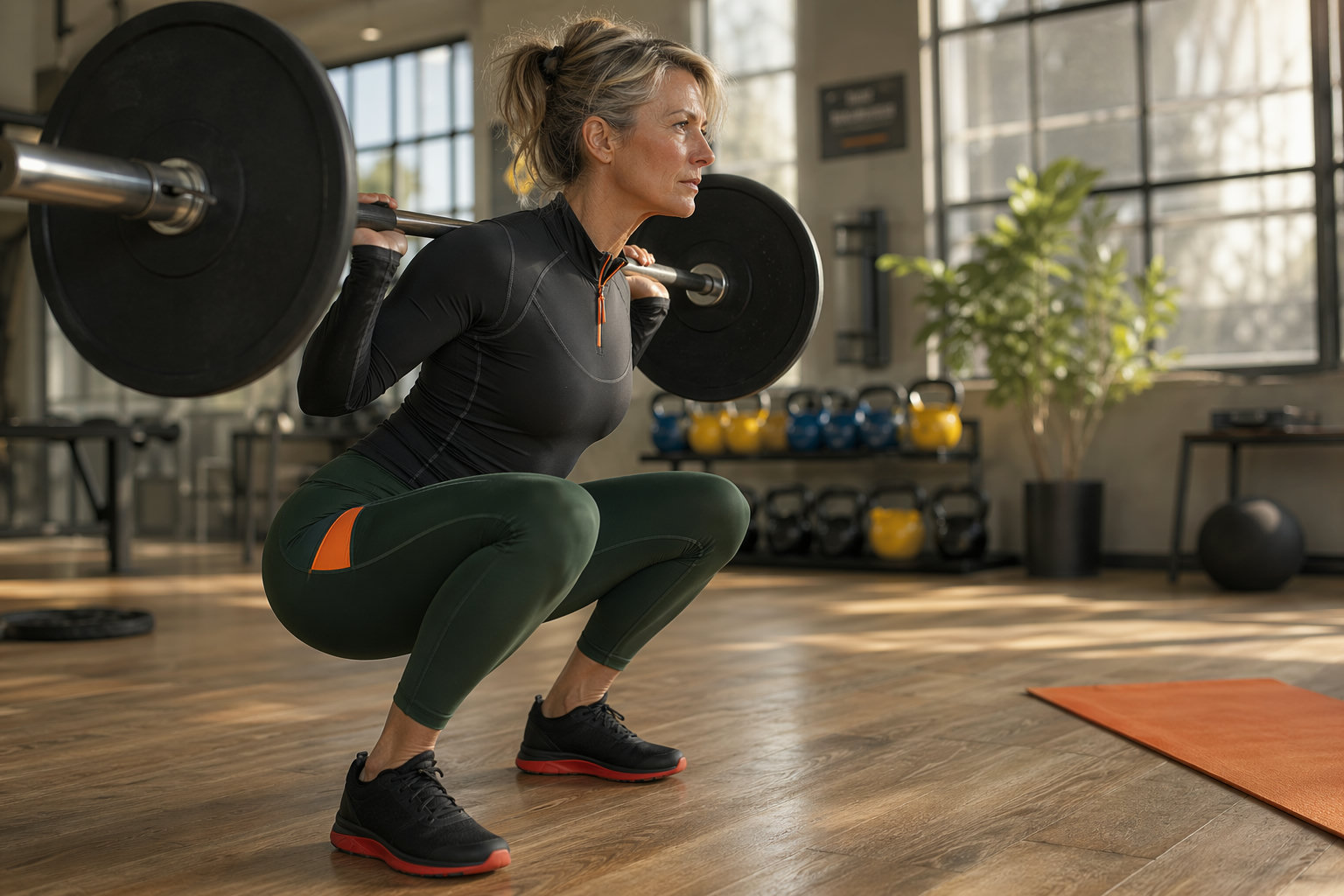
Why everyone over 35 should start strength training in 2026, and why two consistent 30-minute sessions a week already deliver most of the benefit.
Key points at a glance
- 01
Low muscle strength raises the risk of death 2.66-fold, more than many classic risk factors
- 02
90 minutes of strength training per week equates to 3.9 fewer years of biological ageing (telomere study)
- 03
Just 30–60 minutes per week lowers all-cause mortality by 10–17 per cent
- 04
Strength training reduces the risk of falls in older adults by 23–42 per cent and keeps bone density stable
- 05
Strength training for longevity is about everyday strength rather than muscle size, so it has little in common with bodybuilding
Why everyone is suddenly taking strength training seriously in 2026
The longevity market has grown from 785 billion dollars to a projected 1,868 billion by 2034. Five years ago it still sounded like a Silicon Valley hobby, from Bryan Johnson’s Blueprint to Peter Attia’s Centenarian Decathlon. Now it is mainstream. Germany’s fitness trend reports for 2026 point the same way: less focus on looks, less pressure, more substance. Balance, recovery, functional strength.
Every credible longevity protocol has one thing in common: strength training. Less a fitness trend than a medical necessity.
The reason is simple. The evidence linking muscle strength and life expectancy is now so clear that even the conservative German daily Welt ran the headline “Longevity is difficult without strength training.” And Peter Attia, the most influential longevity doctor in the US, calls muscle mass and VO2max the two metrics that correlate most strongly with longevity.
The number that changes everything: strength as a predictor of mortality
A systematic review in the Journal of Physical Activity Research found that people with low muscle strength have an odds ratio of 2.66 for premature death, at the same age, smoking status and activity level. Put simply: take two men in identical circumstances, and the weaker one is around 2.7 times more likely to die early. That is a stronger association than many classic risk factors combined.
A long-term study of 5,472 women, published in JAMA Network Open in 2026, came to the same conclusion. Women who did resistance training at least once a week had a 33 per cent lower risk of death over 12 years of follow-up. The effect held after adjusting for BMI, age and socioeconomic status.
That is why GPs in the US increasingly record grip strength as a vital sign, alongside blood pressure and pulse.
Strength training is not bodybuilding
For many people over 40, the biggest barrier is a misunderstanding: they think strength training means bodybuilding. Hardcore gyms, protein shakes, bulging veins. If that does not appeal, they skip the whole thing.
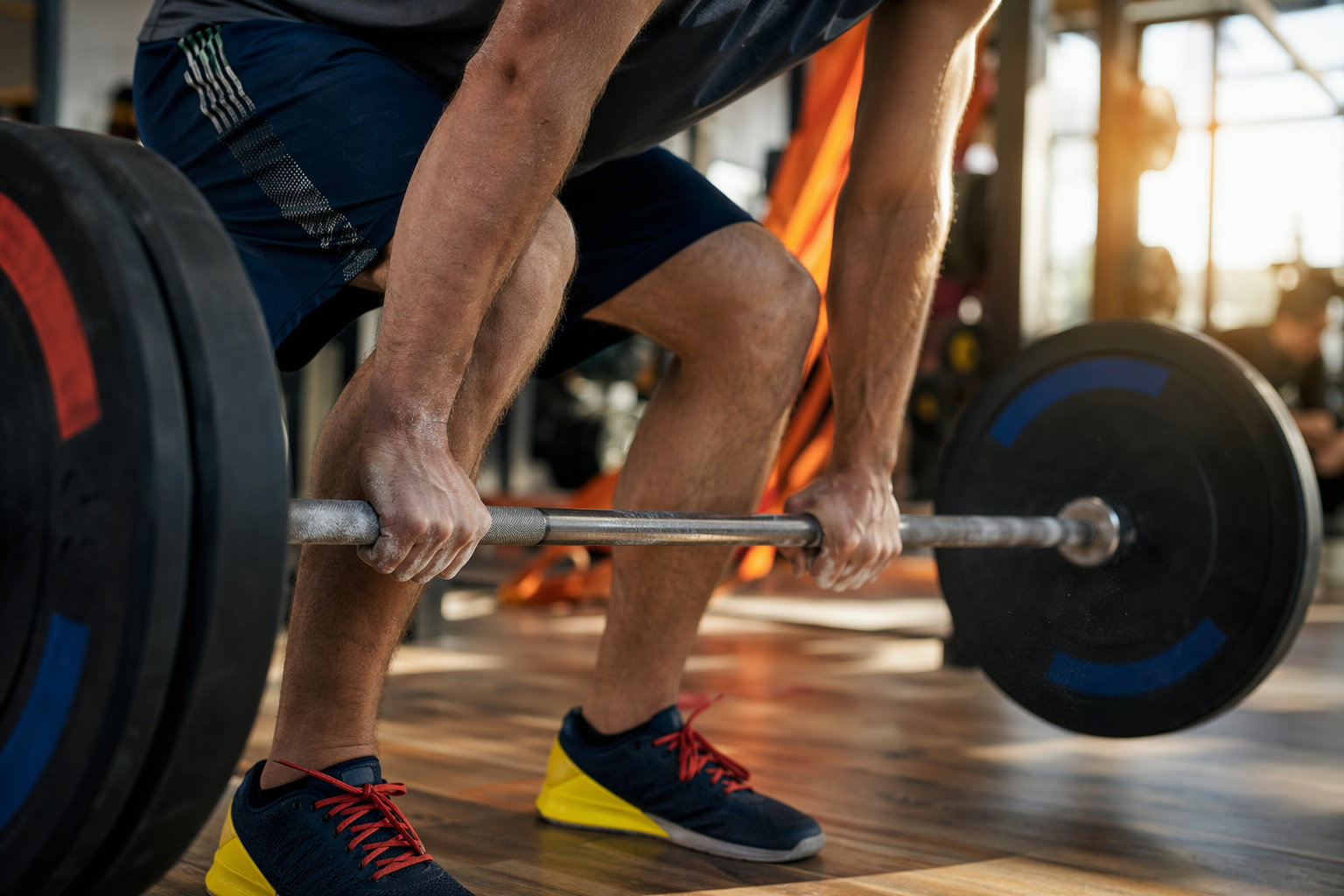
Technically, the two goals are almost opposites. Bodybuilding is optimised for muscle size and symmetry: lots of sets, moderate weights, isolation exercises. Strength training for longevity is optimised for everyday strength, bone density and metabolic health: fewer sets, heavier weights and compound lifts such as squats, deadlifts and pull-ups.
It takes less time, your protein needs stay normal and the visual change is subtler. Train properly for 45 minutes once a week and you won’t end up looking like Arnold Schwarzenegger. Your cells will still age more slowly.
Bodybuilding vs longevity strength training
| Aspect | Bodybuilding | Longevity strength trainingRecommended for longevity |
|---|---|---|
Primary goal | Maximum muscle size, symmetry | Everyday strength, bone density, healthspan |
Training frequency | 4–6× per week | 1–3× per week |
Sets per muscle group | 12–20 sets/week | 3–10 sets/week |
Weight | Moderate, high repetitions | Heavy, low repetitions |
Exercise selection | Many isolation exercises | Focus on compound exercises (squats, deadlifts) |
Nutrition | Calorie surplus, 2.0+ g protein/kg | Maintenance calories, 1.2–1.6 g protein/kg |
Health effect | High with moderate training, risk at extremes | Consistently positive, regardless of age |
Three key effects in detail
The health effects of strength training are well documented. Three matter most for life expectancy: fall prevention, bone density and insulin sensitivity. Each one tackles a major cause of death in later life: fractures after falls, osteoporosis, and type 2 diabetes with its complications.
Fall prevention: 23 to 42 per cent lower risk
Falls are the most common cause of accidents in people over 65 and one of the leading causes of death after 75. The real danger usually lies in what follows: a broken hip, surgery, immobility, pneumonia, death. Within a year of a hip fracture, 20–30 per cent of patients have died.
Meta-analyses from the Zeitschrift für Sportmedizin and the Cochrane Library consistently show that targeted strength training cuts the risk of falls by 23 to 42 per cent, depending on study design and training intensity. Exercises that combine leg and core strength work best: squats, single-leg variations and weighted lunges.
Start at 60 and it is prevention. Start at 80 and it is rehabilitation.

Bone density: your bones are a living organ
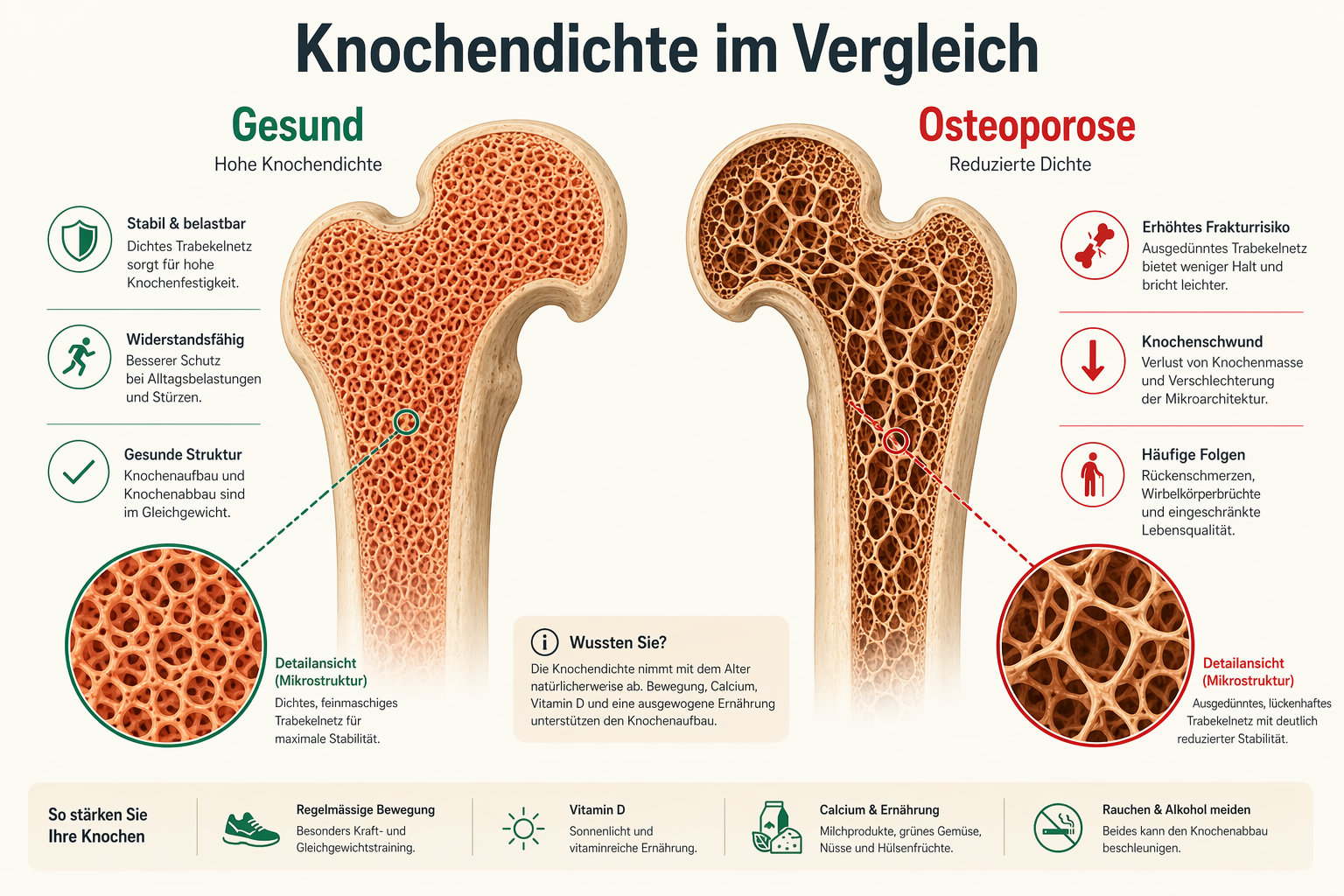
Bone tissue is remodelled throughout life. From about your mid-thirties, breakdown starts to outpace formation, and in women it speeds up sharply after the menopause. Around one in four women over 50 develops osteoporosis.
Strength training delivers a mechanical stimulus: muscle pull and weight-bearing load prompt osteoblasts to build bone. A recent meta-analysis reports a standardised mean difference of 0.88 for the lumbar spine, which counts as a large effect in clinical research.
The effect is specific, though. Swimming, cycling and walking do little for bone density. Only loading with weight, ideally at a faster movement speed, triggers remodelling.
Insulin sensitivity: muscles are the body’s largest glucose store
Skeletal muscle takes up around 80 per cent of the glucose that enters your bloodstream after a meal. The key is GLUT4, a transport protein in the muscle membrane. Strength training stimulates GLUT4 upregulation: after a session, your muscle cells respond better to insulin, absorb sugar faster and keep blood sugar steadier.
The result: lower insulin requirements, less strain on the pancreas and a lower risk of type 2 diabetes and metabolic syndrome. The journal Diabetes showed back in 2004, and many replication studies have confirmed since, that a single strength session improves insulin sensitivity for up to 48 hours.
Train two to three times a week and your metabolism is practically always ‘on’.
Biological ageing: the telomere effect
Biological age and calendar age can drift apart. Two 55-year-olds may be biologically 45 or 65. You can measure this through epigenetic markers and the length of the telomeres, the protective caps on chromosomes.
A study in Scientific Reports with data from 4,800 adults found that people doing 90 minutes of strength training a week had telomeres equivalent to being 3.9 years younger on average than people who did not train. In biological terms: around four years less ageing at the same calendar age.
The main mechanism is myokines, hormone-like messengers that working muscles release into the blood: BDNF for the brain, irisin for fat tissue, IL-6 for the immune system and CLCF1 for bone. Muscle is far from passive tissue. It is an endocrine organ, and strength training is what switches it on.
Minimum effective dose: what is actually enough
Good news if you have neither the time nor the inclination for hours in the gym: the minimum effective dose is smaller than most people think.
A review in Sports Medicine shows that just one set per muscle group per week is enough to maintain the strength you have. To build muscle, 4–6 sets per muscle group per week is the sweet spot. Beyond that, the statistical difference is small.
A WHO-affiliated meta-analysis with 1.4 million participants confirms that 30–60 minutes of strength training per week lowers all-cause mortality by 10–17 per cent. After that, the curve flattens. The first 30 minutes do the most, and every extra minute brings diminishing returns.
In everyday terms: two 30-minute sessions a week, done consistently, deliver 90 per cent of the possible longevity benefit.
Start with two sessions a week
Monday and Thursday, or any rhythm with at least 48 hours between sessions. Consistency beats intensity.
Focus on six compound exercises
Squats, deadlifts, bench press, rows, overhead press and pull-ups (or lat pulldowns). These six cover 90 per cent of the relevant muscles.
Three sets of five to eight repetitions
Choose a weight that makes the last one or two reps properly hard while your technique stays clean. Better to lift less with perfect form.
30–45 minutes per session
Leave your phone out of it. Rest for 2–3 minutes between sets. That rest is part of the workout.
Increase the weight every 4–6 weeks
Progressive overload: once you have completed every rep with clean form for three sessions in a row, add a little weight, 1–2.5 kg per exercise.
Year one: technique before weight
Ideally spend the first 4–8 weeks with a coach or good-quality video instruction. Poor technique in deadlifts and squats is the most common cause of injury.
Why strength training protects the brain
For a long time, endurance training was seen as the type of exercise that protects the brain. Newer evidence shows strength training is just as effective, and in some areas it has the edge.
Working muscles release BDNF (brain-derived neurotrophic factor), a growth factor for nerve cells. In people with mild cognitive impairment (MCI), an early stage of dementia, a study by the Alzheimer's Association found that six months of strength training preserved the brain’s white matter and the hippocampus, the structure that shrinks first in Alzheimer’s disease.
A review in Frontiers in Neuroscience summarises 18 studies: regular resistance training significantly improves executive function, memory and reaction time in people over 60. The size of the effect is comparable to aerobic training aimed at the hippocampus.
When should you start?
The honest answer: the earlier, the better, but it is never too late. Gains in strength and bone density are measurable at every age. Even studies with care-home residents in their 80s and 90s show strength gains of 50–100 per cent after three months of structured training.
What changes is the focus. Your training priorities shift with age:
Focus at each stage of life
- 1
If you are between 25 and 40
build muscle mass as a reserve. What you train now, you will still have at 70
- 2
If you are between 40 and 55
at least hold your current level and delay age-related loss by 10 years
- 3
If you are between 55 and 70
focus on functional strength and explosive power. That protects you against falls
- 4
If you are over 70
every session counts: strength, balance and everyday ability. It can make the difference between independence and needing care
Right for you if …
Every adult: there is no upper age limit
Probably not for you if …
Acute injuries, recent operations or uncontrolled heart disease: seek medical advice first
Frequently asked questions
Is strength training once a week really enough?
To maintain the strength you already have, yes: one set per muscle group per week is statistically enough. For real gains and the full longevity benefit, two sessions of 30–45 minutes are clearly better. The dose-response curve climbs steeply between 0 and 60 minutes per week, then flattens.
I’m over 60 and have never trained. Is it too late?
No. Studies of beginners aged 70 to 90 show strength gains of 50–100 per cent after 12 weeks. The keys: work with a qualified coach for the first few weeks, progress slowly and leave 48 hours between sessions. Your body responds more slowly with age, but it does respond.
Will strength training make me bulky or look like a bodybuilder?
No. Visible muscle growth needs a deliberate calorie surplus, frequent training and, for most women, hormonal conditions that rarely occur naturally. Longevity-focused strength training builds denser, more defined muscle without the bulk. After a year, most people look fitter rather than bigger.
Do I need protein shakes?
Usually not. For longevity training, 1.2–1.6 g of protein per kilogram of body weight per day is enough, and a normal diet covers that easily with meat, fish, eggs, pulses and dairy. Shakes are convenient but optional. They do make sense if you take GLP-1 medication such as Ozempic or eat very few calories.
Can’t I just jog or swim?
Endurance training is excellent for your heart, circulation and VO2max, but it does not build muscle and does little for bone density. For the full health benefit you need both: 150 minutes of endurance training a week plus two strength sessions. The World Health Organization has recommended this since 2020.
Further reading and tools
Related articles and interactive tools for your training
Sources
- JAMA Network Open: Resistance Training and All-Cause Mortality in Women ↗
- Peter Attia MD: Training for the Centenarian Decathlon ↗
- Nature Scientific Reports: Resistance Training and Telomere Length ↗
- Zeitschrift für Sportmedizin: Fall prevention through targeted strength training ↗
- Diabetes Journal: Strength Training Increases Insulin-Mediated Glucose Uptake ↗
- Frontiers in Physiology: Myokines and Skeletal Muscle as an Endocrine Organ ↗
- Alzheimer Europe: Resistance Training Preserves White Matter in MCI ↗
- Welt: Ageing Healthily: Longevity Is Difficult Without Strength Training ↗
- IDEA Fit: Minimum Effective Resistance Training: Small Doses, Large Gains ↗
- WHO: Physical Activity Fact Sheet ↗
View the original article and editorial team in the SportFits Magazine ↗
Inspiration, knowledge and gear for people who want more from the outdoors.