
SportFits Travel
Planning a hut-to-hut hike: a guide for beginners
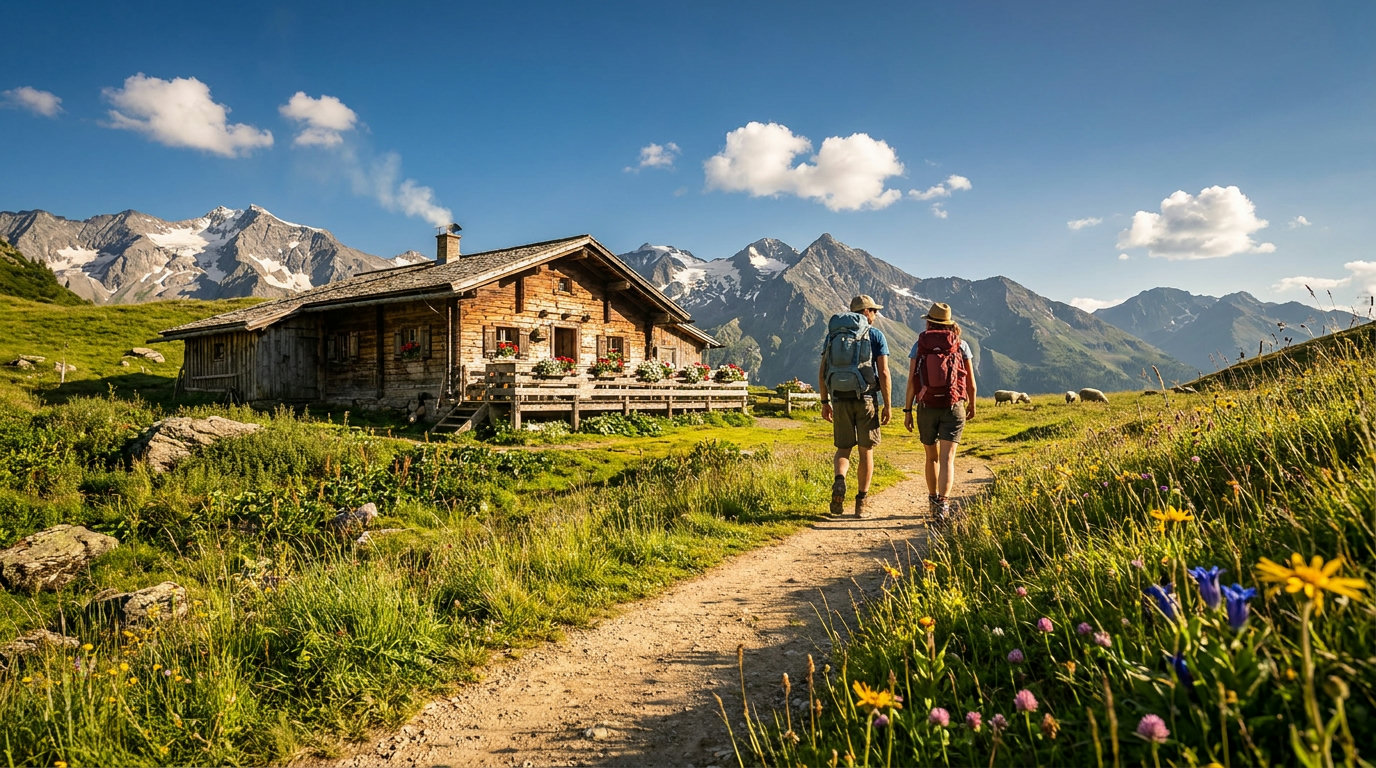
From choosing a route to packing your rucksack: how to plan your first hut-to-hut hike, with clear, practical advice for beginners.
The key points at a glance
- 01
Book popular huts at least 4–8 weeks ahead, and earlier during peak season
- 02
A hut sleeping bag is compulsory at most Alpine Club huts and weighs almost nothing
- 03
Beginners should plan a maximum of 10–15 km and 500–1,000 metres of ascent per stage
- 04
Reach the summit by 1–2 pm at the latest: the risk of thunderstorms rises sharply in the afternoon
- 05
Carry cash: many huts do not accept card payments
What is a hut-to-hut hike?
A hut-to-hut hike is a multi-day mountain walk where you stay in mountain huts instead of camping. Huts offer a dormitory or private room, a hot evening meal and breakfast in the morning: everything you need to set off again the next day.
The big difference from camping is the lighter pack. Your tent, sleeping bag and stove stay at home. That makes hut-to-hut hikes ideal for anyone who wants several days in the mountains without turning the trip into an expedition.
Most huts belong to the German Alpine Club (DAV) or the Austrian Alpine Club (ÖAV). Membership of an Alpine Club is worth considering: members get reduced overnight rates and booking benefits.
Hut-to-hut hikes range from relaxed alpine pasture paths to demanding protected climbing routes. As a beginner, stick to well-marked trails (difficulty T1–T2) without exposed sections. The stages are easier to plan and the infrastructure is well developed.
This format is a poor fit if you prefer complete spontaneity: hut beds are in demand and must be booked in advance. Leave it too late and you may find yourself without a bed for the night.
Choosing the right route
Route choice is the most important planning decision. As a beginner, shorter is safer than longer. A stage that looks manageable on paper can feel very different with a heavy pack on rocky ground.
Plan by walking time as well as distance. As a rule of thumb, 300 metres of ascent adds roughly one hour to your estimate. Beginners should aim for stages of 4–6 hours of walking, including breaks.
Good starting areas for your first hut-to-hut hike include the Allgäu Alps (gentle grassy mountains and a dense network of huts) and the Salzburg Alpine Way (3 days, modest elevation changes and plenty of alpine huts). Both have well-marked trails and are easy to navigate without local knowledge.
Use topographic maps or apps such as komoot and Outdooractive for planning. Printed Alpine Club maps at 1:25,000 remain the most reliable basis for Alpine regions. Always build in a buffer day: bad weather or a longer ascent can shift the timetable.
Booking hut accommodation
Hut places are limited, especially on popular routes during peak season. Book at least 4–8 weeks ahead, and even earlier for July and August. Hoping for a last-minute bed is risky on some routes.
The German and Austrian Alpine Clubs run a shared online booking system covering more than 500 huts. It shows availability for your chosen nights at a glance. Huts outside the Alpine Clubs are often booked by phone, ideally in the evening when the hosts have time.
Set your route and stages
First decide how many hours you want to walk per stage and which huts lie along the route. Topographic maps or apps such as komoot help.
Search the DAV/ÖAV booking system
Check every hut on your route for your dates. The reservation portal shows live availability for more than 500 huts.
Call huts without online booking
Not every hut can be booked online. Call directly, ideally between 5 and 8 pm when the hut hosts have time.
Secure your booking confirmations
Print every confirmation or save it offline on your phone. Mobile reception is not guaranteed in the mountains.
Show your Alpine Club membership card
Members often pay €10–15 less per night than non-members.
Gear: what you really need
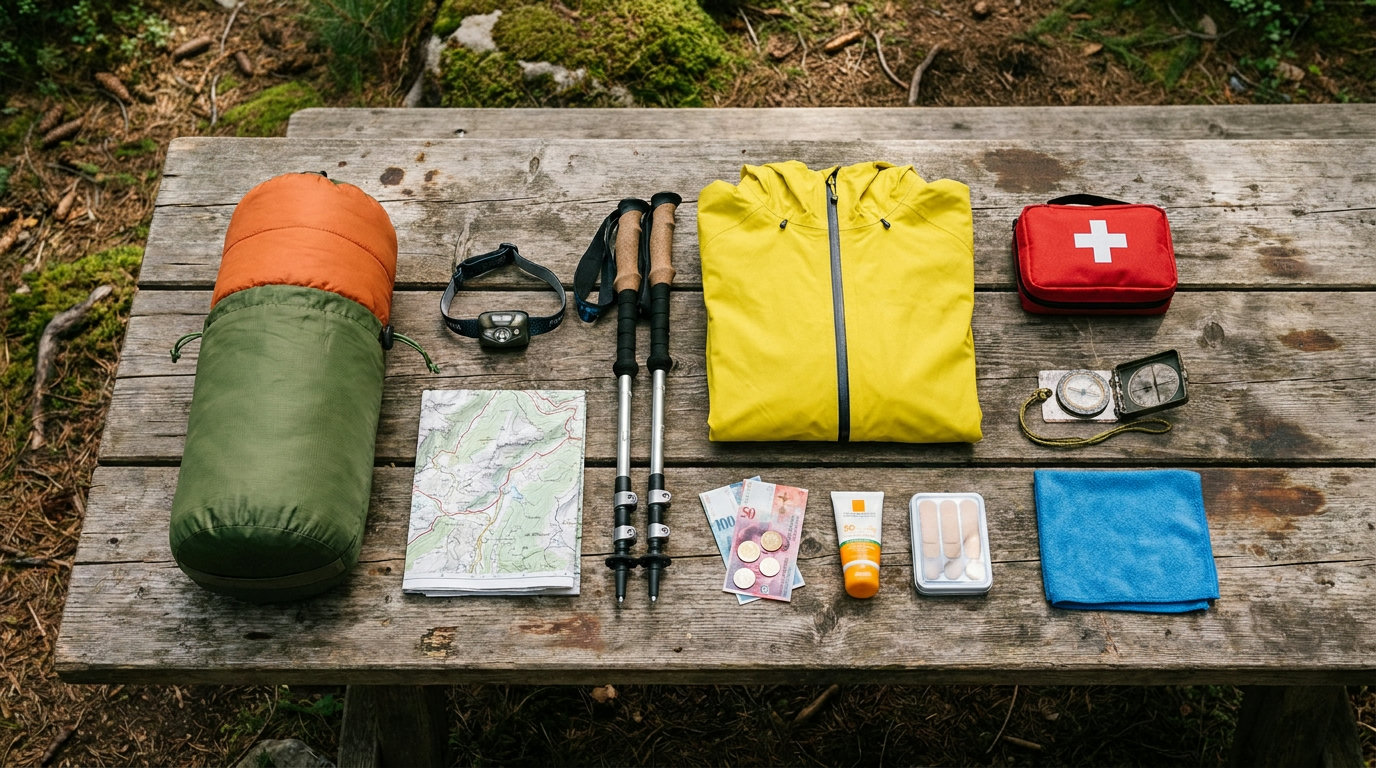
Pack weight has a direct effect on how much energy you have left at the end of the day. A common rule of thumb says your pack should weigh no more than a quarter of your body weight: at 70 kg, that is about 17 kg at most, though less is better. For a hut-to-hut hike, 8–10 kg is usually enough.
Compared with camping, you can leave your sleeping bag, tent and stove at home. The remaining kit still deserves careful thought.
Mountain weather and safety
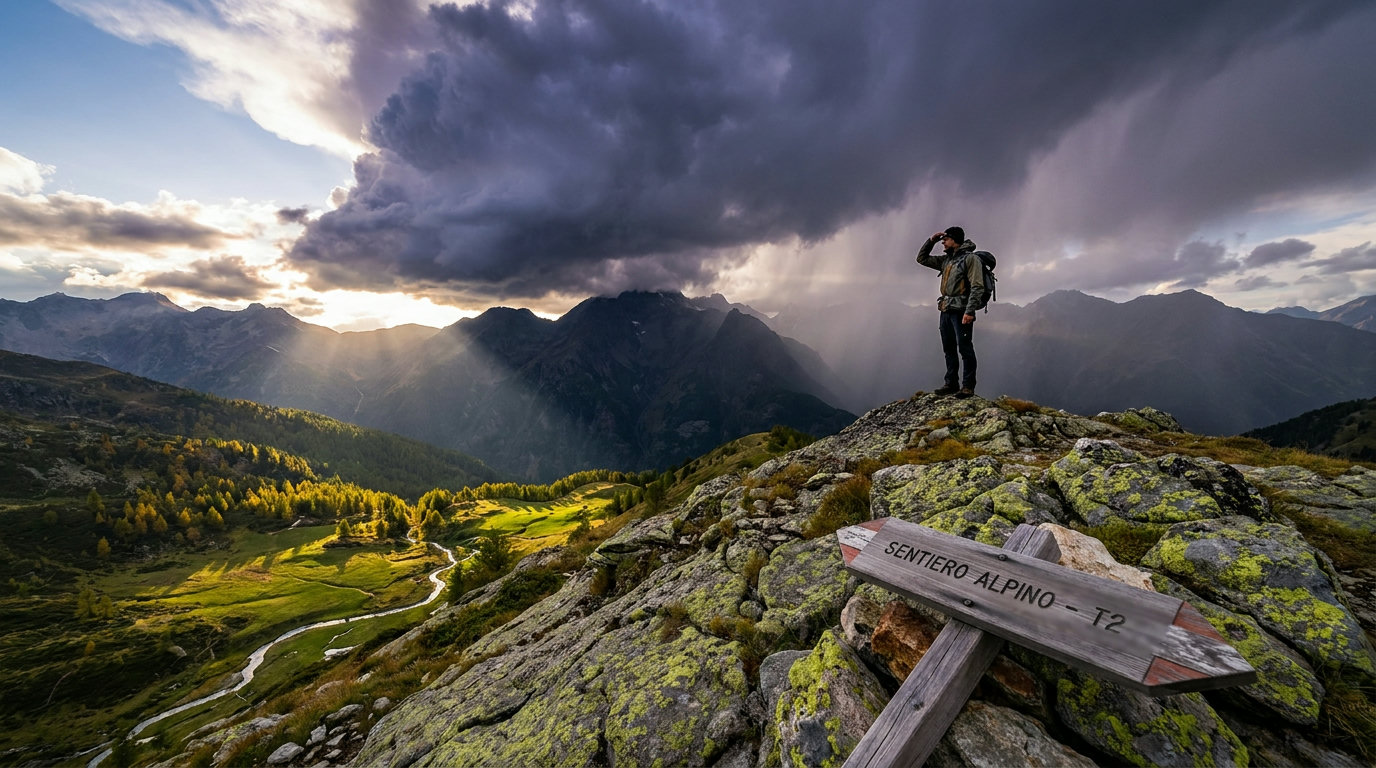
Mountain weather is less predictable than weather in the valley, and many beginners underestimate it. Cold fronts can develop within hours: a sunny morning can turn into a stormy afternoon.
The key rule is simple: start early. Leave at 6 am and you will usually reach the summit before midday, while the risk of heat-driven thunderstorms is still low. From May to August, the risk rises sharply between 1 and 5 pm.
Check the forecast from several sources. The DAV provides a specialist mountain forecast for many regions; yr.no and national weather services are useful too. Always ask the hut hosts as well. Their local knowledge beats any app.
What to expect at the hut
Mountain huts vary widely in comfort and facilities. At basic self-catering huts, you bring your own food. Staffed DAV huts usually serve dinner, breakfast and drinks.
Sleeping is often in a shared dormitory: a large room with wooden bunks where several people sleep side by side. Some huts have smaller rooms for 2–4 people. Do not expect hotel comfort, but after a long day on the trail even a simple mattress feels excellent.
Your hut sleeping bag (liner) is compulsory. Huts provide blankets, but for hygiene reasons you must sleep in your own liner. It is light, affordable and belongs in every pack.
Hut etiquette means leaving hiking boots outside, keeping quiet after 10 pm and telling the hut host if you will arrive later than planned. Showers and washing facilities are often limited at basic huts, so pack a microfibre towel and soap.
As for cost, a night with dinner and breakfast at DAV huts costs members €25–45 per person and non-members €35–60. Drinks are extra. Cash is essential because many huts have no card terminal.
Avoiding common beginner mistakes
What speaks for it
Start early, before 6 am for long stages or summit objectives
Keep stages deliberately short and allow buffer time
Break in your boots well before the trip, at least 5–10 hikes beforehand
Book huts early, at least 4–8 weeks ahead
Check the weather again every day and ask the hut host before setting off
What to weigh up
Planning stages that are too long: 20 km may look harmless on paper, but not with a pack
Testing new gear on your first multi-day trip: use it at home first
Leaving without cash: many huts require it
Relying on weather apps alone: the hut host’s local knowledge is invaluable
Which hut-to-hut hike suits you?
- 1
If this is your first multi-day hike
choose a 2–3-day route in an accessible area such as the Allgäu or Salzburg Alpine Way
- 2
If comfort matters to you
choose huts with private rooms rather than dormitories and ask when booking
- 3
If you want maximum flexibility
plan a circular route rather than a traverse so you can turn back earlier in poor weather
- 4
If you are bringing children
shorten stages to 6–8 km and choose family-friendly huts on gentle alpine pasture
- 5
If you need to keep an eye on your budget
consider Alpine Club membership: it can pay for itself after 3–4 nights
Right for you if …
Anyone who wants to hike for several days without camping, from relaxed alpine pasture routes to demanding high-mountain trails
Probably not for you if …
Anyone seeking maximum flexibility or unwilling to give up privacy and hotel comfort
Frequently asked questions
How far ahead do I need to book hut places?
Book popular routes at least 4–8 weeks ahead, and earlier for July and August. The German and Austrian Alpine Clubs’ online system lists more than 500 huts with live availability. Call huts without online booking directly, ideally between 5 and 8 pm.
Is a hut sleeping bag really compulsory?
Yes. At most staffed Alpine Club huts, your own liner is compulsory for hygiene reasons. It is inexpensive, weighs around 300 grams and fits in any pack. Small, useful and worth carrying.
How heavy should my pack be for a hut-to-hut hike?
As a guide, keep it to no more than a quarter of your body weight. For a 3–5-day hut-to-hut hike, 8–10 kg is usually enough. Without a tent, heavy sleeping bag and stove, that is realistic. Prioritise light, functional merino or synthetic clothing.
What should I do if the weather worsens?
Stay at the hut or shorten the stage. No summit is worth continuing through a thunderstorm or gale. Speak to the hut host in the morning and build a buffer day into your trip.
Do I need special experience for a hut-to-hut hike?
For marked T1–T2 trails, you do not need climbing skills or Alpine experience. Basic sure-footedness, proper footwear and an honest assessment of your fitness are enough. For exposed T3+ routes, go with an experienced companion or take a DAV introductory course.
Tools and articles to help plan your hike
Sources
- German Alpine Club (DAV): Packing list for an overnight hut stay (in German) ↗
- German Alpine Club (DAV): Online booking system for Alpine Club huts (in German) ↗
- German Alpine Club (DAV): How to behave during storms in the mountains (in German) ↗
- BergReif: Minimalist hut-to-hut packing list (in German) ↗
- BergeAktiv: Planning and preparing a hut-to-hut hike (in German) ↗
Inspiration, knowledge and gear for people who want more from the outdoors.