
Buying advice
Understanding ski jackets
What a ski jacket needs to do. And what you need to try on.
Find the right ski jacket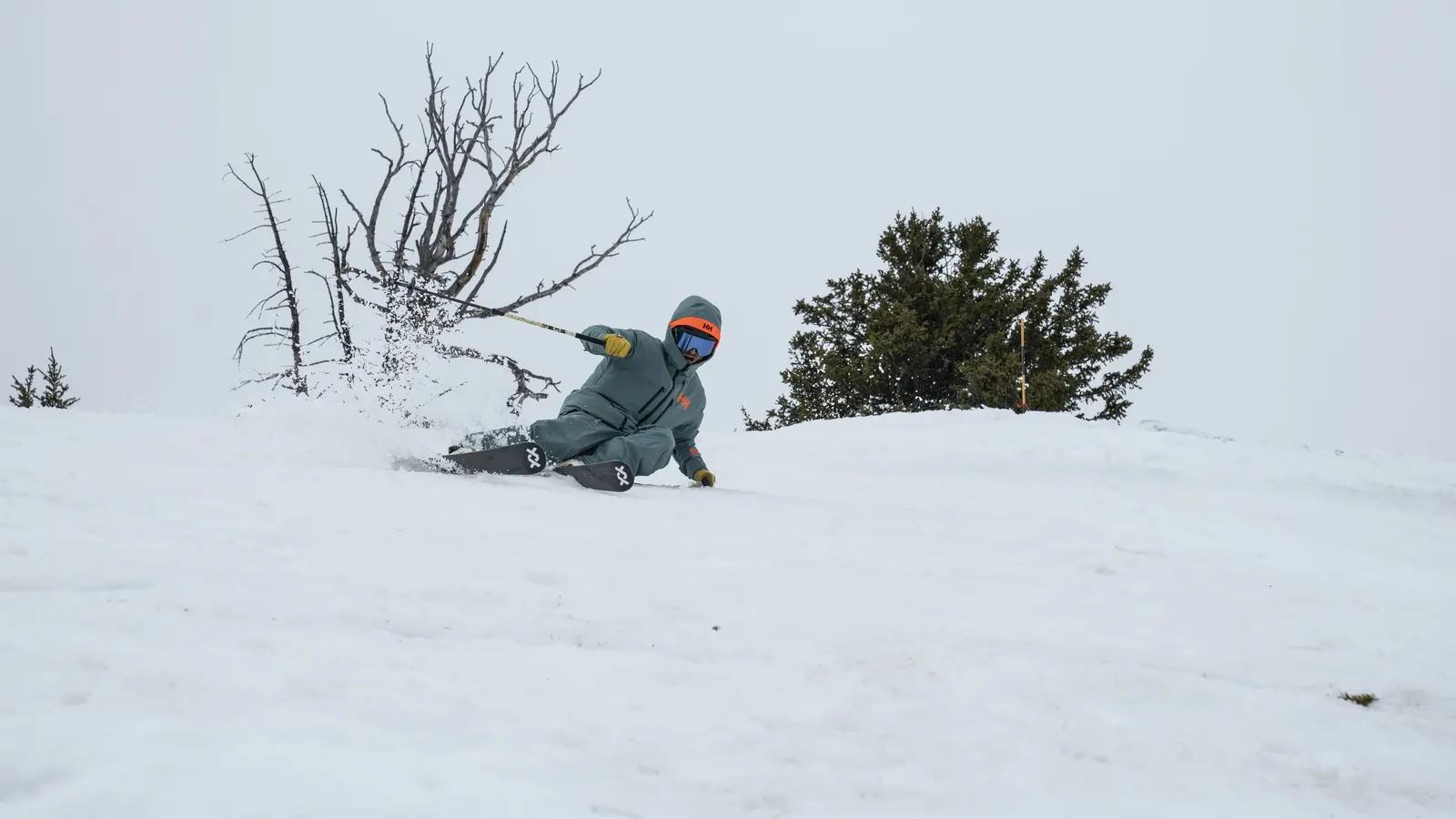 Photo: Helly Hansen
The hydrostatic head shows the water pressure the fabric can withstand, measured in millimetres. It describes the material, not the whole jacket: seams and zips are separate weak points.
Only compare values when the manufacturer states them. If the number is missing, the jacket isn’t automatically worse—we simply don’t know.
If you get cold quickly on the lift, choose a padded jacket. Synthetic insulation still keeps you warm when it gets damp; down offers high warmth at low weight. A shell has no insulation of its own: wear whatever you need underneath for the day.
The amount of insulation tells you how much material is inside. It doesn’t provide a temperature rating.
- A snow skirt keeps snow off your back when you fall or ski in deep snow.
- Ventilation zips let heat out when you’re working hard.
- A ski-pass pocket on the sleeve or chest saves you searching at the gate.
- A RECCO reflector can make it easier for rescuers to find you. It doesn’t replace an avalanche transceiver.
- Try the jacket on with the layers you plan to wear underneath.
- Raise your arms. The hem shouldn’t ride up, and the sleeves should cover your wrists.
- If you can, put your helmet on too and check the hood.
- Buy children’s jackets based on height. Jackets that are too large let snow in at the sleeves and hem.
Is a rain jacket enough for skiing?
It may be enough for individual days with a warm layer underneath. But it often lacks a snow skirt and ski pass pocket. On the piste, you’ll be better equipped with a ski jacket.
What’s the difference between a ski jacket and a freeride jacket?
Freeride jackets are usually shells with a high waterproof rating and taped seams, because you get more snow on you in deep snow and move around more. Piste jackets are more often insulated because you sit on the lift for longer.
How warm is an insulated jacket?
That depends on movement, wind and the layer you wear underneath. That’s why we don’t give a temperature rating. The insulation weight only helps you compare jackets.
Manufacturer information: Schöffel Safuna Ski Jacket · Helly Hansen Sogn Shell Ski Jacket 2.0 · Helly Hansen Swift Team Insulated Ski Jacket · Schöffel Ski Jacket Verbier · The North Face Descendit Jacket · Schöffel Ski Jacket Style Trifex · Helly Hansen Garibaldi 2.0 Insulated Ski Jacket · Helly Hansen Alphelia Ski Jacket · Helly Hansen Kvitfjell Race Puffy Ski Jacket · Helly Hansen Alphelia Lifaloft Ski Jacket · Black Diamond Factor Shell · Helly Hansen Alpha Ski Jacket · Black Diamond Recon LT Stretch Shell · as of 2 November 2026. Product details from the product pages on sportfits.eu.